
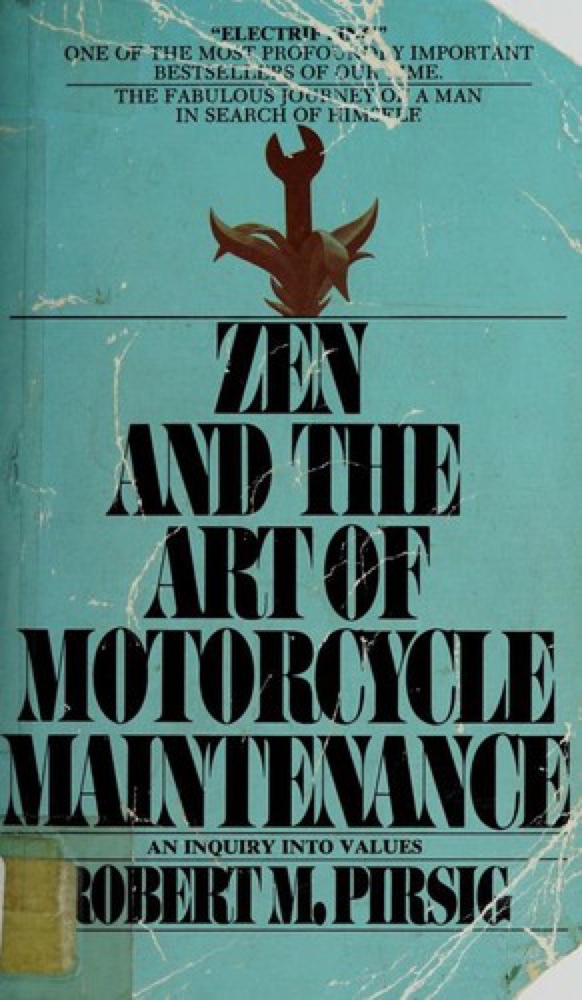
 Zen and the Art of Motorcycle Maintenance
Quotes from the Book
The idea that “all men are created equal” is a gift to the world from the American Indian.
From that original perception of the Indians as the originators of the American style of speech had come an expansion: The Indians were the originators of the American style of life. The American personality is a mixture of European and Indian values. When you see this you begin to see a lot of things that have never been explained before.
To define something is to subordinate it to a tangle of intellectual relationships. And when you do that you destroy real understanding.
He wasn't going to send her to any hospital. He knew that now. At a hospital they'd just start shooting her full of drugs and tell her to adjust. What they wouldn't see is that she is adjusting. That's what the insanity is. She's adjusting to something. The insanity is the adjustment. Insanity isn't necessarily a step in the wrong direction, it can be an intermediate step in a right direction. It wasn't necessarily a disease. It could be part of a cure.
It’s all taking the customer’s money and giving him exactly what he wants and then leaving him poorer than when he started.
Insanity as an absence of common characteristics is also demonstrated by the Rorschach ink-blot test for schizophrenia. In this test, randomly formed ink splotches are shown to the patient and he is asked what he sees. If he says, 'I see a pretty lady with a flowering hat,' that is not a sign of schizophrenia. But if he says, 'All I see is an ink-blot,' he is showing signs of schizophrenia. The person who responds with the most elaborate lie gets the highest score for sanity. The person who tells the absolute truth does not. Sanity is not truth. Sanity is conformity to what is socially expected. Truth is sometimes in conformity, sometimes not.
Insanity on the other hand is an intellectual pattern. It may have biological causes but it has no physical or biological reality. No scientific instrument can be produced in court to show who is insane and who is sane. There's nothing about insanity that conforms to any scientific law of the universe. The scientific laws of the universe are invented by sanity. There's no way by which sanity, using the instruments of its own creation, can measure that which is outside of itself and its creations. Insanity isn't an 'object' of observation. It's an alteration of observation itself. There's no such thing as a 'disease' of patterns of intellect. There's only heresy. And that's what insanity really is.
When she first came here she used to think there was somebody up in those big buildings who knows what's going on here. They would never come down and talk to her. After a while she found out nobody knows what's going on.
These were the underdogs, the outsiders, the pariahs, the sinners of his system. But the reason he was so concerned about them was that he felt the quality and strength of his entire system of organization depended on how he treated them. If he treated the pariahs well he would have a good system. If he treated them badly he would have a weak one.
It's the clothes that make them think you're not really there.
They were living in some kind of movie projected by this intellectual, electromechanical machine that had been created for their happiness, saying: PARADISE PARADISE PARADISE but which had inadvertently shut them out from direct experience of life itself—and from each other.
But the ones who go posing as moralists are the worst. Cost-free morals. Full of great ways for others to improve without any expense to themselves. There's an ego thing in there, too. They use the morals to make someone else look inferior and that way look better themselves. It doesn't matter what the moral code is -- religious morals, political morals, racist morals, capitalist morals, feminist morals, hippie morals -- they're all the same. The moral codes change but the meanness and the egotism stay the same.
Real science and real philosophy are not guided by preconceptions of what subjects are important to consider. That
the struggle of the noble, free-thinking
Perché, ad esempio, un gruppo di composti semplici e stabili di carbonio, idrogeno, ossigeno e azoto avrebbero dovuto lottare per miliardi di anni allo scopo di organizzarsi, mettiamo, in un professore di chimica? Che cosa li ha spinti? Se questo professore noi lo lasciamo esposto su uno scoglio al sole per un tempo sufficientemente lungo, le forze della natura lo ridurranno a una serie di composti di carbonio, ossigeno, idrogeno e azoto, più un po' di calcio e di fosforo con tracce di altri minerali. E la reazione è irreversibile.
Watch on YouTube
About Robert M. Pirsig
We have collected 43 quotes from 2 books by Robert M. Pirsig on BookQuoters.
More about the author →More by Robert M. Pirsig
Zen and the Art of Motorcycle Maintenance
Book details
- Author
- Robert M. Pirsig
- Genre
- Literature
- Goodreads rating
- 3.84 (8k ratings) →
Keep reading
 The Blank Slate: The Modern Denial of Human Nature
 On the Genealogy of Morals
 Heretics
 Daybreak: Thoughts on the Prejudices of Morality
 A Language Older Than Words
 What's Wrong with the World
 The Man Without Qualities
 Walden Two
 American Pastoral
 Foucault's Pendulum
 Human, All Too Human
 From Dawn to Decadence: 500 Years of Western Cultural Life, 1500 to the Present
 Why People Believe Weird Things: Pseudoscience, Superstition, and Other Confusions of Our Time
 The Diamond Age
 The Sane Society
 Genesis
 The Closing of the American Mind
 Creation Lake
 Letters to a Young Contrarian
 Even Cowgirls Get the Blues
 Anti-Oedipus: Capitalism and Schizophrenia
 Skinny Legs and All
 Stories of Your Life and Others
 Hitch-22: A Memoir
 Rationality: From AI to Zombies
 The Story of My Experiments With Truth
 Point Counter Point
 Infinite Jest
 The Gone-Away World
 The Secret Agent
 Maps of Meaning: The Architecture of Belief
 The Art of Being
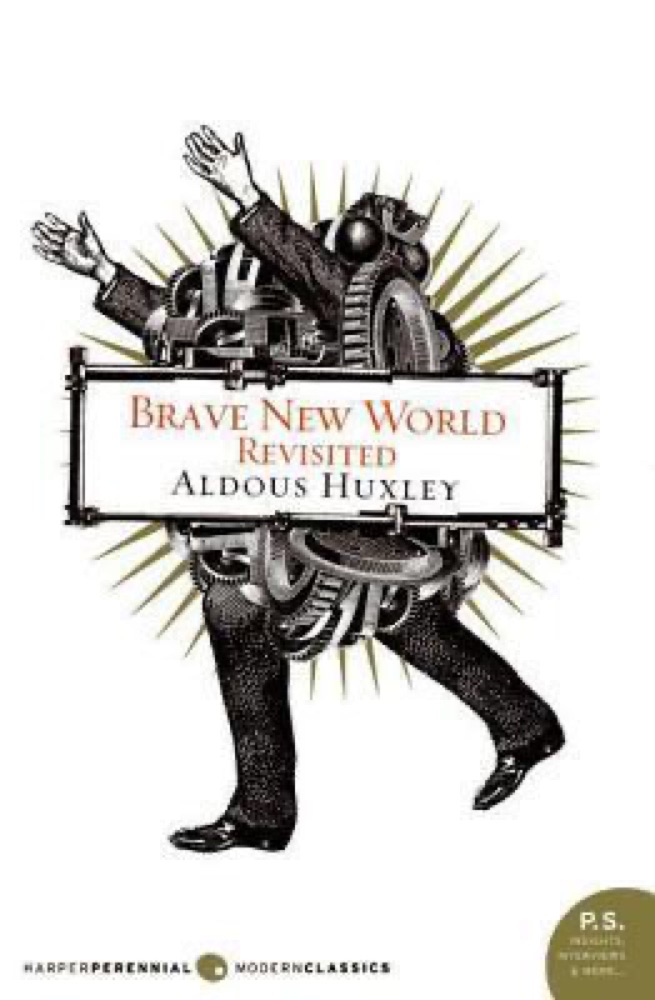 Brave New World Revisited
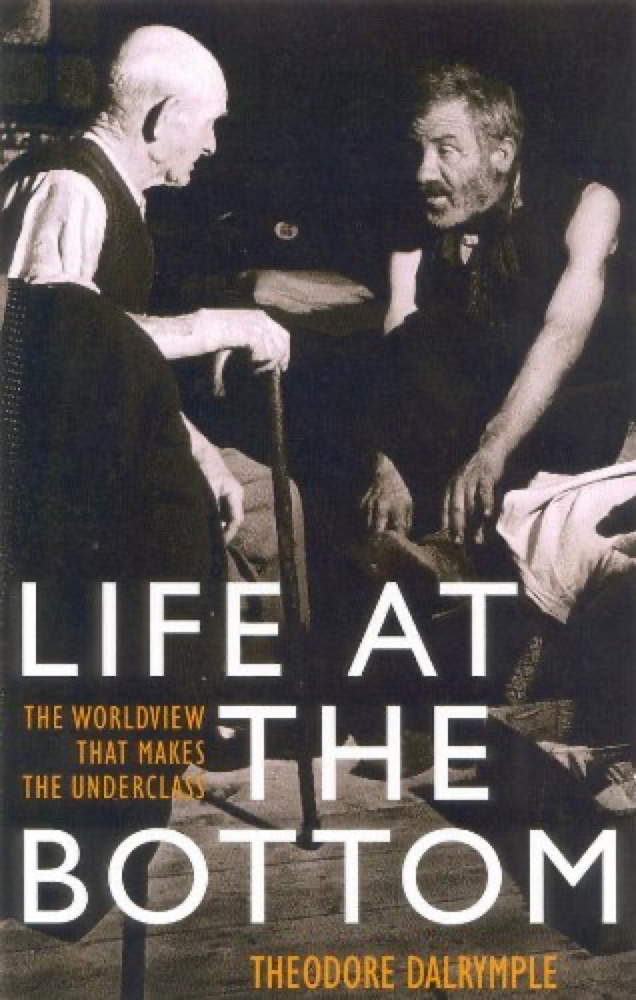 Life at the Bottom: The Worldview That Makes the Underclass
 The Magic Mountain
 The Human Stain
 Erewhon
 The Varieties of Religious Experience
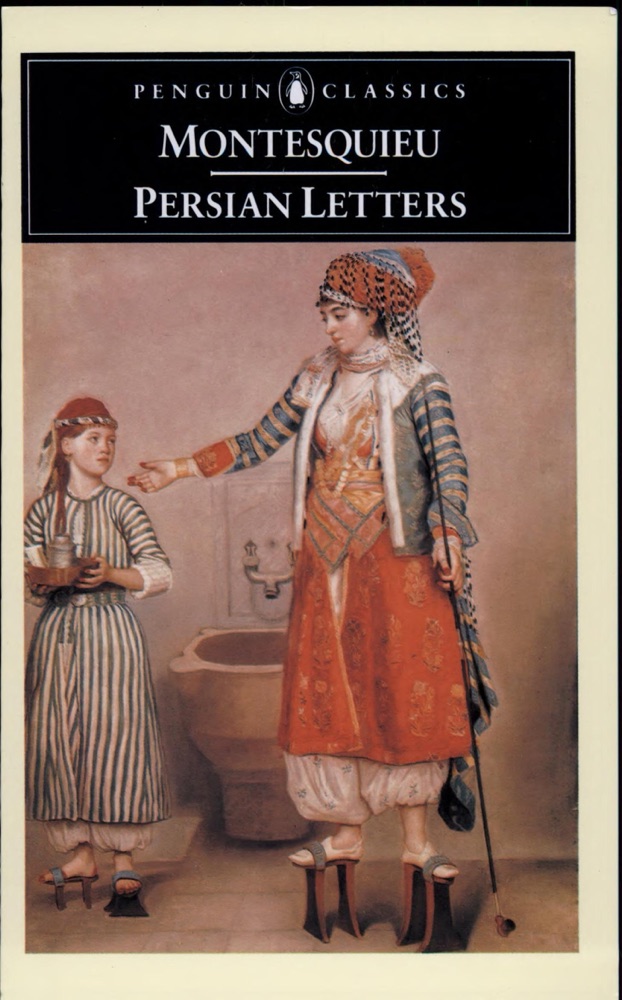 Persian Letters
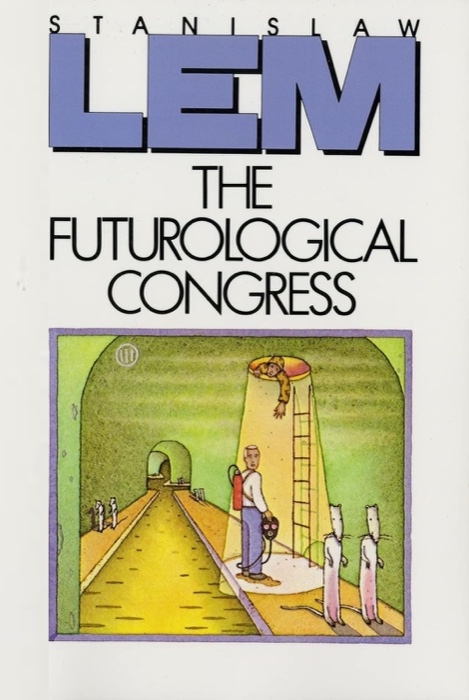 The Futurological Congress: From the Memoirs of Ijon Tichy
 12 Rules for Life: An Antidote to Chaos
 Drive Your Plow Over the Bones of the Dead
 Shadow of the Hegemon
 Emile or On Education
 Villa Incognito
 The Golden House
 Think: A Compelling Introduction to Philosophy
 The Empusium
 The Ego and Its Own
 God Emperor of Dune
 Dialectic of Enlightenment: Philosophical Fragments
 All the Birds in the Sky
 Purity
 The Soul of Man Under Socialism
 The Fall of Babel
 Philosophical Dictionary
 Minima Moralia: Reflections on a Damaged Life
 The Midwich Cuckoos
 Children of Dune
 The Republic