
 The Emperor of All Maladies: A Biography of Cancer
Quotes from the Book
Freaks become norms, and norms become extinct. Monster by monster, evolution advanced
83
Normalcy is the antithesis of evolution.
64
Memories sharpen the past; it is reality that decays.
54
If we define "beauty" as having blue eyes (and only blue eyes), then we will, indeed, find a "gene for beauty." If we define "intelligence" as the performance on only one kind of test, then we will, indeed, find a "gene for intelligence." The genome is only a mirror for the breadth or narrowness of human imagination.
47
Like musicians, like mathematicians—like elite athletes—scientists peak early and dwindle fast. It isn’t creativity that fades, but stamina: science is an endurance sport. To produce that single illuminating experiment, a thousand nonilluminating experiments have to be sent into the trash; it is battle between nature and nerve. Avery
36
The point is this: if you cannot separate the phenotype of mental illness from creative impulses, then you cannot separate the genotype of mental illness and creative impulse.
33
Seek simplicity, but distrust it,” Alfred North Whitehead, the mathematician and philosopher, once advised his students. Dobzhansky
33
Three profoundly destabilizing scientific ideas ricochet through the twentieth century, trisecting it into three unequal parts: the atom, the byte, the gene.
31
History repeats itself, in part because the genome repeats itself. And the genome repeats itself, in part because history does. The impulses, ambitions, fantasies, and desires that drive human history are, at least in part, encoded in the human genome. And human history has, in turn, selected genomes that carry these impulses, ambitions, fantasies, and desires. This self-fulfilling circle of logic is responsible for some of the most magnificent and evocative qualities in our species, but also some of the most reprehensible. It is far too much to ask ourselves to escape the orbit of this logic, but recognizing its inherent circularity, and being skeptical of its overreach, might protect the week from the will of the strong, and the 'mutant' from being annihilated by the 'normal'.
29
The universe seeks equilibriums; it prefers to disperse energy, disrupt organization, and maximize chaos. Life is designed to combat these forces. We slow down reactions, concentrate matter, and organize chemicals into compartments; we sort laundry on Wednesdays. "It sometimes seems as if curbing entropy is our quixotic purpose in the universe," James Gleick wrote. We live in the loopholes of natural laws, seeking extensions, exceptions and excuses. The laws of nature still mark the outer boundaries of permissibility - but life, in all its idiosyncratic, mad weirdness, flourishes by reading between the lines.
25
It is tempting to write the history of technology through products: the wheel; the microscope; the airplane; the Internet. But it is more illuminating to write the history of technology through transitions: linear motion to circular motion; visual space to subvisual space; motion on land to motion on air; physical connectivity to virtual connectivity.
25
Our ability to read out this sequence of our own genome has the makings of a philosophical paradox. Can an intelligent being comprehend the instructions to make itself? —John Sulston Scholars
24
Cancer, perhaps, is an ultimate perversion of genetics—a genome that becomes pathologically obsessed with replicating itself. The
20
If you know the question, you know half.
17
Consider the genesis of a single-celled embryo produced by the fertilization of an egg by a sperm. The genetic material of this embryo comes from two sources: paternal genes (from sperm) and maternal genes (from eggs). But the cellular material of the embryo comes exclusively from the egg; the sperm is no more than a glorified delivery vehicle for male DNA—a genome equipped with a hyperactive tail. Aside from proteins, ribosomes, nutrients, and membranes, the egg also supplies the embryo with specialized structures called mitochondria. These mitochondria are the energy-producing factories of the cell; they are so anatomically discrete and so specialized in their function that cell biologists call them “organelles”—i.e., mini-organs resident within cells. Mitochondria, recall, carry a small, independent genome that resides within the mitochondrion itself—not in the cell’s nucleus, where the twenty-three pairs of chromosomes (and the 21,000-odd human genes) can be found. The exclusively female origin of all the mitochondria in an embryo has an important consequence. All humans—male or female—must have inherited their mitochondria from their mothers, who inherited their mitochondria from their mothers, and so forth, in an unbroken line of female ancestry stretching indefinitely into the past. (A woman also carries the mitochondrial genomes of all her future descendants in her cells; ironically, if there is such a thing as a “homunculus,” then it is exclusively female in origin—technically, a “femunculus”?) Now imagine an ancient tribe of two hundred women, each of whom bears one child. If the child happens to be a daughter, the woman dutifully passes her mitochondria to the next generation, and, through her daughter’s daughter, to a third generation. But if she has only a son and no daughter, the woman’s mitochondrial lineage wanders into a genetic blind alley and becomes extinct (since sperm do not pass their mitochondria to the embryo, sons cannot pass their mitochondrial genomes to their children). Over the course of the tribe’s evolution, tens of thousands of such mitochondrial lineages will land on lineal dead ends by chance, and be snuffed out. And here is the crux: if the founding population of a species is small enough, and if enough time has passed, the number of surviving maternal lineages will keep shrinking, and shrinking further, until only a few are left. If half of the two hundred women in our tribe have sons, and only sons, then one hundred mitochondrial lineages will dash against the glass pane of male-only heredity and vanish in the next generation. Another half will dead-end into male children in the second generation, and so forth. By the end of several generations, all the descendants of the tribe, male or female, might track their mitochondrial ancestry to just a few women. For modern humans, that number has reached one: each of us can trace our mitochondrial lineage to a single human female who existed in Africa about two hundred thousand years ago. She is the common mother of our species. We do not know what she looked like, although her closest modern-day relatives are women of the San tribe from Botswana or Namibia. I find the idea of such a founding mother endlessly mesmerizing. In human genetics, she is known by a beautiful name—Mitochondrial Eve.
17
Modesty is a virtue,” he would later write, “yet one gets further without it.
16
Organisms exist not because of reactions that are possible, but because of reactions that are barely possible.
14
The crucial driver of evolution, Darwin understood, was not nature’s sense of purpose, but her sense of humor).
13
Illness might progressively vanish so might identity. Grief might be diminished, but so might tenderness. Traumas might be erased but so might history. Infirmities might disappear, but so might vulnerability. Chance would become mitigated, but so, inevitably, would choice.
12
that the largest “negative eugenics” project in human history was not the systemic extermination of Jews in Nazi Germany or Austria in the 1930s. That ghastly distinction falls on India and China, where more than 10 million female children are missing from adulthood because of infanticide, abortion, and neglect of female children. Depraved
11
It is not what you have,” as a certain Brazilian samba instructor once told me, “it is what you do with it.
10
There is no permanent status quo in nature,” Muller later wrote. “All is a process of adjustment and readjustment, or else eventual failure.” By
9
Genetic tests,” as Eric Topol, the medical geneticist described it, “are also moral tests. When you decide to test for ‘future risk,’ you are also, inevitably, asking yourself, what kind of future am I willing to risk?” Three case studies illustrate the power and the peril of using genes to predict “future risk.
8
If the history of the last century taught us the dangers of empowering governments to determine genetic “fitness” (i.e., which person fits within the triangle, and who lives outside it), then the question that confronts our current era is what happens when this power devolves to the individual. It is a question that requires us to balance the desires of the individual— to carve out a life of happiness and achievement, without undue suffering— with the desires of a society that, in the short term, may be interested only in driving down the burden of disease and the expense of disability. And operating silently in the background is a third set of actors: our genes themselves, which reproduce and create new variants oblivious of our desires and compulsions— but, either directly or indirectly, acutely or obliquely, influence our desires and compulsions. Speaking at the Sorbonne in 1975, the cultural historian Michel Foucault once proposed that “a technology of abnormal individuals appears precisely when a regular network of knowledge and power has been established.” Foucault was thinking about a “regular network” of humans. But it could just as easily be a network of genes.
8
We live in the loopholes of natural laws, seeking extensions, exceptions, and excuses. The laws of nature still mark the outer boundaries of permissibility—but life, in all its idiosyncratic, mad weirdness, flourishes by reading between the lines.
7
How small a thought it takes to fill someone’s whole life,” the philosopher Ludwig Wittgenstein wrote.
7
The problem with racial discrimination, though, is not the inference of a person's race from their genetic characteristics. It is quite the opposite: it is the inference of a person's characteristics from their race. The question is not, can you, given an individual's skin color, hair texture, or language, infer something about their ancestry or origin. That is a question of biological systematics -- of lineage, taxonomy, of racial geography, of biological discrimination. Of course you can -- and genomics as vastly refined that inference. You can scan any individual genome and infer rather deep insights about a person's ancestry, or place of origin. But the vastly more controversial question is the converse: Given a racial identity -- African or Asian, say -- can you infer anything about an individual's characteristics: not just skin or hair color, but more complex features, such as intelligence, habits, personality, and aptitude? /I/ Genes can certainly tell us about race, but can race tell us anything about genes? /i/ To answer this question, we need to measure how genetic variation is distributed across various racial categories. Is there more diversity _within_ races or _between_ races? Does knowing that someone is of African versus European descent, say, allow us to refine our understanding of their genetic traits, or their personal, physical, or intellectual attributes in a meaningful manner? Or is there so much variation within Africans and Europeans that _intraracial_ diversity dominates the comparison, thereby making the category "African" or "European" moot? We now know precise and quantitative answers to these questions. A number of studies have tried to quantify the level of genetic diversity of the human genome. The most recent estimates suggest that the vast proportion of genetic diversity (85 to 90 percent) occurs _within_ so-called races (i.e., within Asians or Africans) and only a minor proportion (7 percent) within racial groups (the geneticist Richard Lewontin had estimated a similar distribution as early as 1972). Some genes certainly vary sharply between racial or ethnic groups -- sickle-cell anemia is an Afro-Caribbean and Indian disease, and Tay-Sachs disease has a much higher frequency in Ashkenazi Jews -- but for the most part, the genetic diversity within any racial group dominates the diversity between racial groups -- not marginally, but by an enormous amount. The degree of interracial variability makes "race" a poor surrogate for nearly any feature: in a genetic sense, an African man from Nigria is so "different" from another man from Namibia that it makes little sense to lump them into the same category.
6
Natures and features last until the grave
6
It is one thing to try to understand how genes influence human identity or sexuality or temperament. It is quite another thing to imagine altering identity or sexuality or behavior by altering genes.
6
Technology, I said before, is most powerful when it enables transitions—between linear and circular motion (the wheel), or between real and virtual space (the Internet). Science, in contrast, is most powerful when it elucidates rules of organization—laws—that act as lenses through which to view and organize the world. Technologists seek to liberate us from the constraints of our current realities through those transitions. Science defines those constraints, drawing the outer limits of the boundaries of possibility. Our greatest technological innovations thus carry names that claim our prowess over the world: the engine (from ingenium, or “ingenuity”) or the computer (from computare, or “reckoning together”). Our deepest scientific laws, in contrast, are often named after the limits of human knowledge: uncertainty, relativity, incompleteness, impossibility. Of all the sciences, biology is the most lawless; there are few rules to begin with, and even fewer rules that are universal. Living beings must, of course, obey the fundamental rules of physics and chemistry, but life often exists on the margins and interstices of these laws, bending them to their near-breaking limit. The universe seeks equilibriums; it prefers to disperse energy, disrupt organization, and maximize chaos. Life is designed to combat these forces. We slow down reactions, concentrate matter, and organize chemicals into compartments; we sort laundry on Wednesdays. “It sometimes seems as if curbing entropy is our quixotic purpose in the universe,” James Gleick wrote. We live in the loopholes of natural laws, seeking extensions, exceptions, and excuses.
5
Watch on YouTube
About Siddhartha Mukherjee
We have collected 83 quotes from 3 books by Siddhartha Mukherjee on BookQuoters.
More about the author →More by Siddhartha Mukherjee
The Emperor of All Maladies: A Biography of Cancer
 The Song of the Cell: An Exploration of Medicine and the New Human
About the book
Spanning the globe and several centuries, The Gene is the story of the quest to decipher the master-code that makes and defines humans, that governs our form and function.
The story of the gene begins in an obscure Augustinian abbey in Moravia in 1856 where a monk stumbles on the idea of a ‘unit of heredity’. It intersects with Darwin’s theory of evolution, and collides with the horrors of Nazi eugenics in the 1940s. The gene transforms post-war biology. It reorganizes our understanding of sexuality, temperament, choice and free will. This is a story driven by human ingenuity and obsessive minds – from Charles Darwin and Gregor Mendel to Francis Crick, James Watson and Rosalind Franklin, and the thousands of scientists still working to understand the code of codes.
This is an epic, moving history of a scientific idea coming to life, by the author of The Emperor of All Maladies. But
Book details
- First published
- 2016
- Author
- Siddhartha Mukherjee
- Genre
- Nonfiction
- Goodreads rating
- 4.34 (57k ratings)
The buzz
- The New York TimesReview in The New York Timesprofessional review (via Book Marks)
- The Washington PostReview in The Washington Postprofessional review (via Book Marks)
- The Wall Street JournalReview in The Wall Street Journalprofessional review (via Book Marks)
- The GuardianReview in The Guardianprofessional review (via Book Marks)
- TimeReview in Timeprofessional review (via Book Marks)
- The Boston GlobeReview in The Boston Globeprofessional review (via Book Marks)
Keep reading
 Genome: the Autobiography of a Species in 23 Chapters
 The Code Breaker: Jennifer Doudna, Gene Editing, and the Future of the Human Race
 How the Mind Works
 Darwin's Dangerous Idea: Evolution and the Meanings of Life
 The Blind Watchmaker: Why the Evidence of Evolution Reveals a Universe Without Design
The Song of the Cell: An Exploration of Medicine and the New Human
The Blind Watchmaker: Why the Evidence of Evolution Reveals a Universe Without Design
The Song of the Cell: An Exploration of Medicine and the New Human
 The Red Queen: Sex and the Evolution of Human Nature
 The Social Conquest of Earth
 Genome
 The Big Picture: On the Origins of Life, Meaning, and the Universe Itself
 The Information: A History, a Theory, a Flood
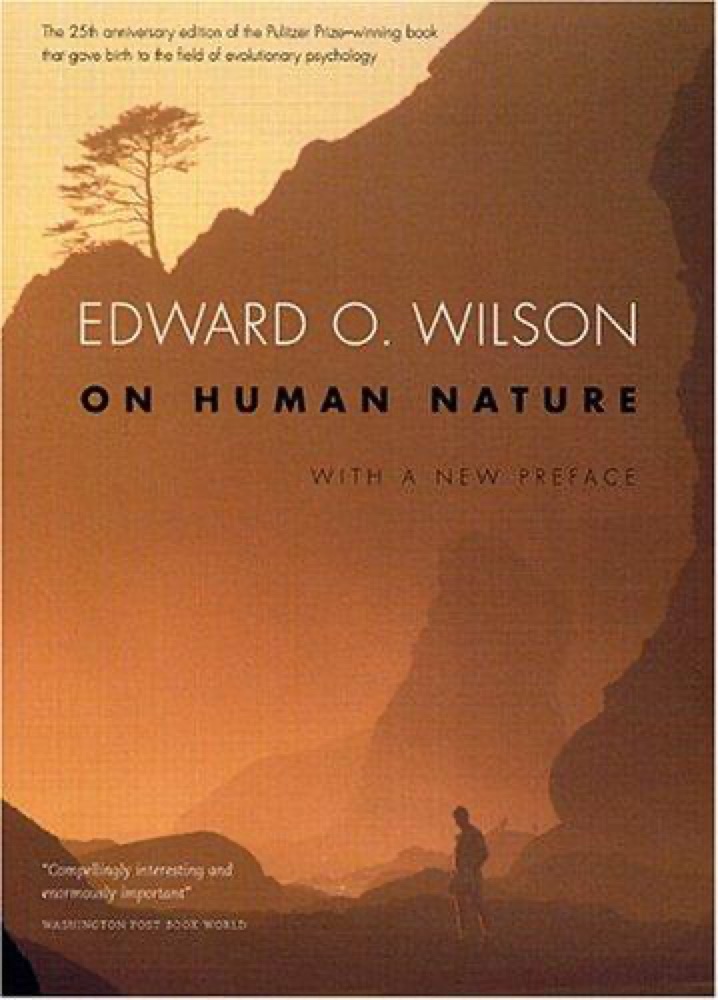 On Human Nature
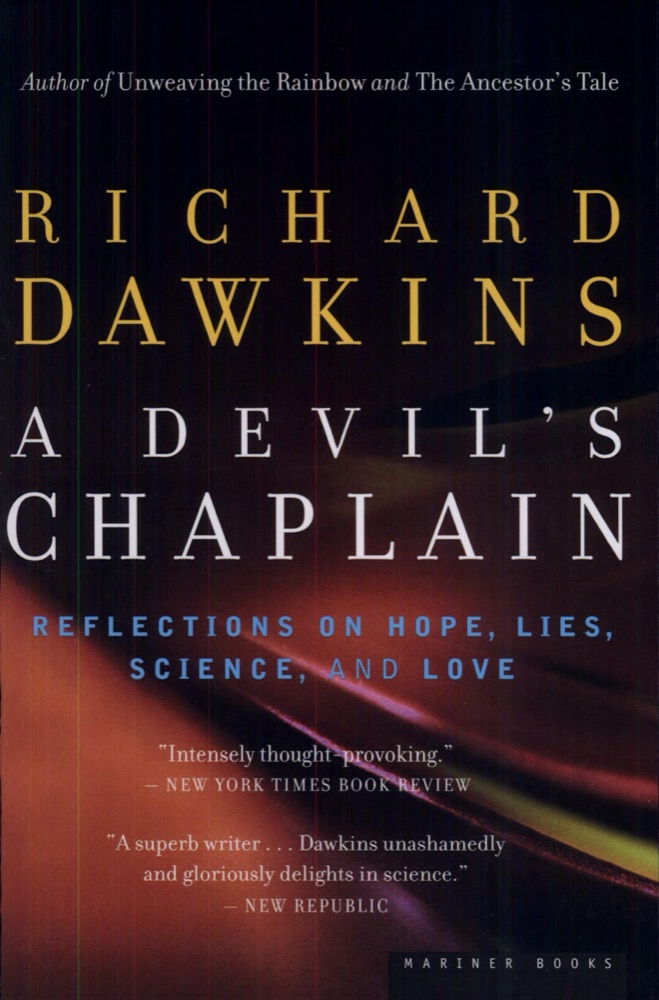 A Devil's Chaplain: Reflections on Hope, Lies, Science, and Love
 Consilience: The Unity of Knowledge
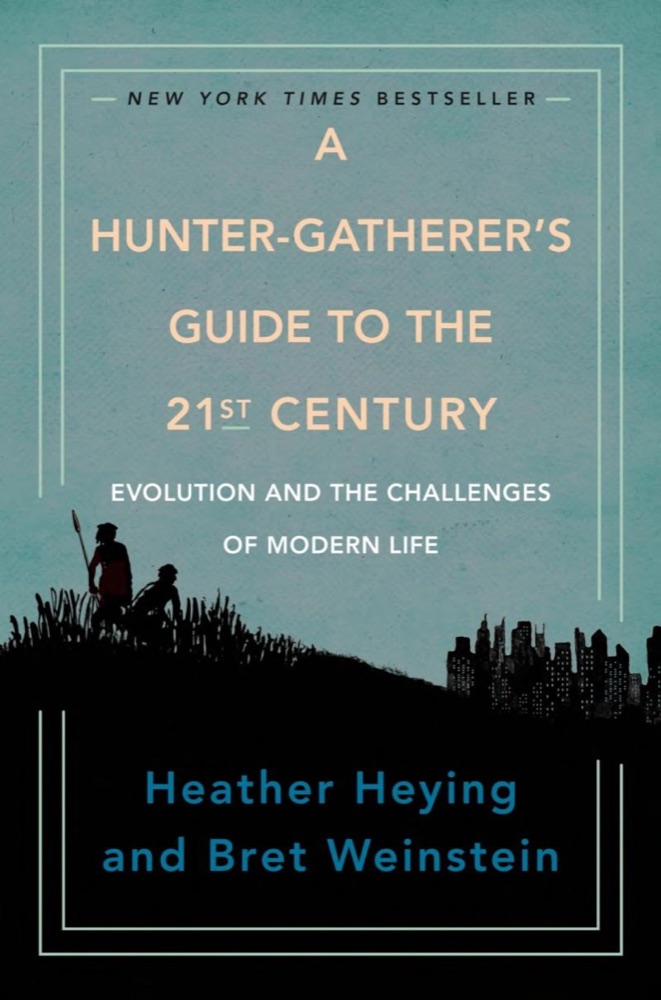 A Hunter-Gatherer's Guide to the 21st Century: Evolution and the Challenges of Modern Life
 The Selfish Gene
 The Violinist's Thumb: And Other Lost Tales of Love, War, and Genius, as Written by Our Genetic Code
 The Lost World
 The Ascent of Man
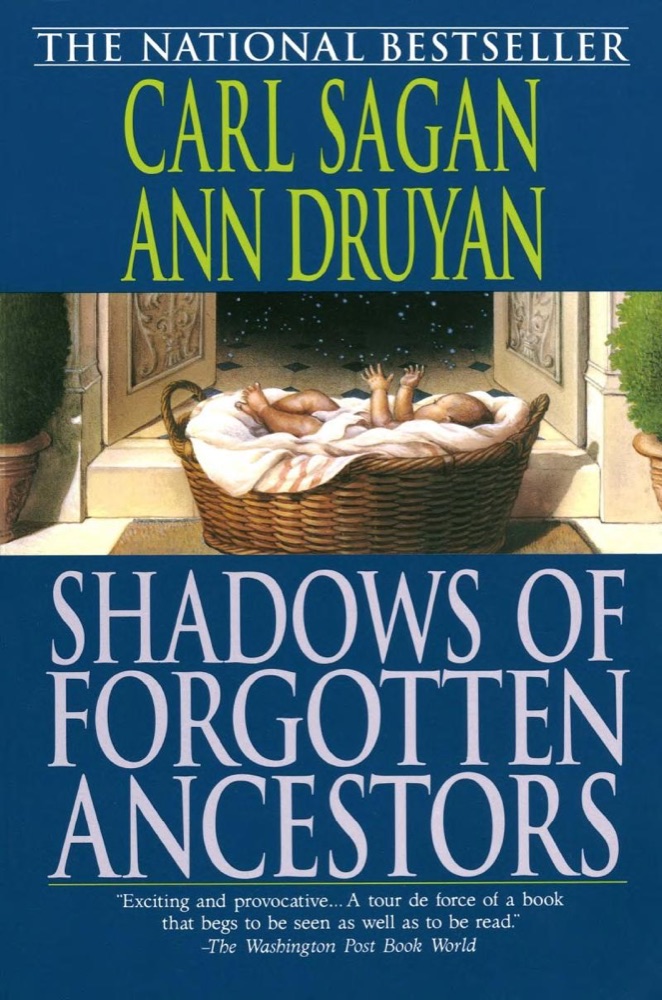 Shadows of Forgotten Ancestors
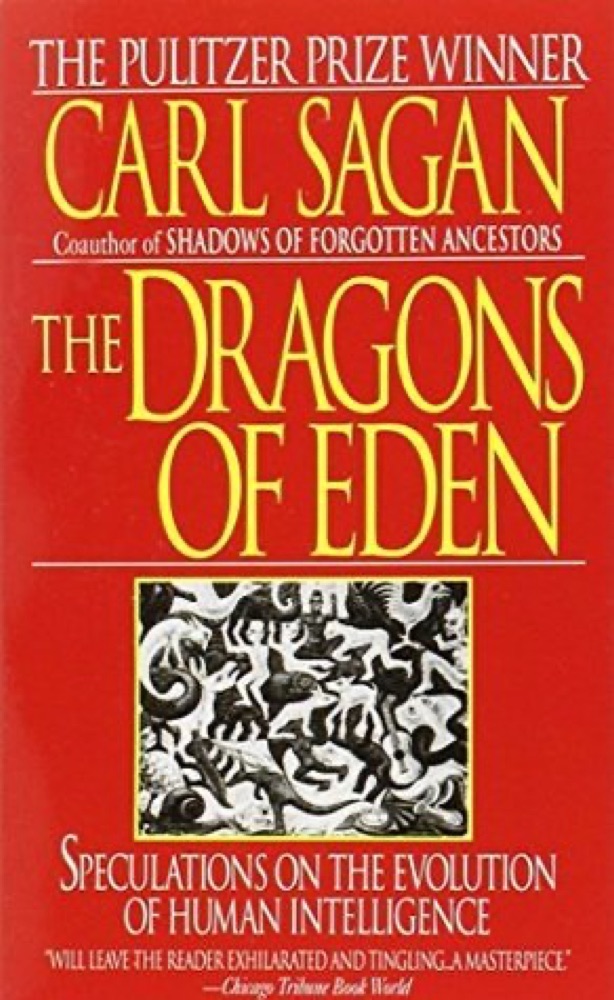 Dragons of Eden: Speculations on the Evolution of Human Intelligence
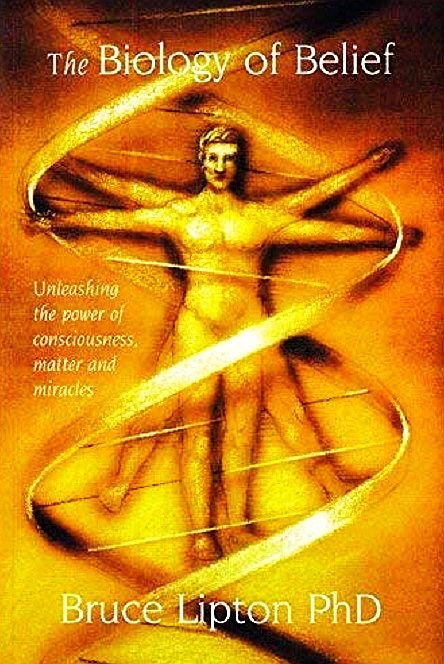 The Biology of Belief: Unleashing the Power of Consciousness, Matter and Miracles
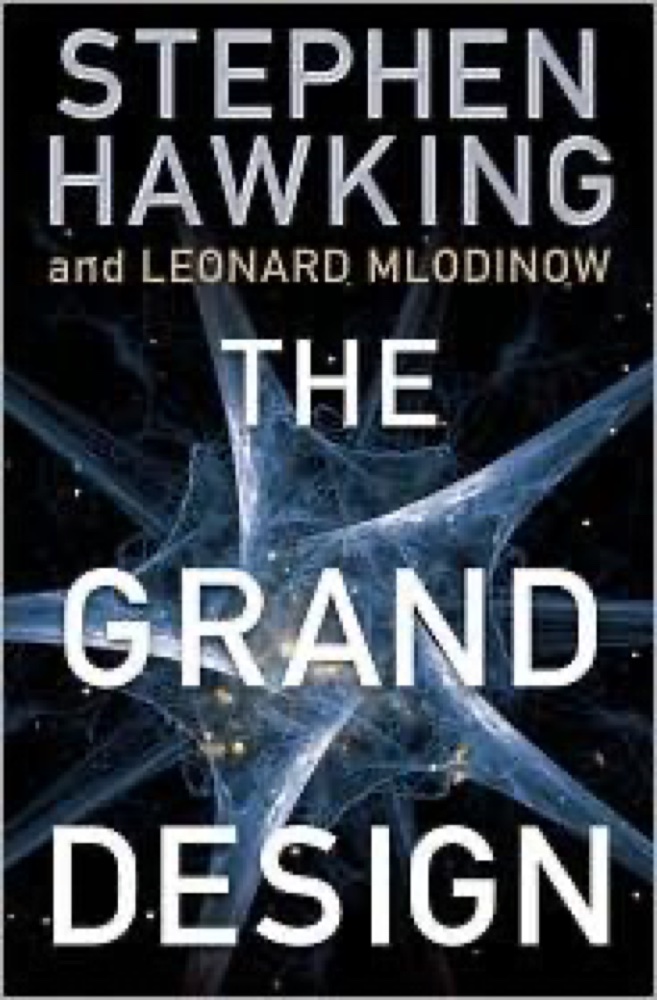 The Grand Design
 Genesis
 Undeniable: Evolution and the Science of Creation
 The Tell-Tale Brain: A Neuroscientist's Quest for What Makes Us Human
 Homo Deus: A History of Tomorrow
 The Blank Slate: The Modern Denial of Human Nature
 Sapiens: A Brief History of Humankind
 From Bacteria to Bach and Back: The Evolution of Minds
 Figuring
 Echopraxia
 Until the End of Time: Mind, Matter, and Our Search for Meaning in an Evolving Universe
 The Origin of Species
 The Botany of Desire: A Plant's-Eye View of the World
 Freedom Evolves
 The Lives of a Cell: Notes of a Biology Watcher
 2312
2312
 Understanding Media: The Extensions of Man
 The Fifth Science
 Maps of Meaning: The Architecture of Belief
 What Technology Wants
 Why Fish Don’t Exist: A Story of Loss, Love, and the Hidden Order of Life
 Chaos: Making a New Science
 The Social Animal: The Hidden Sources of Love, Character, and Achievement
 Wired
Wired
 A Short History of Nearly Everything
 Natural Causes: An Epidemic of Wellness, the Certainty of Dying, and Killing Ourselves to Live Longer
 The Mountain in the Sea
 The Singularity is Near: When Humans Transcend Biology
 Darwin's Black Box: The Biochemical Challenge to Evolution
 The Moral Animal: Why We Are the Way We Are - The New Science of Evolutionary Psychology
 The Case Against Reality: Why Evolution Hid the Truth from Our Eyes
 Jurassic Park
 From Dawn to Decadence: 500 Years of Western Cultural Life, 1500 to the Present
 Myths to Live By
 Psych: The Story of the Human Mind
 The Cosmic Serpent: DNA and the Origins of Knowledge
 Stories of Your Life and Others
 The Great Influenza: The Story of the Deadliest Pandemic in History