
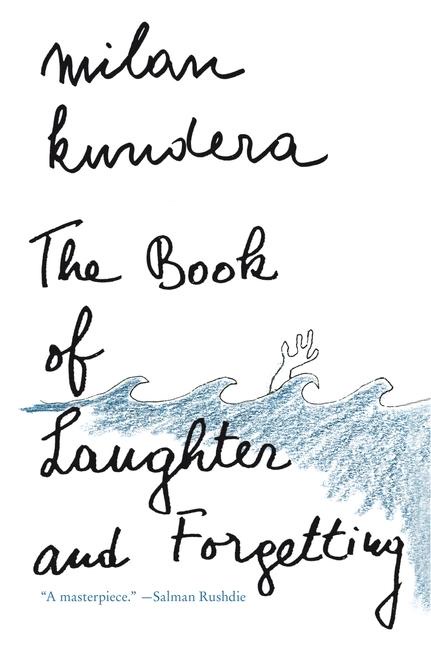
 The Book of Laughter and Forgetting
Quotes from the Book
When the heart speaks, the mind finds it indecent to object.
Anyone whose goal is 'something higher' must expect someday to suffer vertigo. What is vertigo? Fear of falling? No, Vertigo is something other than fear of falling. It is the voice of the emptiness below us which tempts and lures us, it is the desire to fall, against which, terrified, we defend ourselves.
Making love with a woman and sleeping with a woman are two separate passions, not merely different but opposite. Love does not make itself felt in the desire for copulation (a desire that extends to an infinite number of women) but in the desire for shared sleep (a desire limited to one woman).
Love is the longing for the half of ourselves we have lost.
for there is nothing heavier than compassion. Not even one's own pain weighs so heavy as the pain one feels with someone, for someone, a pain intensified by the imagination and prolonged by a hundred echoes.
But when the strong were too weak to hurt the weak, the weak had to be strong enough to leave.
The heaviest of burdens crushes us, we sink beneath it, it pins us to the ground. But in love poetry of every age, the woman longs to be weighed down by the man's body.The heaviest of burdens is therefore simultaneously an image of life's most intense fulfillment. The heavier the burden, the closer our lives come to the earth, the more real and truthful they become. Conversely, the absolute absence of burden causes man to be lighter than air, to soar into heights, take leave of the earth and his earthly being, and become only half real, his movements as free as they are insignificant. What then shall we choose? Weight or lightness?
In the sunset of dissolution, everything is illuminated by the aura of nostalgia, even the guillotine.
He suddenly recalled from Plato's Symposium: People were hermaphrodites until God split then in two, and now all the halves wander the world over seeking one another. Love is the longing for the half of ourselves we have lost.
A person who longs to leave the place where he lives is an unhappy person.
She had an overwhelming desire to tell him, like the most banal of women. Don't let me go, hold me tight, make me your plaything, your slave, be strong! But they were words she could not say. The only thing she said when he released her from his embrace was, "You don't know how happy I am to be with you." That was the most her reserved nature allowed her to express.
There is no perfection only life
she loved to walk down the street with a book under her arm. It had the same significance for her as an elegant cane for the dandy a century ago. It differentiated her from others.
A single metaphor can give birth to love.
The brain appears to possess a special area which we might call poetic memory and which records everything that charms or touches us, that makes our lives beautiful ... Love begins with a metaphor. Which is to say, love begins at the point when a woman enters her first word into our poetic memory.
And therein lies the whole of man's plight. Human time does not turn in a circle; it runs ahead in a straight line. That is why man cannot be happy: happiness is the longing for repetition.
I want you to be weak. As weak as I am.
There is no means of testing which decision is better, because there is no basis for comparison. We live everything as it comes, without warning, like an actor going on cold. And what can life be worth if the first rehearsal for life is life itself? That is why life is always like a sketch. No, "sketch" is not quite a word, because a sketch is an outline of something, the groundwork for a picture, whereas the sketch that is our life is a sketch for nothing, an outline with no picture.
The only relationship that can make both partners happy is one in which sentimentality has no place and neither partner makes any claim on the life and freedom of the other.
loves are like empires: when the idea they are founded on crumbles, they, too, fade away.
And what can life be worth if the first rehearsal for life is life itself?
The goals we pursue are always veiled. A girl who longs for marriage longs for something she knows nothing about. The boy who hankers after fame has no idea what fame is. The thing that gives our every move its meaning is always totally unknown to us.
Flirting is a promise of sexual intercourse without a guarantee.
Perhaps all the questions we ask of love, to measure, test, probe, and save it, have the additional effect of cutting it short. Perhaps the reason we are unable to love is that we yearn to be loved, that is, we demand something (love) from our partner instead of delivering ourselves up to him demand-free and asking for nothing but his company.
Chance and chance alone has a message for us. Everything that occurs out of necessity, everything expected, repeated day in and day out, is mute. Only chance can speak to us.
Does he love me? Does he love anyone more than me? Does he love me more than I love him? Perhaps all the questions we ask of love, to measure, test, probe, and save it, have the additional effect of cutting it short. Perhaps the reason we are unable to love is that we yearn to be loved, that is, we demand something (love) from our partner instead of delivering ourselves up to him demand-free and asking for nothing but his company.
When we want to give expression to a dramatic situation in our lives, we tend to use metaphors of heaviness. We say that something has become a great burden to us. We either bear the burden or fail and go down with it, we struggle with it, win or lose. And Sabina - what had come over her? Nothing. She had left a man because she felt like leaving him. Had he persecuted her? Had he tried to take revenge on her? No. Her drama was a drama not of heaviness but of lightness. What fell to her lot was not the burden, but the unbearable lightness of being.
Why don't you ever use your strength on me?" she said. Because love means renouncing strength," said Franz softly.
Did you know?
- The novel was written in Czech but first published in 1984 in a French translation, as Kundera was living in exile in France.
- Its title plays against Friedrich Nietzsche's concept of eternal recurrence, contrasting the weight of a repeating life with the lightness of one lived only once.
- It was adapted into a 1988 film directed by Philip Kaufman, starring Daniel Day-Lewis, Juliette Binoche, and Lena Olin.
- Kundera was reportedly unhappy with the film adaptation, feeling it had little to do with the spirit of his book.
- The story is set largely in Prague during and after the 1968 Soviet-led invasion of Czechoslovakia.
About Milan Kundera
Milan Kundera (1929-2023) was a Czech and French novelist who went into exile in France in 1975 and became a French citizen in 1981. He is best known for novels exploring existential themes, memory, and life under totalitarianism, of which The Unbearable Lightness of Being is the most famous.
More about the author →More by Milan Kundera
All books by Milan Kundera →
About the book
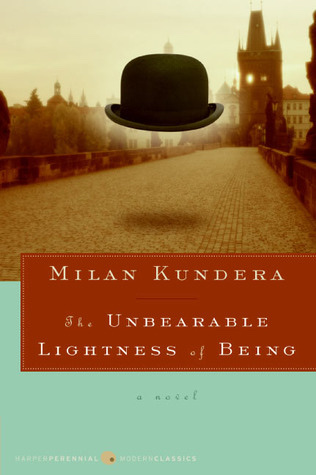
The Unbearable Lightness of Being is Milan Kundera's philosophical novel, first published in French translation in 1984, following four interconnected lives in Prague around the 1968 Soviet occupation. Tomas, a gifted surgeon, is torn between his devotion to his wife Tereza and his compulsive womanizing, while his mistress Sabina, a painter, treats freedom and betrayal as one and the same. As the political weight of the invasion presses on private life, the characters drift between Prague and the West, and between commitment and evasion.
Its title names the book's central preoccupation. Playing against Nietzsche's idea of eternal return, Kundera asks whether a life that happens only once is unbearably weightless or, in its lack of consequence, unbearably light. Love and fidelity, the body and the soul, kitsch and authenticity, and the tension between the heaviness of obligation and the lightness of freedom recur through the narrative as the author steps in to reflect directly on his characters.
Blending storytelling with essayistic digression, the novel became one of the most widely read works of late twentieth-century European fiction and helped define Kundera's international reputation. It was adapted into a 1988 film directed by Philip Kaufman, an adaptation the author was unhappy with, and it remains a touchstone for its meditation on how personal desire and political history shape a single, unrepeatable life.
Key characters
- TomasA skilled surgeon torn between love for Tereza and his compulsive womanizing
- TerezaTomas's wife, a photographer marked by vulnerability and jealousy
- SabinaA free-spirited painter and Tomas's mistress who embraces betrayal as liberation
- FranzAn idealistic Geneva professor who becomes Sabina's lover
- KareninTomas and Tereza's dog, a figure of loyalty and steady, uncomplicated love
Book details
- First published
- 1984
- Length
- 314 pages
- Reading time
- 6 hours
- Author
- Milan Kundera
- Genre
- Classics
- Goodreads rating
- 4.10 (560k ratings) →
- First line
- “The idea of eternal return is a mysterious one, and Nietzsche has often perplexed other philosophers with it: to think that everything recurs as we once experienced it, and that the recurrence itself recurs ad infinitum!”
Movie & TV adaptations
- IMDb
If you liked this, read…
- 1The Book of Laughter and ForgettingAnother Kundera novel blending storytelling with essayistic reflection under Czech communism
- 2ImmortalityKundera's later novel continuing his philosophical, digressive approach to love and identity
- 3Love in the Time of CholeraA sweeping literary meditation on love, fidelity, and desire across a lifetime
Keep reading
 The Passion
 On Love
 Doctor Zhivago
 Arch of Triumph
 Adultery
 The Death of the Heart
 Eleven Minutes
 In Search of Lost Time
 Here I Am
 Embers
 Women in Love
 Shadow Man
 Levels of Life
 The Moon and Sixpence
 Shantaram
 Identity
 Intermezzo
 Eat, Pray, Love
 First Person Singular: Stories
 Nutshell
 A Tale of Love and Darkness
 The Ballad of the Sad Café and Other Stories
 Life of Pi
 The Proposal
 The Nice and the Good
 The End of the Affair
 Sexing the Cherry
 Under the Udala Trees
 The Magus
 Sexus
The Book of Laughter and Forgetting
Sexus
The Book of Laughter and Forgetting
 Smilla's Sense of Snow
 Trust: Betrayed
 East of Eden
 Hell
Hell
 Aphorisms on Love and Hate
 Panenka
 Les Misérables
 The Joke
 The Devil in the Flesh
 Love and Will
 The Fall
 A Well-Tempered Heart
 Just Above My Head
 By the River Piedra I Sat Down and Wept
 The Hundred Secret Senses
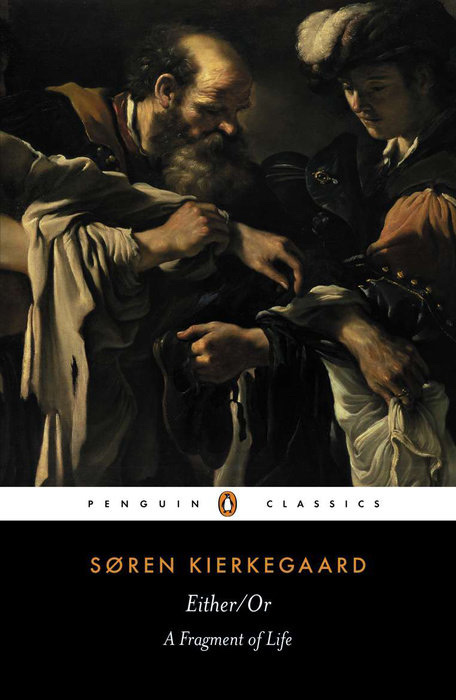 Either/Or: A Fragment of Life
 The Goldfinch
 Requiem
 A Luminous Republic
 Any Human Heart
 The Art of Hearing Heartbeats
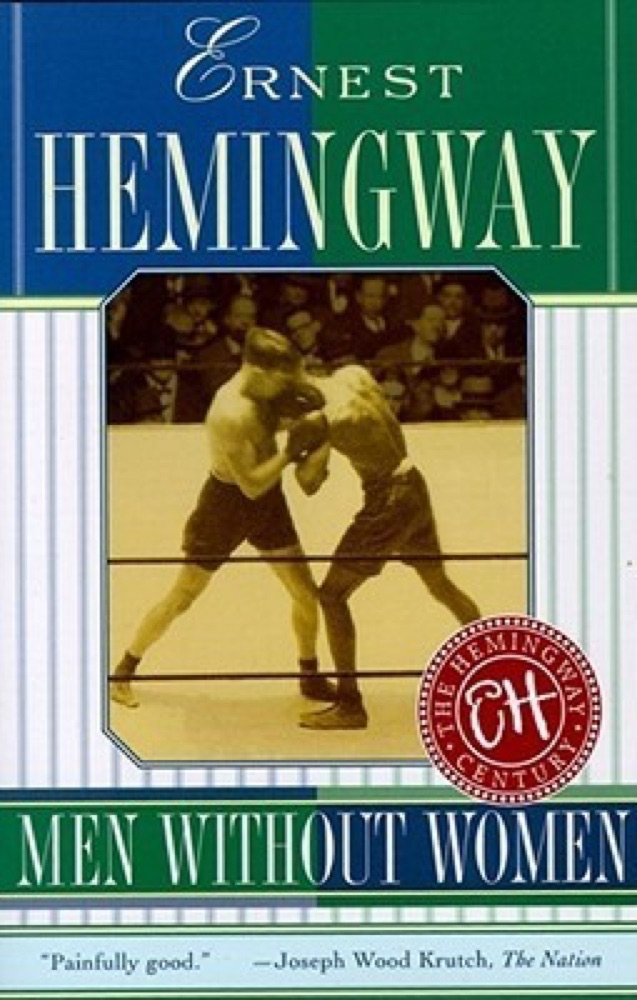 Men Without Women
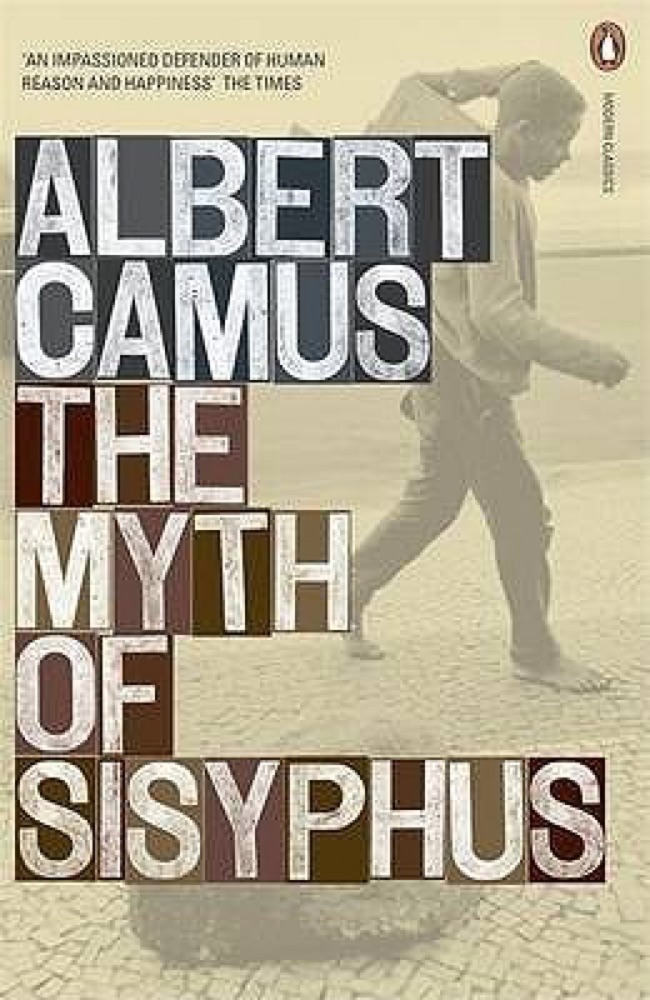 The Myth of Sisyphus
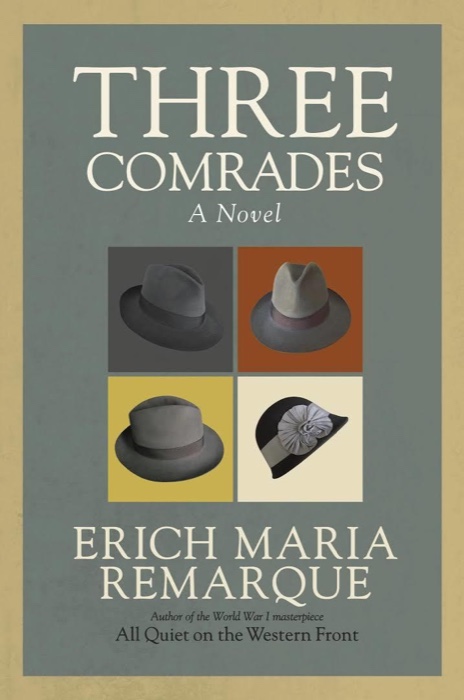 Three Comrades
 The Fountainhead
 De Profundis
 Lady Chatterley's Lover
 Snow
Snow
 The Cost of Living: A Working Autobiography