

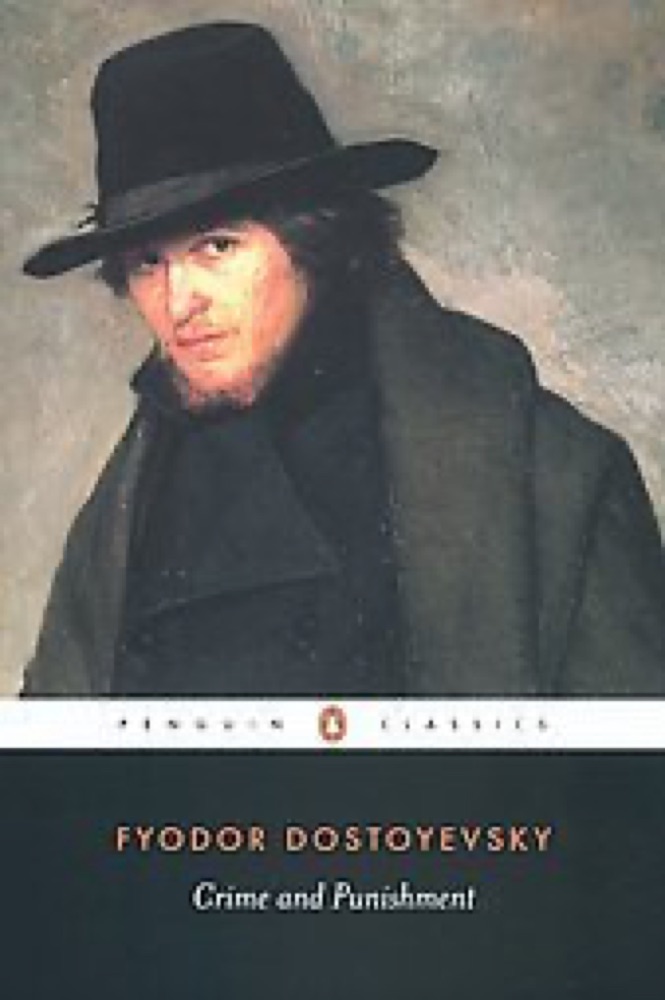
 Crime and Punishment
Quotes from the Book
Above all, don't lie to yourself. The man who lies to himself and listens to his own lie comes to a point that he cannot distinguish the truth within him, or around him, and so loses all respect for himself and for others. And having no respect he ceases to love.
12k
What is hell? I maintain that it is the suffering of being unable to love.
5.7k
I love mankind, he said, "but I find to my amazement that the more I love mankind as a whole, the less I love man in particular.
3.2k
The mystery of human existence lies not in just staying alive, but in finding something to live for.
3k
The world says: "You have needs -- satisfy them. You have as much right as the rich and the mighty. Don't hesitate to satisfy your needs; indeed, expand your needs and demand more." This is the worldly doctrine of today. And they believe that this is freedom. The result for the rich is isolation and suicide, for the poor, envy and murder.
2k
I can see the sun, but even if I cannot see the sun, I know that it exists. And to know that the sun is there - that is living.
1.8k
The awful thing is that beauty is mysterious as well as terrible. God and the devil are fighting there and the battlefield is the heart of man.
1.5k
I think the devil doesn't exist, but man has created him, he has created him in his own image and likeness.
1.4k
This is my last message to you: in sorrow, seek happiness.
1.1k
Besides, nowadays, almost all capable people are terribly afraid of being ridiculous, and are miserable because of it.
1.1k
You will burn and you will burn out; you will be healed and come back again.
925
Love in action is a harsh and dreadful thing compared to love in dreams.
834
The more stupid one is, the closer one is to reality. The more stupid one is, the clearer one is. Stupidity is brief and artless, while intelligence squirms and hides itself. Intelligence is unprincipled, but stupidity is honest and straightforward.
829
I believe like a child that suffering will be healed and made up for, that all the humiliating absurdity of human contradictions will vanish like a pitiful mirage, like the despicable fabrication of the impotent and infinitely small Euclidean mind of man, that in the world's finale, at the moment of eternal harmony, something so precious will come to pass that it will suffice for all hearts, for the comforting of all resentments, for the atonement of all the crimes of humanity, for all the blood that they've shed; that it will make it not only possible to forgive but to justify all that has happened.
713
A beast can never be as cruel as a human being, so artistically, so picturesquely cruel.
698
The more I love humanity in general the less I love man in particular. In my dreams, I often make plans for the service of humanity, and perhaps I might actually face crucifixion if it were suddenly necessary. Yet I am incapable of living in the same room with anyone for two days together. I know from experience. As soon as anyone is near me, his personality disturbs me and restricts my freedom. In twenty-four hours I begin to hate the best of men: one because he’s too long over his dinner, another because he has a cold and keeps on blowing his nose. I become hostile to people the moment they come close to me. But it has always happened that the more I hate men individually the more I love humanity.
686
I think I could stand anything, any suffering, only to be able to say and to repeat to myself every moment, 'I exist.' In thousands of agonies -- I exist. I'm tormented on the rack -- but I exist! Though I sit alone in a pillar -- I exist! I see the sun, and if I don't see the sun, I know it's there. And there's a whole life in that, in knowing that the sun is there.
604
Above all, do not lie to yourself. A man who lies to himself and listens to his own lie comes to a point where he does not discern any truth either in himself or anywhere around him, and thus falls into disrespect towards himself and others. Not respecting anyone, he ceases to love, and having no love, he gives himself up to passions and coarse pleasures in order to occupy and amuse himself, and in his vices reaches complete beastiality, and it all comes from lying continually to others and himself. A man who lies to himself is often the first to take offense. it sometimes feels very good to take offense, doesn't it? And surely he knows that no one has offended him, and that he himself has invented the offense and told lies just for the beauty of it, that he has exaggerated for the sake of effect, that he has picked up on a word and made a mountain out of a pea--he knows all of that, and still he is the first to take offense, he likes feeling offended, it gives him great pleasure, and thus he reaches the point of real hostility...
591
The centripetal force on our planet is still fearfully strong, Alyosha. I have a longing for life, and I go on living in spite of logic. Though I may not believe in the order of the universe, yet I love the sticky little leaves as they open in spring. I love the blue sky, I love some people, whom one loves you know sometimes without knowing why. I love some great deeds done by men, though I’ve long ceased perhaps to have faith in them, yet from old habit one’s heart prizes them. Here they have brought the soup for you, eat it, it will do you good. It’s first-rate soup, they know how to make it here. I want to travel in Europe, Alyosha, I shall set off from here. And yet I know that I am only going to a graveyard, but it’s a most precious graveyard, that’s what it is! Precious are the dead that lie there, every stone over them speaks of such burning life in the past, of such passionate faith in their work, their truth, their struggle and their science, that I know I shall fall on the ground and kiss those stones and weep over them; though I’m convinced in my heart that it’s long been nothing but a graveyard. And I shall not weep from despair, but simply because I shall be happy in my tears, I shall steep my soul in emotion. I love the sticky leaves in spring, the blue sky — that’s all it is. It’s not a matter of intellect or logic, it’s loving with one’s inside, with one’s stomach.
552
And what's strange, what would be marvelous, is not that God should really exist; the marvel is that such an idea, the idea of the necessity of God, could enter the head of such a savage, vicious beast as man.
447
I exist.’ In thousands of agonies — I exist. I’m tormented on the rack — but I exist! Though I sit alone in a pillar — I exist! I see the sun, and if I don’t see the sun, I know it’s there. And there’s a whole life in that, in knowing that the sun is there.
439
Love all God’s creation, both the whole and every grain of sand. Love every leaf, every ray of light. Love the animals, love the plants, love each separate thing. If thou love each thing thou wilt perceive the mystery of God in all; and when once thou perceive this, thou wilt thenceforward grow every day to a fuller understanding of it: until thou come at last to love the whole world with a love that will then be all-embracing and universal.
411
Be not forgetful of prayer. Every time you pray, if your prayer is sincere, there will be new feeling and new meaning in it, which will give you fresh courage, and you will understand that prayer is an education.
395
Forgive me... for my love - for ruining you with my love.
360
They were like two enemies in love with one another.
319
Remember particularly that you cannot be a judge of anyone. For no one can judge a criminal until he recognizes that he is just such a criminal as the man standing before him, and that he perhaps is more than all men to blame for that crime. When he understands that, he will be able to be a judge. Though that sounds absurd, it is true. If I had been righteous myself, perhaps there would have been no criminal standing before me. If you can take upon yourself the crime of the criminal your heart is judging, take it at once, suffer for him yourself, and let him go without reproach. And even if the law itself makes you his judge, act in the same spirit so far as possible, for he will go away and condemn himself more bitterly than you have done. If, after your kiss, he goes away untouched, mocking at you, do not let that be a stumbling-block to you. It shows his time has not yet come, but it will come in due course. And if it come not, no matter; if not he, then another in his place will understand and suffer, and judge and condemn himself, and the truth will be fulfilled. Believe that, believe it without doubt; for in that lies all the hope and faith of the saints.
309
One can fall in love and still hate.
307
Man, do not pride yourself on your superiority to the animals, for they are without sin, while you, with all your greatness, you defile the earth wherever you appear and leave an ignoble trail behind you -- and that is true, alas, for almost every one of us!
284
Love children especially, for they too are sinless like the angels; they live to soften and purify our hearts and, as it were, to guide us.
279
Did you know?
- The novel was first serialized in the literary journal The Russian Messenger from 1879 to 1880.
- Dostoevsky died in 1881, only a few months after completing the novel.
- Ivan's chapter 'The Grand Inquisitor' is one of the most famous passages in world literature and is often anthologized on its own.
- The character Smerdyakov suffers from epilepsy, a condition Dostoevsky himself shared.
- The town in the novel was partly inspired by Staraya Russa, where Dostoevsky spent time.
- The first English translation was made by Constance Garnett in 1912.
About Fyodor Dostoevsky
Fyodor Dostoevsky (1821-1881) was a Russian novelist whose works, including Crime and Punishment, The Idiot, and Demons, explore faith, morality, and the human psyche. The Brothers Karamazov was his final and culminating novel.
More about the author →More by Fyodor Dostoevsky
All books by Fyodor Dostoevsky →

About the book
The Brothers Karamazov is Fyodor Dostoevsky's final novel, a sprawling tale set in provincial 19th-century Russia centered on the dissolute landowner Fyodor Pavlovich Karamazov and his three very different sons: the passionate, impulsive Dmitri; the coldly intellectual Ivan; and the gentle, faithful novice Alyosha. When the loathsome father is murdered, suspicion falls on Dmitri, and the resulting investigation and trial bring the family's rivalries, debts, and rivalries over money and women to a violent reckoning.
Beyond its murder plot, the novel is a profound philosophical and theological drama. Dostoevsky probes the existence of God, the problem of innocent suffering, free will, doubt, and moral responsibility, most famously in Ivan's 'Rebellion' and 'The Grand Inquisitor' chapters and in the counterweight of the saintly elder Zosima. The Karamazov brothers embody competing answers to how one should live in a world where, as Ivan suggests, 'everything is permitted' if there is no God.
Serialized in 1879-1880 and published as a complete novel in 1880 shortly before Dostoevsky's death, the book is widely regarded as one of the supreme achievements of world literature. It has been admired by figures from Einstein and Wittgenstein to Freud and praised for its psychological depth and moral seriousness, and it has shaped generations of writers and philosophers, including the existentialists.
Key characters
- Fyodor Pavlovich KaramazovThe dissolute, sensualist father whose murder drives the plot
- Dmitri (Mitya) KaramazovThe passionate, impulsive eldest son accused of the murder
- Ivan KaramazovThe intellectual, rationalist middle son tormented by doubt
- Alyosha (Alexei) KaramazovThe gentle youngest son and monastery novice
- SmerdyakovThe epileptic servant and probable illegitimate son of Fyodor
- GrushenkaThe alluring woman pursued by both Dmitri and his father
- Father ZosimaThe revered elder and Alyosha's spiritual guide
Book details
- First published
- 1880
- Length
- 796 pages
- Reading time
- 28 hours
- Author
- Fyodor Dostoevsky
- Genre
- Classics
- Goodreads rating
- 4.39 (405k ratings)
Critical reception
- Widely regarded as one of the greatest novels ever written and the summit of Dostoevsky's work.
- Admired by figures including Albert Einstein, Ludwig Wittgenstein, and Sigmund Freud.
- Its 'Grand Inquisitor' chapter has been hugely influential in philosophy and theology.
Movie & TV adaptations
- IMDb
- IMDb
If you liked this, read…
- 1Crime and PunishmentDostoevsky's other major novel of guilt, conscience, and moral reckoning
- 2The IdiotAnother Dostoevsky novel exploring faith and moral purity amid human passions
- 3Anna KareninaA monumental 19th-century Russian novel of family, morality, and society
Keep reading
 East of Eden
 De Profundis
 Doctor Zhivago
 When Nietzsche Wept
 The Gay Science
 Demian
 The Fall
 Demons
 The Setting Sun
 Works of Love
 The Seven Storey Mountain
 Life and Fate
 The Treasured Writings of Kahlil Gibran
 Either/Or: A Fragment of Life
 The Magus
 The Portable Nietzsche
 The Idiot
 The Story of My Experiments With Truth
 The Will to Power
 Shōgun
 The Consolation of Philosophy
 Frankenstein
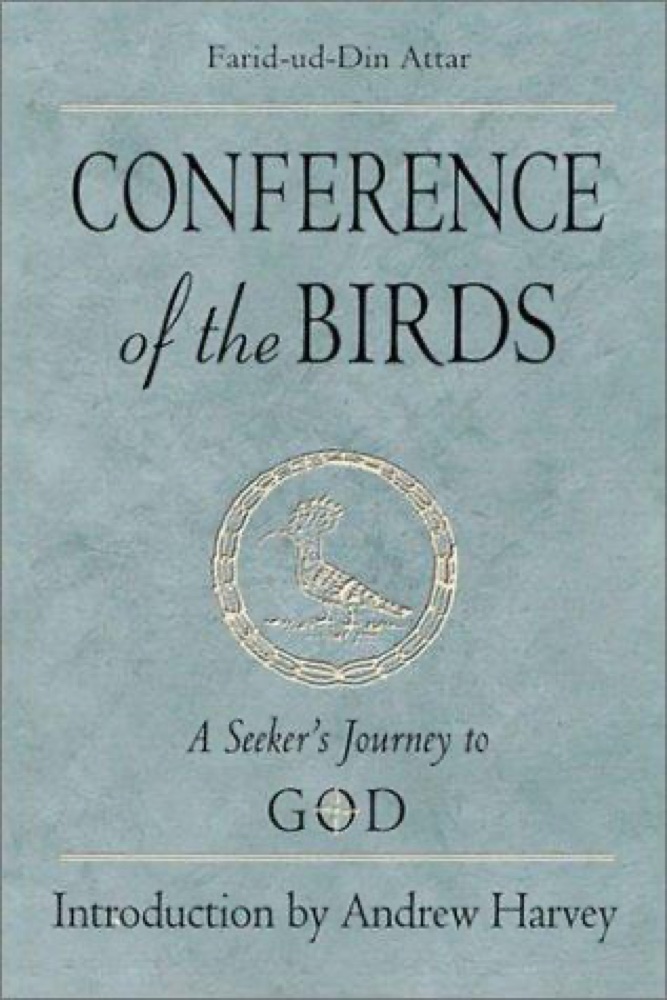 The Conference of the Birds
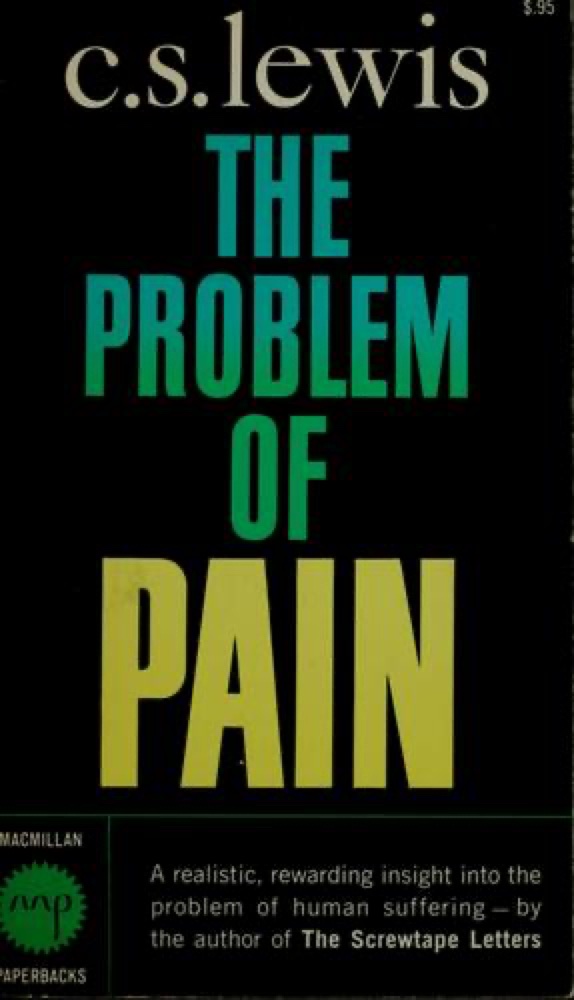 The Problem of Pain
 Shantaram
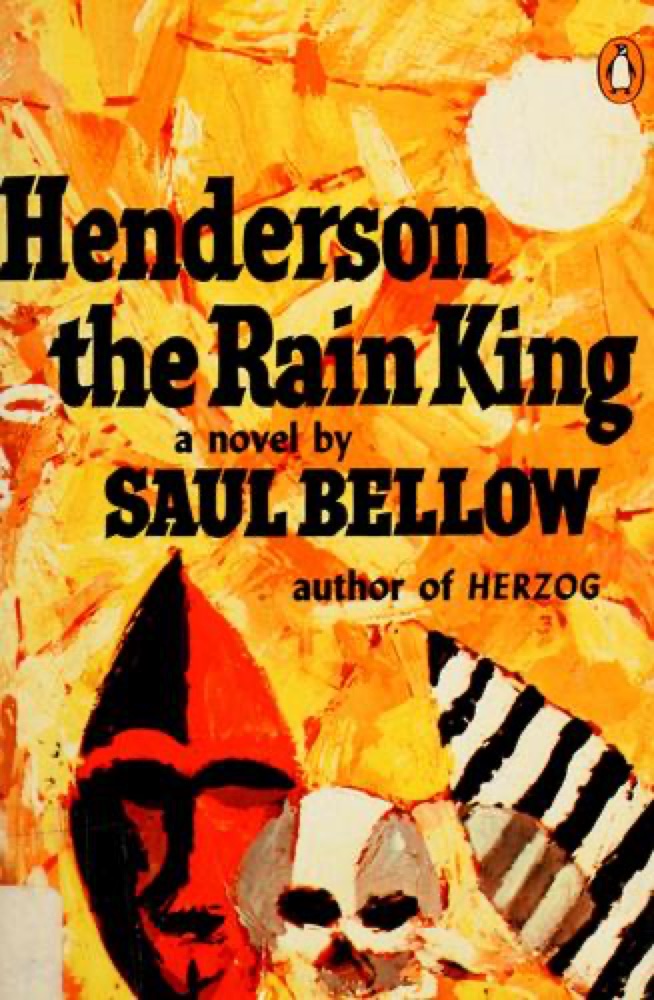 Henderson the Rain King
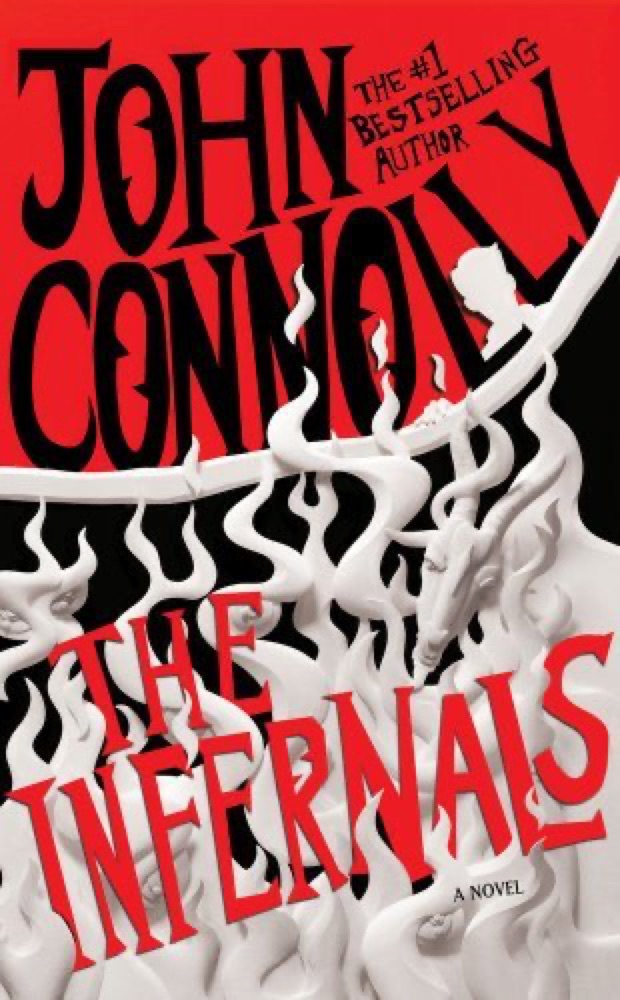 The Infernals
 Jayber Crow
 Les Misérables
 Man and Superman
 The Claw of the Conciliator
 Daniel Deronda
 Life of Pi
 The Spy
 Day
Day
 Ben-Hur: A Tale of the Christ
 Embers
 Maldoror and the Complete Works
 Arch of Triumph
 Kokoro
 The Last Man
 The Goldfinch
 Christmas Holiday
 Confessions
 Intermezzo
 The Gargoyle
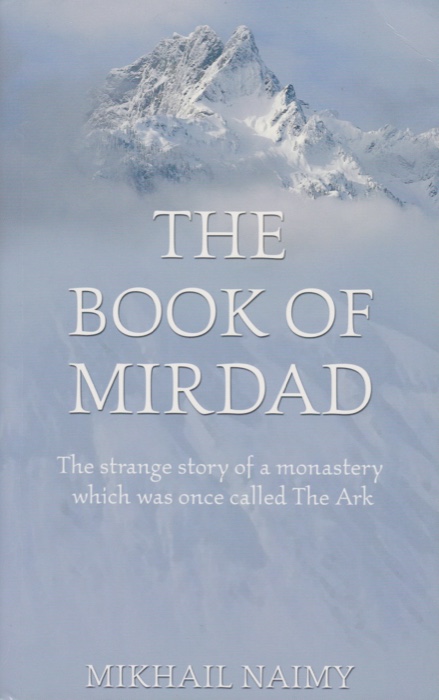 The Book of Mirdad: The Strange Story of a Monastery Which Was Once Called the Ark
 Gilead
 Narcissus and Goldmund
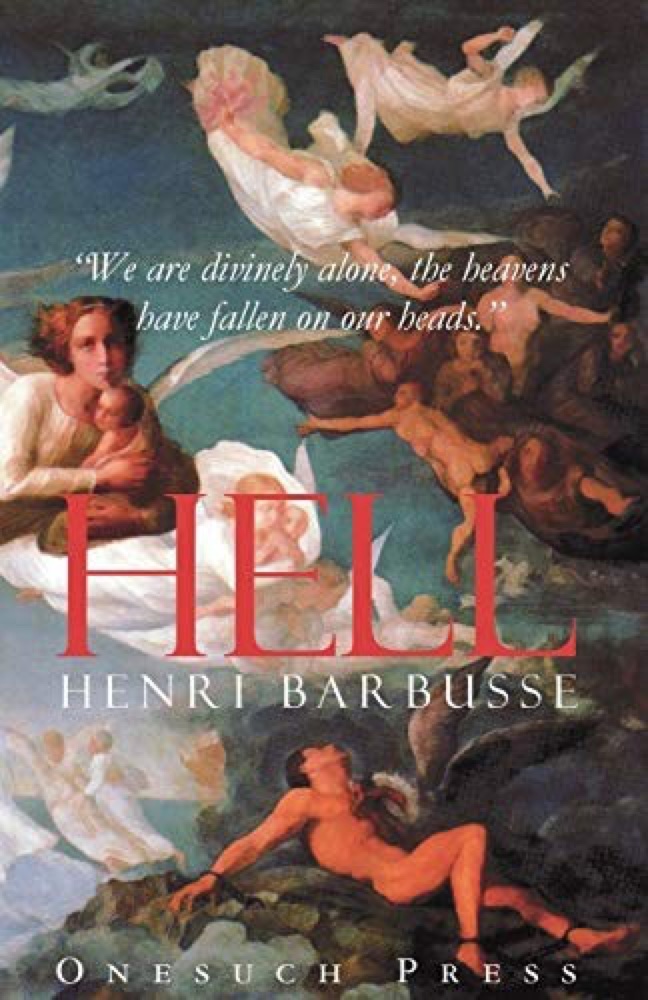 Hell
Hell
 A Soldier of the Great War
 The Mountain Shadow
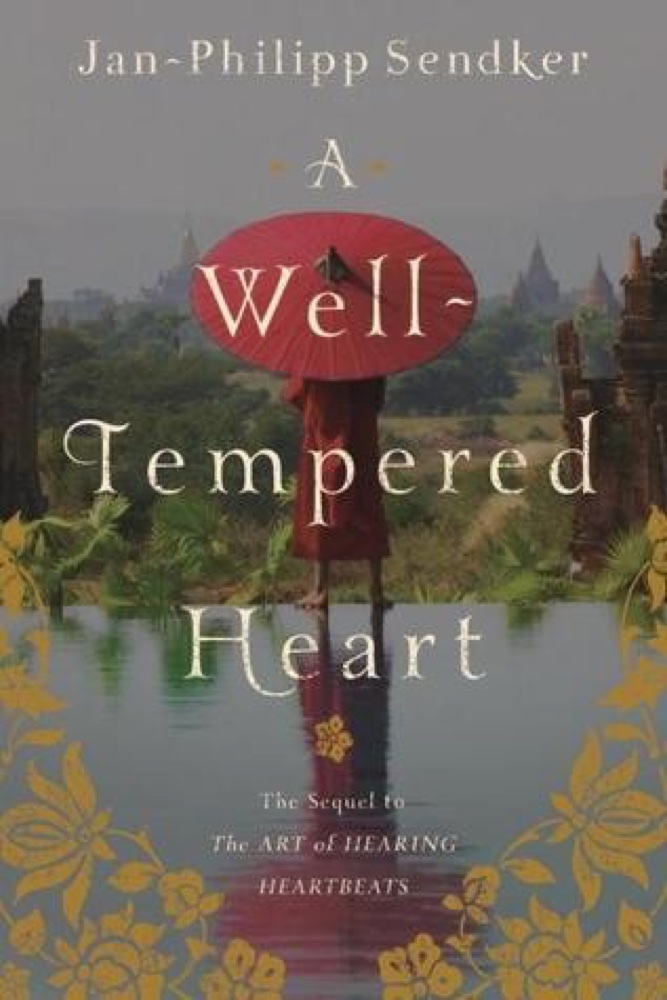 A Well-Tempered Heart
 Confessions of a Mask
 The Count of Monte Cristo
 The Symposium
 Sexus
Sexus
 The Once and Future King
 A Hero of Our Time
 The Passion