
 Every Exquisite Thing
Quotes from the Book
Behold the field in which I grow my fucks. Lay thine eyes upon it and see that it is barren. (anonymous twitter joke referenced in the book)
420
I had a very happy childhood; I just wasn’t a very happy child.
153
Just because someone has power over you doesn’t mean they’re going to use it to hurt you. People who believe that tend to either be: People who have been victims of that sort of behavior, or . . . People who, if given power, will use it to hurt you.
142
Even on this most terrible days, even when the worst of us are all we can think of, I am proud to be a human.
133
You can only do so much pretending before you become the thing you're pretending to be.
99
Just because you can't imagine something doesn't mean you can't do it.
95
The power that each of us has over complete strangers to make them feel terrible and and frightened and weak is amazing.
89
I’d heard all this before, but I also knew that this line of argument worked. If you tell people that they’re being attacked for their beliefs, then suddenly they want to defend their beliefs, even if they didn’t really believe them before. It’s pretty amazing, really.
64
What is reality except for the things that people universally experience the same way?
62
Knowing something is a bad idea does not always decrease the odds that you will do it.
55
As is often the case, it was the easier choice to make and the more difficult choice to live with.
49
When you’re faced with something you don’t understand, I think the most natural thing but also the least interesting thing you can be is afraid,
43
Basically, do your best to mock and deride their connection to and appreciation of you because, deep down, you dislike yourself enough that you cannot imagine anyone worthwhile actually wanting to be with you. I mean, if they like you, there must be something wrong with them, right?
39
The most insidious part of fame for April wasn't that other people dehumanized her; it was that she dehumanized herself. She came to see herself not as a person but as a tool.
37
It turns out pundits don’t want to talk about what’s happened; they want to use what’s happened to talk about the same things they talk about every day.
36
We are each individual, but the far greater thing is what we are together, and if that isn't protected and cherished, we are headed to a bad place.
30
I don't think any of us are blameless when we all, more and more often, see ourselves not as members of a culture but as weapons in a war.
30
Maya was the most effective talker I knew. It was like she wrote essays in her brain and then recited them verbatim. She once explained to me that she thought this was part of being Black in America. “Every black person who spends time with a lot of white people eventually ends up being asked to speak for every black person,” she told me one night after it was too late to still be talking, “and I hate that. It’s really stupid. And everyone gets to respond to that idiocy however they want. But my anxiety eventually made me extremely careful about everything I said, because of course I don’t represent capital-B Black People, but if people think I do, then I still feel a responsibility to try to do it well.
29
Here’s a quick overview of what happens when groups of passionate believers start to define themselves in opposition to others: A simple message seems obvious to a large population, and those people can’t understand what the opposition could possibly be thinking. They never or almost never engage with someone who holds those different beliefs, and if they do, it’s in the context of the discussion, not in the context of, like, also being a human. The vast majority of those people nod appreciatively and then change the channel and watch NCIS and eat the tacos that they made. It’s their own recipe. They’ve developed it over years, and they like it better than any taco you could get at even a super fancy restaurant. They go to bed at 10: 30 and worry a bit about whether their son is adjusting well to college. A very small percentage get really riled up. They’re angry, but they’re mostly worried or even scared and want to cause some kind of action. They call their representatives and do a little organizing. They’re usually motivated not just by agreement in the message but by a hatred of the people trying to fight the message. A tiny percentage of that percentage just go way the fuck overboard. They get so frightened and angry that they need to make something happen. How? Well, that’s simple, right? You eliminate the people who are actively trying to destroy the world. If we’re all really unlucky, and if there are enough of them, those people find each other and they confirm and exacerbate their own extremism.
27
Just move toward the back wall. There's less fire there." "My new favorite kind of fire.
25
That entire conversation had the feeling of a pleasant stroll inches away from the edge of the Grand Canyon.
23
I think the Carls, maybe they didn't pick you because of who you were but because of who you could become." "That's a nice thing to say, though I don't know that I love what I've become." "Maybe you're not done yet.
23
My annoyance became frustration, which became anger, which became hate, and hate is a long-burning fuel.
20
It’s so much easier for people to get excited about disliking something than agreeing to like it. The circle jerk of mockery and self-congratulation was so intense I didn’t even notice I was at its center. It was so easy to get people to follow me, and in the end, that’s what I wanted.
20
So let’s talk a little about April May’s theory of tiered fame. Tier 1: Popularity You are a big deal in your high school or neighborhood. You have a peculiar vehicle that people around town recognize, you are a pastor at a medium-to-large church, you were once the star of the high school football team. Tier 2: Notoriety You are recognized and/or well-known within certain circles. Maybe you’re a preeminent lepidopterist whom all the other lepidopterists idolize. Or you could be the mayor or meteorologist in a medium-sized city. You might be one of the 1.1 million living people who has a Wikipedia page. Tier 3: Working-Class Fame A lot of people know who you are and they are distributed around the world. There’s a good chance that a stranger will approach you to say hi at the grocery store. You are a professional sports player, musician, author, actor, television host, or internet personality. You might still have to hustle to make a living, but your fame is your job. You’ll probably trend on Twitter if you die. Tier 4: True Fame You get recognized by fans enough that it is a legitimate burden. People take pictures of you without your permission, and no one would scoff if you called yourself a celebrity. When you start dating someone, you wouldn’t be surprised to read about it in magazines. You are a performer, politician, host, or actor whom the majority of people in your country would recognize. Your humanity is so degraded that people are legitimately surprised when they find out that you’re “just like them” because, sometimes, you buy food. You never have to worry about money again, but you do need a gate with an intercom on your driveway. Tier 5: Divinity You are known by every person in your world, and you are such a big deal that they no longer consider you a person. Your story is much larger than can be contained within any human lifetime, and your memory will continue long after your earthly form wastes away. You are a founding father of a nation, a creator of a religion, an emperor, or an idea. You are not currently alive.
18
The comments on YouTube, Facebook, and Twitter instantly switched from a small, friendly, supportive community to a selection of the loudest, most over-the-top opinions one could imagine. I was a traitor to my species. I was ultra-fuckable. I was a space alien. I was an ultra-fuckable space alien. And so on.
18
So here’s a really stupid thing about the world: The trick to looking cool is not caring whether you look cool. So the moment you achieve perfect coolness is simultaneously the moment that you actually, completely don’t care. I didn’t care about the gravitas of that TV show, and the freedom and security and confidence that came with that was a rush. It took me a while to realize that the feeling I was feeling was power.
17
I’m not much older now than I was then, but in a lot of ways, obviously, I’m a different person. So it is easy for me to recognize that I made some good decisions and some bad ones. But it’s telling that, with this, I knew it was a bad idea even then but I still couldn’t control myself. Knowing something is a bad idea does not always decrease the odds that you will do it. If I had examined my motivations on this one, I probably wouldn’t have liked what I found, so I didn’t.
16
Bring People together and promote a simple change and a better world.
16
Did you know?
- It is Hank Green's debut novel.
- The novel became a New York Times bestseller.
- It is the first book in the two-book series The Carls.
- The mysterious robot-like statues at the center of the story are nicknamed the Carls.
- It was followed by a sequel, A Beautifully Foolish Endeavor, in 2020.
About Hank Green
Hank Green is an American author, entrepreneur, and online video creator who, with his brother John Green, founded the Vlogbrothers YouTube channel and the educational series Crash Course. An Absolutely Remarkable Thing (2018) was his debut novel.
More about the author →About the book
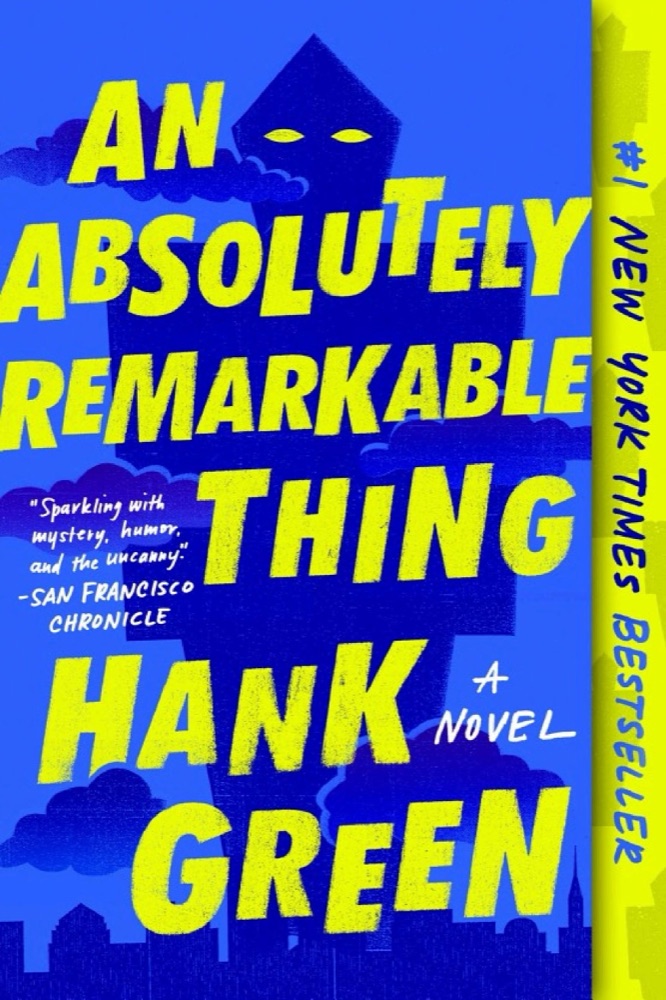
An Absolutely Remarkable Thing is the debut novel of Hank Green, a science fiction story about first contact in the age of the internet. When twenty-three-year-old April May stumbles upon a giant robot-like sculpture standing in Midtown Manhattan in the middle of the night, she films a goofy video with her friend Andy and goes to bed. By morning she is famous: identical statues, nicknamed the Carls, have appeared simultaneously in dozens of cities around the world, and her video is the one everyone is watching. The novel follows April as she rides a wave of sudden, dizzying celebrity while she and a small circle of friends try to decode the puzzles the Carls seem to pose.
At its core the book is about fame, identity, and the way social media reshapes how people see themselves and one another. Through April's first-person narration it examines the seductions and costs of viral attention, the polarization that springs up around an unexplained event, and the difference between collaboration and tribalism in a hyperconnected world. The first-contact premise becomes a lens for very contemporary anxieties: who controls a story, what we owe a watching audience, and how easily public discourse curdles into us-versus-them.
Published in 2018, the novel was a New York Times bestseller and drew on Green's own experience as a longtime internet creator. Reviews were generally positive, praising its blend of humor, mystery, and genuine ideas about online life, while some critics found the dialogue uneven or the open ending unsatisfying. It launched a two-book series, The Carls, and helped establish Green, already well known online, as a novelist.
Key characters
- April MayNarrator and protagonist who becomes an overnight internet celebrity
- Andy SkamptApril's friend who helps film the first video of the Carl
- MayaApril's girlfriend
- RobinManager who helps handle April's sudden fame
- Peter PetrawickiPundit who builds an opposition movement against the Carls
- CarlThe enigmatic statues at the heart of the first-contact mystery
Book details
- First published
- 2018
- Length
- 352 pages
- Series
- The Carls #1
- Reading time
- 7 hours
- Author
- Hank Green
- Genre
- Science Fiction
- Goodreads rating
- 4.03 (133k ratings)
Critical reception
- Became a New York Times bestseller and a popular Book of the Month pick.
- Critics praised its blend of humor, mystery, and commentary on internet fame.
- Some reviewers, including Entertainment Weekly, criticized the dialogue and found the open ending unsatisfying.
Series & reading order
- 1 An Absolutely Remarkable Thing
- 2 A Beautifully Foolish Endeavor
If you liked this, read…
- 1Ready Player OneAnother pop-culture-soaked science fiction story steeped in internet and online identity.
- 2The MartianAccessible, humor-laced contemporary science fiction with a strong first-person voice.
Keep reading
Every Exquisite Thing
 The Long Hard Road Out of Hell
 Riding the Elephant: A Memoir of Altercations, Humiliations, Hallucinations, and Observations
 The Nix
 The Yearbook
 Humans of New York
 Struck by Lightning: The Carson Philips Journal
 The Likeness
 Nice Try, Jane Sinner
 The Beginning of Everything
 The Adventures of Augie March
 Where Am I Now?
 One Hundred Names
 The City in the Middle of the Night
 The House of Hidden Meanings
 Special Topics in Calamity Physics
 The Long Way to a Small, Angry Planet
 Worm
Worm
 A Fraction of the Whole
 Believe Me: A Memoir of Love, Death, and Jazz Chickens
 How Long 'til Black Future Month?
 Conviction
 Big Machine
 We Learn Nothing
 Becoming
 Infinite Jest
 I Have Some Questions for You
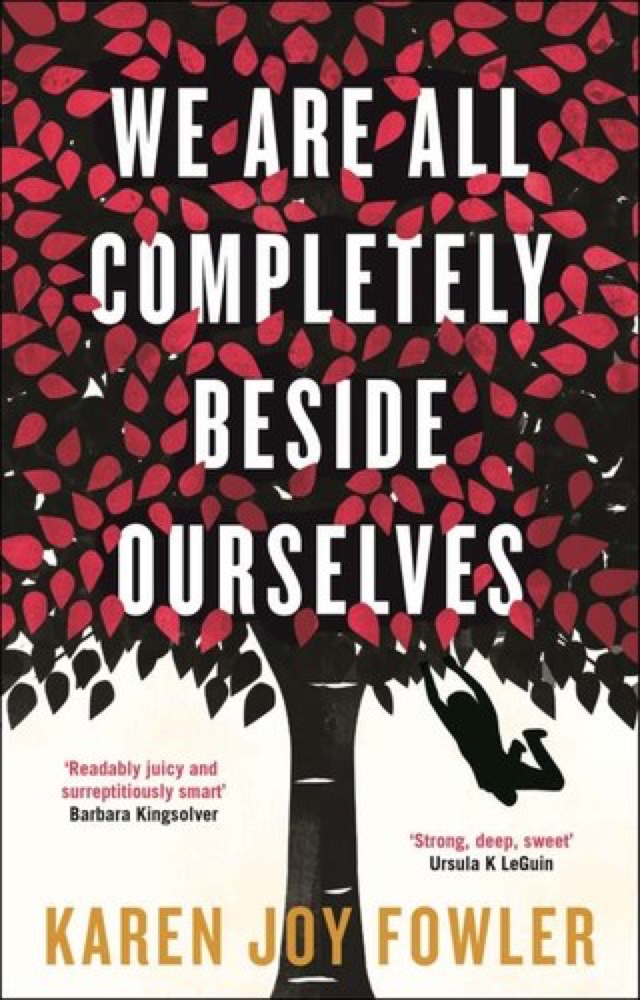 We Are All Completely Beside Ourselves
 Tricks for Free
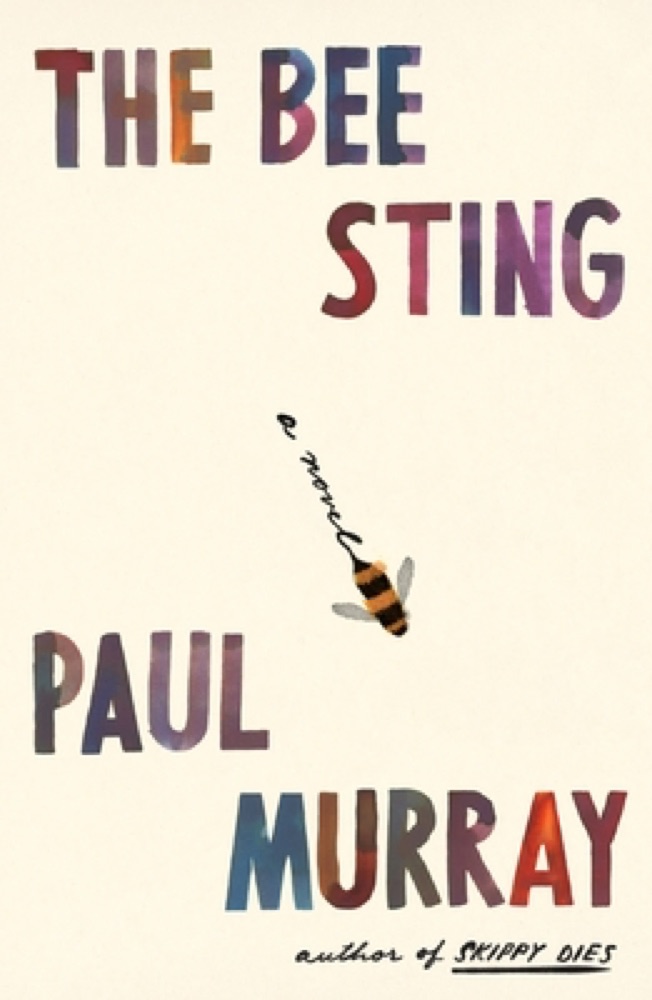 The Bee Sting
 Words on Bathroom Walls
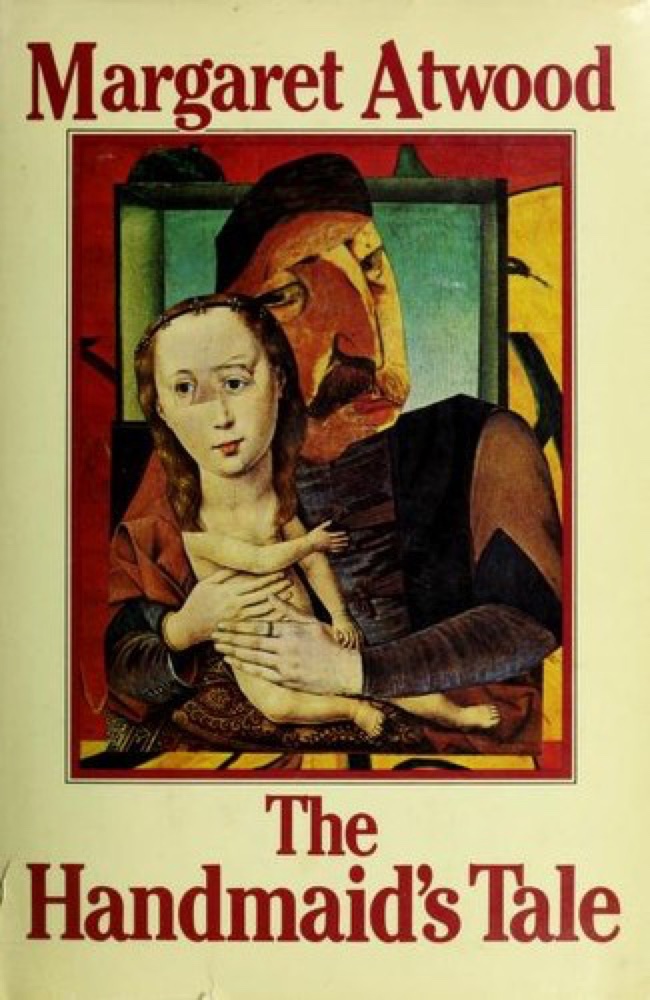 The Handmaid's Tale
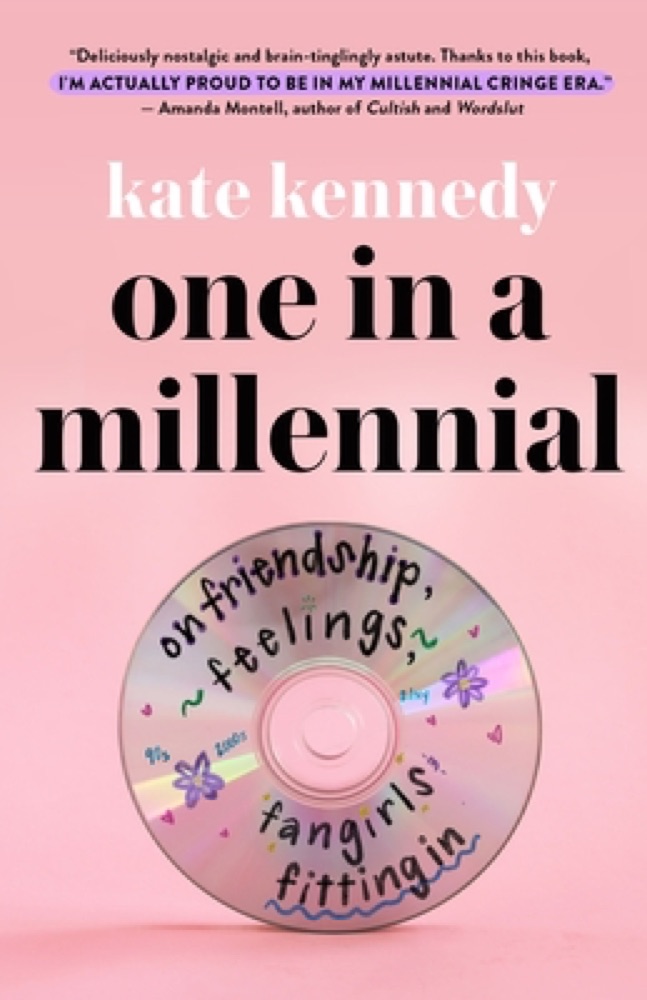 One in a Millennial: On Friendship, Feelings, Fangirls, and Fitting In
 Change of Heart
 It's Not Like It's a Secret
 Open City
 In the Miso Soup
 Second Helpings
 Small Great Things
 A Long Way Down
 Wide Awake
 Holding Up the Universe
 Tell Me More: Stories About the 12 Hardest Things I'm Learning to Say
 The Harder I Fight the More I Love You: A Memoir
 Attempting Normal
 Horror Stories: A Memoir
 300 Arguments: Essays
 Seven Deadly Sins: Settling the Argument Between Born Bad and Damaged Good
 Hate List
 Sleeping Giants
 Still Life with Tornado
 Revolutionary Road
 Love from A to Z
 The Golden Notebook
 Oranges Are Not the Only Fruit
 The House in the Cerulean Sea
 Dear Senthuran: A Black Spirit Memoir
 Paris: A Memoir for Young Women in the Age of Influencers
 When Michael Met Mina
 The Fifth Season