 Flyboys: A True Story of Courage
Quotes from the Book
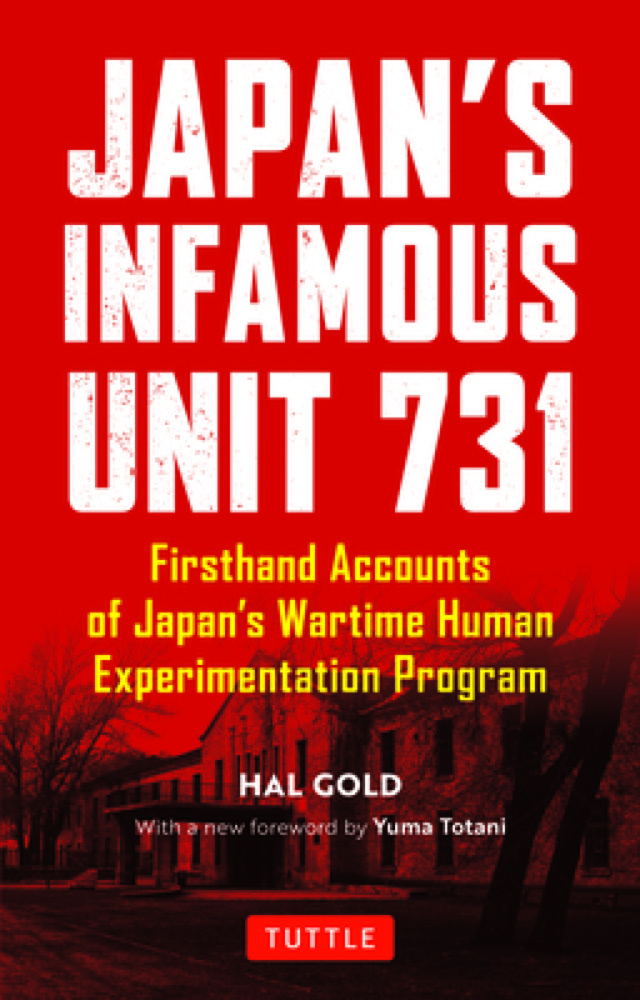
As far back as 1945, the Japanese government has consistently denied that the Japanese army conducted human experiments and biological warfare. Admitting now that the bones are from Unit 731’s victims would amount to the admission of a half-century’s worth of lies. It would also raise the problem of compensation. Yet, until Japan makes some sort of concrete acknowledgment of what it did during the war, it seems consigned to permanent ostracism.
1
It is the duty of those who experienced war to tell these things to their children and grandchildren, to tell of the real horrors of war.
Commenting further on connections between AIDS and biological warfare, Dr. Yamaguchi adds his voice to the chorus of those who find it hard to believe the orthodox explanation that the disease started with monkeys. It is much easier, he says, to think that it was developed in Fort Detrick as part of their ongoing biological warfare program, after which it somehow leaked out. A researcher at Fort Detrick was said to have remarked to the effect that, within ten years, the U.S. would have developed a biological weapon that would be more devastating than anything to date. Just ten years after that statement, the first AIDS case appeared. The Fort Detrick origin, says Yamaguchi, is a much more scientifically realistic explanation.
America wanted Ishii, Ishii’s group, and the emperor protected. More than that, it wanted secrecy and exclusivity. The Soviets pressed to bring them all to trial, so that the secrets America had obtained from the Japanese could be made available to everyone (especially them). America won. And Unit 731 made its contribution to the Cold War.
As soon as the symptoms were observed, the prisoner was taken from his cell and into the dissection room. He was stripped and placed on the table, screaming, trying to fight back. He was strapped down, still screaming frightfully. One of the doctors stuffed a towel into his mouth, then with one quick slice of the scalpel he was opened up.” Even with the intestines and organs exposed, a person does not die immediately. It is the same physical situation as ordinary surgery under anesthesia in which a person is operated on and restored. Witnesses at vivisections report that the victim usually lets out a horrible scream when the cut is made, and that the voice stops soon after that. The researchers then conduct their examination of the organs, remove the ones that they want for study, then discard what is left of the body. Somewhere in the process, the victim dies, through blood loss or removal of vital organs.
Watch on YouTube
About Hal Gold
About the book
This is a riveting and disturbing account of the medical atrocities performed in China during WWII.
Some of the cruelest deeds of Japan's war in Asia did not occur on the battlefield, but in quiet, antiseptic medical wards in obscure parts of China. Far from front lines and prying eyes, Japanese doctors and their assistants subjected human guinea pigs to gruesome medical experiments in the name of science and Japan's wartime chemical and biological warfare research.
Author Hal Gold draws upon a wealth of sources to construct a portrait of the Imperial Japanese Army's most notorious medical unit, giving an overview of its history and detailing its most shocking activities. The book presents the words of former unit members themselves, taken from remarks they made at a traveling Unit 731 exhibition held in Japan in 1994-95. They recount vivid first-hand memories of what it was like to ta
Keep reading
Flyboys: A True Story of Courage
 The Rape of Nanking
 On Killing: The Psychological Cost of Learning to Kill in War and Society
 Fallout: The Hiroshima Cover-up and the Reporter Who Revealed It to the World
 Facing the Mountain: A True Story of Japanese American Heroes in World War II
 The Great Influenza: The Story of the Deadliest Pandemic in History
 The Forgotten Highlander: My Incredible Story of Survival During the War in the Far East
 The Second World War
 They Called Us Enemy
 Ghost Soldiers: The Epic Account of World War II's Greatest Rescue Mission
 With the Old Breed: At Peleliu and Okinawa
 Operation Paperclip: The Secret Intelligence Program that Brought Nazi Scientists to America
 We Wish to Inform You That Tomorrow We Will Be Killed with Our Families
 The Coldest Winter: America and the Korean War
 War Is a Racket
 Koba the Dread: Laughter and the Twenty Million
 This Kind of War: A Study in Unpreparedness
 Death's Acre: Inside the Legendary Forensic Lab the Body Farm Where the Dead Do Tell Tales
 Say Nothing: A True Story of Murder and Memory in Northern Ireland
 The Gulag Archipelago 1918-1956
 Grunt: The Curious Science of Humans at War
 Imperial Ambitions: Conversations on the Post-9/11 World
 Generation Kill: Devil Dogs, Iceman, Captain America, and the New Face of American War
 Zinky Boys: Soviet Voices from the Afghanistan War
 Bloodlands: Europe Between Hitler and Stalin
 Pacific Crucible: War at Sea in the Pacific, 1941-1942
 The Forever War
 Auschwitz: A Doctor's Eyewitness Account
 Stiff: The Curious Lives of Human Cadavers
 World War Z: An Oral History of the Zombie War
 Eichmann in Jerusalem: A Report on the Banality of Evil
 War
War
 The Aquariums of Pyongyang: Ten Years in the North Korean Gulag
 The Jakarta Method: Washington's Anticommunist Crusade and the Mass Murder Program that Shaped Our World
 Ripple
 The Betrayal of Anne Frank: A Cold Case Investigation
 Nuclear War: A Scenario
 The Light of Days: The Untold Story of Women Resistance Fighters in Hitler's Ghettos
 Dispatches
 American Sniper: The Autobiography of the Most Lethal Sniper in U.S. Military History
 United States of Japan
 Code Talker
 A Rumor of War: The Classic Vietnam Memoir
 Escape from Camp 14: One Man's Remarkable Odyssey from North Korea to Freedom in the West
 Homage to Catalonia
 The Girls of Atomic City: The Untold Story of the Women Who Helped Win World War II
 Agent Zigzag: A True Story of Nazi Espionage, Love, and Betrayal
 The Wars
 The Untold History of The United States
 American Shaolin: Flying Kicks, Buddhist Monks, and the Legend of Iron Crotch: An Odyssey in the New China
 One Day, Everyone Will Have Always Been Against This
 There Is No Antimemetics Division
 An Ordinary Man: An Autobiography
 Bomb: The Race to Build—and Steal—the World's Most Dangerous Weapon
 Epitaph for a Spy
 Get Well Soon: History's Worst Plagues and the Heroes Who Fought Them
 Behold a Pale Horse
 The Immortal Life of Henrietta Lacks
 The Hangman's Replacement: Sprout of Disruption
 The Pentagon's Brain