 Drift
Drift
Quotes from the Book
I spent 33 years and four months in active military service and during that period I spent most of my time as a high class muscle man for Big Business, for Wall Street and the bankers. In short, I was a racketeer, a gangster for capitalism. I helped make Mexico and especially Tampico safe for American oil interests in 1914. I helped make Haiti and Cuba a decent place for the National City Bank boys to collect revenues in. I helped in the raping of half a dozen Central American republics for the benefit of Wall Street. I helped purify Nicaragua for the International Banking House of Brown Brothers in 1902-1912. I brought light to the Dominican Republic for the American sugar interests in 1916. I helped make Honduras right for the American fruit companies in 1903. In China in 1927 I helped see to it that Standard Oil went on its way unmolested. Looking back on it, I might have given Al Capone a few hints. The best he could do was to operate his racket in three districts. I operated on three continents.
235
WAR is a racket. It always has been. It is possibly the oldest, easily the most profitable, surely the most vicious. It is the only one international in scope. It is the only one in which the profits are reckoned in dollars and the losses in lives.
86
To summarize: Three steps must be taken to smash the war racket. 1. We must take the profit out of war. 2. We must permit the youth of the land who would bear arms to decide whether or not there should be war. 3. We must limit our military forces to home defense purposes.
46
Beautiful ideals were painted for our boys who were sent out to die. The was the "war to end wars." This was the "war to make the world safe for democracy." No one told them that dollars and cents were the real reason. No one mentioned to them, as they marched away, that their going and their dying would mean huge war profits. No one told these American soldiers that they might be shot down by bullets made by their own brothers here. No one told them that the ships on which they were going to cross might be torpedoed by submarines built with United State patents. They were just told it was to be a "glorious adventure". Thus, having stuffed patriotism down their throats, it was decided to make them help pay for the war, too. So, we gave them the large salary of $30 a month! All that they had to do for this munificent sum was to leave their dear ones behind, give up their jobs, lie in swampy trenches, eat canned willy (when they could get it) and kill and kill and kill...and be killed
28
There are only two reasons why you should ever be asked to give your youngsters. One is defense of our homes. The other is the defense of our Bill of Rights and particularly the right to worship God as we see fit. Every other reason advanced for the murder of young men is a racket, pure and simple.
27
A racket is best described, I believe, as something that is not what it seems to the majority of the people. Only a small "inside" group knows what it is about. It is conducted for the benefit of the very few, at the expense of the very many. Out of war a few people make huge fortunes. In
18
Let the workers in these plants get the same wages -- all the workers, all presidents, all executives, all directors, all managers, all bankers -- yes, and all generals and all admirals and all officers and all politicians and all government office holders -- everyone in the nation be restricted to a total monthly income not to exceed that paid to the soldier in the trenches! Let all these kings and tycoons and masters of business and all those workers in industry and all our senators and governors and majors pay half of their monthly $30 wage to their families and pay war risk insurance and buy Liberty Bonds. Why shouldn't they? They aren't running any risk of being killed or of having their bodies mangled or their minds shattered. They aren't sleeping in muddy trenches. They aren't hungry. The soldiers are! Give capital and industry and labor thirty days to think it over and you will find, by that time, there will be no war. That will smash the war racket -- that and nothing else. Maybe
16
In the World War, we used propaganda to make the boys accept conscription. They were made to feel ashamed if they didn't join the army.
11
Yes, we have had disarmament conferences and limitations of arms conferences. They don't mean a thing. One has just failed; the results of another have been nullified. We send our professional soldiers and our sailors and our politicians and our diplomats to these conferences. And what happens? The professional soldiers and sailors don't want to disarm. No admiral wants to be without a ship. No general wants to be without a command. Both mean men without jobs. They are not for disarmament. They cannot be for limitations of arms. And at all these conferences, lurking in the background but all-powerful, just the same, are the sinister agents of those who profit by war. They see to it that these conferences do not disarm or seriously limit armaments.
9
Only those who would be called upon to risk their lives for their country should have the privilege of voting to determine whether the nation should go to war. There
8
I have visited eighteen government hospitals for veterans. In them are a total of about 50,000 destroyed men -- men who were the pick of the nation eighteen years ago. The very able chief surgeon at the government hospital; at Milwaukee, where there are 3,800 of the living dead, told me that mortality among veterans is three times as great as among those who stayed at home. Boys
7
The only way to smash this racket is to conscript capital and industry and labor before the nations manhood can be conscripted.
7
Victory or defeat will be determined by the skill and ingenuity of our scientists. If we put them to work making poison gas and more and more fiendish mechanical and explosive instruments of destruction, they will have no time for the constructive job of creating greater prosperity for all peoples.
5
The normal profits of a business concern in the United States are six, eight, ten, and sometimes twelve percent. But war-time profits -- ah! that is another matter -- twenty, sixty, one hundred, three hundred, and even eighteen hundred per cent -- the sky is the limit. All that traffic will bear. Uncle Sam has the money. Let's get it. Of
4
If we put them to work making poison gas and more and more fiendish mechanical and explosive instruments of destruction, they will have no time for the constructive job of building a greater prosperity for all peoples. By putting them to this useful job, we can all make more money out of peace than we can out of war—even the munition makers. So ... I say, “TO HELL WITH WAR!
3
It has been estimated by statisticians and economists and researchers that the war cost your Uncle Sam $52,000,000,000. Of this sum, $39,000,000,000 was expended in the actual war period. This expenditure yielded $16,000,000,000 in profits. That is how the 21,000 billionaires and millionaires got that way. This $16,000,000,000 profits is not to be sneezed at. It is quite a tidy sum. And it went to a very few.
3
The shipbuilders felt they should come in on some of it, too. They built a lot of ships that made a lot of profit. More than $3,000,000,000 worth. Some to the ships were all right. But $635,000,000 worth of them were made of wood and wouldnʼt float! The seams opened up—and they sank. We paid for them, though. And somebody pocketed the profits.
3
Airplane and engine manufacturers felt they, too, should get their just profits out of this war. Why not? Everybody else was getting theirs. So $1,000,000,000—count them if you live long enough—was spent by Uncle Sam in building airplanes and airplane engines that never left the ground! Not one plane, or motor, out of the billion dollarsʼ worth ordered, ever got into a battle in France. Just the same the manufacturers made their little profit of 30, 100 or perhaps 300 per cent.
3
Then, the most crowning insolence of all -- he was virtually blackjacked into paying for his own ammunition, clothing, and food by being made to buy Liberty Bonds. Most soldiers got no money at all on pay days. We made them buy Liberty Bonds at $100 and then we bought them back -- when they came back from the war and couldn't find work -- at $84 and $86. And the soldiers bought about $2,000,000,000 worth of these bonds! Yes,
3
And even now the families of the wounded men and of the mentally broken and those who never were able to readjust themselves are still suffering and still paying. Picture of a WW1 soldier whose jaw was shot
2
No one told them that dollars and cents were the real reason. No one mentioned to them, as they marched away, that their going and their dying would mean huge war profits. No one told these American soldiers that they might be shot down by bullets made by their own brothers here. No one told them that the ships on which they were going to cross might be torpedoed by submarines built with United States patents. They were just told it was to be a 'Glorious Adventure' (Page 44)
1
Yes, they are getting ready for another war. Why shouldn't they? It pays high dividends. But what does it profit the masses? What does it profit the men who are killed? What does it profit the men who are maimed? What does it profit their mothers and sisters, their wives and their sweethearts? What does it profit their children? What does it profit anyone except the very few to whom war means huge profits?
1
As far as I have been able to ascertain there is nothing in the scheme to limit a soldier to the loss of but one eye, or one arm, or to limit his wounds to one or two or three. Or to limit the loss of life. There is nothing in this scheme, apparently, that says not more than 12 per cent of a regiment shall be wounded in battle, or that not more than 7 per cent in a division shall be killed
1
The active pacifists, however, are not of this class: they are not men without impulsive force but men in whom some impulse to which war is hostile is strong enough to overcome the impulses that lead to war.
1
Looking back, Woodrow Wilson was re-elected President in 1916 on a platform that had "kept us out of war"... Yet, five months later he asked congress to declare war on Germany...
Watch on YouTube
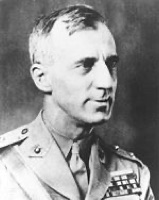
About Smedley D. Butler
We have collected 25 quotes from 1 book by Smedley D. Butler on BookQuoters.
More about the author →About the book
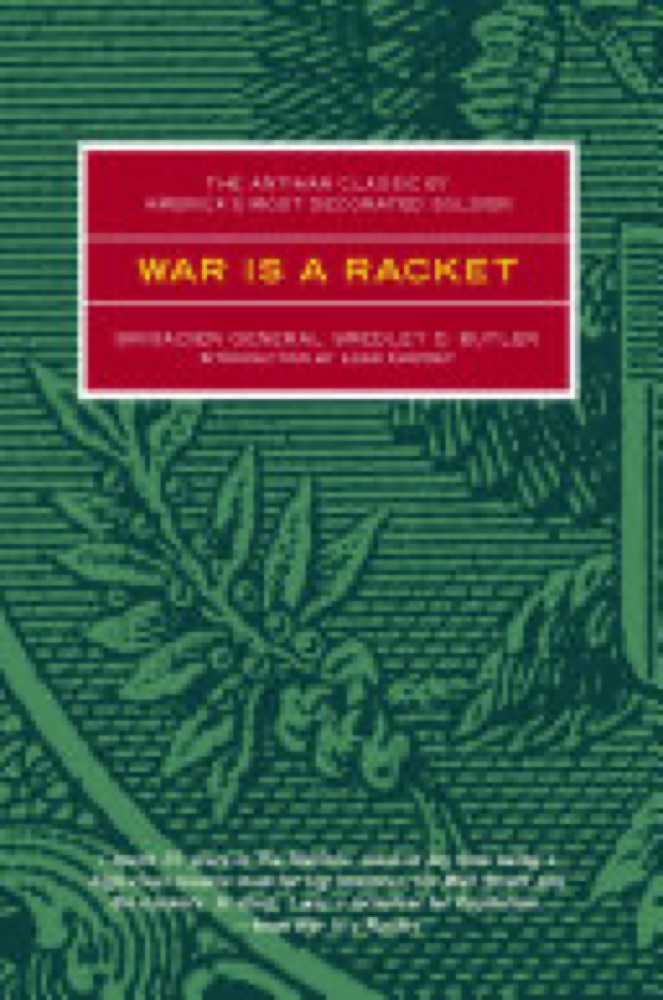
Originally printed in 1935, War Is a Racket is General Smedley Butler's frank speech describing his role as a soldier as nothing more than serving as a puppet for big-business interests. The introduction discusses why General Butler went against the corporate war machine and how he exposed a fascist coup d'etat plot against President Franklin Roosevelt. Widely appreciated and referenced by left- and right-wingers alike, this is an extraordinary argument against war—more relevant now than ever.
Book details
- First published
- 1935
- Author
- Smedley D. Butler
- Genre
- History
- Goodreads rating
- 4.28 (9k ratings)
Keep reading
Drift
 This Kind of War: A Study in Unpreparedness
 War
War
 American Sniper: The Autobiography of the Most Lethal Sniper in U.S. Military History
 The Untold History of The United States
 Imperial Ambitions: Conversations on the Post-9/11 World
 Homage to Catalonia
 Johnny Got His Gun
 The Winds of War
 Mr. Lincoln's Army
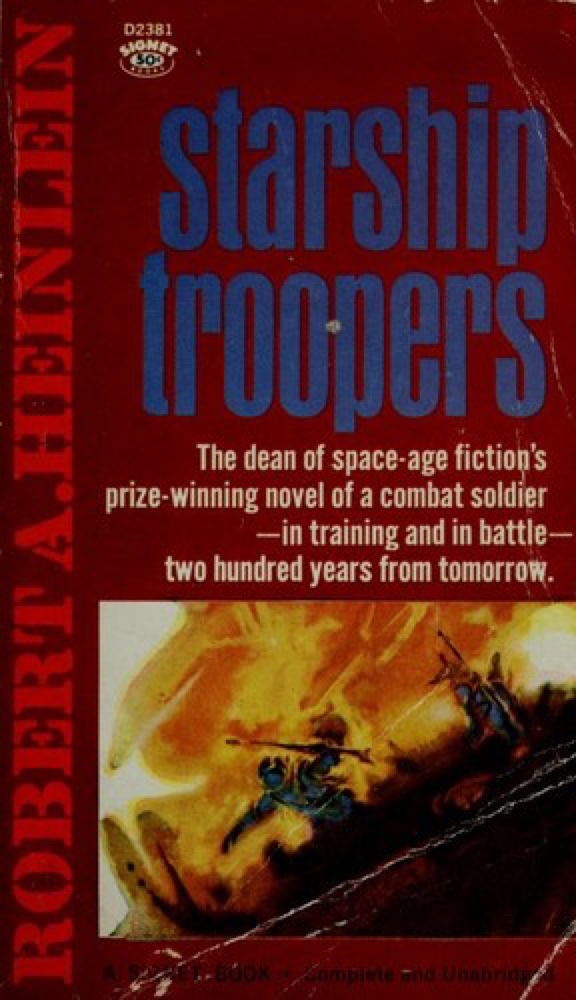 Starship Troopers
 We Were Soldiers Once... and Young: Ia Drang - The Battle that Changed the War in Vietnam
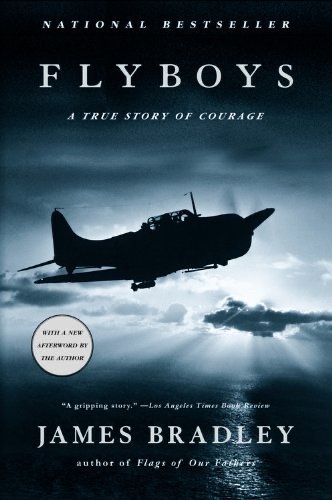 Flyboys: A True Story of Courage
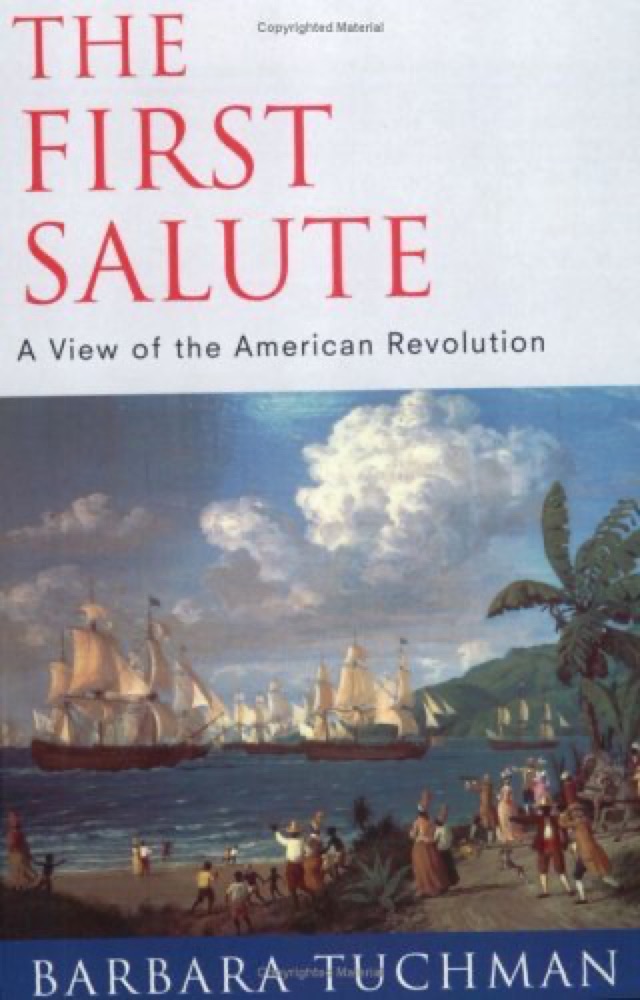 The First Salute : View of the American Revolution
 The War on Warriors: Behind the Betrayal of the Men Who Keep Us Free
 Empire
 War Is a Force That Gives Us Meaning
 Behold a Pale Horse
 A Fable
 The Creature from Jekyll Island: A Second Look at the Federal Reserve
 Power Systems: Conversations on Global Democratic Uprisings and the New Challenges to U.S. Empire
 Epitaph for a Spy
 Generation Kill: Devil Dogs, Iceman, Captain America, and the New Face of American War
 The Greatest Generation
 It Can't Happen Here
 Black Hawk Down
 Closing the Ring
 Battle Cry of Freedom
 The Killer Angels
 War and Remembrance
 Dead Fall
 World War Z: An Oral History of the Zombie War
 The Iron Heel
 Fall of Giants
 Quotations from Chairman Mao Tsetung
 Truman
 Band of Brothers: E Company, 506th Regiment, 101st Airborne from Normandy to Hitler's Eagle's Nest
 Assata: An Autobiography
 The Next Decade: Where We've Been . . . and Where We're Going
 The Forever War
 On Killing: The Psychological Cost of Learning to Kill in War and Society
 Executive Orders
 Berlin Diary: The Journal of a Foreign Correspondent 1934-1941
 The Coldest Winter: America and the Korean War
 With the Old Breed: At Peleliu and Okinawa
 Lone Survivor: The Eyewitness Account of Operation Redwing and the Lost Heroes of SEAL Team 10
 Major Barbara
 The Monuments Men: Allied Heroes, Nazi Thieves, and the Greatest Treasure Hunt in History
 Helmet for My Pillow
 Memoirs of General W.T. Sherman
 The Guns at Last Light: The War in Western Europe, 1944-1945
 Understanding Power: The Indispensable Chomsky
 Armageddon in Retrospect
 The Small and the Mighty: Twelve Unsung Americans Who Changed the Course of History, from the Founding to the Civil Rights Movement
 A Fighting Chance
 America: The Farewell Tour
 The Guns of August
 The Will to Battle
 Use of Weapons
 The Civil War, Vol. 3: Red River to Appomattox