
 World War Z: An Oral History of the Zombie War
Quotes from the Book
This is why I say that the individual's most potent weapon is a stubborn belief in the triumph of common decency.
Kindness is not an illusion and violence is not a rule. The true resting state of human affairs is not represented by a man hacking his neighbor into pieces with a machete. That is a sick aberration. No, the true state of human affairs is life as it ought to be lived.
There is something living deep within us all that welcomes, even relishes, the role of victimhood for ourselves. There is no cause in the world more righteously embraced than our own when we feel someone has wronged us. Perhaps it is a psychological leftover from early childhood, when we felt the primeval terror of the world around us and yearned for the intervention of a mother/protector to keep us safe. Perhaps it makes it easier to explain away our personal failures when the work of an enemy can be blamed. Perhaps we just get tired of long explanations and like the cleanliness of an easy solution. It is for wiser people than me to say. Whatever its allure, this primitive ideology of Hutu Power swept through Rwanda in 1993 and early 1994 with the speed of flame through dry grass.
A sad truth of human nature is that it is hard to care for people when they are abstractions, hard to care when it is not you or somebody close to you. Unless the world community can stop finding ways to dither in the face of this monstrous threat to humanity those words Never Again will persist in being one of the most abused phrases in the English language and one of the greatest lies of our time.
Facts are almost irrelevant to most people. We make decisions based on emotion and then justify them later with whatever facts we can scrounge up in our defense.
It always bothers me when I hear Rwanda's genocide described as a product of "ancient tribal hatreds." I think this is an easy way for Westerners to dismiss the whole thing as a regrettable but pointless bloodbath that happens to primitive brown people.
The other thing you have to understand was that the message crept into our national consciousness very slowly. It did not happen all at once. We did not wake up one morning to hear it pouring out of the radio at full strength. It started with a sneering comment, the casual use of the term "cockroach," the almost humorous suggestion that Tutsis should be airmailed back to Ethiopia. Stripping the humanity from an entire group of people takes time. It is an attitude that requires cultivation, a series of small steps, daily tending.
I have since thought a great deal about how people are able to maintain two attitudes in their minds at once. Take the colonel: He had come fresh from a world of machetes, road gangs, and random death and yet was able to have a civilized conversation with a hotel manager over a glass of beer and let himself be talked out of committing another murder. He had a soft side and a hard side and neither was in absolute control of his actions. It would have been dangerous to assume that he was this way or that way at any given point in the day. It was like those Nazi concentration camp guards who could come home from a day manning the gas chambers and be able to play games with their children, put a Bach record on the turntable, and make love to their wives before getting up to kill to more innocents. And this was not the exception—this was the rule. The cousin of brutality is a terrifying normalcy. So I tried never to see these men in terms of black or white. I saw them instead in degrees of soft and hard. It was the soft that I was trying to locate inside them; once I could get my fingers into it, the advantage was mine. If sitting down with abhorrent people and treating them as friends is what it took to get through to that soft place, then I was more than happy to pour the Scotch.
If anybody tried to threaten me I would simply look him in the eye and ask him in a firm but friendly voice, “Why?” The bully would have no choice but to engage me verbally, and this made violence next to impossible. I learned that it is very difficult to fight someone with whom you are already talking.
If you stay friendly with monsters you can find cracks in their armor to exploit. Shut them out and they can kill you without a second thought. I reminded myself of this over and over.
Between January 1993 and March 1994, a total of half a million machetes were imported into my country from various overseas suppliers.
It was not the largest genocide in the history of the world, but it was the fastest and most efficient.
Quiet, ordinary people are often the only people with the real ability to defeat evil. They can give it the Rwandan no.
Human beings were designed to live sanely, and sanity always returns.
Wherever the killing season should next begin and people should become strangers to their neighbors and themselves, my hope is that there will still be those ordinary men who say a quiet no and open the rooms upstairs.
Watch on YouTube
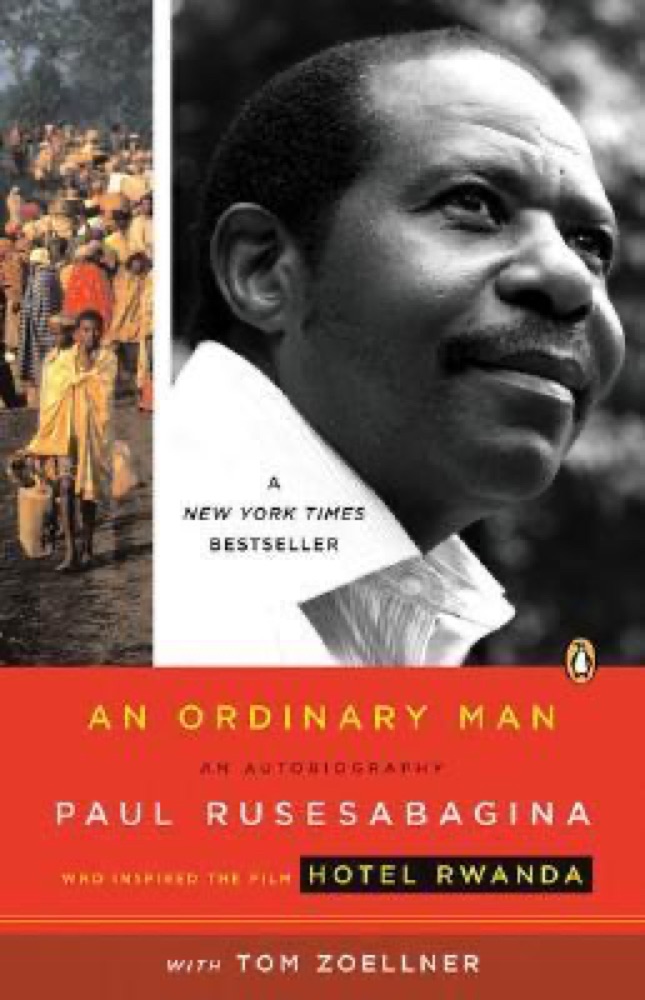
About Paul Rusesabagina
We have collected 15 quotes from 1 book by Paul Rusesabagina on BookQuoters.
More about the author →Book details
- First published
- 2006
- Author
- Paul Rusesabagina
- Genre
- History
- Goodreads rating
- 4.19 (7k ratings)
Keep reading
World War Z: An Oral History of the Zombie War
 We Wish to Inform You That Tomorrow We Will Be Killed with Our Families
 One Day, Everyone Will Have Always Been Against This
 Humankind: A Hopeful History
 Transition
 The Autobiography of Martin Luther King, Jr.
 People of the Lie: The Hope for Healing Human Evil
 Endgame, Vol. 1: The Problem of Civilization
 Between the World and Me
 The Sympathizer
 The Girl Who Smiled Beads: A Story of War and What Comes After
 Survival in Auschwitz
 The Fire Next Time
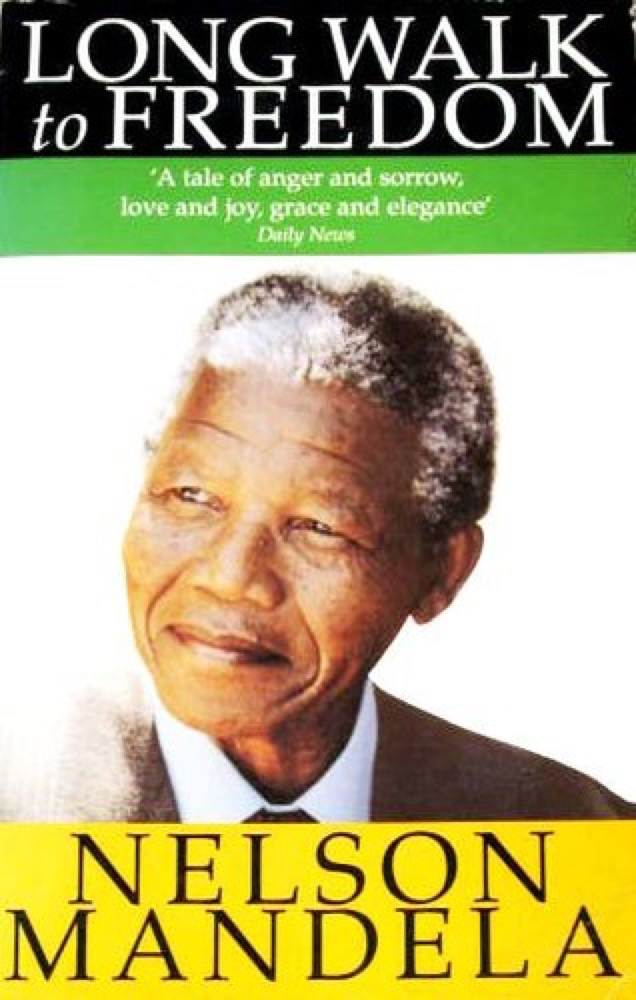 Long Walk to Freedom
 The Better Angels of Our Nature: Why Violence Has Declined
 Arguably: Selected Essays
 Shadow of the Hegemon
 Devolution: A Firsthand Account of the Rainier Sasquatch Massacre
 No Name in the Street
 Resistance, Rebellion and Death: Essays
 You Can't Be Neutral on a Moving Train: A Personal History of Our Times
 The Quiet American
 Kingdom of Fear: Loathsome Secrets of a Star-Crossed Child in the Final Days of the American Century
 How Long 'til Black Future Month?
 Use of Weapons
 A Language Older Than Words
 Ancillary Sword
 The Hangman's Replacement: Sprout of Disruption
 Ancillary Justice
 How Beautiful We Were
 The Fall of Babel
 Anthills of the Savannah
 Heavenly Tyrant
 If This Is a Man / The Truce
 The Story of My Experiments With Truth
 Creation Lake
 The Gulag Archipelago 1918-1956
 Only Human
 The Lucifer Effect: Understanding How Good People Turn Evil
 The Secret Agent
 The Ministry for the Future
 The Kite Runner
 Riding the Elephant: A Memoir of Altercations, Humiliations, Hallucinations, and Observations
 Life and Fate
 The Culture of Make Believe
 Underground: The Tokyo Gas Attack and the Japanese Psyche
 Regarding the Pain of Others
 Open City
 Assata: An Autobiography
 Blackfish City
 Starship Troopers
 American Pastoral
 Last Words
 Demonspawn
 Nobody Knows My Name
 The Atlantis Gene
 The Moon is a Harsh Mistress
 Black Like Me
 The First Circle
 Stranger in a Strange Land