
 The Mask of Dimitrios
Quotes from the Book
Reality is always so obstructive.
22
Good' did not triumph. 'Evil' did not triumph. The two resolved, destroyed each other and created new 'evils', new 'goods' which slew each other in their turn.
12
I tell you this, my friend; all men are cowards. They dislike a fact except when it is so wrapped up in lies and sentiments that the sharp edge of it cannot hurt them. When a man tells the truth he his, depend upon it, a dangerous man.
4
All over Europe, all over the world, men were spying. While in government offices other men were tabulating the results of the spies' labours; thicknesses of armour-plating, elevation angles of guns, muzzles velocities, details of fire control mechanisms and range-finders, fuse efficiencies, details of fortifications, positions of ammunition stores, disposition of key factories, landmarks for bombers. The world was getting ready to go to war. For the cannon-makers and for the spies, business was good.
2
It was Napoleon who said that one spy in the right place was worth twenty thousand men in the field. He was speaking of his own spy, Schul-meister, a man of amazing courage, skill, and loyalty. But when the time came to reward Schulmeister for his services it was the same Napoleon who refused him the Legion of Honor for which he had been recommended, and the same Napoleon who commented that money was the only suitable reward for
2
After a bit, I began to think more calmly. It was ridiculous. It was outrageous. It was impossible. Yet it had happened. I was in a police cell under arrest on a charge of espionage. The penalty, should I be convicted, would be perhaps four years’ imprisonment—four years in a French prison and then deportation. I could put up with prison—even a French one—but deportation! I began to feel sick and desperately frightened. If France expelled me there was nowhere left for me to go. Yugoslavia would arrest me. Hungary would not admit me. Neither would Germany or Italy. Even if a convicted spy could get into England without a passport he would not be permitted to work. To America I would be merely another undesirable alien. The South American republics would demand sums of money that I would not possess as surety for my good behavior. Soviet Russia would have no more use for a convicted spy than would England. Even the Chinese wanted your passport. There would be nowhere I could go, nowhere. And after all, what did it matter? What happened to an insignificant teacher of languages without national status was of no interest to anyone. No consul would intervene on his behalf; no Parliament, no Congress, no Chamber of Deputies would inquire into his fate. Officially he did not exist; he was an abstraction, a ghost. All he could decently and logically do was destroy himself.
1
I was born in Szabadka in Hungary. By the treaty of Trianon in 1919 Szabadka was incorporated in Yugoslav territory. In 1921 I went as a student to the University of Buda-Pesth. I obtained a Yugoslav passport for the purpose. While I was still at the University my father and elder brother were shot by the Yugoslav police for a political offense. My mother had died during the war and I had no other relations or friends. I was advised not to attempt to return to Yugoslavia. Conditions in Hungary were terrible. In 1922 I went to England, and remained there, teaching German in a school near London until 1931, when my labor permit was withdrawn. I was one of many other foreigners who had their labor permits withdrawn at that time. When my passport had expired I had applied for its renewal to the Yugoslav legation in London, but had been refused on the grounds that I was no longer a Yugoslav citizen. I had afterwards applied for British naturalization, but when I was deprived of my labor permit I was forced to find work elsewhere. I went to Paris. I was allowed by the police to remain and given papers with the proviso that if I left France I should not be permitted to return. I have since applied for French citizenship.
1
It would be good now, I thought, to be in Paris. The afternoon city heat would have gone. It would be good to sit under the trees near the marionette theatre. It would be quiet there now. There would be no one there but a student or two reading. There you could listen to the rustle of leaves unconscious of the pains of humanity in labour, of a civilisation hastening to its own destruction. There, away from this brassy sea and blood-red earth, you could contemplate the twentieth-century tragedy unmoved; unmoved except by pity for mankind fighting to save itself from the primeval ooze that welled from its own subconscious being.
1
At this point doubts started to creep in. One was always reading of young men running away to sea, or people shipping as deck-hands and working their passages. There seemed to be no special qualifications needed. No ropes had to be spliced. No rigging had to be climbed. All you did was paint the anchor, chip rust off the deck plating and say 'aye, aye, sir', when addressed by an officer. It was a tough life and you met tough men. There were weevils in the ship's biscuits and you had little to eat but skilly. Quarrels were settled with bare fists and you went about naked to the waist. But one of the crew always had a concertina and there were sing-songs when the day's work was done. In after life you wrote a book about it.
1
Watch on YouTube
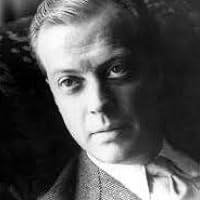
About Eric Ambler
We have collected 36 quotes from 2 books by Eric Ambler on BookQuoters.
More about the author →More by Eric Ambler
The Mask of Dimitrios
About the book
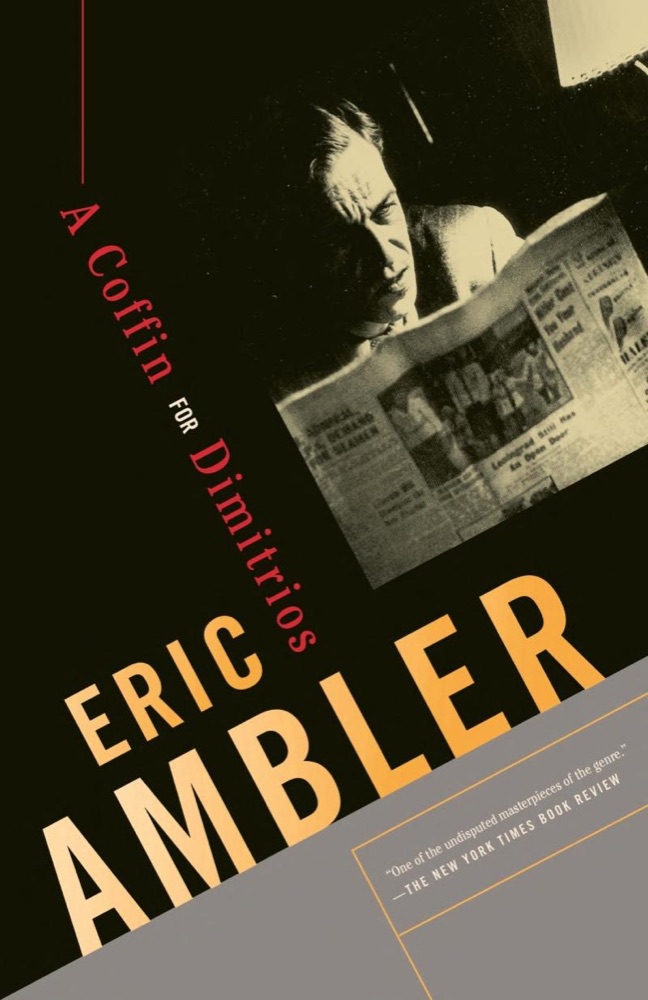
When Josef Vadassy arrives at the Hotel de la Reserve at the end of his Riviera holiday, he is simply looking forward to a few more days of relaxation before returning to Paris. But in St. Gatien, on the eve of World War II, everyone is suspect–the American brother and sister, the expatriate Brits, and the German gentleman traveling under at least one assumed name. When the film he drops off at the chemist reveals photographs he has not taken, Vadassy finds himself the object of intense suspicion. The result is anything but the rest he had been hoping for.
Book details
- First published
- 1938
- Author
- Eric Ambler
- Genre
- Fiction
- Goodreads rating
- 3.91 (5k ratings)
Keep reading
 The Road Back
 Agent Zigzag: A True Story of Nazi Espionage, Love, and Betrayal
 The Gulag Archipelago 1918-1956
 The Spy Who Came In from the Cold
The Mask of Dimitrios
The Spy Who Came In from the Cold
The Mask of Dimitrios
 Berlin Diary: The Journal of a Foreign Correspondent 1934-1941
 Night Soldiers
 The Honourable Schoolboy
 The Winds of War
 The Captive Mind
 The Looking Glass War
 The Secret Agent
 Radio Free Albemuth
 Homage to Catalonia
 A Russian Journal
 You Can't Go Home Again
 The Paris Vendetta
 The Wars
 Fall of Giants
 City of Thieves
 The Splendid and the Vile: A Saga of Churchill, Family, and Defiance During the Blitz
 Under the Same Stars
 The Eighth Life
 Precipice
 The Prague Cemetery
 Tigerman
 The Nutmeg of Consolation
 Witness
 Closing the Ring
 The Dream of Scipio
 Address Unknown
 The Enemy
 A Collection of Essays
 From Here to Eternity
 Darkness at Noon
 Use of Weapons
 The Colossus of Maroussi
 The Monuments Men: Allied Heroes, Nazi Thieves, and the Greatest Treasure Hunt in History
 Everything Flows
 My Early Life, 1874-1904
 Another Country
 A Bend in the River
 Black Lamb and Grey Falcon
 Arm of the Sphinx
 The Proud Tower: A Portrait of the World Before the War, 1890-1914
 Too Like the Lightning
 The Postcard
 The Glass Palace
 Mason & Dixon
 Resistance, Rebellion and Death: Essays
 If This Is a Man / The Truce
 All the Devils Are Here
 Essays of E.B. White
 Flight To Arras
 The Will to Battle
 The Tunnel
 Ninety-Three
 That Hideous Strength
 Storm of Steel
 Border: A Journey to the Edge of Europe