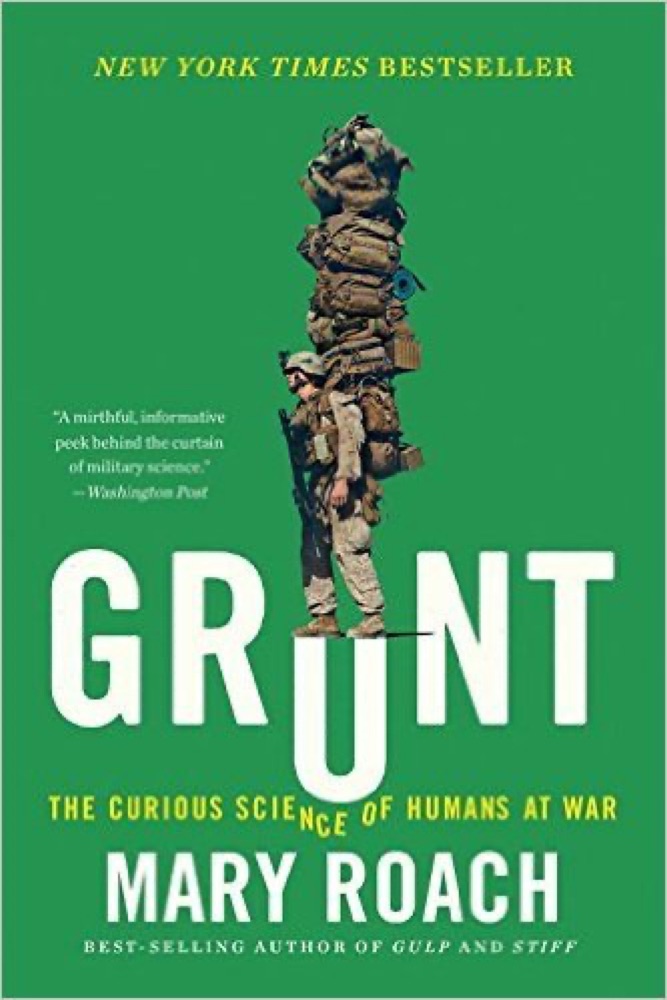

 Packing for Mars: The Curious Science of Life in the Void
Quotes from the Book
Heroism doesn’t always happen in a burst of glory. Sometimes small triumphs and large hearts change the course of history. Sometimes a chicken can save a man’s life.
16
Sometimes courage is nothing more than a willingness to think differently than those around you. In a culture of conformity, that’s braver than it sounds.
8
How about suicide rate. And what a shame to lose them after they’ve made it back. We keep them alive, but we don’t teach them how to live.
7
US government button specifications run to twenty-two pages. This fact on its own yields a sense of what it is like to design garments for the Army.
6
This book is a salute to the scientists and the surgeons, running along in the wake of combat, lab coats flapping. Building safer tanks, waging war on filth flies. Understanding turkey vultures. T
5
On top of its other charms, the maggot breathes through its ass. It
5
The technical term for fuckin’ tunnel vision is attentional narrowing. It’s another prehistorically helpful but now potentially disastrous feature of the survival stress response. One focuses on the threat to the exclusion of almost everything else. Bruce Siddle tells a story about a doctor who had some fun with an anxious intern. He sent him across the emergency room to sew up a car crash victim’s lacerations. The intern was so intent on his stitching that he failed to notice his patient was dead.
5
A few words in defense of military scientists. I agree that squad leaders are in the best position to know what and how much their men and women need to bring on a given mission. But you want those squad leaders to be armed with knowledge, and not all knowledge comes from experience. Sometimes it comes from a pogue at USUHS who’s been investigating the specific and potentially deadly consequences of a bodybuilding supplement. Or an army physiologist who puts men adrift in life rafts off the dock at a Florida air base and discovers that wetting your uniform cools you enough to conserve 74 percent more of your body fluids per hour. Or the Navy researcher who comes up with a way to speed the recovery time from travelers’ diarrhea. These things matter when it’s 115 degrees and you’re trying to keep your troops from dehydrating to the point of collapse. There’s no glory in the work. No one wins a medal. And maybe someone should.
5
The other way to train medics is to have them practice a skill so many times that it becomes automatic. So when the prefrontal cortex goes AWOL, when reasoning drops away, muscle memory, one hopes, will persist.
4
I am not, by trade or character, a spotlight operator. I’m the goober with a flashlight, stumbling into corners and crannies, not looking for anything specific but knowing when I’ve found it.
4
Sunlight triggers a cutoff of melatonin, bringing on wakefulness. (Indoor light—particularly the light from tablets and smartphones—can also suppress melatonin, but nowhere near as dramatically as sunlight.) This is why night shift workers who drive home in the morning through sunlight and then struggle to fall asleep may find relief by buying amber-lensed Bono-style glasses that block the sun’s blue light wavelengths. NSMRL
3
For every twenty-four hours awake, Belenky told me, people lose 25 percent of their capacity for useful mental work.
3
Caffeine is safe and effective but not without a downside. Depending on one’s sensitivity, it has a half-life of six to eight hours. Even if you have no trouble falling asleep after drinking coffee late in the day, you may wake more easily during the night because your nervous system is still aroused, your brain attuned to sounds and other stimuli that would otherwise go unheeded. The more poorly you sleep, the more caffeine you tend to consume the next day, and the more lightly you sleep the following night. And so on.
3
Sudden loud noise triggers a cluster of split-second protective reflexes known as the startle pattern. You blink to protect your eyes, while your upper body swivels toward the sound to assess the threat. The arms bend and retract to the chest, the shoulders hunch, and the knees bend, all of which combine to make you a smaller, less noticeable target. Snapping the limbs in tight to the torso may also serve to protect your vital innards.‡ You are your own human shield. Siddle says hunching may have evolved to protect the neck: a holdover from caveman days. “A big cat stalking prey will jump the last twenty feet and come down on the back and shoulders and bite through the neck.
3
Anything perceived as a threat trips the amygdala—the brain’s hand-wringing sentry—to set in motion the biochemical cascade known as the fight-or-flight response. Bruce Siddle, who consults in this area and sits on the board of Strategic Operations, prefers the term “survival stress response.” Whatever you wish to call it, here is a nice, concise summary, courtesy of Siddle: “You become fast, strong, and dumb.” Our hardwired survival strategy evolved back when threats took the form of man-eating mammals, when hurling a rock superhumanly hard or climbing a tree superhumanly fast gave you the edge that might keep you alive. A burst of adrenaline prompts a cortisol dump to the bloodstream. The cortisol sends the lungs into overdrive to bring in more oxygen, and the heart rate doubles or triples to deliver it more swiftly. Meanwhile the liver spews glucose, more fuel for the feats at hand. To get the goods where the body assumes they’re needed, blood vessels in the large muscles of the arms and legs dilate, while vessels serving lower-priority organs (the gut, for example, and the skin) constrict. The prefrontal cortex, a major blood guzzler, also gets rationed. Good-bye, reasoning and analysis. See you later, fine motor skills. None of that mattered much to early man. You don’t need to weigh your options in the face of a snarling predator, and you don’t have time.
3
The M16 has a scope with a small red arrow in the center of the sight. You align the arrow with what or (jeez) whom you wish to shoot and squeeze the trigger. Both “squeeze” and “pull” are exaggerations of the motion applied to this trigger. It’s a trivial, tiny movement, the twitch of a dreaming child. So quick and so effortless is it that it’s hard for me to associate it with any but the most inconsequential of acts. Flipping a page. Typing an M. Scratching an itch. Ending a life wants a little more muscle.
3
A wedding gown entails multilayering of expensive specialty fabrics for an outfit whose useful lifespan may come and go in a single afternoon. Much like a bomb suit.
3
The driving aesthetic of military style is uniformity. Whence the word uniform. From first inspection to Arlington National Cemetery, soldiers look like those around them: same hat, same boots, identical white grave marker. They are discouraged from looking unique, because that would encourage them to feel unique, to feel like an individual. The problem with individuals is that they think for themselves and of themselves, rather than for and of their unit. They’re the lone goldfish on the old Pepperidge Farm bags, swimming the other way. They’re a problem.
3
Riddle traveled a lot in his twenties and recalls being hit by a realization. So much of people’s lives—their opportunities, their health and longevity—comes down to where they were born. “It’s so random,” he says.
3
Navy personnel began clamoring for it. To the embarrassment of many, the current Navy working uniform is a blue camouflage print. Unsure whether perhaps I was missing the point, I asked a Navy commander about the rationale. He looked down at his trousers and sighed. “That’s so no one can see you if you fall overboard.” No
3
I tell Mark I’m glad to see some cup holders were left in place. I recognize the brief, polite silence that follows. It’s Mark Roman rendered mute by the fullness of my ignorance. They’re rifle holders.
2
What sort of person experimentally infests a child with maggots? A confident sort, certainly. A maverick. Someone comfortable with the unpretty facts of biology. Someone who is perhaps himself an unpretty fact of biology.
2
Three hundred feet down, seawater slams through a two-inch hole with enough force to bend a knee the way knees don’t bend.
2
If you’re dying of thirst in the desert, drinking your urine won’t help you. The proteins and salts are by that point so concentrated that the body needs to pull fluid from the tissues to dilute them, which puts you back where you began, only worse, because now you are saddled with the memory of drinking your own murky, stinking pee. Rhabdomyolysis
2
You mean like a small silicone breast implant?” I wasn’t actually thinking that, but sure.
2
If you don’t have a pair of cadaver shoes, you’re not doing enough research.
2
What does this tell us about sharks? Should women be worried? Hard to say. How crazy are sharks for seal meat? Do dead groupers smell like used tampons? Unknown. I’d stay in my deck chair, if I were menstruating you.
2
At an Italian deli counter, a whiff of butyric acid reads as parmesan cheese; elsewhere, vomit.
2
Every now and then in life, a compliment is tucked so seamlessly into a insult that it’s impossible to know how to react.
2
Watch on YouTube
About Mary Roach
We have collected 198 quotes from 7 books by Mary Roach on BookQuoters.
More about the author →More by Mary Roach
Packing for Mars: The Curious Science of Life in the Void
 Stiff: The Curious Lives of Human Cadavers
 Bonk: The Curious Coupling of Science and Sex
 Gulp: Adventures on the Alimentary Canal
About the book
A New York Times / National Bestseller
"America's funniest science writer" ( Washington Post ) Mary Roach explores the science of keeping human beings intact, awake, sane, uninfected, and uninfested in the bizarre and extreme circumstances of war. Grunt tackles the science behind some of a soldier's most challenging adversaries―panic, exhaustion, heat, noise―and introduces us to the scientists who seek to conquer them. Mary Roach dodges hostile fire with the U.S. Marine Corps Paintball Team as part of a study on hearing loss and survivability in combat. She visits the fashion design studio of U.S. Army Natick Labs and learns why a zipper is a problem for a sniper. She visits a repurposed movie studio where amputee actors help prepare Marine Corps medics for the shock and gore of combat wounds. At Camp Lemmonier, Djibouti, in east Africa, we learn how diarrhea can be a threat to national
Book details
- First published
- 2016
- Author
- Mary Roach
- Genre
- Nonfiction
- Goodreads rating
- 3.94 (24k ratings)
The buzz
- The New York TimesReview in The New York Timesprofessional review (via Book Marks)
- The Washington PostReview in The Washington Postprofessional review (via Book Marks)
- The Wall Street JournalReview in The Wall Street Journalprofessional review (via Book Marks)
- Los Angeles TimesReview in Los Angeles Timesprofessional review (via Book Marks)
- The Boston GlobeReview in The Boston Globeprofessional review (via Book Marks)
- ChicagotribuneReview in Chicagotribuneprofessional review (via Book Marks)
Keep reading
 Pocket Apocalypse
 The Hangman's Replacement: Sprout of Disruption
Stiff: The Curious Lives of Human Cadavers
The Hangman's Replacement: Sprout of Disruption
Stiff: The Curious Lives of Human Cadavers
 Blindsight
 Parasite
 Tell Me Everything: The Story of a Private Investigation
 The Dreadful Lemon Sky
 Helmet for My Pillow
 A Better World
 Beacon 23
 Killing Floor
 Fool Me Once
 The Enemy
 The Intern's Handbook
 The Tale of the Dueling Neurosurgeons: The History of the Human Brain as Revealed by True Stories of Trauma, Madness, and Recovery
 The Salmon of Doubt
Packing for Mars: The Curious Science of Life in the Void
The Salmon of Doubt
Packing for Mars: The Curious Science of Life in the Void
 What It is Like to Go to War
 What Doesn't Kill Us: How Freezing Water, Extreme Altitude, and Environmental Conditioning Will Renew Our Lost Evolutionary Strength
 Use of Weapons
 The Gone-Away World
 Wampeters, Foma and Granfalloons
 Maelstrom
 Dead Stop
 Sometimes a Great Notion
 The Forever War
Gulp: Adventures on the Alimentary Canal
The Forever War
Gulp: Adventures on the Alimentary Canal
 NGLND XPX
 The Nature of Jade
 Unwind
 What Moves the Dead
 When You Are Engulfed in Flames
 Cryptonomicon
 Starfish
 Riding the Elephant: A Memoir of Altercations, Humiliations, Hallucinations, and Observations
 What If?: Serious Scientific Answers to Absurd Hypothetical Questions
 Speaking from Among the Bones
 Make Something Up: Stories You Can't Unread
 Range of Motion
 Heaven's River
 The Further Adventures of An Idiot Abroad
 Snow Crash
 Dead Beat
 Skeleton Crew
 The Long Way to a Small, Angry Planet
 Mostly Harmless
 Moving Pictures
 Generation Kill: Devil Dogs, Iceman, Captain America, and the New Face of American War
 Dry
Dry
 Starship Troopers
 Caliban’s War
 This Book Is Full of Spiders
 Infinite Jest
 The Rhesus Chart
 Friday
 Soonish: Ten Emerging Technologies That'll Improve and/or Ruin Everything
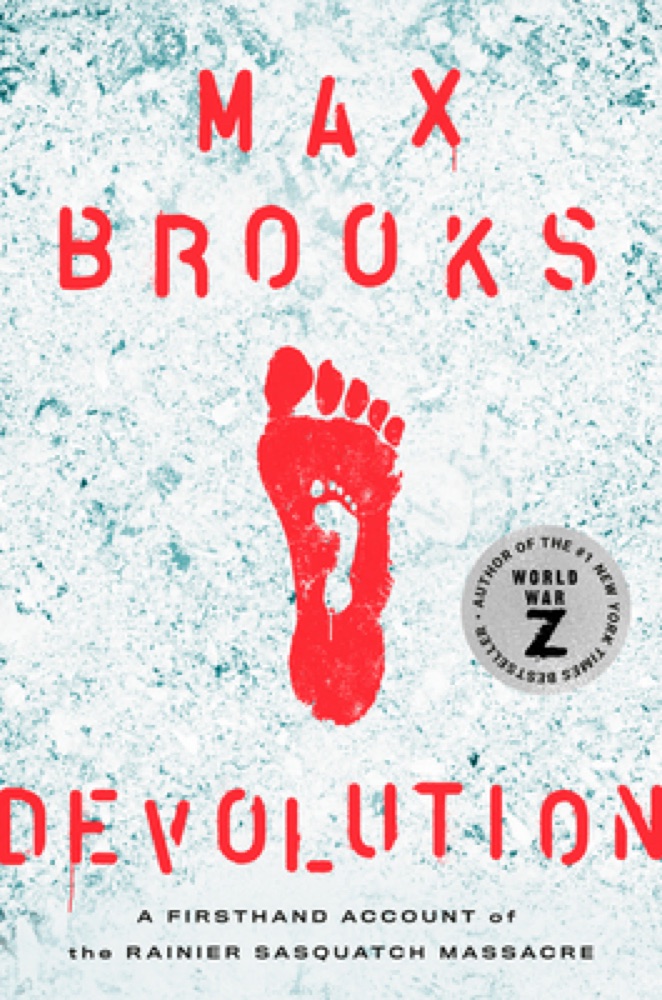 Devolution: A Firsthand Account of the Rainier Sasquatch Massacre
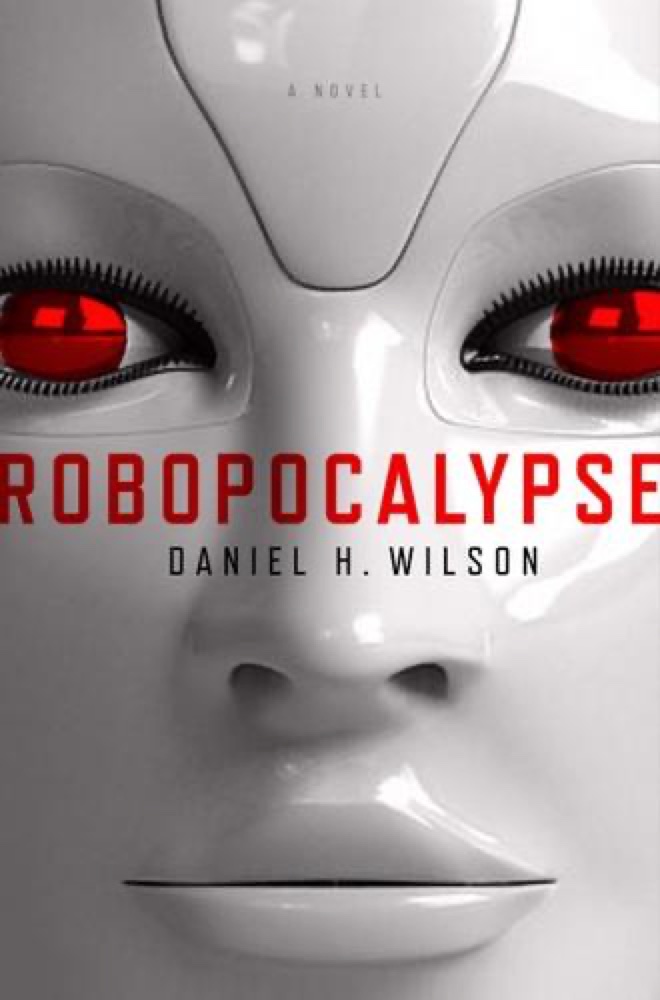 Robopocalypse
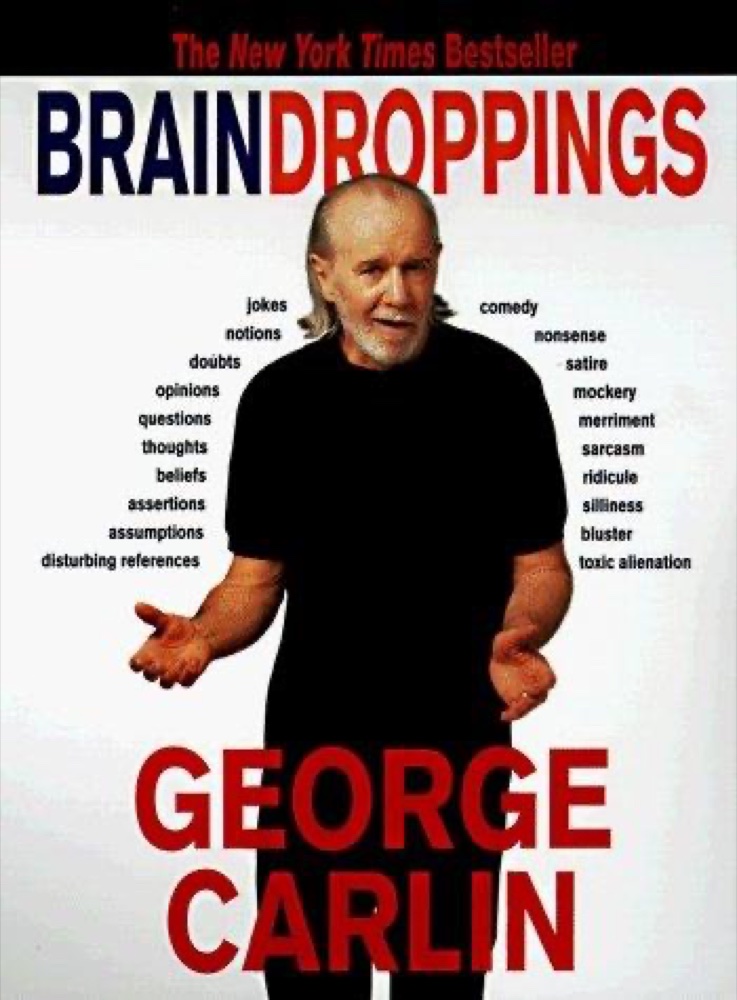 Brain Droppings