
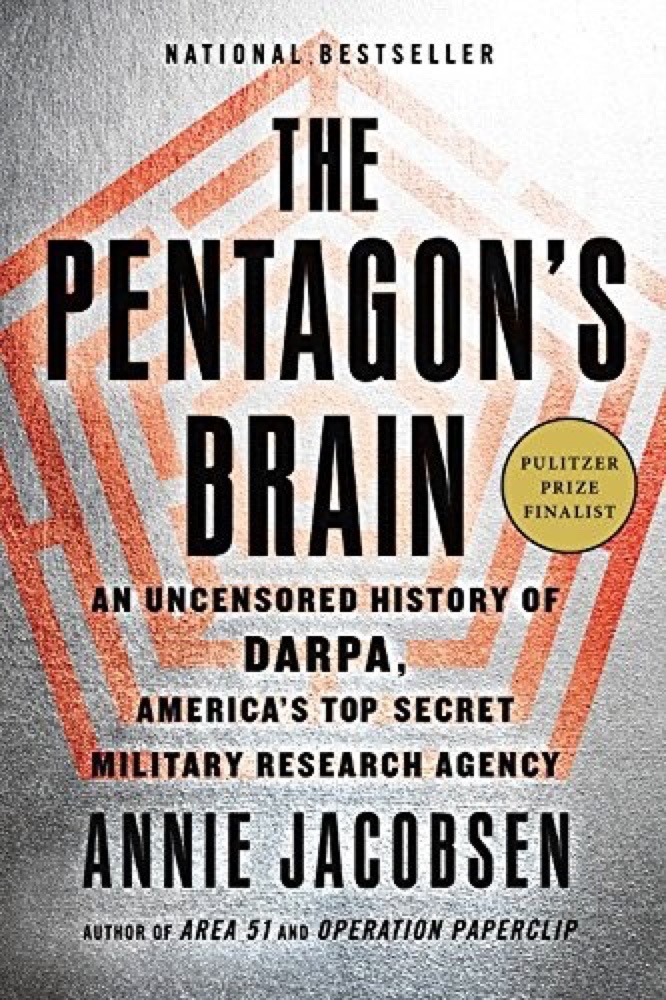
 The Pentagon's Brain
Quotes from the Book
Humans are wired to advance. Humans do whatever it takes. And yet, nuclear war zeros it all out. Nuclear weapons reduce human brilliance and ingenuity, love and desire, empathy and intellect, to ash.
11
A nuclear crisis is not a worst-case scenario, it is the worst-case scenario.
4
Albert Einstein was asked what he thought about nuclear war, to which he is said to have responded, “I know not with what weapons World War III will be fought, but World War IV will be fought with sticks and stones.
3
The fundamental idea behind this book is to demonstrate, in appalling detail, just how horrifying nuclear war would be.
3
With time, after a nuclear war, all present-day knowledge will be gone. Including the knowledge that the enemy was not North Korea, Russia, America, China, Iran, or anyone else vilified as a nation or a group. It was the nuclear weapons that were the enemy of us all. All along.
2
It is the astonishing speed with which ballistic missile submarines can launch nuclear weapons, and hit multiple targets nearly simultaneously, that makes them the handmaidens of the apocalypse.
2
An immediate consequence of a nuclear strike [would be] that democracy would be completely gone and military rule would take place.” Perry believes that if military rule is ever imposed on today’s America, “it would be almost impossible to undo military rule” in the United States.
2
When a nuclear bomb hits Washington, D.C., chaos will grip the nation. Without a functioning government, there will be no rule of law. Democracy will be replaced by anarchy. Moral constructs will disappear. Murder, mayhem, and madness will prevail. In the words of Nikita Khrushchev, “The survivors will envy the dead.
2
Paranoia is a psychological phenomenon, same as deterrence.
2
Perry believes that if military rule is ever imposed on today’s America, “it would be almost impossible to undo military rule” in the United States.
2
If it’s a Bolt out of the Blue attack,” says Fugate, “population protection planning is a different animal. With a Bolt out of the Blue attack, population protection planning won’t happen because everyone will be dead.
2
The U.S. president—as odd as this may seem—has sole authority to launch America’s nuclear weapons. The president asks permission of no one.
1
The power to hurt is bargaining power,”76 Schelling famously wrote in his book Arms and Influence. “To exploit it is diplomacy—vicious diplomacy, but diplomacy.
1
And when the U.S. wants regime change, history shows the U.S. will lie.
1
Nikita Khrushchev, “The survivors will envy the dead.
1
Those who somehow manage to escape death by the initial blast
1
So here we are now. Teetering at the edge—perhaps even closer than ever before.
1
During the Cuban Missile Crisis, in 1962, U.S. forces were placed at DEFCON 2,119 meaning war involving nuclear weapons was presumed to be imminent. Okay
1
Launch on Warning policy is why—and how—America keeps a majority of its deployed nuclear arsenal on ready-for-launch status, also known as Hair-Trigger Alert.
1
The Missile Warning Center, Cheyenne Mountain Complex, Colorado The National Military Command Center, Pentagon, Washington, D.C.
1
It was decades later that Rubel confessed that this U.S. plan for nuclear war he participated in reminded him of the Nazis’ plans for genocide.
1
Why stockpile 1,000 or 18,000 or 31,255 nuclear bombs when a single one of them the size of Ivy Mike, dropped on New York City or Moscow, could leave some 10 million people dead?
1
By 1957, there were 5,543 bombs in the U.S. stockpile.
1
An atomic bomb will kill tens of thousands of people, as did the ones dropped on Hiroshima and Nagasaki. A thermonuclear bomb, if detonated on a city like New York or Seoul, will kill millions of people in a superheated flash.
1
U.S. began making new and bigger plans, to use scores of atomic weapons in the next world war. A war that could be expected to kill, at minimum, 600 million people, one-fifth of the entire world’s population.
1
Jeffrey R. Yago: engineer; advisor to Electromagnetic Pulse Task Force of National and Homeland Security
1
A story where 12,000 years of civilization in the making gets reduced to rubble in mere minutes and hours. This is the reality of nuclear war. For as long as nuclear war exists as a possibility, it threatens mankind with Apocalypse.
1
The sharp edge of a razor is difficult to pass over; thus the wise say the path to Salvation is hard.
1
Thousands of commercial airplanes using fly-by-wire technology systems lose wing and tail controls, lose cabin pressure and landing gear, lose instrument landing systems as they head violently toward the ground. One class of passenger aircraft is mercifully spared, namely the older model 747s, used by the Defense Department for its Doomsday Planes. “747 pilots still use a foot pedal and a yoke, mechanically linked to the control surfaces,” Yago tells us. “There’s no fly-by-wire technology there.
1
Watch on YouTube
About Annie Jacobsen
We have collected 67 quotes from 3 books by Annie Jacobsen on BookQuoters.
More about the author →More by Annie Jacobsen
About the book
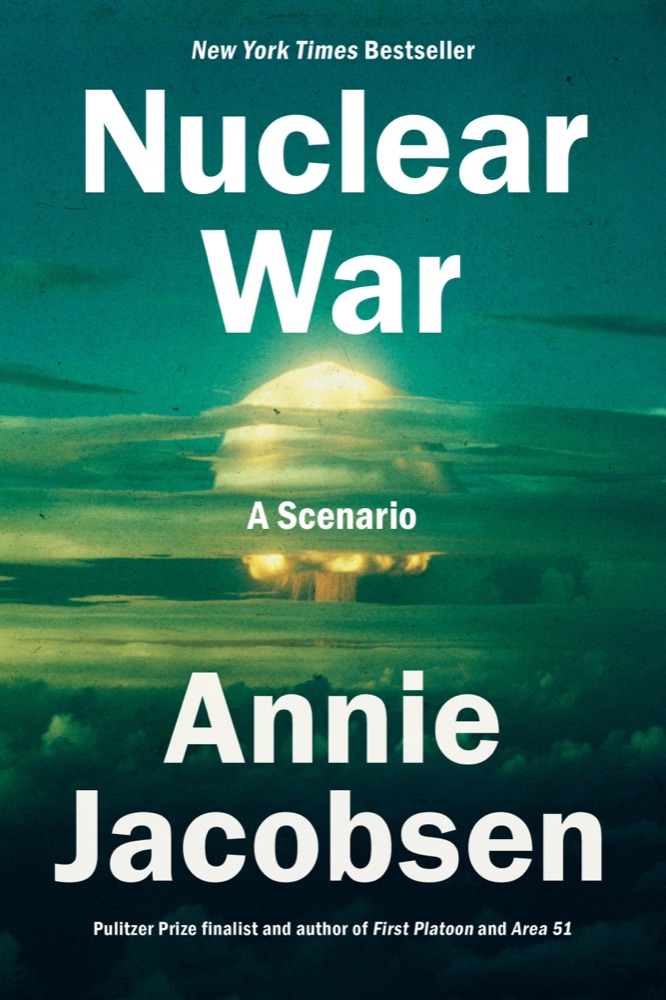
There is only one scenario other than an asteroid strike that could end the world as we know it in a matter of hours: nuclear war. And one of the triggers for that war would be a nuclear missile inbound toward the United States.
Every generation, a journalist has looked deep into the heart of the nuclear military establishment: the technologies, the safeguards, the plans, and the risks. These investigations are vital to how we understand the world we really live in—where one nuclear missile will beget one in return, and where the choreography of the world’s end requires massive decisions made on seconds’ notice with information that is only as good as the intelligence we have.
Pulitzer Prize finalist Annie Jacobsen’s Nuclear War: A Scenario explores this ticking-clock scenario, based on dozens of exclusive new interviews with military and civilian experts who have built the weapo
Book details
- First published
- 2024
- Author
- Annie Jacobsen
- Genre
- Nonfiction
- Goodreads rating
- 4.36 (53k ratings)
The buzz
- The New York TimesReview in The New York Timesprofessional review (via Book Marks)
- The Wall Street JournalReview in The Wall Street Journalprofessional review (via Book Marks)
- Kirkus ReviewsReview in Kirkus Reviewsprofessional review (via Book Marks)
- TelegraphReview in Telegraphprofessional review (via Book Marks)
Keep reading
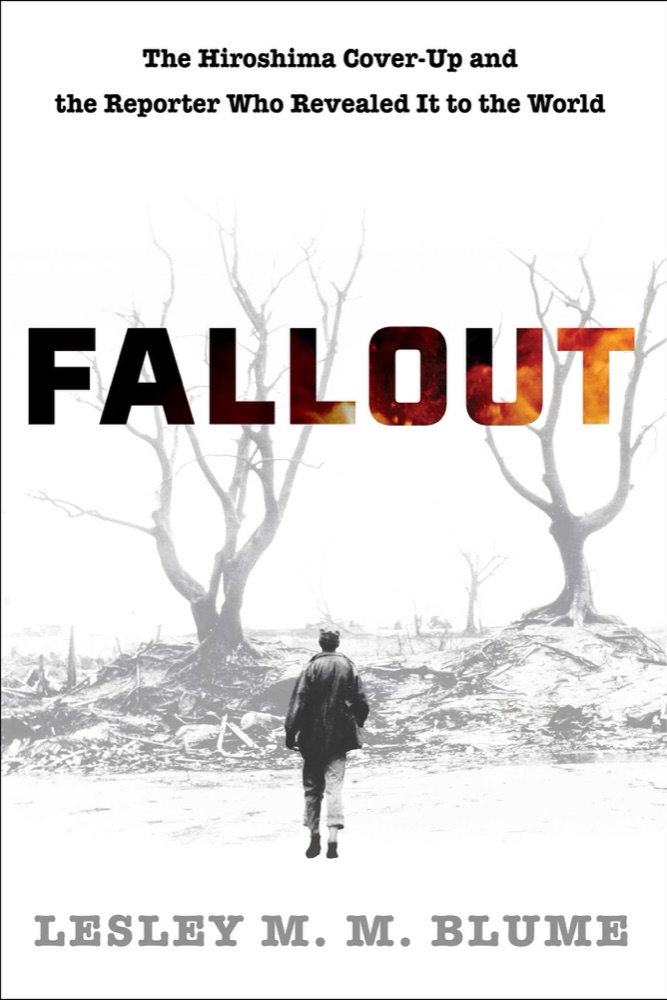 Fallout: The Hiroshima Cover-up and the Reporter Who Revealed It to the World
The Pentagon's Brain
Fallout: The Hiroshima Cover-up and the Reporter Who Revealed It to the World
The Pentagon's Brain
 This Kind of War: A Study in Unpreparedness
 One Second After
 Bomb: The Race to Build—and Steal—the World's Most Dangerous Weapon
 Imperial Ambitions: Conversations on the Post-9/11 World
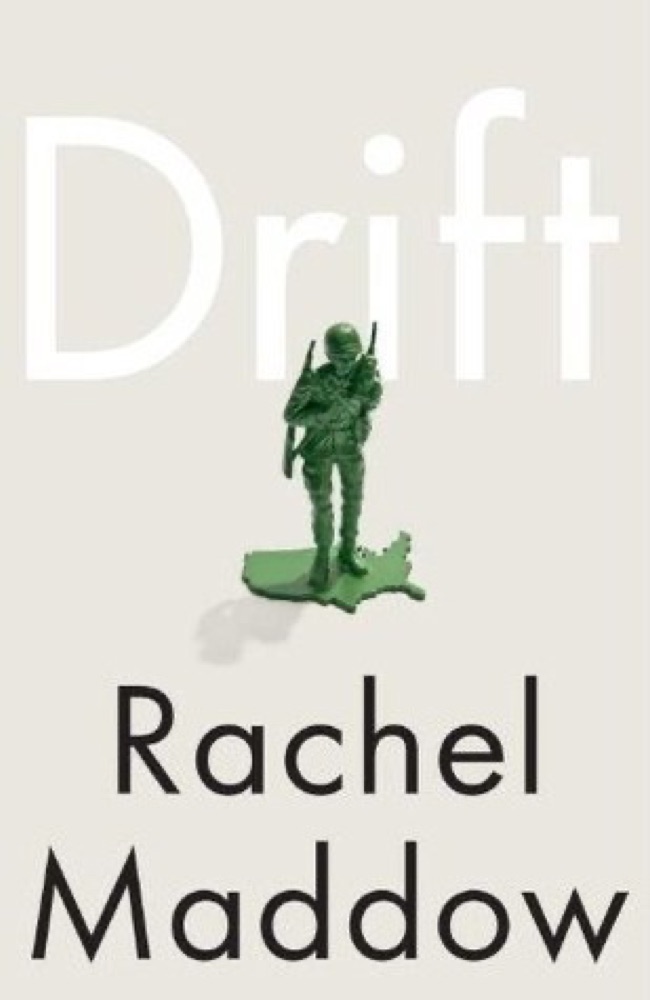 Drift
Drift
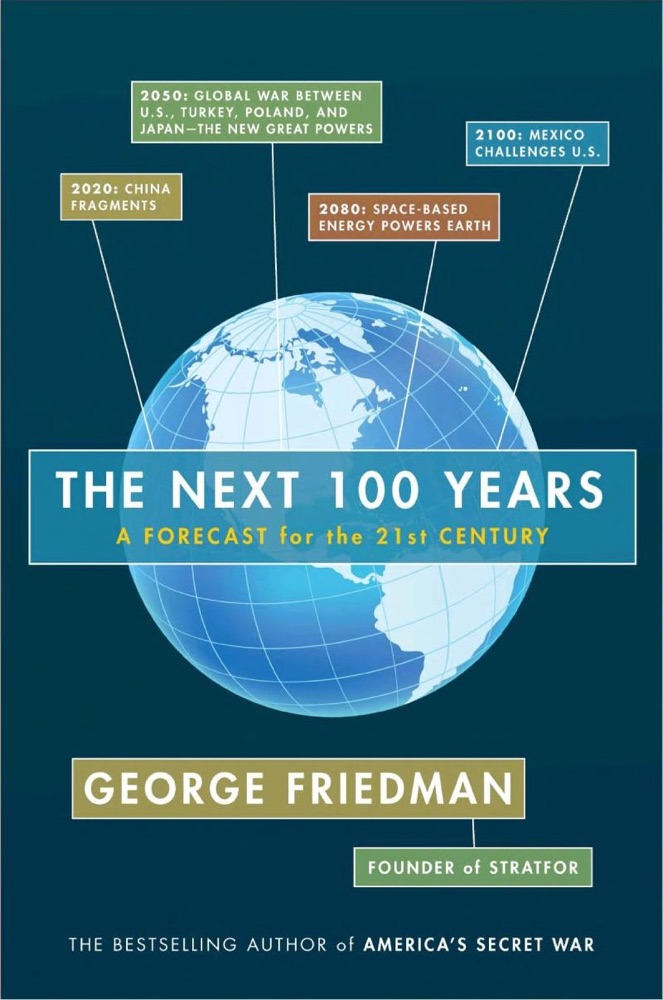 The Next 100 Years: A Forecast for the 21st Century
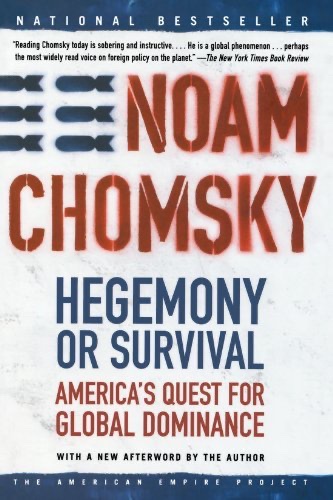 Hegemony or Survival: America's Quest for Global Dominance
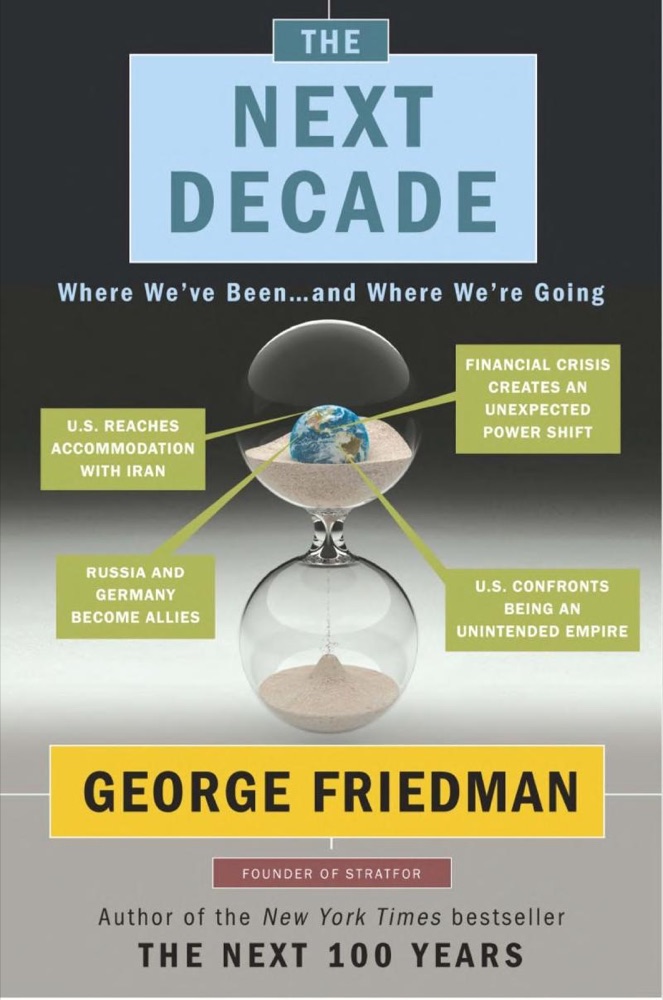 The Next Decade: Where We've Been . . . and Where We're Going
 War
War
 Wastelands: Stories of the Apocalypse
 Dead Fall
 What If?: Serious Scientific Answers to Absurd Hypothetical Questions
 World War Z: An Oral History of the Zombie War
 One Year After
 The Great Influenza: The Story of the Deadliest Pandemic in History
 A Better World
 America Alone: The End of the World As We Know It
 One Minute to Midnight: Kennedy, Khrushchev and Castro on the Brink of Nuclear War
 Killing Kennedy: The End of Camelot
 Behold a Pale Horse
 Closing the Ring
 The Untold History of The United States
 Ripple
 Billions & Billions: Thoughts on Life and Death at the Brink of the Millennium
 If Anyone Builds It, Everyone Dies: Why Superhuman AI Would Kill Us All
 Persepolis Rising
 On Killing: The Psychological Cost of Learning to Kill in War and Society
 Conspirators' Hierarchy: The Story of the Committee of 300
 The Girls of Atomic City: The Untold Story of the Women Who Helped Win World War II
 How To: Absurd Scientific Advice for Common Real-World Problems
 The Shock Doctrine: The Rise of Disaster Capitalism
 One Day, Everyone Will Have Always Been Against This
 Use of Weapons
 Flyboys: A True Story of Courage
 The Revenge Of Geography: What the Map Tells Us About Coming Conflicts and the Battle Against Fate
 Cibola Burn
 American Prometheus: The Triumph and Tragedy of J. Robert Oppenheimer
 Radio Free Albemuth
 The Ministry for the Future
 Wanderers
 The Jakarta Method: Washington's Anticommunist Crusade and the Mass Murder Program that Shaped Our World
 Falter: Has the Human Game Begun to Play Itself Out?
 Understanding Power: The Indispensable Chomsky
 Voices from Chernobyl: The Oral History of a Nuclear Disaster
 The Winter Fortress: The Epic Mission to Sabotage Hitler's Atomic Bomb
 The Western Lands
 The Forever War
 Pacific Crucible: War at Sea in the Pacific, 1941-1942
 On Tyranny: Twenty Lessons from the Twentieth Century
 A Short History of Progress
 Apocalypse Z: The Beginning of the End
 The Coldest Winter: America and the Korean War
 War Is a Force That Gives Us Meaning
 Too Like the Lightning
 Sandworms of Dune
 Red Mars
 Notes from an Apocalypse: A Personal Journey to the End of the World and Back
 What It is Like to Go to War