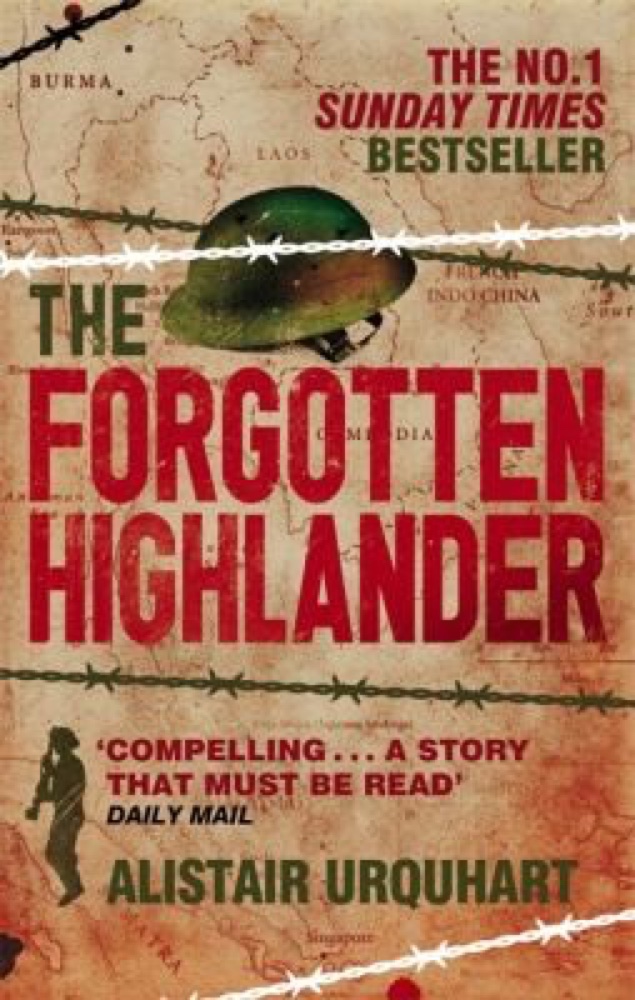
 The Forgotten Highlander: My Incredible Story of Survival During the War in the Far East
Quotes from the Book
These men suffered enough for a hundred lifetimes, and no one in this country should be allowed to forget it.
25
The War Department in Washington briefly weighed more ambitious schemes to relieve the Americans on a large scale before it was too late. But by Christmas of 1941, Washington had already come to regard Bataan as a lost cause. President Roosevelt had decided to concentrate American resources primarily in the European theater rather than attempt to fight an all-out war on two distant fronts. At odds with the emerging master strategy for winning the war, the remote outpost of Bataan lay doomed. By late December, President Roosevelt and War Secretary Henry Stimson had confided to Winston Churchill that they had regrettably written off the Philippines. In a particularly chilly phrase that was later to become famous, Stimson had remarked, 'There are times when men have to die.
13
I thought we’d been forgotten,” the prisoner said. “No, you’re not forgotten,” Robbins said. “We’ve come for you.
6
The degree to which a society is civilized can be judged by entering its prisons.
5
We are not pleasant people here, for the story of war is always the story of hate; it makes no difference with whom one fights. The hate destroys you … Agnes Newton Keith Three Came Home
5
Filipinos were famous for their garrulousness. They were the Irish of Asia, it was sometimes said—warm, openhearted, story-loving, with unslakable appetites for the latest rumor or fact.
4
In August 1944, the War Ministry in Tokyo had issued a directive to the commandants of various POW camps, outlining a policy for what it called the ‘final disposition’ of prisoners. A copy of this document, which came to be known as the ‘August 1 Kill-All Order,’ would surface in the war crimes investigations in Tokyo. Bearing a chilling resemblance to actual events that occurred at Palawan, the directive stated: ‘When the battle situation becomes urgent the POWs will be concentrated and confined to their location and kept under heavy guard until preparations for the final disposition will be made. Although the basic aim is to act under superior orders, individual dispositions may be made in [certain] circumstances. Whether they are destroyed individually or in groups, and whether it is accomplished by means of mass bombing, poisonous smoke, poisons, drowning, or decapitation, dispose of them as the situation dictates. It is the aim not to allow the escape of a single one, to annihilate them all, and not to leave any traces.’ (pp. 23-24)
4
Ralph Hibbs said his heart stopped, for he realized that it was the first Stars and Stripes he'd seen since the surrender. All the men in all the trucks stood at attention and saluted. Then came the tears. "We wept openly," said Abie Abraham, "and we wept without shame.
3
It was a chaplain on the battlefields of Bataan, Father Cummings, who had coined the famous phrase There are no atheists in foxholes.
2
They’d seen killing, and many themselves had killed. But the emotional texture of warfare was vastly different from that of prisonerhood. Fighting, even fighting a losing battle, was mercifully busy work. There was always something to do, and having something to do could be a godsend. It kept one’s mind off the brutal panorama, it kept the focus on martial craft and the necessities of personal survival.
2
Thomas was far from healthy, but his diphtheria never returned. Thomas could only call his recovery a miracle. More serum arrived two days later; had he not rallied so dramatically there still was a chance that Thomas would have survived long enough to receive a lifesaving shot. Still, he could not shake the feeling that his reversal without antitoxin was related to his passing the shot on to his buddy Trujillo. There had been numerous cases of miraculous recoveries in the wards of Cabanatuan, and these stories were the subject of endless theological speculation. Thomas, who was not a deeply religious man at the time, did not know what to make of all this, but he was, like Trujillo, most grateful to be alive. “When I came through that diphtheria,” Thomas recalled, “I knew that if anyone was going to walk out of that prison camp it was going to be me. I had made it this far, and as long as the Lord was willing, I was going to make it the rest of the way.
2
He had wanted to go to college but he couldn’t afford it, so he joined the Army, which in comparison to his life in Grand Rapids seemed a radiant existence, holding out the promise of good wages ($21 a month) and three hot meals a day.
1
We’re the battling bastards of Bataan, No mama, no papa, no Uncle Sam, No aunts, no uncles, no nephews, no nieces, No pills, no planes, no artillery pieces, … and nobody gives a damn.
1
Captain Prince nervously craned his neck to learn what the delay was. He heard something strange, a chorus singing softly in the twilight. The tune was hard to make out at first, but then Prince caught it—“God Bless America,” the familiar stanzas rendered in thickly accented English, the melody charmingly curdled with the occasional stale note. At the entrance to the town a few dozen teenage girls dressed in white gowns were singing in sad, sweet voices. It was like a hastily arranged beauty pageant. The local school principal had gone door to door recruiting the prettiest young women from Platero and the surrounding countryside. Some of the girls slipped garlands of fresh sampaguita flowers over the Rangers’ heads and offered welcoming kisses.
1
The executioner would thread a hose down the victim’s esophagus and turn on a spigot. As the water pressure increased, the man’s abdomen would become distended. The guards would then jump on the victim until his intestines ruptured
1
Captain Tsuneyoshi was a caricature of the bombastic prison warden. The Americans would call him “Little Hitler.” A short, bowlegged, mustachioed man, he wore baggy pants and riding boots with spurs. A large samurai sword dangled at his side. He had grave, penetrating eyes, a bald pate, a scar on his right cheek, and a mole on his bottom lip. “He was one of the ugliest mortals I have ever seen,” one prisoner later wrote.
1
faintly rolling hills covered in crisp dry grass. Containers of water had been left along the roadsides, but almost invariably the Japanese guards would kick them over before the prisoners could get a drink.
1
bitter penance, living day to day, and watching the years unfold unused and slow, the youth starved in the breast.
1
I want you to swear an oath before God,” he told them. “Swear that you’ll die fighting rather than let any harm come to those prisoners.
1
from his legs like an untethered weight. In their thousands the parasites
1
a warmth that would almost seem cloying if it wasn’t so obviously sincere.
natural contempt of the victor.
Watch on YouTube
About Hampton Sides
We have collected 22 quotes from 1 book by Hampton Sides on BookQuoters.
More about the author →About the book
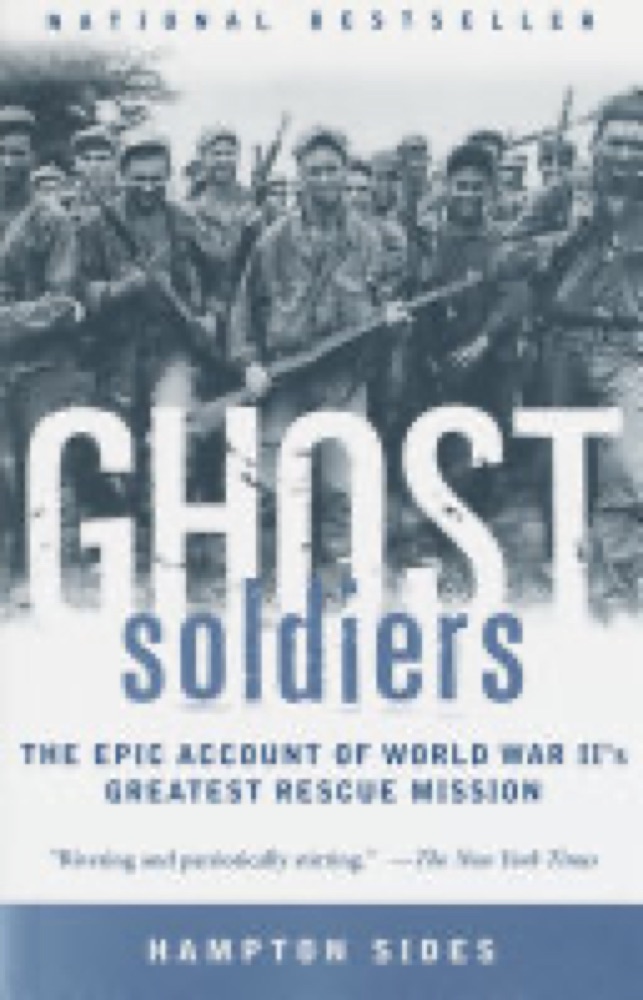
On January 28, 1945, 121 hand-selected U.S. troops slipped behind enemy lines in the Philippines. Their mission: March thirty rugged miles to rescue 513 POWs languishing in a hellish camp, among them the last survivors of the infamous Bataan Death March. A recent prison massacre by Japanese soldiers elsewhere in the Philippines made the stakes impossibly high and left little time to plan the complex operation.In Ghost Soldiers Hampton Sides vividly re-creates this daring raid, offering a minute-by-minute narration that unfolds alongside intimate portraits of the prisoners and their lives in the camp. Sides shows how the POWs banded together to survive, defying the Japanese authorities even as they endured starvation, tropical diseases, and torture. Harrowing, poignant, and inspiring, Ghost Soldiers is the mesmerizing story of a remarkable mission. It is also a testament to the human spir
Book details
- First published
- 2001
- Author
- Hampton Sides
- Genre
- History
- Goodreads rating
- 4.26 (40k ratings)
Keep reading
The Forgotten Highlander: My Incredible Story of Survival During the War in the Far East
 A Rumor of War: The Classic Vietnam Memoir
 Flyboys: A True Story of Courage
 With the Old Breed: At Peleliu and Okinawa
 Black Hawk Down
 Band of Brothers: E Company, 506th Regiment, 101st Airborne from Normandy to Hitler's Eagle's Nest
 The Killer Angels
 The Thin Red Line
 Mr. Lincoln's Army
 An Army at Dawn: The War in North Africa, 1942-1943
 Dispatches
 Auschwitz: A Doctor's Eyewitness Account
 Unbroken: An Extraordinary True Story of Courage and Survival
 The Moon Is Down
 The Wars
 The Second World War
 Matterhorn
 Homage to Catalonia
 Tree of Smoke
 Days Without End
 The Naked and the Dead
 Facing the Mountain: A True Story of Japanese American Heroes in World War II
 The Underground Railroad
 The Day of Battle: The War in Sicily and Italy, 1943-1944
 The Gulag Archipelago 1918-1956
 The Young Lions
 Zinky Boys: Soviet Voices from the Afghanistan War
 Into the Silence: The Great War, Mallory and the Conquest of Everest
 Prisoner B-3087
 Escape from Camp 14: One Man's Remarkable Odyssey from North Korea to Freedom in the West
 A Case of Exploding Mangoes
 Code Talker
 The Monuments Men: Allied Heroes, Nazi Thieves, and the Greatest Treasure Hunt in History
 The Coldest Winter: America and the Korean War
 The Forgotten Soldier
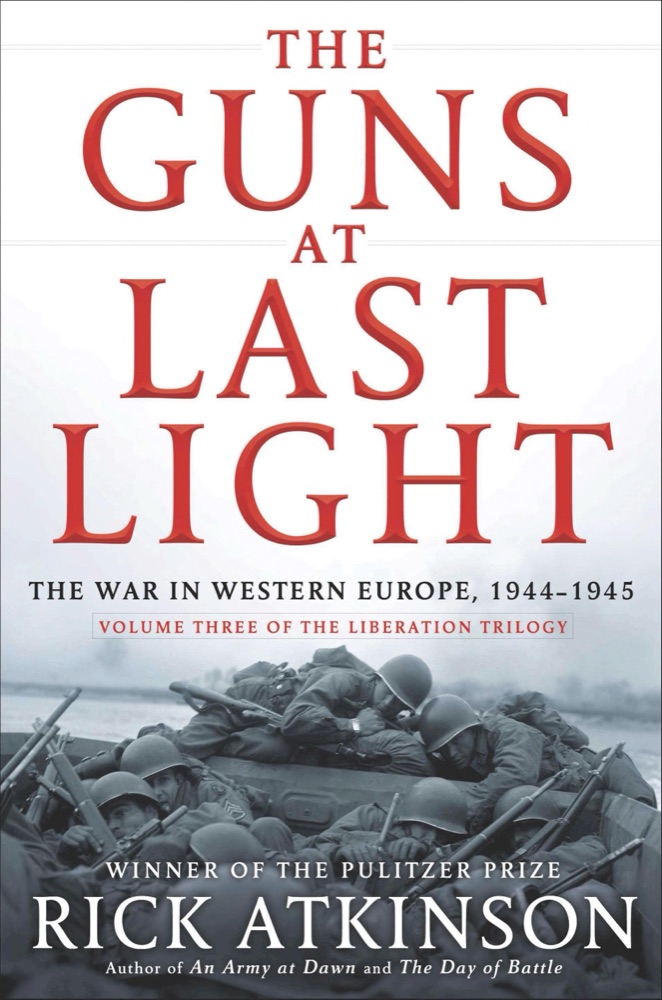 The Guns at Last Light: The War in Western Europe, 1944-1945
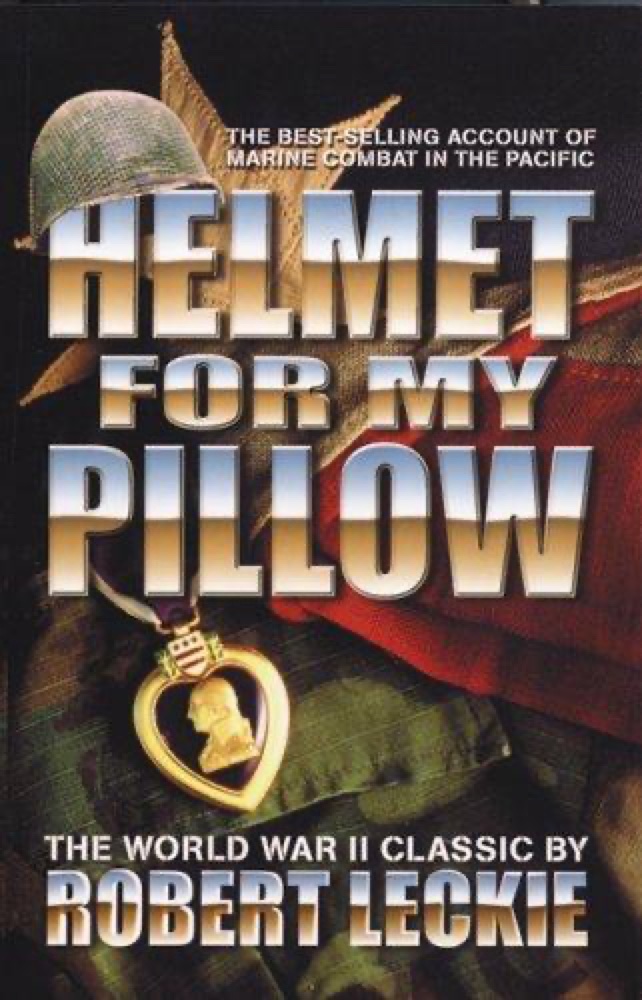 Helmet for My Pillow
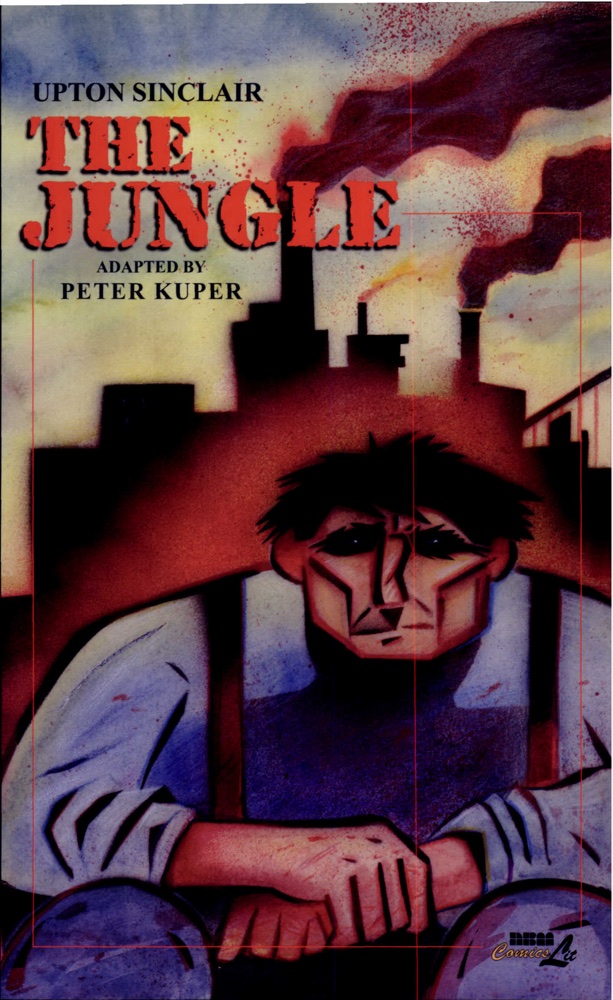 The Jungle
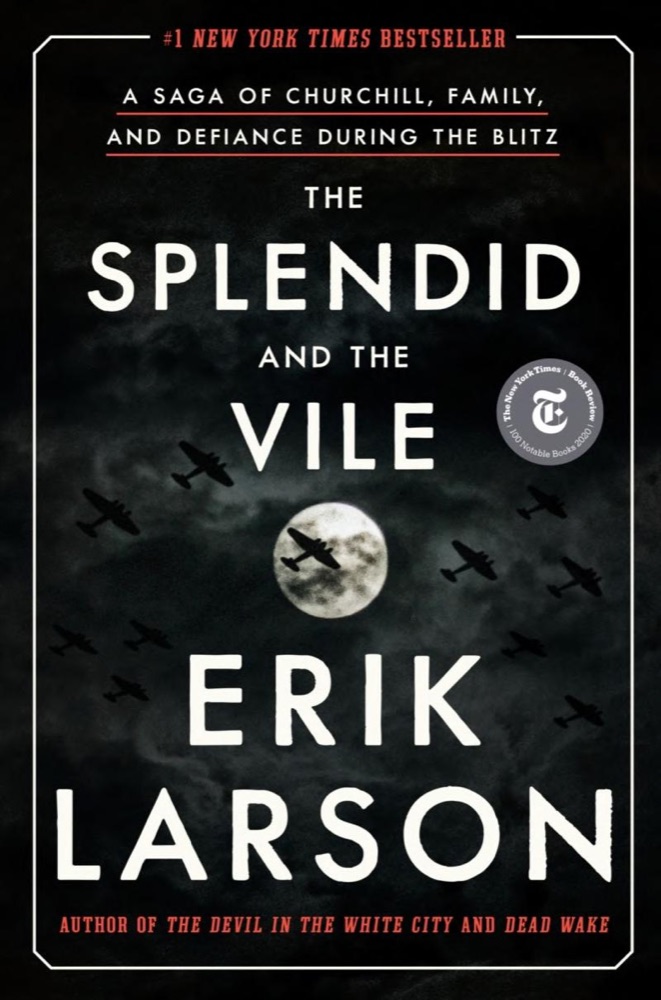 The Splendid and the Vile: A Saga of Churchill, Family, and Defiance During the Blitz
 Blood Song
 We Were Soldiers Once... and Young: Ia Drang - The Battle that Changed the War in Vietnam
 Flags of Our Fathers
 The Buddha in the Attic
 Generation Kill: Devil Dogs, Iceman, Captain America, and the New Face of American War
 Parachute Infantry: An American Paratrooper's Memoir of D-Day and the Fall of the Third Reich
 Dragon Seed
 War and Remembrance
 The Winds of War
 The Affair
 American War
 All Quiet on the Western Front
 No-No Boy
 United States of Japan
 Kolyma Tales
 Alas, Babylon
 The Son
 One Day in the Life of Ivan Denisovich
 The Little Drummer Girl
 In the Penal Colony
 Queen of Fire