 Dead Blondes and Bad Mothers
Quotes from the Book
Lorsque, discutant avec un écrivain qui a trois enfants et qui voyage beaucoup, [Natacha Appanah] lui demande comment il fait, il lui réponde qu'il a « beaucoup de chance ». Elle commente : « "Beaucoup de chance", c'est, je crois, une façon moderne de dire "J'ai une épouse formidable". » Et elle fait les comptes : « Flannery O'Connor, Virginia Woolf, Katherine Mansfield, Simone de Beauvoir : pas d'enfants. Toni Morrison : deux enfants, a publié son premier roman à trente-neuf ans. Penelope Fitzgerald : trois enfants, a publié son premier roman à soixante ans. Saul Bellow : plusieurs enfants, plusieurs romans. John Updike : plusieurs enfants, plusieurs romans. » (p. 83-84)
8
De nos jours, rien n'est plus mensonger que cette étiquette "pro-vie" dont s'affublent les militants antiavortements : un grand nombre d'entre eux sont aussi favorables à la peine de mort ou, aux Etats-Unis, à la libre circulation des armes (plus de quinze mille morts en 2017), et on ne le voit pas militer avec tant d'ardeur contre les guerres ni contre la pollution, dont on estime qu'elle a été responsable d'une mort sur six dans le monde en 2015. La vie ne les passionne que lorsqu'il s'agit de pourrir celles des femmes. Le natalisme est affaire de pouvoir, et non d'amour de l'humanité.
7
The witch embodies woman free of all domination, all limitation; she is an ideal to aim for; she shows us the way.
6
in 1484, Pope Innocent VIII ordered that all cats seen in the company of women be considered their familiars; these witches were to be burned along with their animals. The cats’ extermination contributed to the growth of the rat population, so aggravating subsequent outbreaks of disease—which were blamed on witches
6
Peut-on se forcer à faire quelque chose qu'on n'a aucune envie de faire uniquement pour prévenir un hypothétique regret situé dans un avenir lointain?
6
[Une existence dépourvue d'enfant] offre une sorte de poche d'oxygène, de corne d'abondance. Il autorise l'excès, la démesure : une orgie de temps à soi et de liberté, que l'on peut explorer, dans lesquels on peut se rouler à en perdre le souffle, sans craindre d'en abuser, mais avec l'intuition que les choses intéressantes commence là où d'ordinaire on juge raisonnable de les arrêter. Dans ma logique, ne pas transmettre la vie permet d'en jouir pleinement. (p. 95-96)
5
Women who refuse motherhood are also faced with the prejudice that they must therefore hate children, like the witches who dined out on small roasted bodies during sabbaths or cast fatal spells on their neighbor’s child. This is doubly exasperating. First, because it is far from true in most cases: it can even be a strong sympathy with children that makes you refrain from having your own, while others may choose to have them for deeply dubious reasons.
4
Men, it seems, experience the merest breeze of equality as something like a catastrophic hurricane—there’s a similar exaggeration involved when majority groups feel under attack and consider themselves practically overwhelmed as soon as victims of racism show the least sign of standing up for themselves. Apart from resistance to renouncing their privilege (whether as men or as white people), this reaction displays the inability of the dominant to comprehend the experience of the dominated, but perhaps also, despite their indignant protestations of innocence, an appalling guilty conscience, acknowledging something along the lines of: “We are hurting them so badly that, if we give them the tiniest room for maneuver, they will destroy us.
4
leading an independent life, growing old and retaining control of one’s body remain, in many ways, off-limits for women.
4
Il reste que, face aux femmes volontairement sans descendance, on brandit toujours cette menace : « Un jour, tu le regretteras ! » Cela traduit un raisonnement très étrange. Peut-on se forcer à faire quelque chose qu'on n'a aucune envie de faire uniquement pour prévenir un hypothétique regret situé dans un avenir lointain ? Cet argument ramène les personnes concernées précisément à la logique que nombre d'entre elles cherchent à fuir, cette logique de prévoyance à laquelle incite la présence d'un enfant et qui peut dévorer le présent dans l'espoir d'assurer l'avenir : prendre un crédit, se tuer au travail, se soucier du patrimoine qu'on lui léguera, de la façon dont on paiera ses études… (p. 120-121)
4
Bien sûr, rien n'interdit à une femme d'avoir des enfants et de se réaliser en même temps dans d'autres domaines. Au contraire, vous y êtes même vivement encouragée : en posant la cerise de l'accomplissement personnel sur le gâteau de la maternité, vous flatterez notre bonne conscience et notre narcissisme collectif. Nous n'aimons pas nous avouer que nous voyons les femmes avant tout comme des reproductrices. […] Mais alors, vous avez intérêt à avoir beaucoup d'énergie, un bon sens de l'organisation et une grande capacité de résistance à la fatigue ; vous avez intérêt à ne pas trop aimer dormir ou paresser, à ne pas détester les horaires, à savoir faire plusieurs choses à la fois. (p. 82)
4
In short, our emotions don’t always lead us astray; sometimes, on the contrary, when we listen to them, they can save us. This can work not only when people are trying to make us live on the edge of radioactive landfill sites, but also in situations of harassment and abuse, like those outlined above. By giving some credit to their feelings—whether disgust, anger, rejection or resistance—by listening to the alarms going off in their bodies and minds, victims may find the strength to defend themselves, especially when the voice of reason is just a front for the debilitating, intimidating voice of authority.
3
A l'opposé, les "apostates du conjugal" ont toujours cultivé une distance critique, voire une défiance totale à l'égard de ces rôles [de la bonne épouse ou de la bonne mère]. Ce sont aussi des femmes créatives, qui lisent beaucoup et qui ont une vie intérieure intense [...]. Elles se conçoivent comme des individus et non comme des représentantes d'archétypes féminins. Loin de l'isolement misérable que les préjugés associent au fait de vivre seule, cet affinement inlassable de leur identité produit un double effet : il leur permet d'apprivoiser et même de savourer cette solitude à laquelle la plupart des gens, mariés ou pas, sont confrontés, au moins par périodes, au cours de leurs vies, mais aussi de nouer des relations particulièrement intenses, car émanant du cœur de leur personnalité plutôt que de rôles sociaux convenus. En ce sens, la connaissance de soi n'est pas un "égoïsme", un repli sur soi, mais une voie royale vers les autres.
3
[Ne pas avoir d'enfant] ne signifie pas ne rien transmettre. Le même manque d'imagination nous empêche de voir que la transmission - outre que les enfants ne s'en chargent pas toujours, ou pas forcément d'une façon qui vous satisfait - emprunte de nombreux chemins : chaque existence humaine bouscule une infinité de quilles et laisse une empreinte profonde, qu'il n'est pas toujours en notre pouvoir de cartographier. (p. 102)
3
Ultimately, given the current cultural norms, only one kind of woman can pursue her life with absolute peace of mind, enjoying both her own satisfaction and society’s approval: the woman who has one or more children she wants to have, who feels enriched by this experience and has not paid too high a price for it, whether thanks to her comfortable financial circumstances, to a working life that is fulfilling but still leaves time for family, to a partner who does their share of the educational and domestic tasks, to a wider circle—of relatives and friends—that helps out, or thanks to all these things at once.
2
Contrary to what today’s “backlash” would have us believe, women’s autonomy does not entail a severing of connections, but rather the opportunity to form bonds that do not infringe on our integrity or our freedom of choice, bonds that promote our personal development instead of blocking it—whatever lifestyle we choose, whether solo or in a partnership, with or without children.
2
The Renaissance demonologists couldn’t even imagine women’s absolute autonomy; for them, the freedom of those they accused of witchcraft had to be understood as part of a further subordination: they were necessarily under the Devil’s sway and therefore still subject to a masculine authority.
2
Who is this Devil who, from the fourteenth century onward, in the eyes of powerful European men, began to loom behind the figure of every female healer, every sorceress, every woman who was slightly too forward or too much of a stirrer, to the point that they became a mortal threat to society? What if this Devil were in fact independence?
2
Witchcraft is a fashion inspiration; the big brands are adopting and adapting it. And there’s nothing surprising in this: after all, capitalism is always engaged in selling back to us in product form all that it has first destroyed.
2
Watch on YouTube
About Mona Chollet
We have collected 19 quotes from 1 book by Mona Chollet on BookQuoters.
More about the author →About the book
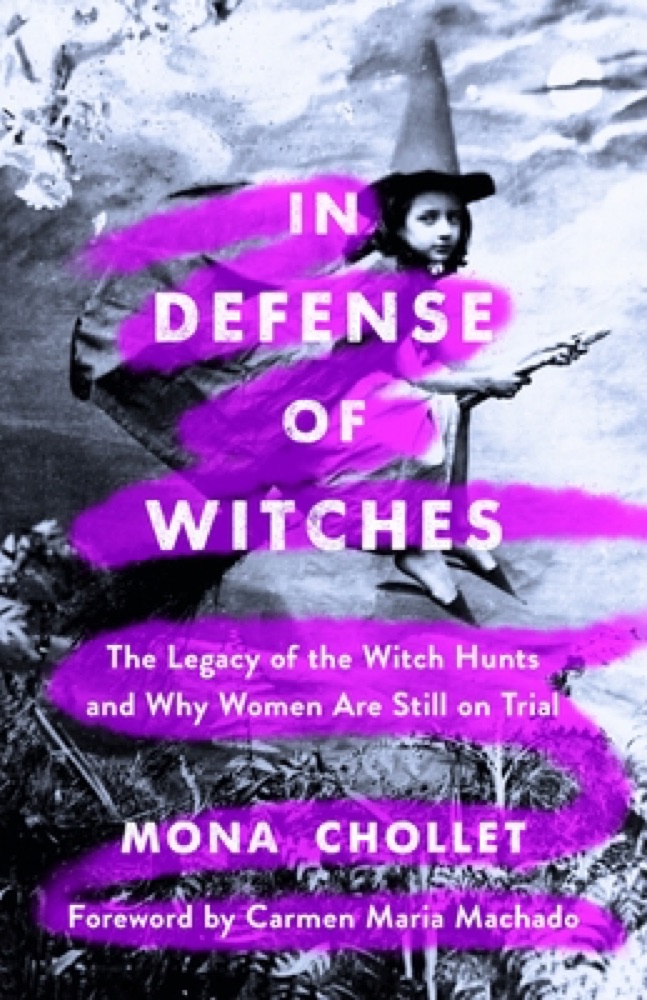
Mona Chollet's In Defense of Witches is a celebration by an acclaimed French feminist of the witch as a symbol of female rebellion and independence in the face of misogyny and persecution.
Centuries after the infamous witch hunts that swept through Europe and America, witches continue to hold a unique fascination for as fairy tale villains, practitioners of pagan religion, as well as feminist icons. Witches are both the ultimate victim and the stubborn, elusive rebel. But who were the women who were accused and often killed for witchcraft? What types of women have centuries of terror censored, eliminated, and repressed?
Celebrated feminist writer Mona Chollet explores three types of women who were accused of witchcraft and the independent woman, since widows and celibates were particularly targeted; the childless woman, since the time of the hunts marked the end of tolerance for
Book details
- First published
- 2018
- Author
- Mona Chollet
- Genre
- Nonfiction
- Goodreads rating
- 4.03 (25k ratings)
The buzz
- The New York TimesReview in The New York Timesprofessional review (via Book Marks)
- NPRReview in NPRprofessional review (via Book Marks)
- The TimesReview in The Timesprofessional review (via Book Marks)
- Publishers WeeklyReview in Publishers Weeklyprofessional review (via Book Marks)
- BooklistReview in Booklistprofessional review (via Book Marks)
- ChireviewofbooksReview in Chireviewofbooksprofessional review (via Book Marks)
Keep reading
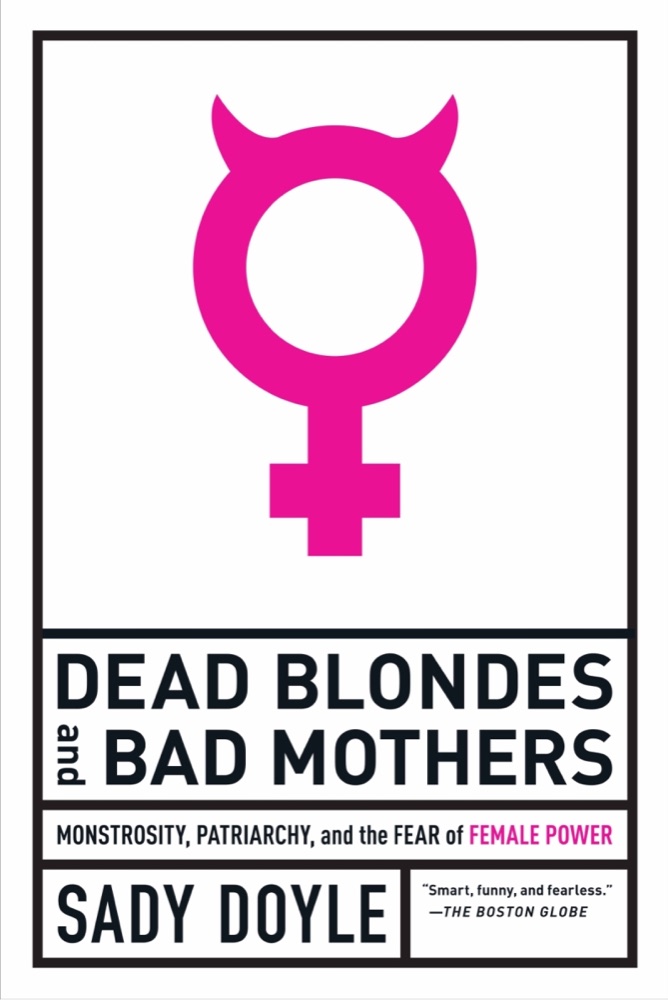
Dead Blondes and Bad Mothers
 The Soul of a Woman
 Why I Am Not a Feminist: A Feminist Manifesto
 The Book of the City of Ladies
 The Female Eunuch
 The Feminine Mystique
 The Anti-Mary Exposed: Rescuing the Culture from Toxic Femininity
 Misogyny: The World's Oldest Prejudice
 Right Wing Women
 Whose Story Is This? Old Conflicts, New Chapters
 The Possibility of an Island
 Dreams of Trespass: Tales of a Harem Girlhood
 How to Suppress Women's Writing
 Femina: A New History of the Middle Ages, Through the Women Written Out of it
 The Mad Women's Ball
 A Woman's Worth
 The Mother of All Questions
 Herland
 More Than a Woman: A Brutally Honest and Hilarious Feminist Memoir on Parenting, Marriage, and Middle-Age
 Persian Letters
 Happening
 Unspeakable Things: Sex, Lies and Revolution
 The Dialectic of Sex: The Case for Feminist Revolution
 Of Woman Born: Motherhood as Experience and Institution
 Headscarves and Hymens: Why the Middle East Needs a Sexual Revolution
 Elizabeth Costello
 Cunt: A Declaration of Independence
 Letter to a Child Never Born
 Her Majesty's Royal Coven
 The Heroine's Journey: Woman's Quest for Wholeness
 Women's Bodies, Women's Wisdom: Creating Physical and Emotional Health and Healing
 The Women's Room
 The Master's Tools Will Never Dismantle the Master's House
 The Kreutzer Sonata
 Violeta
 Princess Sultana's Daughters
 Medea
Medea
 Matrix
 This Bridge Called My Back: Writings by Radical Women of Color
 A Woman in Berlin: Eight Weeks in the Conquered City: A Diary
 It's Not About the Burqa
 Moon Witch, Spider King
 Women Who Run With the Wolves
 3,096 Days
 Creation Lake
 A Winter's Promise
 A Girl Is a Body of Water
 Things I've Been Silent About
 The Elementary Particles
 Women Talking
 Women and Other Monsters: Building a New Mythology
 When We Lost Our Heads
 Brave New World / Brave New World Revisited
 Sexual Personae: Art and Decadence from Nefertiti to Emily Dickinson
 Emma in the Night
 Old Babes in the Wood: Stories
 The Truth Will Set You Free, But First It Will Piss You Off!: Thoughts on Life, Love, and Rebellion
 The Right to Sex: Feminism in the Twenty-First Century
 In Search of Our Mothers' Gardens: Womanist Prose
 Woman: An Intimate Geography