
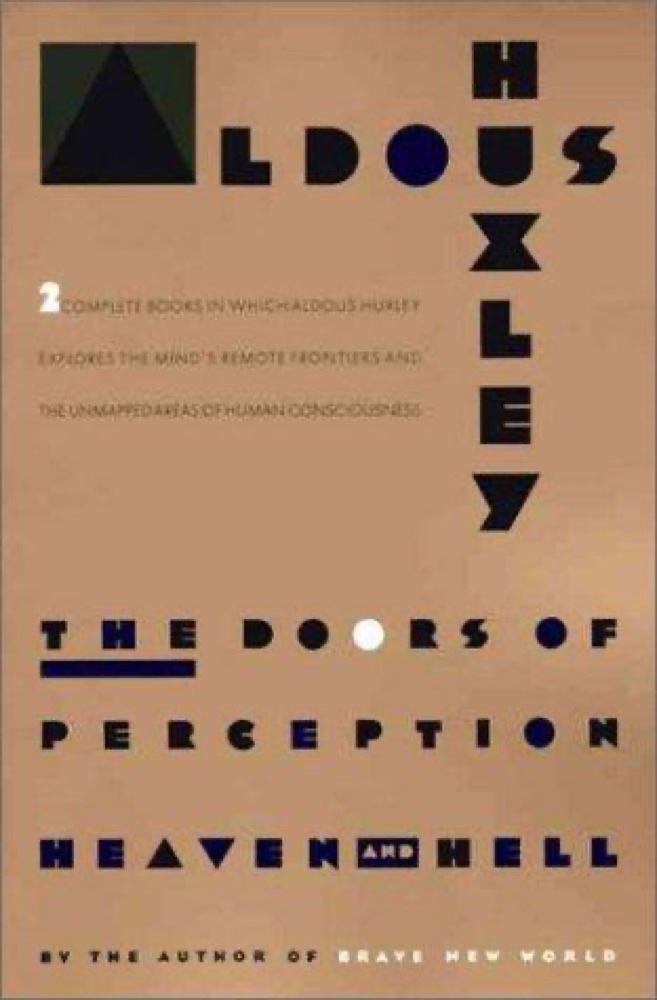
 The Doors of Perception & Heaven and Hell
Quotes from the Book
Hug me till you drug me, honey; Kiss me till I'm in a coma.
The nature of psychological compulsion is such that those who act under constraint remain under the impression that they are acting on their own initiative. The victim of mind-manipulation does not know that he is a victim. To him the walls of his prison are invisible, and he believes himself to be free. That he is not free is apparent only to other people. His servitude is strictly objective.
life is short and information endless: nobody has time for everything
On no account brood over your wrongdoing. Rolling in the muck is not the best way of getting clean.
But liberty, as we all know, cannot flourish in a country that is permanently on a war footing, or even a near-war footing. Permanent crisis justifies permanent control of everybody and everything by the agencies of the central government.
Today alcohol and tobacco are available, and people spend considerably more on these very unsatisfactory euphorics, pseudo-stimulants and sedatives than they are ready to spend on the education of their children.
Walking and talking - that seemed a very odd way of spending an afternoon.
Unorthodoxy threatens more than the life of a mere individual; it strikes at Society itself.
And no wonder; for the new technique of "subliminal projection," as it was called, was intimately associated with mass entertainment, and in the life of civilized human beings massed entertainment now plays a part comparable to that played in the Middle Ages be religion.
Bottle of mine, it's you I've always wanted! Bottle of mine, why was I ever decanted? Skies are blue inside of you, The weather's always fine; For There ain't no Bottle in all the world Like that dear little Bottle of mine.
Rams wrapped in thermogene beget no lambs.
Éste es el secreto de la felicidad y la virtud: Amar lo que uno tiene que hacer. Todo condicionamiento tiende a esto: a lograr que la gente ame su inevitable destino social".
Today I feel no wish to demonstrate that sanity is impossible. On the contrary, though I remain no less sadly certain than in the past that sanity is a rather rare phenomenon, I am convinced that it can be achieved and would like to see more of it.
People are related to one another, not as total personalities, but as the embodiments of economic functions, or when they are not at work, as irresponsible seekers of entertainment. Subjected to this kind of life, individuals tend to feel lonely and insignificant. Their existence cases to have any point of meaning
The strange words rolled through his mind; rumbled, like talking thunder; like the drums at the summer dances, if the drums could have spoken; like the men singing the Corn Song, beautiful, beautiful, so that you cried.
Podría haber y, a mi juicio, debería haber leyes que impidieran a los candidatos, no solamente gastar más que determinada cantidad en sus campañas electorales, sino también recurrir a esa especie de propaganda antirracional que convierte en disparate todo el procedimiento democrático.
La actual felicidad siempre parece muy menguada en comparación con las compensaciones que brinda la miseria. Y, además, la estabilidad no es ni con mucho tan espectacular como la inestabilidad. Y el estar satisfecho no tiene el encanto de una denodada lucha contra la desgracia, ni el pintoresquismo de una pugna contra la tentación, o de una fatal derrota a manos de la pasión o de la duda. La felicidad nunca es grandiosa.
No se debe discutir con los adversarios; hay que atacarlos, callarlos a gritos o, si molestan demasiado, liquidarlos. El intelectual, moralmente remilgado, tal vez se escandalice de una cosa así. Pero las masas siempre están convencidas de que “el derecho está de parte del agresor activo”.
Our “increasing mental sickness” may find expression in neurotic symptoms. These symptoms are conspicuous and extremely distressing. But “let us beware,” says Dr. Fromm, “of defining mental hygiene as the prevention of symptoms. Symptoms as such are not our enemy, but our friend; where there are symptoms there is conflict, and conflict always indicates that the forces of life which strive for integration and happiness are still fighting.” The really hopeless victims of mental illness are to be found among those who appear to be most normal. “Many of them are normal because they are so well adjusted to our mode of existence, because their human voice has been silenced so early in their lives, that they do not even struggle or suffer or develop symptoms as the neurotic does.” They are normal not in what may be called the absolute sense of the word; they are normal only in relation to a profoundly abnormal society. Their perfect adjustment to that abnormal society is a measure of their mental sickness. These millions of abnormally normal people, living without fuss in a society to which, if they were fully human beings, they ought not to be adjusted, still cherish “the illusion of individuality,” but in fact they have been to a great extent deindividualized. Their conformity is developing into something like uniformity. But “uniformity and freedom are incompatible. Uniformity and mental health are incompatible too. . . . Man is not made to be an automaton, and if he becomes one, the basis for mental health is destroyed.
Una de las principales funciones de un amigo es el sufrir (en forma más suave y simbólica) los castigos que queremos, y no podemos infligir a nuestros enemigos.
El hecho de que en la más poderosa democracia del mundo haya tantos jóvenes y bien alimentados espectadores de televisión que muestren tan completa indiferencia por la idea de gobernarse a sí mismos y sientan tan poco interés por la libertad de pensamiento y el derecho a disentir es aflictivo, pero no muy sorprendente. Decimos “libre como un pájaro” y envidiamos a los alados seres su poder de moverse sin restricción alguna en las tres dimensiones. Pero, ay, nos olvidamos del dido. Todo pájaro que aprenda a organizarse una buena vida sin necesidad de usar sus alas pronto renunciará al privilegio del vuelo y permanecerá por siempre en tierra. Algo parecido pasa con los seres humanos.
Did you know?
- Brave New World was first published in 1932 by Chatto & Windus.
- The novel's title is drawn from a line spoken by Miranda in Shakespeare's play The Tempest.
- The World State's motto is 'Community, Identity, Stability.'
- Brave New World Revisited, a nonfiction work, was published in 1958, almost thirty years after the novel.
- The Modern Library ranked Brave New World fifth on its list of the 100 best English-language novels of the twentieth century.
- In Revisited, Huxley concluded that society was moving toward his imagined future faster than he had originally expected.
About Aldous Huxley
Aldous Huxley (1894-1963) was an English writer and philosopher, best known for his dystopian novel Brave New World. Over his career he produced novels, essays, and nonfiction exploring science, society, and human consciousness.
More about the author →More by Aldous Huxley
All books by Aldous Huxley →
About the book
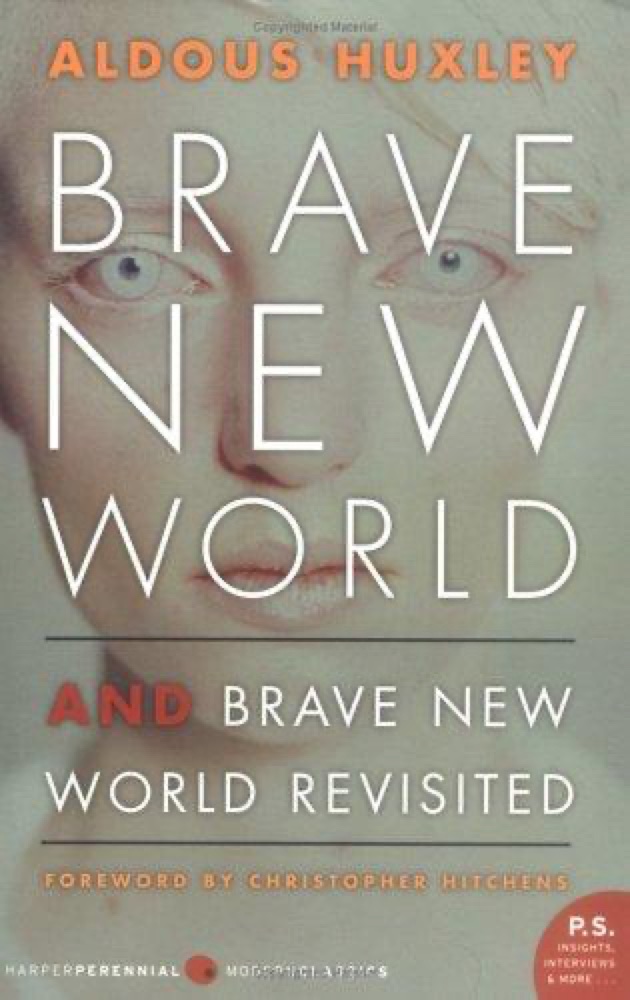
This volume pairs Aldous Huxley's 1932 dystopian novel Brave New World with his 1958 nonfiction sequel Brave New World Revisited. The novel is set in a futuristic World State whose citizens are mass-produced in hatcheries, genetically engineered and conditioned into a fixed caste hierarchy, and kept placid by consumption, casual pleasure, and the drug soma. Its stability is challenged when John, a naturally born outsider raised outside this society, is brought into the World State and confronts its values.
The book's central themes are the trade of freedom for comfort, the loss of individuality through mass conditioning, and the use of technology and pleasure as instruments of control. Where later dystopias imagined oppression through fear and scarcity, Huxley imagined a population that is controlled by giving it exactly what it wants. Brave New World Revisited returns to these ideas as essays, in which Huxley reconsiders his predictions and argues that the world was drifting toward his imagined future faster than he had expected.
Brave New World is one of the most influential dystopian novels of the twentieth century, frequently studied and cited alongside works like Nineteen Eighty-Four. It was ranked fifth on the Modern Library list of the best English-language novels of the century and appears on Le Monde's 100 Books of the Century. Revisited extends its reach into social criticism, examining overpopulation, propaganda, and the mechanisms by which free societies might slide toward control.
Key characters
- John (the Savage)Outsider born naturally and raised outside the World State
- Bernard MarxAlpha-Plus sleep-learning specialist who feels alienated
- Lenina CrowneBeta worker in the Hatchery
- Helmholtz WatsonLecturer and Bernard's discontented friend
- Mustapha MondResident World Controller of Western Europe
Book details
- First published
- 1932
- Length
- 311 pages
- Reading time
- 5 hours
- Author
- Aldous Huxley
- Genre
- Classics
- Goodreads rating
- 3.98 (2.1M ratings) →
- First line
- “A squat grey building of only thirty-four stories.”
Movie & TV adaptations
- IMDb
If you liked this, read…
- 1Nineteen Eighty-FourA companion dystopia contrasting control by fear with Huxley's control by pleasure
- 2WeAn earlier dystopia of a regimented, engineered society
- 3Fahrenheit 451A dystopia where comfort and distraction suppress independent thought
Keep reading
 Firmin: Adventures of a Metropolitan Lowlife
 The Invention of Morel
 Emma in the Night
 Ficciones
 The Charioteer
 Think of a Number
 Zeno's Conscience
 The Star Diaries
 Doctor Glas
 Eyeless in Gaza
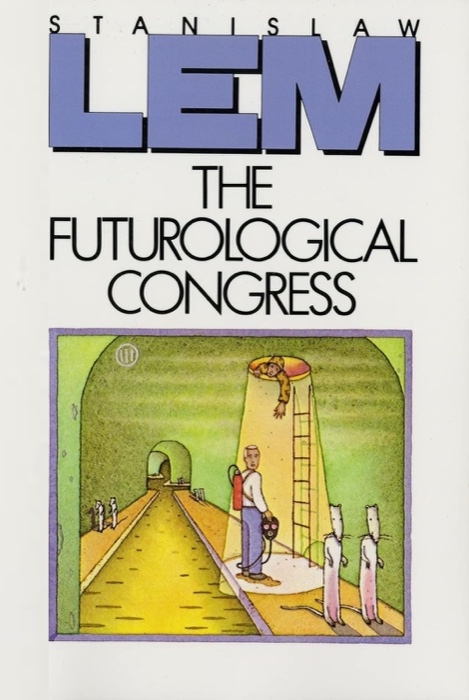 The Futurological Congress: From the Memoirs of Ijon Tichy
 The Sound of Things Falling
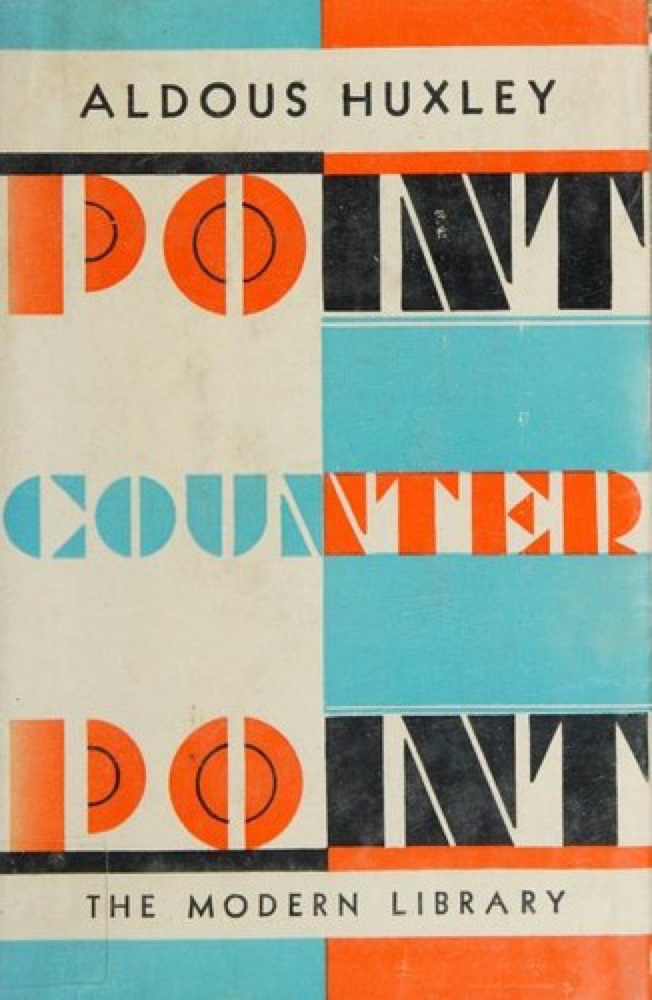 Point Counter Point
 Soul Mountain
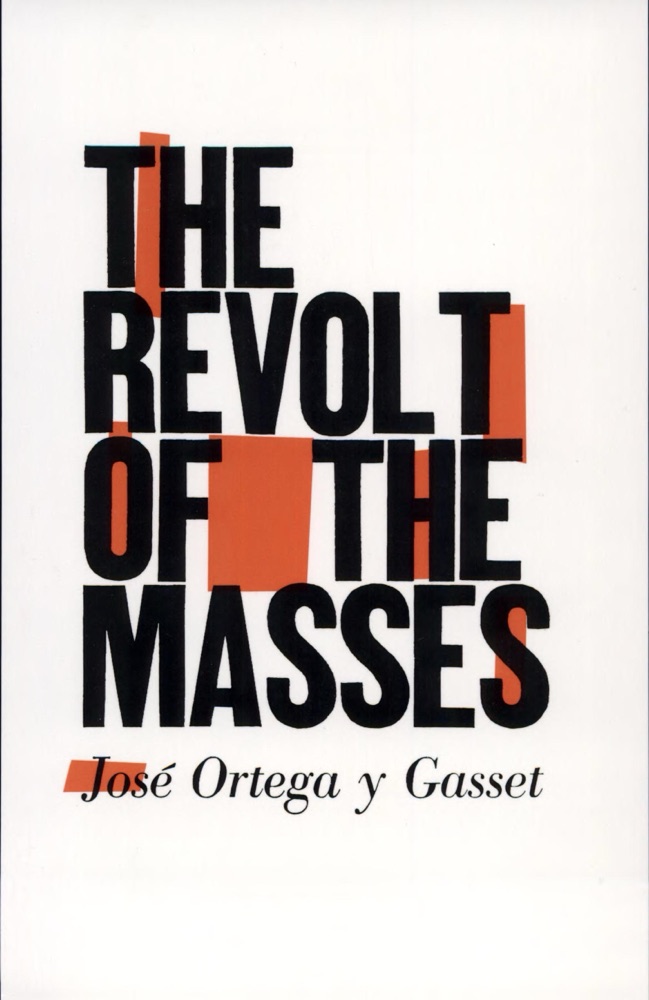 The Revolt of the Masses
 Platform
 Concrete
 The Fall of Babel
 The Double
 Travels With My Aunt
 Heretics of Dune
 So Much for That
 V.
V.
 The Time in Between
 Even Cowgirls Get the Blues
 Cujo
Cujo
 Civil Disobedience and Other Essays
 The Little Virtues
 A Sunny Place for Shady People
 Phaedo
 The Face of Another
 What's Wrong with the World
 Minima Moralia: Reflections on a Damaged Life
 The Rebel Angels
 A General Theory of Oblivion
 Elective Affinities
 Infinite Jest
 Cocaine
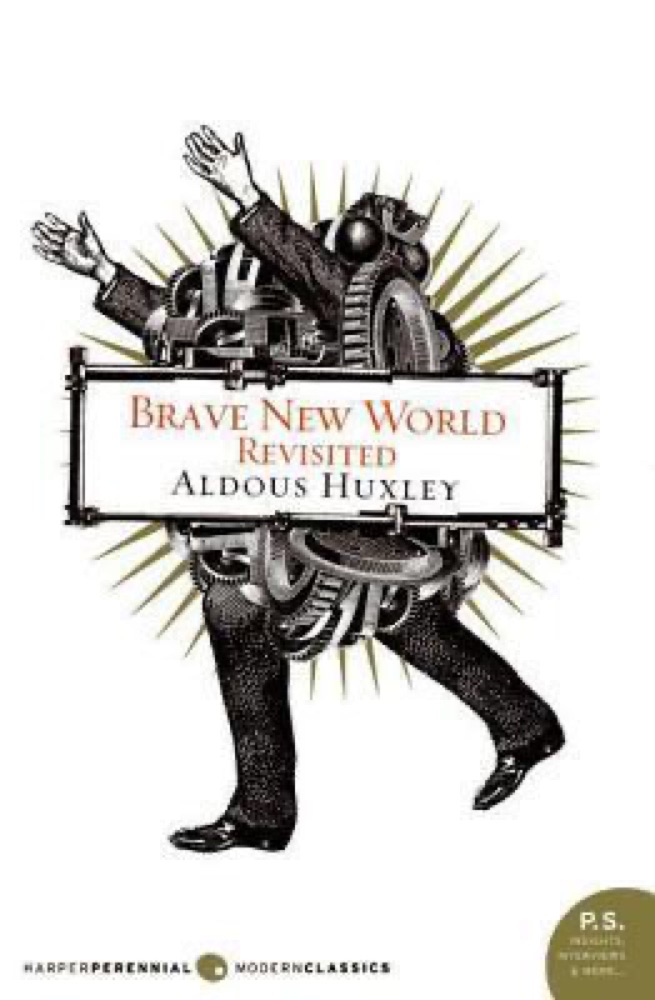 Brave New World Revisited
 The Complete Stories
 The State of the Art
 Under Western Eyes
 Mutant Message Down Under
 I Am a Cat
 The Elementary Particles
 Nadja
Nadja
 The Complete Short Stories
 Manifestoes of Surrealism
 A Heart So White
 Shut Your Eyes Tight
 Talking to Ourselves
 The Shockwave Rider
 Lila: An Inquiry Into Morals
 Ship of Fools
 Papillon
 The Midwich Cuckoos
 The Age of Absurdity: Why Modern Life makes it Hard to be Happy
 The Story of the Lost Child
 Fall of Man in Wilmslow
 Gaudy Night