 The Upanishads
Quotes from the Book
These days I keep noticing how my feelings towards men - and the feelings of all the other women - are changing. We feel sorry for them; they seem so miserable and powerless. The weaker sex. Deep down we women are experiencing a kind of collective disappointment. The Nazi world - ruled by men, glorifying the strong man - is beginning to crumble, and with it the myth of "Man". In earlier wars men could claim that the privilege of killing and being killed for the fatherland was theirs and theirs alone. Today, we women, too, have a share. That has transformed us, emboldened us. Among the many defeats at the end of this war is the defeat of the male sex.
23
I’ve seen Moscow, Paris, and London, among other cities, and experienced Bolshevism, Parliamentarianism, and Fascism close up, as an ordinary person among ordinary people. Are there differences? Yes, substantial ones. But from what I can tell the distinctions are mostly ones of form and coloration, of the rules of play, not differences in the greater or lesser fortunes of common people, which Candide was so concerned about. And the individuals I encountered who were meek, subservient, and uninterested in any existence other than the one they were born to didn’t seem any unhappier in Moscow than they did in Paris or Berlin—all of them lived by adjusting their souls to the prevailing conditions.
5
I couldn't help thinking how good I'd had it, until now - the fact that love had always been a pleasure and never a pain. I had never been forced, nor had I ever had to force myself. Everything had been good the way it was.
5
All my feelings seem dead, except for the drive to live. They shall not destroy me.
4
Authority as a means of applying pressure. And here I was, using a little piece of paper to pretend I had authority ... However, it appears that most of life's mechanisms rely on similar tricks—marriages, companies, nation-states, armies.
4
Ich versuche mir vorzustellen, wie es wäre, wenn mir dies Erleben zum ersten Mal auf solche Art zuteil geworden wäre. Ich muß den Gedanken abbremsen, so was ist nicht vorstellbar. Eines ist klar: Wäre an dem Mädchen irgendwann in Friedenszeiten durch einen herumstreunenden Kerl die Notzucht verübt worden, wäre hinterher das übliche Friedensbrimborium von Anzeige, Protokoll, Vernehmung, ja von Verhaftung und Gegenüberstellung, Zeitungsbericht und Nachbarngetue gewesen – das Mädel hätte anders reagiert, hätte einen anderen Schock davongetragen. Hier aber handelt es sich um ein Kollektiv-Erlebnis, vorausgewußt, viele Male vorausbefürchtet – um etwas, das den Frauen links und rechts und nebenan zustieß, das gewissermaßen dazu gehörte. Diese kollektive Massenform der Vergewaltigung wird auch kollektiv überwunden werden. Jede hilft jeder, indem sie darüber spricht, sich Luft macht, der anderen Gelegenheit gibt sich Luft zu machen, das Erlittene auszuspeien. Was natürlich nicht ausschließt, das feinere Organismen als diese abgebrühte Berliner Göre daran zerbrechen oder doch auf Lebenszeit einen Knacks davontragen.
4
And so the balance is maintained: well-fed nations wallow in neurosis and excesses, while people plagued with suffering, as we are now, may rely on numbness and apathy to help see them through—if not for that I’d be weeping morning, noon, and night.
3
the sum total of tears always stays the same' - i.e., that in every nation, no matter what flag or system of government, no matter which gods are worshiped or what the average income is, the sum total of tears, pain, and fear that everyone must pay for his existence is a constant. And so the balance is maintained: well-fed nations wallow in neurosis and excesses, while people plagued with suffering, as we are now, may rely on numbness and apathy to help see them through - if not for that I'd be weeping morning, noon, and night. But I'm not crying and neither is anyone else, and the fact that we aren't is all part of a natural law. Of course if you believe that the earthly sum of tears is fixed and immutable, then you're not very well cut out to improve the world or to act on any kind of grand scale.
3
Harte Arbeit, spärliches Brot - doch die alte Sonne a Himmel. Und vielleicht spricht das Herz noch einmal. Was habe ich alles gehabt in meinem Leben - überreichlich!
3
Love? Lies trampled on the ground. And were it ever to rise again, I would always be anxious, could never find true refuge, would never again dare hope for permanence.
2
No question about it: I have to find a single wolf to keep away the pack.
1
What does it mean—rape? When I said the word for the first time aloud, Friday evening in the basement, it sent shivers down my spine. Now I can think and write it with an untrembling hand, say it loud enough to get used to hearing it said. It sounds like the absolute worst, the end of everything—but it's not.
1
I feel something nagging at me, boring into me. I can’t go on living like a plant; I need to move, I have to act, start doing something. I feel as though I’ve been dealt a good hand of cards but don’t know whether I’ll be able to play them. And who am I playing with?
1
And yet I don’t want to fence myself off, I want to give myself over to this communal sense of humanity; I want to be part of it, to experience it. There’s a split between my aloofness, the desire to keep my private life to myself, and the urge to be like everyone else, to belong to the nation, to abide and suffer history together.
1
Our fate is rolling in from the east and it will transform the entire climate, like another Ice Age. People ask why, tormenting themselves with pointless questions. But I just want to focus on today, the task at hand.
1
Yes, we've been spoiled by technology. We can't accept doing without loudspeakers or rotary presses. Handwritten placards and whispered proclamations just don't carry the same weight. Technology has devalued the impact of our own speech and writing. In the old days one man's call to arms was enough to set off an uprising - a few hand-printed leaflets, ninety-five theses nailed to a church door in Wittenberg. But today we need more, we need bigger and better, wider repercussions, mass-produced by machines and multiplied exponentially.
1
A shadow has fallen in the room. The baby pays no attention - she bites the foreign finger, cooing and squealing. I feel a lump rising in my throat. She seems like a miracle to me, pink and white with copper curls, flowering here in this desolate, half-looted room, among us adult human beings so mired in filth. And suddenly I realize why the warriors are drawn to the little baby.
1
That’s our strength—we women always focus on the task at hand. We’re happy whenever we can flee into the present to escape worrying about the future. And for these women the task at hand is sausage, and the thought of sausage alters their perspective on things that may be much more important but are nevertheless much further away.
In every nation, no matter what the flag or system of government, no matter which gods are worshiped or what the average income is, the sum total of tears, pain, and fear that every person must pay for his existence is a constant.
Homo homini lupus. It’s true everywhere and always, these days even among blood relatives. At most I can imagine a mother going hungry to keep her children fed—but that’s probably because mothers feel their children as their own flesh and blood.
I’ve had so many narrow escapes; I feel I lead a charmed life. Which is probably the way most people feel. How else could they be in such high spirits, surrounded by so much death? What’s clear is that every threat to your life boosts your vitality.
Thieving has deep roots among these people. Back when I was traveling in Russia I was robbed of nearly everything that could be stolen, especially during the first part of my stay: my purse, briefcase, coat, gloves, alarm clock, even the stockings I'd hung in the bathroom to dry. One time I was in an office with three people who worked there. I bent down for a moment to open a drawer and look for a photo, and when I turned back again I saw that someone had taken my pair of scissors.
Der zweite russische Gast ist ein junger Kerl, siebzehn Jahre alt, Partisan gewesen und dann mit der kämpfenden Truppe westwärts gezogen. Er sieht mich mit streng gerunzelter Stirn an und fordert mich auf, zu übersetzen, daß deutsche Militärs in seinem Heimatdorf Kinder erstochen hätten und Kinder bei den Füßen gefaßt, um ihre Schädel an der Mauer zu zertrümmern. Ehe ich das übersetze frage ich: ‘Gehört? Oder selbst mit angesehen?’ Er, streng, vor sich hin: ‘Zweimal selber gesehen.’ Ich übersetze. ‘Glaub ich nicht’, erwidert Frau Lehmann. ‘Unsere Soldaten? Mein Mann? Niemals!’ Und Fräulein Behn fordert mich auf, den Russen zu fragen, ob die Betreffenden ‘Vogel hier’ (am Arm) oder ‘Vogel da’ (an der Mütze) hatten, das heißt, ob sie Wehrmacht waren oder SS. Der Russe begreift den Sinn der Frage sofort: den Unterschied zu machen, haben sie wohl in den russischen Dörfern gelernt. Doch selbst wenn es, wie in diesem Fall und ähnlichen Fällen, SS-Leute waren: Jetzt werden unsere Sieger sie zum ‘Volk’ rechnen und uns allen diese Rechnung vorhalten. Schon geht solches Gerede; ich hörte an der Pumpe mehrfach den Satz: ‘Unsere haben’s wohl drüben nicht viel anders gemacht.’ Schweigen. Wir starren alle vor uns hin. Ein Schatten steht im Raum. Das Baby weiß nichts davon. Es beißt in den fremden Zeigefinger, es kräht und quietscht. Mir steigt ein Klumpen in die Kehle. Das Kind kommt mir wie ein Wunder vor, rosa und weiß mit Kupferlöckchen blüht es in diesem wüsten, halb ausgeräumten Zimmer, zwischen uns verdreckten Menschen. Auf einmal weiß ich, warum es den Krieger zum Kindchen zieht.
Soms wou ik, dat alles voorbij was. Dit zijn vreemde dagen. Je beleeft de geschiedenis uit de eerste hand, de dingen die later in de geschiedenisboekjes zullen staan. Maar van dichtbij lossen ze zich op in zorg en angst.
The most bitter thing in the life of a single woman is that every times she enters some kind of family life, after a while she ends up causing trouble: she's one too many, someone doesn't like her because someone else does, and in the end they kick her out to preserve the precious peace.
Watch on YouTube
About Anonymous
More by Anonymous
All books by Anonymous →
About the book
A New York Times Book Review Editors' Choice
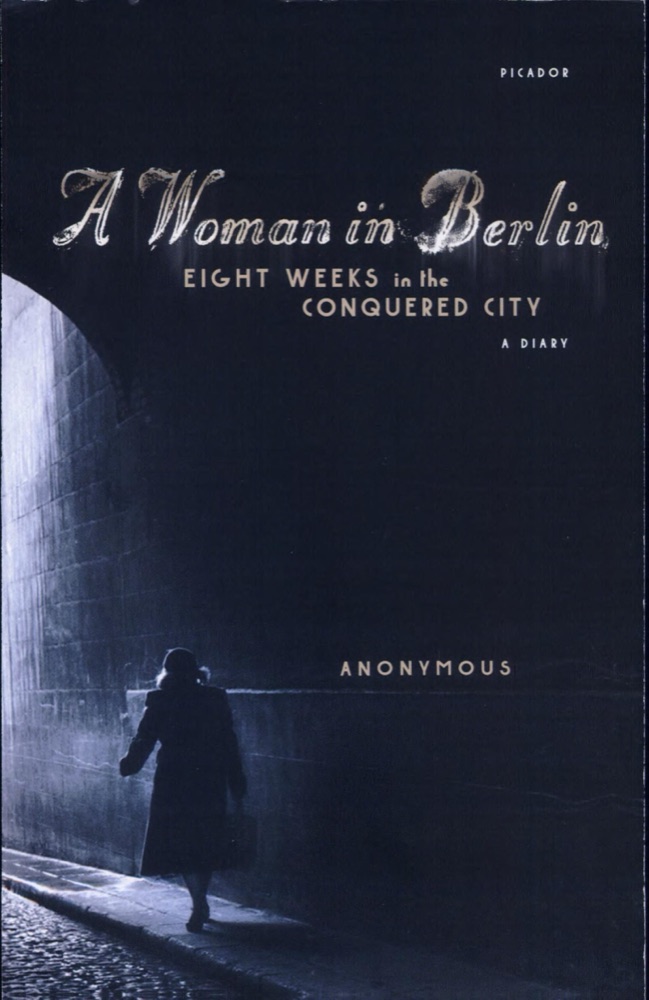
For eight weeks in 1945, as Berlin fell to the Russian army, a young woman kept a daily record of life in her apartment building and among its residents. The anonymous author depicts her fellow Berliners in all their humanity, as well as their cravenness, corrupted first by hunger and then by the Russians. A Woman in Berlin tells of the complex relationship between civilians and an occupying army and the shameful indignities to which women in a conquered city are always subject--the mass rape suffered by all, regardless of age or infirmity.
Keep reading
 An Interrupted Life: The Diaries, 1941-1943; and Letters from Westerbork
 The Women's Room
 The Girl Who Smiled Beads: A Story of War and What Comes After
 Old Babes in the Wood: Stories
 Tropic of Cancer
 Breasts and Eggs
 The Setting Sun
 Notes To Self
 The Golden Notebook
 Anthropology of an American Girl
 Drive Your Plow Over the Bones of the Dead
 Fear of Flying
 Whatever
 Things I've Been Silent About
 Journal of a Solitude
 Liberation Day
 Sophie's Choice
 The Story of the Lost Child
 Terminal Boredom: Stories
 Concrete
 What Is the What
 Aftermath: On Marriage and Separation
 Atemschaukel
 The Notebooks of Malte Laurids Brigge
 Em and The Big Hoom
 All That I Am
 No Longer Human
 Survival in Auschwitz
 The Red Parts
 Embers
 The Devil in the Flesh
 The Good Soldier
 Schoolgirl
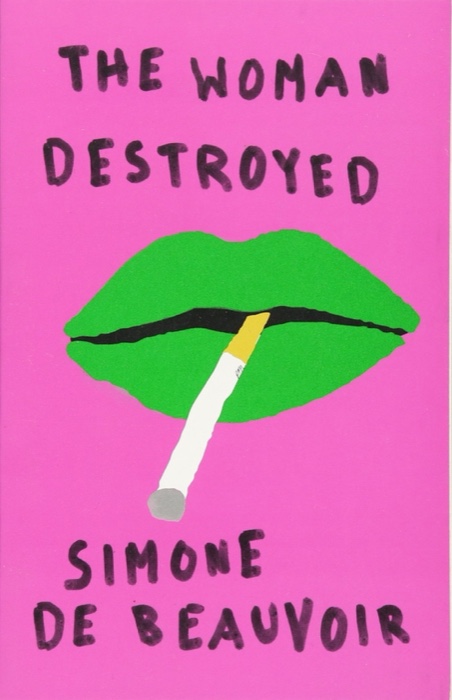 The Woman Destroyed
 The Complete Stories
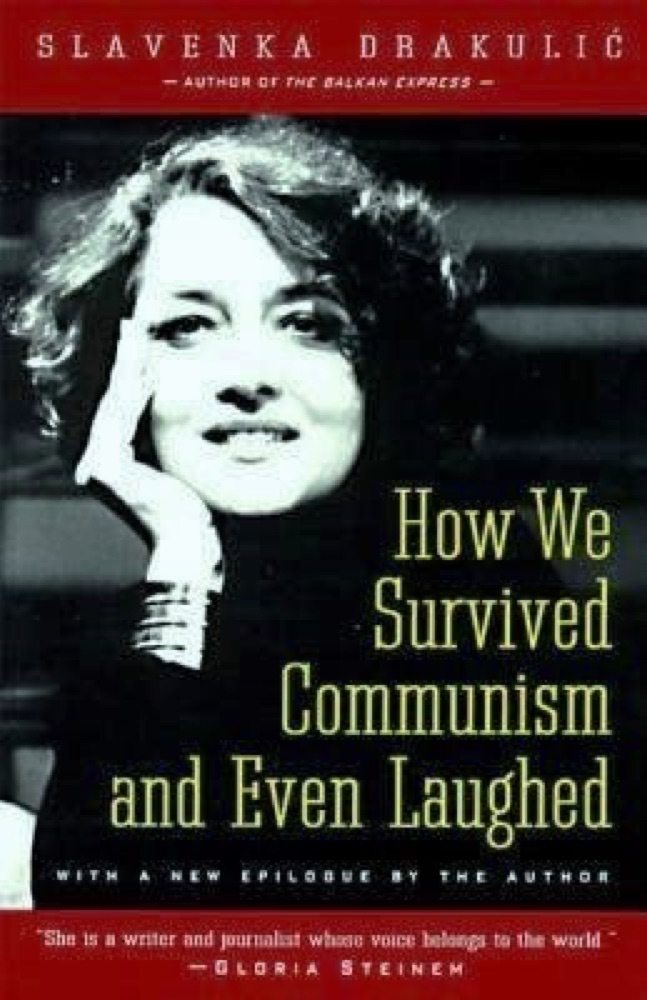 How We Survived Communism and Even Laughed
 The Fall
 The Chrysalids
 Farewell Waltz
 The Tender Bar
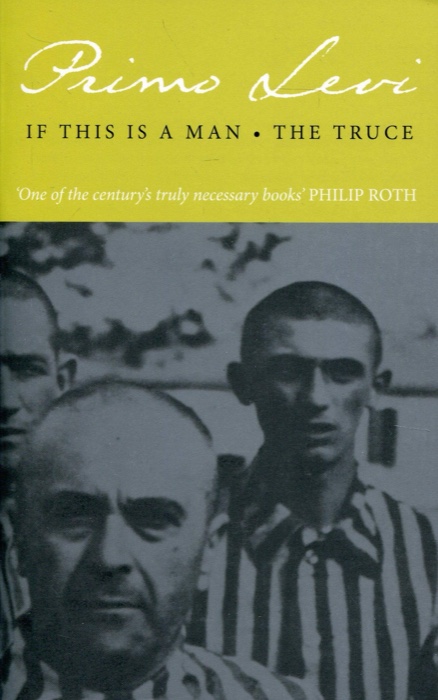 If This Is a Man / The Truce
 The Spirit Bares Its Teeth
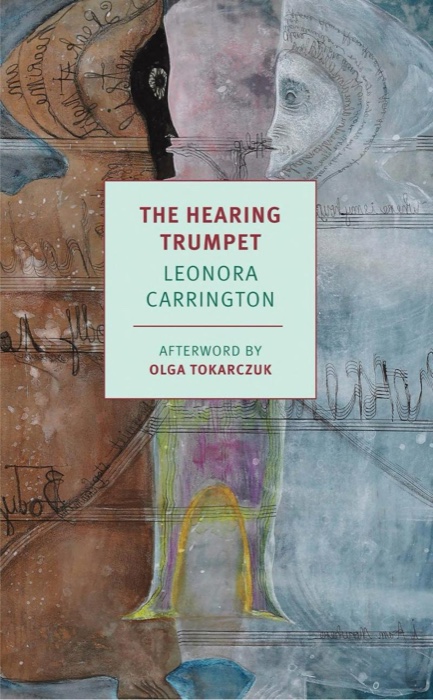 The Hearing Trumpet
 Dream Count
 Zlata's Diary: A Child's Life in Wartime Sarajevo
 Aftershocks
 The Folded Clock: A Diary
 The Magus
 Super Sad True Love Story
 Secondhand Time: The Last of the Soviets
 The Postcard
 Identity
 Belong to Me
 The Eighth Life
 Middlesex
 Agatha Christie: An Autobiography
 Women
Women
 A Little Devil in America: Notes in Praise of Black Performance
 Under the Udala Trees
 The Cancer Journals