
 Anti-Oedipus: Capitalism and Schizophrenia
Quotes from the Book
Men chase by night those they will not greet by day.
96
Eroticism is mystique; that is, the aura of emotion and imagination around sex. It cannot be 'fixed' by codes of social or moral convenience, whether from the political left or right. For nature's fascism is greater than that of any society. There is a daemonic instability in sexual relations that we may have to accept.
46
Nature is always pulling the rug out from under our pompous ideals.
41
Western science is a product of the Apollonian mind: its hope is that by naming and classification, by the cold light of intellect, archaic night can be pushed back and defeated.
34
Everything is melting in nature. We think we see objects, but our eyes are slow and partial. Nature is blooming and withering in long puffy respirations, rising and falling in oceanic wave-motion. A mind that opened itself fully to nature without sentimental preconception would be glutted by nature’s coarse materialism, its relentless superfluity. An apple tree laden with fruit: how peaceful, how picturesque. But remove the rosy filter of humanism from our gaze and look again. See nature spuming and frothing, its mad spermatic bubbles endlessly spilling out and smashing in that inhuman round of waste, rot, and carnage. From the jammed glassy cells of sea roe to the feathery spores poured into the air from bursting green pods, nature is a festering hornet’s nest of aggression and overkill. This is the chthonian black magic with which we are infected as sexual beings; this is the daemonic identity that Christianity so inadequately defines as original sin and thinks it can cleanse us of. Procreative woman is the most troublesome obstacle to Christianity’s claim to catholicity, testified by its wishful doctrines of Immaculate Conception and Virgin Birth. The procreativeness of chthonian nature is an obstacle to all of western metaphysics and to each man in his quest for identity against his mother. Nature is the seething excess of being.
25
If sexual physiology provides the pattern for our experience of the world, what is woman's basic metaphor? It is mystery, the hidden. Karen Horney speaks of a girl's inability to see her genitals and a boy's ability to see his as the source of "the greater subjectivity of women as compared with the greater objectivity of men." To rephrase this with my different emphasis: men's delusional certitude that objectivity is possible is based on the visibility of their genitals. Second, this certitude is a defensive swerve from the anxiety-inducing invisibility of the womb. Women tend to be more realistic and less obsessional because of their toleration for ambiguity which they learn from their inability to learn about their own bodies. Women accept limited knowledge as their natural condition, a great human truth that a man may take a lifetime to reach. The female body’s unbearable hiddenness applies to all aspects men’s dealings with women. What does it look like in there? Did she have an orgasm? Is it really my child? Who was my real father? Mystery surrounds women’s sexuality. This mystery is the main reason for the imprisonment man has imposed on women. Only by confining his wife in a locked harem guarded by eunuchs could he be certain that her son was also his.
21
liberalism defines government as tyrant father but demands it behave as nurturant mother.
20
Love is a crowded theater, for as Harold Bloom remarks, “We can never embrace (sexually or otherwise) a single person, but embrace the whole of her or his family romance.
18
Twentieth-century physics, going full circle back to Heracleitus, postulates that all matter is in motion. In other words, there is no thing, only energy.
17
The western mind makes definitions; it draws lines.
15
At some level, all love is combat, a wrestling with ghosts.
13
Beauty is our escape from the murky flesh-envelope that imprisons us.
13
Consciousness is a pitiful hostage of its flesh-envelope, whose surges, circuits, and secret murmurings it cannot stay or speed. This is the chthonian drama that has no climax but only an enedless round, cycle upon cycle. Microcosm mirrors macrocosm. Free will is stillborn in the red cells of our body, for there is no free will in nature. Our choices come to us prepackaged and special delivery, molded by hands not our own.
13
Society is a system of inherited forms reducing our humiliating passivity to nature.
12
All roads from Rousseau lead to Sade.
12
We are merely one of a multitude of species upon which nature indiscriminately exerts its force. Nature has a master agenda we can only dimly know.
12
Not untill all babies are born from glass jars will the combat cease between mother and son. But in a totalitarian future that has removed procreation from woman's hands, there will also be no affect and no art. Men will be machines, without pain but also without pleasure. Imagination has a price, which we are paying every day. There is no escape from the biologic chains that bind us.
12
Venus of Willendorf carries her cave with her. She is blind, masked. Her ropes of corn-row hair look forward to the invention agriculture. She has a furrowed brow. Her facelessness is the impersonality of primitive sex and religion. There is no psychology or identity yet, because there is no society, no cohesion. Men cower and scatter at the blast of the elements. Venus of Willendorf is eyeless because nature can be seen but not known. She is remote even as she kills and creates. The statuette, so overflowing and protuberant, is ritually invisible. She stifles the eye. She is the cloud of archaic night.
11
Psychoanalysis [...] overestimates the linguistic character of the unconscious. Dreaming is a pagan cinema.
10
[W]earisome as it may seem, women must realize that, in making a commitment to a man, they have merged in his unconscious with his mother and have therefore inherited the ambivalence of that relationship.
8
Nature is forever playing solitaire with herself.
7
Reunion with the mother is a siren call haunting our imagination. Once there was bliss, and now there is struggle. Dim memories of life before the traumatic separation of birth may be the source of Arcadian fantasies of a lost golden age.
7
An aesthete does not necessarily dress well or collect art works: an aesthete is one who lives by the eye.
5
The formidable combined forces of Judeo-Christianity and modern science have never succeeded in wiping out pagan astrology, nor will they ever. Astrology supplies what is missing in the west's official moral and intellectual codes. Astrology is the oldest organised art form of sexual personae. Waging war on astrology, the medieval and Renaissance Church promulgated the distortion that astrology is fatalism, a flouting of God's Providence and the necessity for moral struggle. But the predictive part of astrology is less important than its psychology, which three thousand years of continuous practise have given a phenomenal subtlety. Astrology does insist on self-discipline and self-transformation. Judging astrology by those vague sun-sign columns in the daily paper is like judging Christianity by a smudged shop window of black-velvet day-glo paintings of the Good Shepherd.
5
Man's spiritual trajectory ends in the rubbish heap of his own mother-born body.
5
At some level, all love is combat, a wrestling with ghosts. We are only for something by being against something else. People who believe they are having pleasant, casual, uncomplex sexual encounters, whether with friend, spouse, or stranger are blocking from consciousness the tangle of psychodynamics at work, just as they block the hostile clashings of their dream life.
4
The Bible has come under fire for making woman the fall guy in man's cosmic drama. But in casting a male conspirator, the serpent, as God's enemy, Genesis hedges and does not take its misogyny far enough. The Bible defensively swerves from God's true opponent, chthonian nature. The serpent is not outside Eve but in her. She is the garden and the serpent.
4
Mind is a captive of the body. Perfect objectivity does not exist. Every thought bears some emotional burden. Had we time or energy to pursue it, each random choice, from the color of a toothbrush to a decision over a menu, could be made to yield its secret meaning in the inner drama of our lives. But in exhaustion, we shut out this psychic supersaturation.
3
El artista no hace su arte para salvar a la humanidad, sino para salvarse a sí mismo. Todo comentario benévolo de un artista a este respecto no será sino echar una cortina de humo, ocultar el rastro sangriento de su asalto contra la realidad y los otros.
3
Watch on YouTube
About Camille Paglia
We have collected 29 quotes from 1 book by Camille Paglia on BookQuoters.
More about the author →About the book
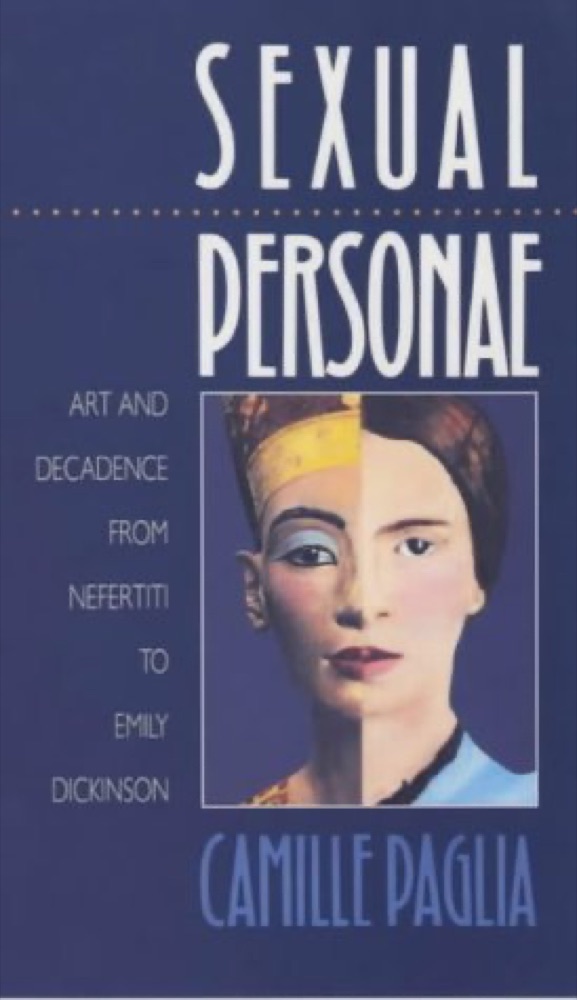
Is Emily Dickinson "the female Sade"? Is Donatello's David a bit of paedophile pornography? What is the secret kinship between Byron and Elvis Presley, between the Medusa and Madonna? How do liberals and feminists - as well as conservatives - fatally misread human nature? This audacious and omnivorously learned work of guerilla scholarship offers nothing less than a unified-field theory of Western culture, high and low, since the Egyptians invented beauty - making a persuasive case for all art as a pagan battleground between male and female, form and chaos, civilisation and demonic nature.
Book details
- First published
- 1990
- Author
- Camille Paglia
- Genre
- Nonfiction
- Goodreads rating
- 3.99 (4k ratings)
Keep reading
Anti-Oedipus: Capitalism and Schizophrenia
 Dialectic of Enlightenment: Philosophical Fragments
 The Blank Slate: The Modern Denial of Human Nature
 Food of the Gods: The Search for the Original Tree of Knowledge
 The Birth of Tragedy
 Twilight of the Idols/The Anti-Christ
 The Doors of Perception & Heaven and Hell
 Civilization and Its Discontents
 On the Genealogy of Morals/Ecce Homo
 Sexus
Sexus
 Love and Will
 The Atrocity Exhibition
 The Occult
 Modern Man in Search of a Soul
 Maps of Meaning: The Architecture of Belief
 The Politics of Experience/The Bird of Paradise
 Moravagine
 Ape and Essence
 The Art of Seduction
 Death in Venice and Other Tales
 Complete Works of Oscar Wilde
 Villa Incognito
 Man and His Symbols
 The Infernal Desire Machines of Doctor Hoffman
 Myths to Live By
 A Language Older Than Words
 Orthodoxy
 Minima Moralia: Reflections on a Damaged Life
 Irrational Man: A Study in Existential Philosophy
 Art and Lies
 The Myth of Sisyphus and Other Essays
 The World as Will and Representation, Vol 1
 From Dawn to Decadence: 500 Years of Western Cultural Life, 1500 to the Present
 Nutshell
 Wild Ducks Flying Backward
 The Elementary Particles
 The Fifth Science
 Eyeless in Gaza
 A Short History of Decay
 The Book of Joan
 Figuring
 Eros and Civilization: A Philosophical Inquiry into Freud
 What's Wrong with the World
 Sexing the Cherry
 Persian Letters
 The Book of Laughter and Forgetting
 The Varieties of Religious Experience
 The Red Queen: Sex and the Evolution of Human Nature
 Woman: An Intimate Geography
 The Ground Beneath Her Feet
 The Interpretation of Murder
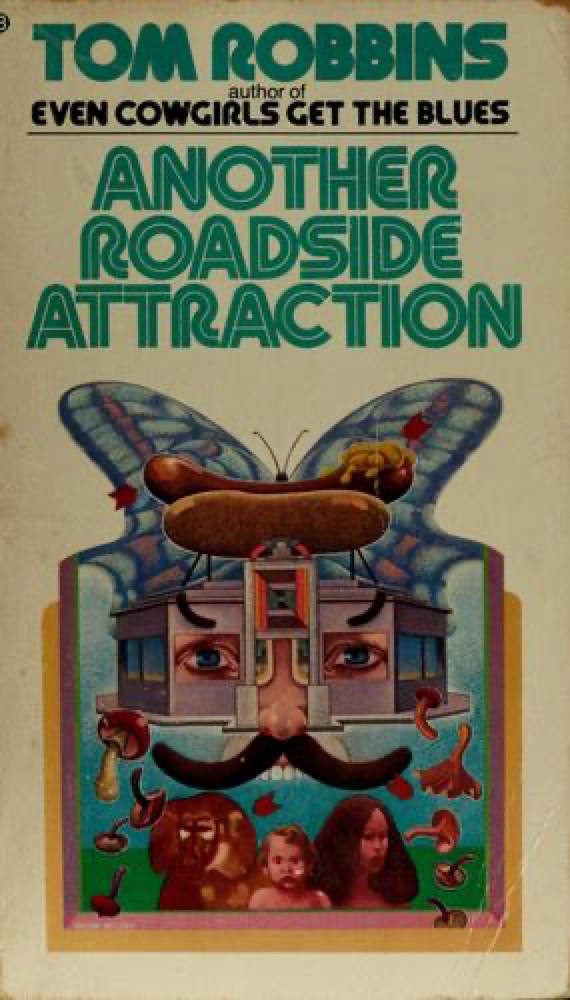 Another Roadside Attraction
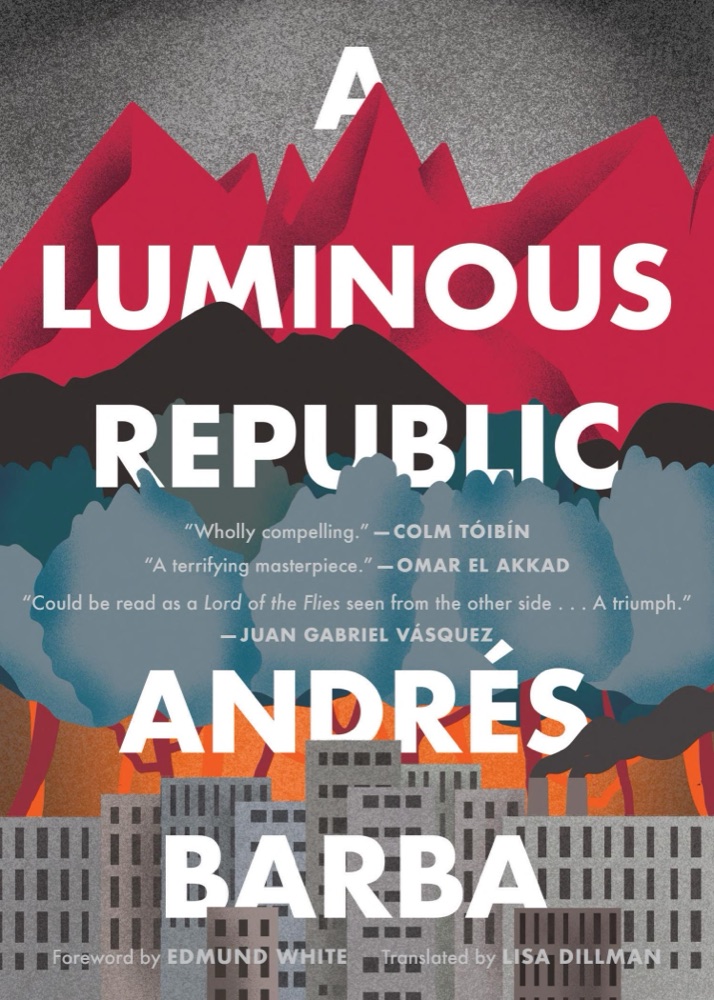 A Luminous Republic
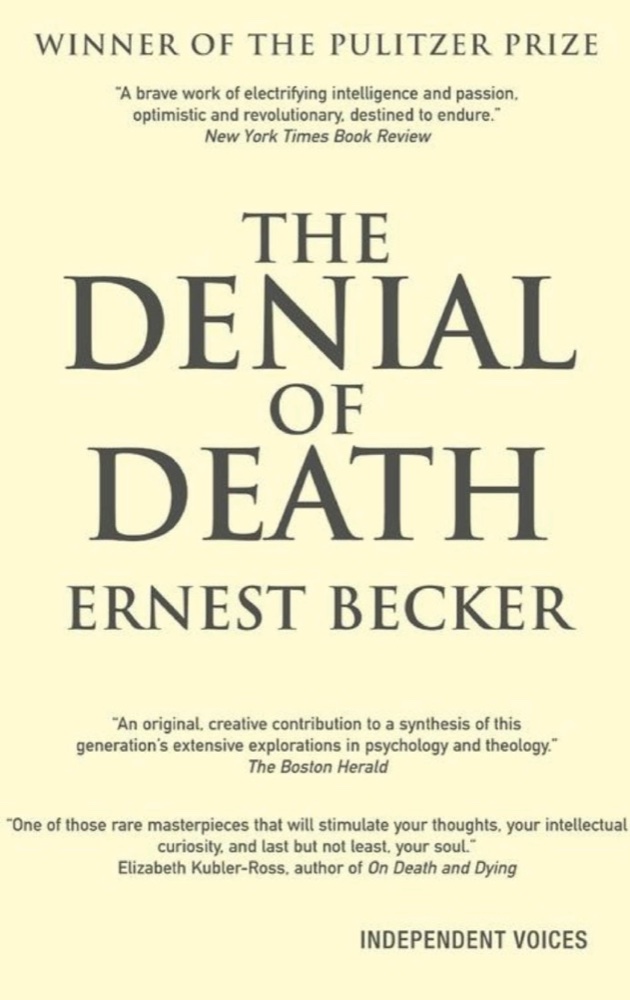 The Denial of Death
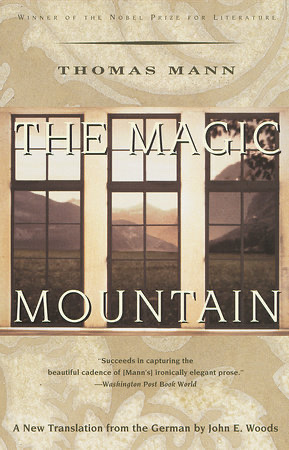 The Magic Mountain
 Monday or Tuesday
 The Way Things Are
 The Essential Writings of Ralph Waldo Emerson
 Genesis