
 The Book of Joy: Lasting Happiness in a Changing World
Quotes from the Book
If scientific analysis were conclusively to demonstrate certain claims in Buddhism to be false, then we must accept the findings of science and abandon those claims.
What we do and think in our own lives, then, becomes of extreme importance as it effects everything we're connected to.
unless the direction of science is guided by a consciously ethical motivation, especially compassion, its effects may fail to bring benefit. They may indeed cause great harm.
The theory of emptiness…is the deep recognition that there is a fundamental disparity between the way we perceive the world, including our own existence in it, and the way things actually are.
The view that all aspects of reality can be reduced to matter and its various particles is, to my mind, as much a metaphysical position as the view that an organizing intelligence created and controls reality.
If as spiritual practitioners we ignore the discoveries of science, our practice is also impoverished, as this mind-set can lead to fundamentalism.
Can there be a completely different set of laws of physics in a different universe, or do the laws of physics as we understand them hold true in all possible universes? If the answer is that a different set of laws can operate in a different universe system, this would suggest (from a Buddhist perspective) that even the laws of physics are entangled with the karma of the sentient beings that will arise in that universe.
Buddhism and science share a fundamental reluctance to postulate a transcendent being as the origin of all things.
The specific areas of science that I have explored most over the years are subatomic physics, cosmology, and biology, including neuroscience and psychology.
My confidence in venturing into science lies in my basic belief that as in science so in Buddhism, understanding the nature of reality is pursued by means of critical investigation: if scientific analysis were conclusively to demonstrate certain claims in Buddhism to be false, then we must accept the findings of science and abandon those claims.
I wish to emphasize to the millions of my fellow Buddhists worldwide the need to take science seriously and to accept its fundamental discoveries within their worldview.
no credible understanding of the natural world or our human existence—what I am going to call in this book a worldview—can ignore the basic insights of theories as key as evolution, relativity, and quantum mechanics.
Science and technology are powerful tools, but we must decide how best to use them.
There is more to human existence and to reality itself than current science can ever give us access to.
The view that all mental processes are necessarily physical processes is a metaphysical assumption, not a scientific fact.
What marks the transition from non-sentient to sentient beings? A model of increasing complexity based on evolution through natural selection is simply a descriptive hypothesis, a kind of euphemism for “mystery,” and not a satisfactory explanation.
the first moment of consciousness of the new being must be preceded by its substantial cause, which must be a moment of consciousness.
This is a precious gateway into the alleviation of suffering, which I believe to be our principal task on this earth.
For modern science, at least from a philosophical point of view, the critical divide seems to be between inanimate matter and the origin of living organisms, while for Buddhism the critical divide is between non-sentient matter and the emergence of sentient beings.
On the whole, I think the Darwinian theory of evolution, at least with the additional insights of modern genetics, gives us a fairly coherent account of the evolution of human life on earth. At the same time, I believe that karma can have a central role in understanding the origination of what Buddhism calls “sentience,” through the media of energy and consciousness.
The Kalachakra texts claim that, prior to its formation, any particular universe remains in the state of emptiness, where all its material elements exist in the form of potentiality as “space particles.
Anton showed me an instrument that allows one to view an ionized single atom. Try as I might, though, I simply could not see it. Perhaps my karma wasn’t ripe enough to enjoy this spectacle.
Because I have no mathematical background, teaching me modern physics, especially esoteric topics such as the theory of relativity, was not an easy task. When I think of Bohm’s patience, his soft voice and gentle manner, and the care with which he made sure that I was following his explanation, I miss him dearly. As
As any layperson who has attempted to understand this theory is aware, even a basic comprehension of Einstein’s principle demands a willingness to defy common sense.
There is almost no area of human life today that is not touched by the effects of science and technology. Yet are we clear about the place of science in the totality of human life—what exactly it should do and by what it should be governed? This last point is critical because unless the direction of science is guided by a consciously ethical motivation, especially compassion, its effects may fail to bring benefit. They may indeed cause great harm.
Like modern science, Buddhism holds the basic premise that, at the most fundamental level, there is no qualitative difference between the material basis of the body of a sentient being, such as a human, and that of, say, a piece of rock.
In order for the study of consciousness to be complete, we need a methodology that would account not only for what is occurring at the neurological and biochemical levels but also for the subjective experience of consciousness itself.
Contemplative traditions on the whole have historically emphasized subjective, first-person investigation of the nature and functions of consciousness, by training the mind to focus in a disciplined way on its own internal states.
In my view, the combination of the first-person method with the third-person method offers the promise of a real advance in the scientific study of consciousness.
What we do and think in our own lives, then, becomes of extreme importance as it affects everything we’re connected to. The
Watch on YouTube
About Dalai Lama XIV
We have collected 244 quotes from 9 books by Dalai Lama XIV on BookQuoters.
More about the author →More by Dalai Lama XIV
The Book of Joy: Lasting Happiness in a Changing World
 The Art of Happiness
 Ethics for the New Millennium
 Beyond Religion: Ethics for a Whole World
Book details
- Author
- Dalai Lama XIV
- Genre
- Philosophy
- Goodreads rating
- 4.03 (10k ratings) →
Keep reading
 The Big Picture: On the Origins of Life, Meaning, and the Universe Itself
 Consilience: The Unity of Knowledge
 The Biology of Belief: Unleashing the Power of Consciousness, Matter and Miracles
 The Varieties of Scientific Experience: A Personal View of the Search for God
 Why Does the World Exist?: An Existential Detective Story
 A Devil's Chaplain: Reflections on Hope, Lies, Science, and Love
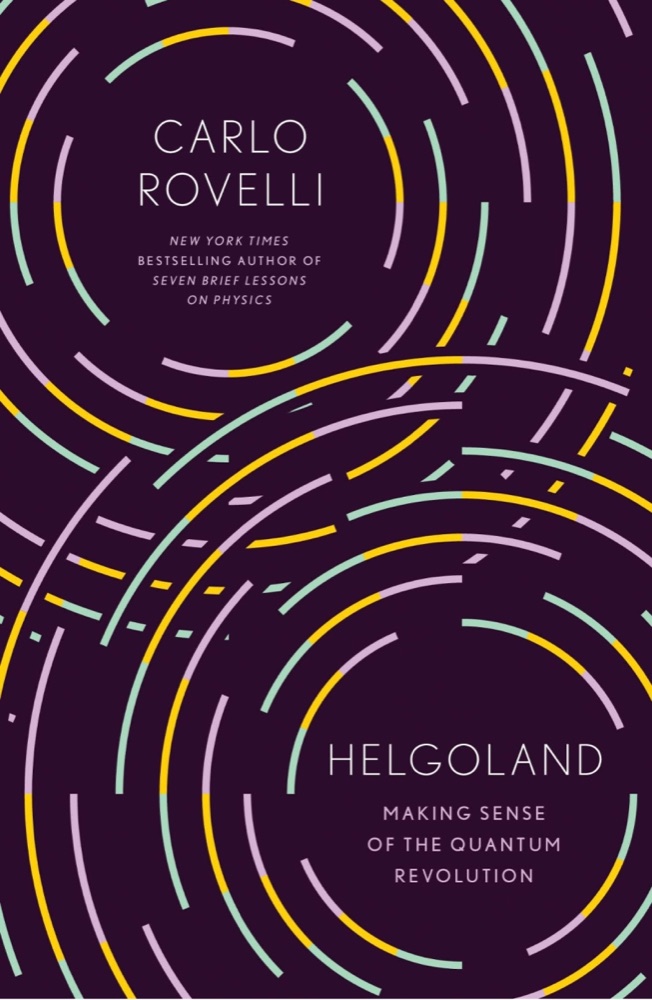 Helgoland: Making Sense of the Quantum Revolution
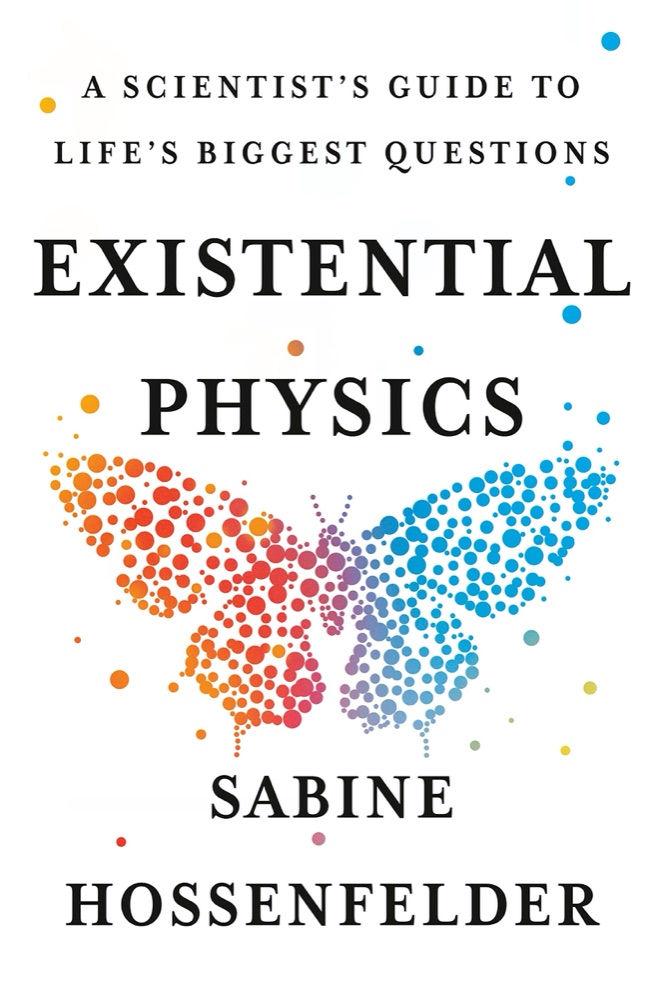 Existential Physics: A Scientist's Guide to Life's Biggest Questions
 The Accidental Universe: The World You Thought You Knew
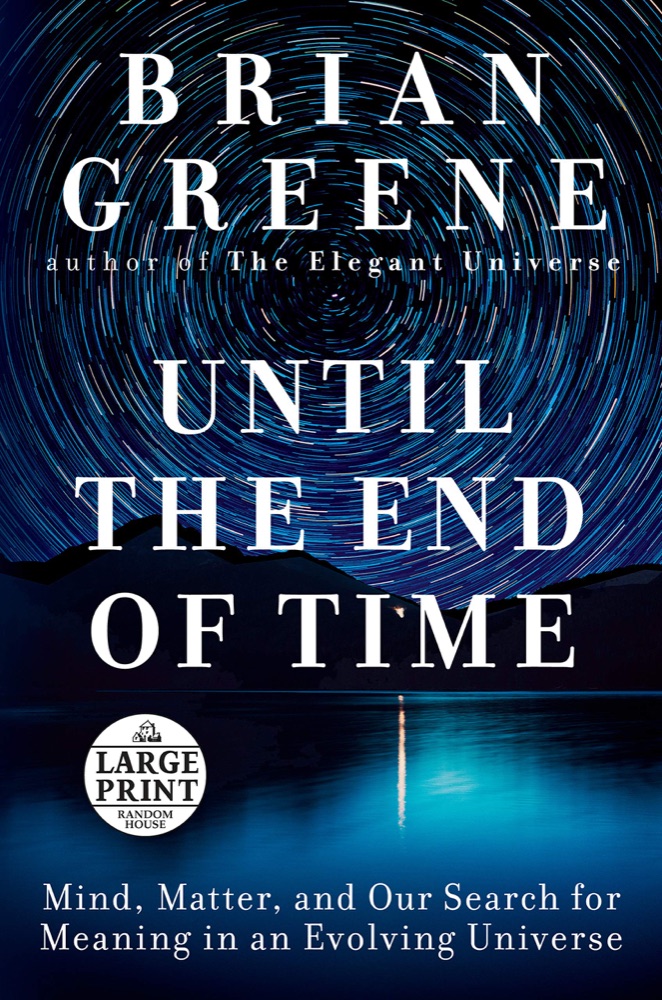 Until the End of Time: Mind, Matter, and Our Search for Meaning in an Evolving Universe
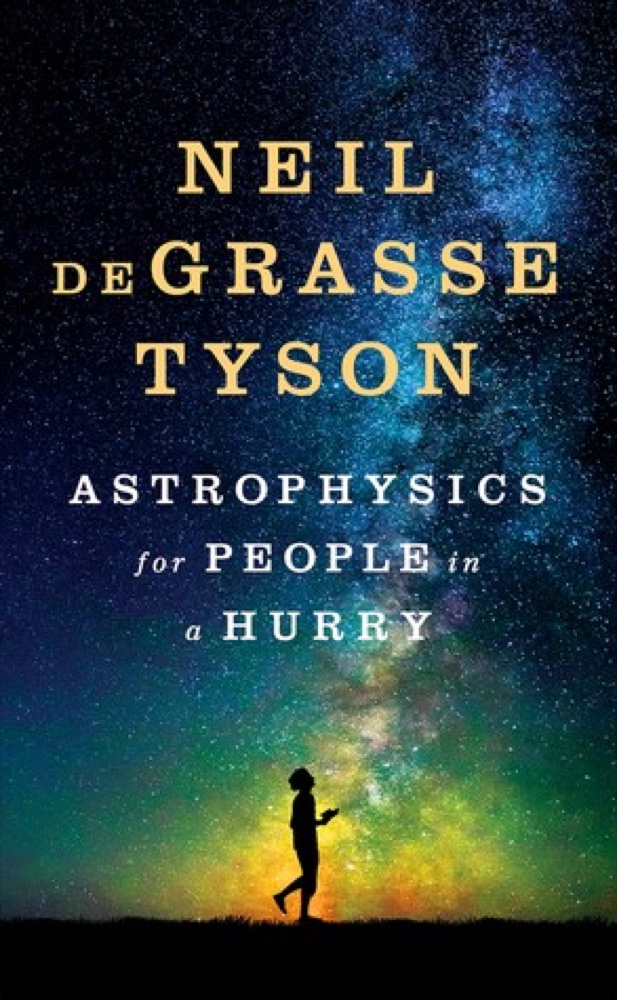 Astrophysics for People in a Hurry
 The Grand Design
 An Enquiry Concerning Human Understanding
 Myths to Live By
 The Cosmic Serpent: DNA and the Origins of Knowledge
 The Tell-Tale Brain: A Neuroscientist's Quest for What Makes Us Human
 The Tao of Physics: An Exploration of the Parallels between Modern Physics and Eastern Mysticism
 The Case Against Reality: Why Evolution Hid the Truth from Our Eyes
 The Convoluted Universe, Book 1
 A Universe from Nothing: Why There Is Something Rather Than Nothing
 Buddhism: A Very Short Introduction
 How to Change Your Mind: The New Science of Psychedelics
 The Master and His Emissary: The Divided Brain and the Making of the Western World
 The Origin of Consciousness in the Breakdown of the Bicameral Mind
 The Science of Mind
 Confession of a Buddhist Atheist
 Proof of Heaven: A Neurosurgeon's Journey into the Afterlife
 The Demon-Haunted World: Science as a Candle in the Dark
 The Language of God: A Scientist Presents Evidence for Belief
 Our Mathematical Universe: My Quest for the Ultimate Nature of Reality
 The Meaning of It All: Thoughts of a Citizen-Scientist
 Parallel Worlds: A Journey Through Creation, Higher Dimensions, and the Future of the Cosmos
 The World According to Physics
 The Problems of Philosophy
 Real Magic: Ancient Wisdom, Modern Science, and a Guide to the Secret Power of the Universe
 Living with a Wild God: A Nonbeliever's Search for the Truth about Everything
 The Ascent of Man
 The Occult
 Critique of Pure Reason
 The World's Religions
 Black Holes and Baby Universes and Other Essays
 The Way of Zen
 The Varieties of Religious Experience
 The Book: On the Taboo Against Knowing Who You Are
 Metaphysics
 The Perennial Philosophy
 Waking Up: A Guide to Spirituality Without Religion
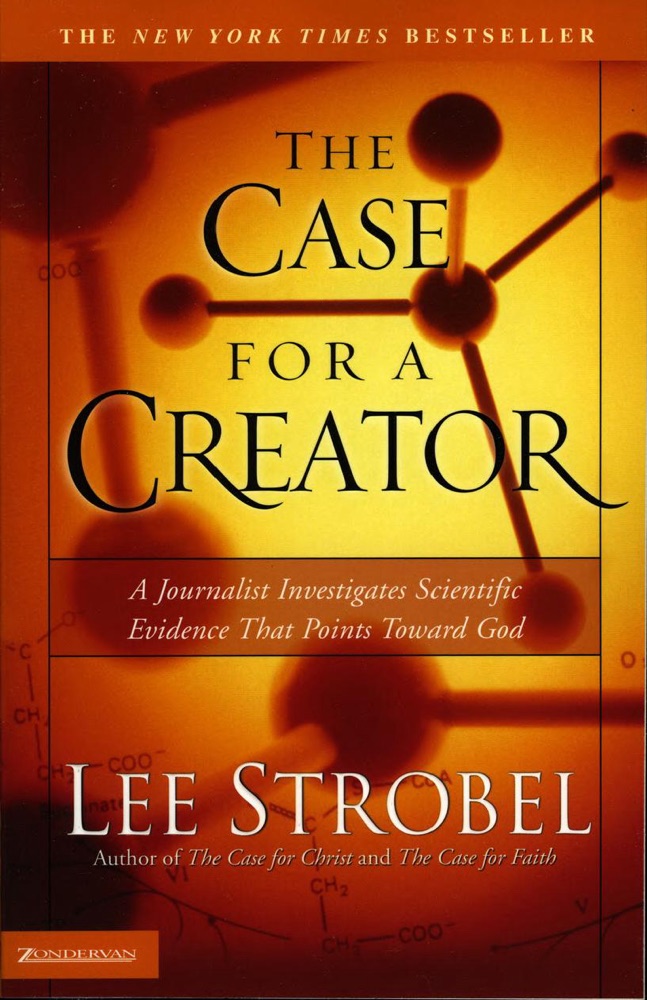 The Case for a Creator: A Journalist Investigates Scientific Evidence That Points Toward God
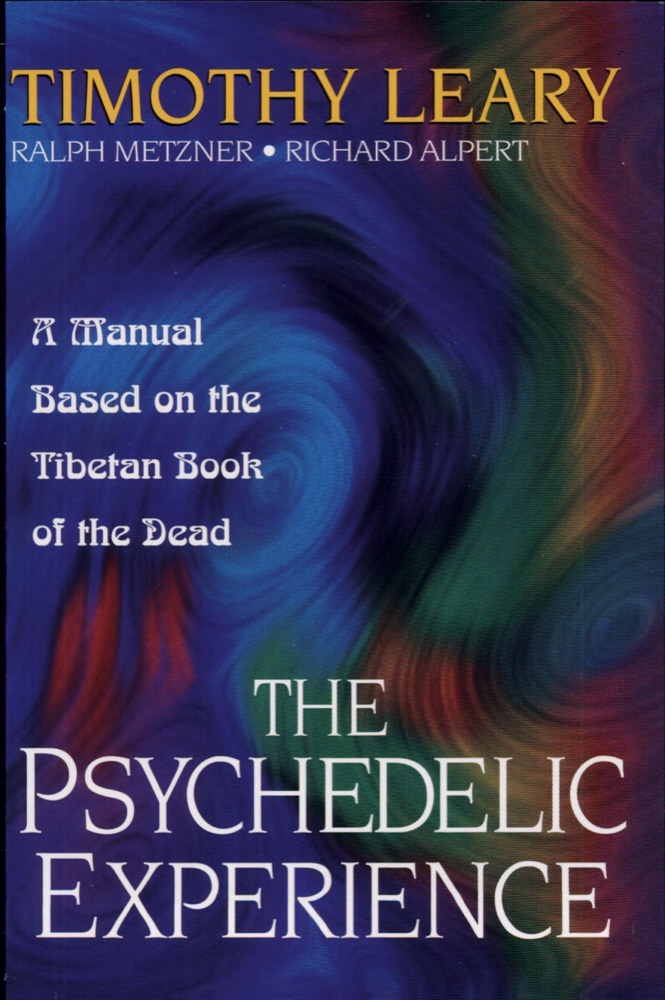 The Psychedelic Experience: A Manual Based on the Tibetan Book of the Dead
 Destination: Void
 Phenomenology of Perception
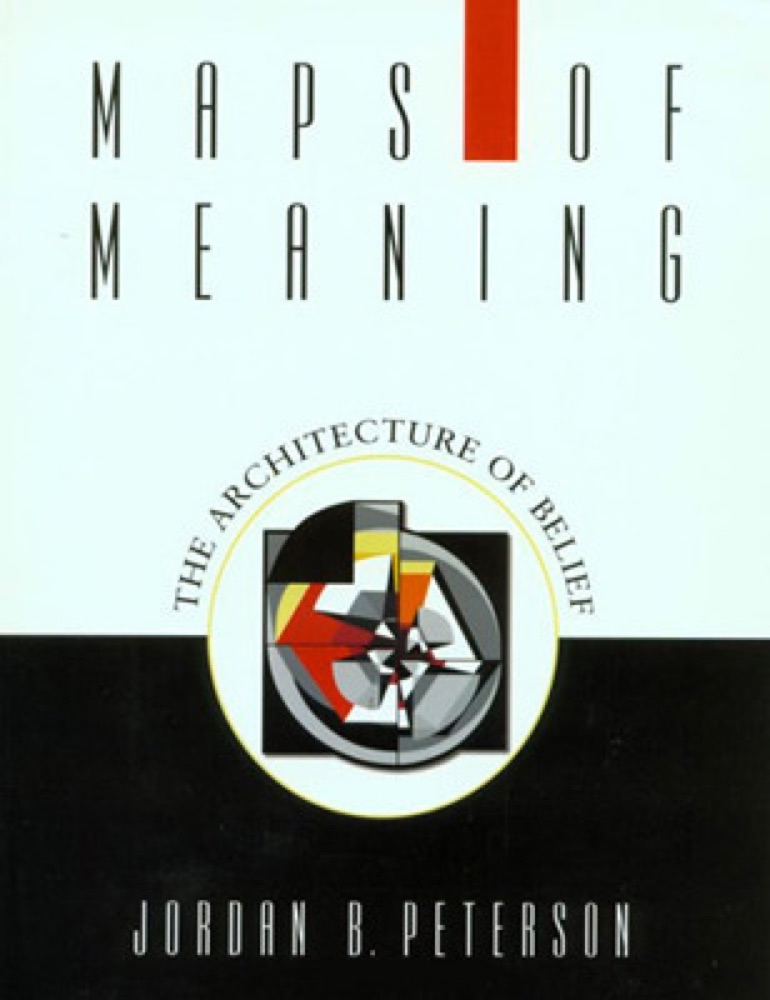 Maps of Meaning: The Architecture of Belief
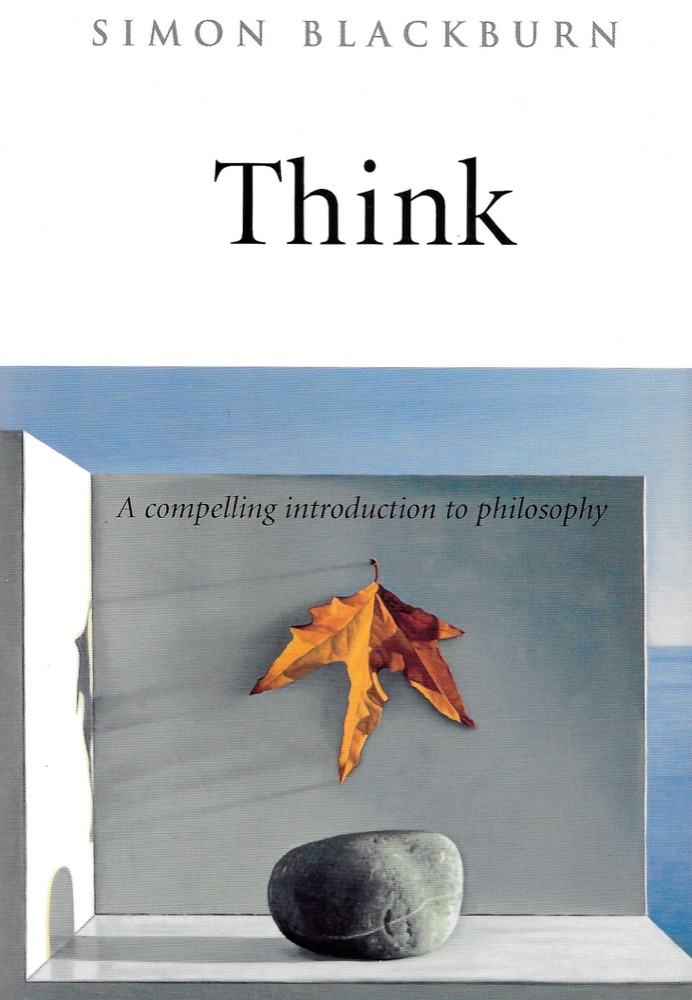 Think: A Compelling Introduction to Philosophy
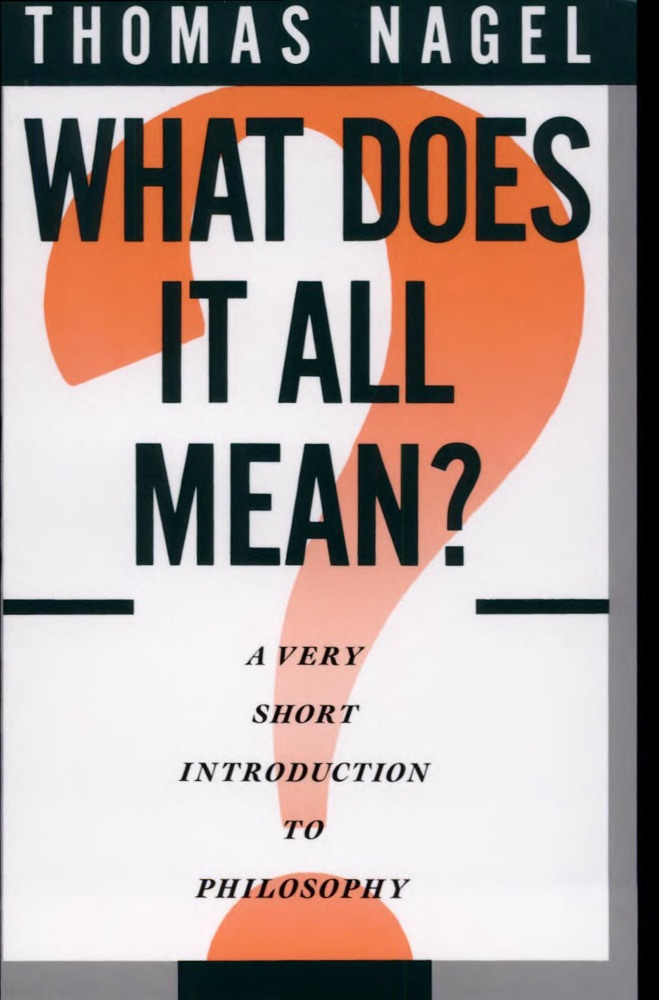 What Does It All Mean? A Very Short Introduction to Philosophy
 Darwin's Dangerous Idea: Evolution and the Meanings of Life
 What Technology Wants
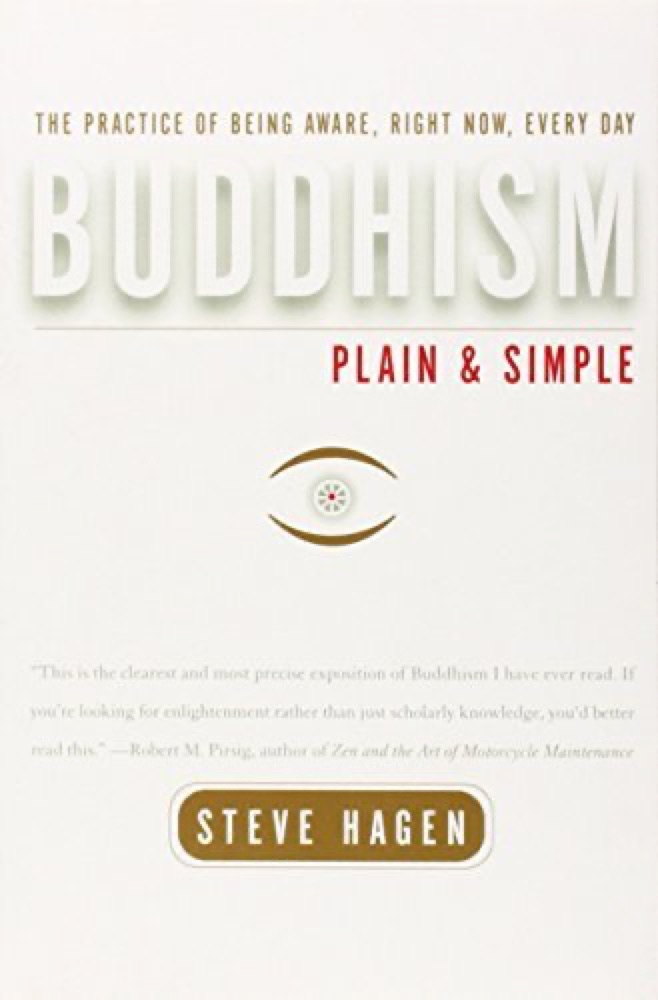 Buddhism Plain & Simple: The Practice of Being Aware, Right Now, Every Day
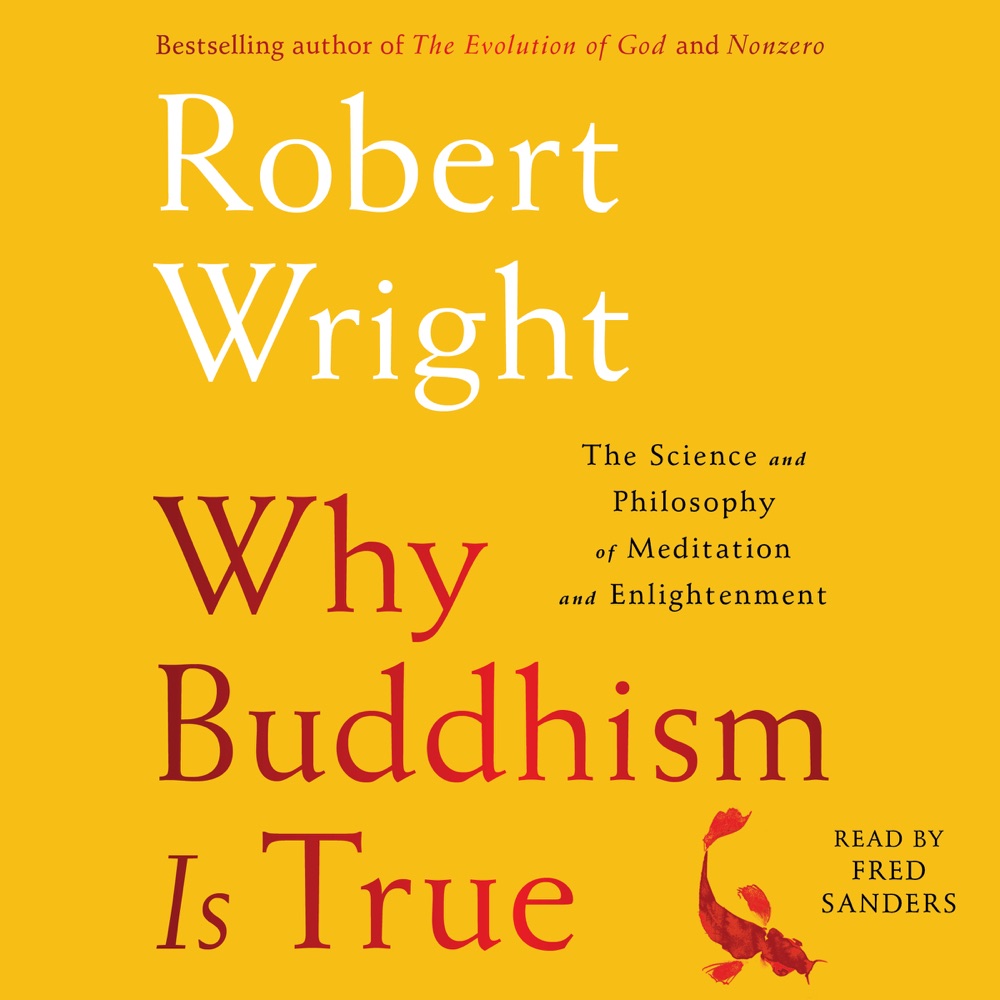 Why Buddhism Is True: The Science and Philosophy of Meditation and Enlightenment
 There Is a God: How the World's Most Notorious Atheist Changed His Mind
 What Is Real?: The Unfinished Quest for the Meaning of Quantum Physics