
 Paper Towns
Quotes from the Book
We all know how loving ends. But I want to fall in love with the world anyway, to let it crack me open. I want to feel what there is to feel while I am here.
518
One of the strange things about adulthood is that you are your current self, but you are also all the selves you used to be, the ones you grew out of but can't ever quite get rid of.
398
To fall in love with the world isn’t to ignore or overlook suffering, both human or otherwise. For me anyway, to fall in love with the world is to look up at the night sky and feel your mind swim before the beauty and the distance of the stars. It is to hold your children while they cry and watch the sycamore trees leaf out in June. When my breastbone starts to hurt, and my throat tightens and tears well in my eyes, I want to look away from feeling. I want to deflect with irony or anything else that will keep me from feeling directly. We all know how loving ends. But I want to fall in love with the world anyway, to let it crack me open. I want to feel what there is to feel while I am here.
337
I'll never again speak to many of the people who loved me into this moment, just as you will never speak to many of the people who loved you into your now. So we raise a glass to them--and hope that perhaps somewhere, they are raising a glass to us.
290
You can't see the future coming--not the terrors, for sure, but you also can't see the wonders that are coming, the moments of light-soaked joy that await each of us.
253
For me, finding hope is not some philosophical exercise or sentimental notion; it is a prerequisite for my survival.
200
I am thoughtful—full of thoughts, all the time, inescapably, exhaustingly. But I am also mindless—acting in accordance with default settings I neither understand nor examine.
186
I...took some pride in 'not fulfilling my potential,' in part because I was terrified that if I tried my hardest, the world would learn I didn't actually have that much potential.
171
When people we love are suffering, we want to make it better. But sometimes - often, in fact - you can't make it better. I'm reminded of something my supervisor said to me when I was a student chaplain: "Don't just do something. Stand there.
132
our obsessive desire to make and have and do and say and go and get—six of the seven most common verbs in English—may ultimately steal away our ability to be, the most common verb in English.
120
Humans are not the protagonists of this planet's story. If there is a main character, it is life itself, which makes of earth and starlight something more than earth and starlight. But in the age of the Anthropocene, humans tend to believe, despite all available evidence, that the world is here for our benefit.
118
When you have the microphone, what you say matters, even when you're just kidding.
110
I think it's helpful to know how sunsets work. I don't buy the romantic notion that scientific understanding somehow robs the universe of its beauty, but I still can't find language to describe how breathtakingly beautiful sunsets are--not breathtakingly, actually, but breath-givingly beautiful. All I can say is that sometimes when the world is between day and night, I'm stopped cold by its splendor, and I feel my absurd smallness. You'd think that would be sad, but it isn't. It only makes me grateful.
105
In this world, you must be oh so smart, or oh so pleasant.’ Well, for years I was smart. I recommend pleasant.
105
It's no wonder we worry about the end of the world. Worlds end all the time.
104
At the end of his life, the great picture book author and illustrator Maurice Sendak said on the NPR show Fresh Air, 'I cry a lot because I miss people. I cry a lot because they die, and I can't stop them. They leave me, and I love them more.' He said, 'I'm finding out as I'm aging that I'm in love with the world.' It has taken me all my life up to now to fall in love with the world, but I've started to feel it the last couple of years. To fall in love with the world isn't to ignore or overlook suffering, both human and otherwise. For me anyway, to fall in love with the world is to look up at the night sky and feel your mind swim before the beauty and the distance of the stars. It is to hold your children while they cry, to watch as the sycamore trees leaf out in June. When my breastbone starts to hurt, and my throat tightens, and tears well in my eyes, I want to look away from the feeling. I want to deflect with irony, or anything else that will keep me from feeling directly. We all know how loving ends. But I want to fall in love with the world anyway, to let it crack me open. I want to feel what there is to feel while I am here.
94
Marveling at the perfection of that leaf, I was reminded that aesthetic beauty is as much about how and whether you look as what you see. From the quark to the supernova, the wonders do not cease. It is our attentiveness that is in short supply, our ability and willingness to do the work that awe requires.
87
...I reread the work of my friend and mentor Amy Krouse Rosenthal, who'd died a few months earlier. She'd once written, 'For anyone trying to discern what to do w/ their life: PAY ATTENTION TO WHAT YOU PAY ATTENTION TO. That's pretty much all the info u need.
78
We can talk and talk and talk about what the pain is like, but we can never manage to convey what it is.
77
History, like human life, is at once incredibly fast and agonizingly slow.
75
Maybe we forget so that we can go on.
71
I never excelled academically, and took some pride in “not fulfilling my potential,” in part because I was terrified that if I tried my hardest, the world would learn that I didn’t actually have that much potential
71
What you're looking at matters, but not as much as how you're looking or who you're looking with
66
I know the world will survive us - and in some ways it will be more alive.
60
I'm not sure why I find it beautiful to devote oneself obsessively to the creation of something that doesn't matter, but I do.
54
After the death of the poet Jane Kenyon, her husband Donald Hall wrote, “We did not spend our days gazing into each other’s eyes. We did that gazing when we made love or when one of us was in trouble, but most of the time our gazes met and entwined as they looked at a third thing. Third things are essential to marriages, objects or practices or habits or arts or institutions or games or human beings that provide a site of joint rapture or contentment. Each member of a couple is separate; the two come together in double attention.
52
I think two of the fundamental facts of being a person are 1. We must go on, and 2. None of us ever walks alone. We may feel alone (in fact, we will feel alone), but even in the crushing grind of isolation, we aren't alone.
51
What an astonishment to breathe on this breathing planet. What a blessing to be Earth loving Earth.
50
We are at once far too powerful and not nearly powerful enough. We are powerful enough to radically reshape Earth's climate and biodiversity, but not powerful enough to choose how we reshape them.
47
There's a certain way I talk about the things I don't talk about. Maybe that's true for all of us. We have ways of closing off the conversation so that we don't ever get directly asked what we can't bear to answer.
47
Did you know?
- The book grew out of Green's podcast of the same name, which launched in January 2018.
- Green signed all 250,000 tip-in sheets for the first U.S. and Canadian printing of the hardcover.
- It was John Green's first nonfiction book after a career writing fiction.
- The book debuted at number one on the New York Times Best Seller list for nonfiction.
- Each essay ends with Green assigning the reviewed subject a rating on a five-star scale.
- The concept was sparked when Green and his brother Hank encountered absurd Google reviews while on a 2017 book tour.
Watch on YouTube
About John Green
John Green is an American author and YouTube creator best known for bestselling young adult novels such as The Fault in Our Stars and Looking for Alaska. The Anthropocene Reviewed, adapted from his podcast, was his first work of nonfiction.
More about the author →More by John Green
All books by John Green →
About the book
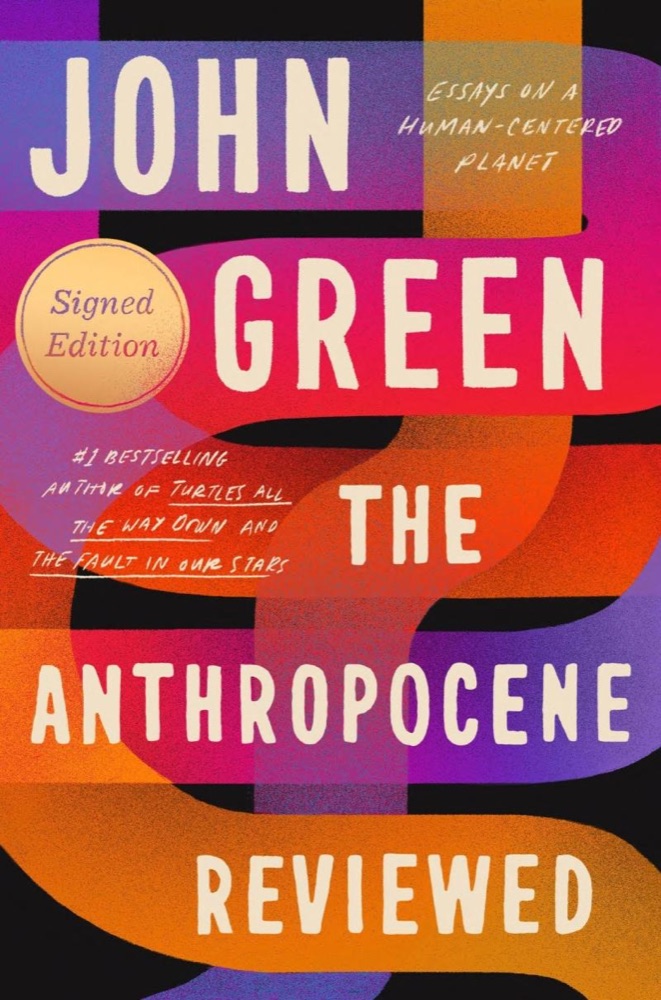
The Anthropocene Reviewed is a collection of personal essays in which novelist John Green reviews disparate facets of the human-centered planet, or Anthropocene, on a five-star scale. His subjects range widely, from sweeping ideas such as humanity's capacity for wonder to specific and seemingly mundane things like Diet Dr Pepper, Halley's Comet, the QWERTY keyboard, and Canada geese. The book grew out of Green's podcast of the same name, which launched in 2018, with the essays revised and several new ones added for the page.
Beneath the playful conceit of assigning star ratings, the essays are deeply personal and meditative, weaving memoir with reflections on meaning, fragility, and connection. Green returns repeatedly to themes of human vulnerability, awe, anxiety, and hope, drawing on his own experiences with mental illness and on the idea, voiced by his wife Sarah, that in the Anthropocene there are no disinterested observers, only participants.
The book was both a critical and commercial success, debuting at number one on the New York Times nonfiction bestseller list and earning starred reviews from outlets including Booklist, Library Journal, and Publishers Weekly. It was Green's first nonfiction book and won the 2021 Goodreads Choice Award for Best Nonfiction.
Book details
- First published
- 2021
- Author
- John Green
- Genre
- Nonfiction
- Goodreads rating
- 4.34 (189k ratings)
Critical reception
- Debuted at #1 on the New York Times Best Seller list in Combined Print & E-book Nonfiction and sold over 57,000 copies in its first week.
- Received starred reviews from Booklist, Library Journal, and Publishers Weekly.
- Won the 2021 Goodreads Choice Award for Best Nonfiction.
The buzz
- NPRReview in NPRprofessional review (via Book Marks)
- IrishtimesReview in Irishtimesprofessional review (via Book Marks)
- BooklistReview in Booklistprofessional review (via Book Marks)
- DatebookReview in Datebookprofessional review (via Book Marks)
- AuxReview in Auxprofessional review (via Book Marks)
Keep reading
 The Opposite of Loneliness: Essays and Stories
 Deep Creek: Finding Hope in the High Country
 A Room Called Earth
 To Be Taught, If Fortunate
 Sputnik Sweetheart
 The World and Other Places: Stories
 How High We Go in the Dark
 Notes on a Nervous Planet
 Kafka on the Shore
 The Stone Gods
 Why Fish Don’t Exist: A Story of Loss, Love, and the Hidden Order of Life
 Winter Hours: Prose, Prose Poems, and Poems
 Love Is the Higher Law
 Girlfriend in a Coma
 These Precious Days: Essays
 Hard-Boiled Wonderland and the End of the World
 Beautiful World, Where Are You
 What I Loved
 To The Bright Edge of the World
 Winter
 Small Wonder
 On Connection
 Drive Your Plow Over the Bones of the Dead
 The Goldfinch
 Hourglass: Time, Memory, Marriage
 Any Human Heart
 We the Living
 On Earth We're Briefly Gorgeous
 What If This Were Enough?: Essays
 The Dark and Hollow Places
 Warm Bodies
 Lighthousekeeping
 Perhaps the Stars
 Gilead
 Travels with Charley: In Search of America
 Hey Nostradamus!
 Journal of a Solitude
 Holding Up the Universe
 Like Streams to the Ocean: Notes on Ego, Love, and the Things That Make Us Who We Are
 A Heartbreaking Work of Staggering Genius
 The Humans
 A Tale for the Time Being
 Bewilderment
 Encyclopedia of an Ordinary Life
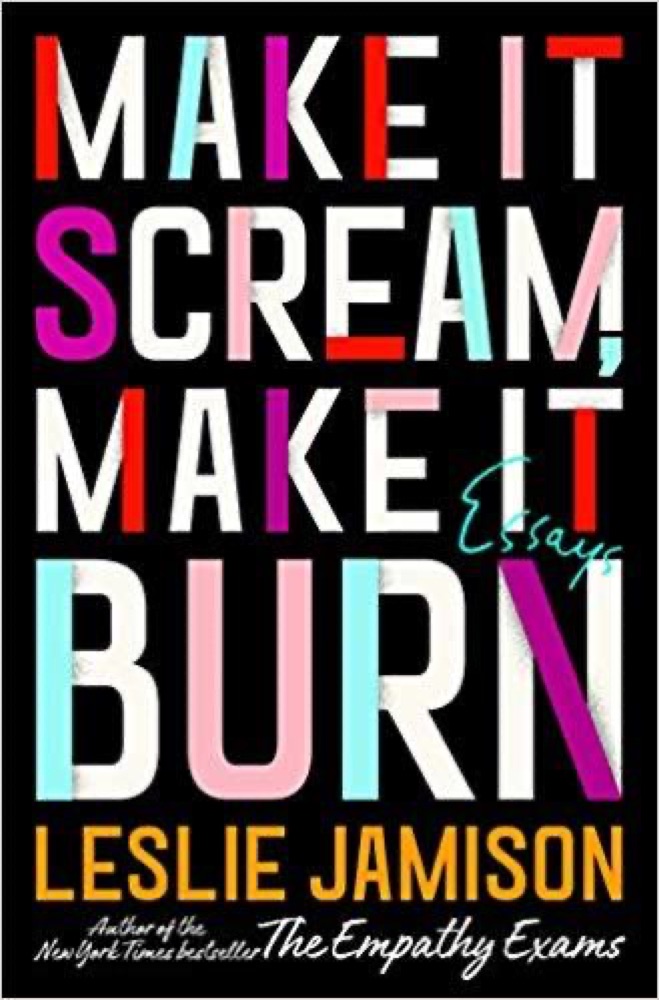 Make It Scream, Make It Burn
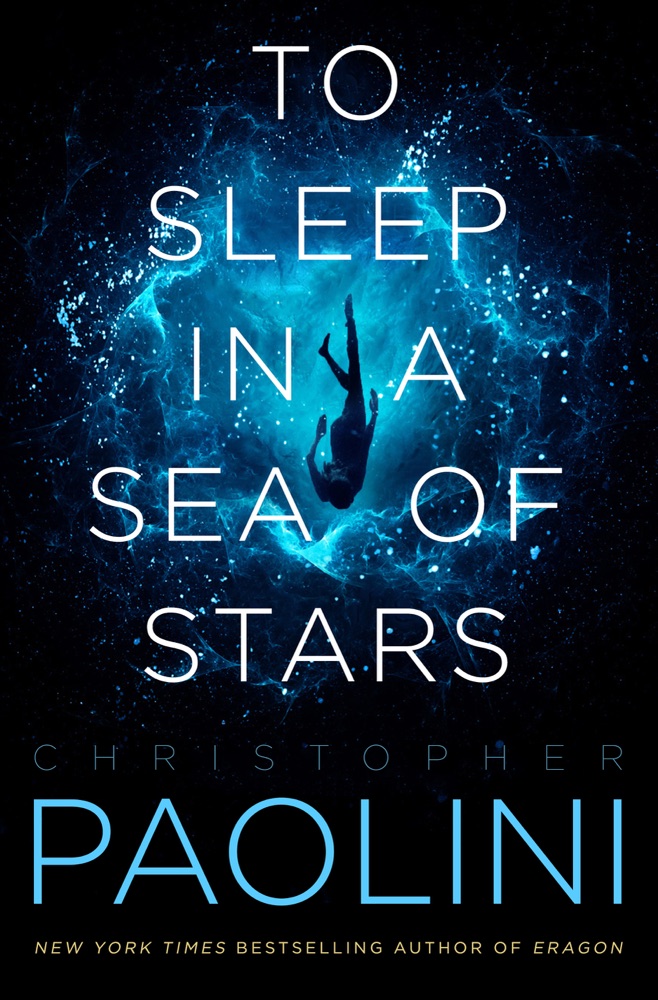 To Sleep in a Sea of Stars
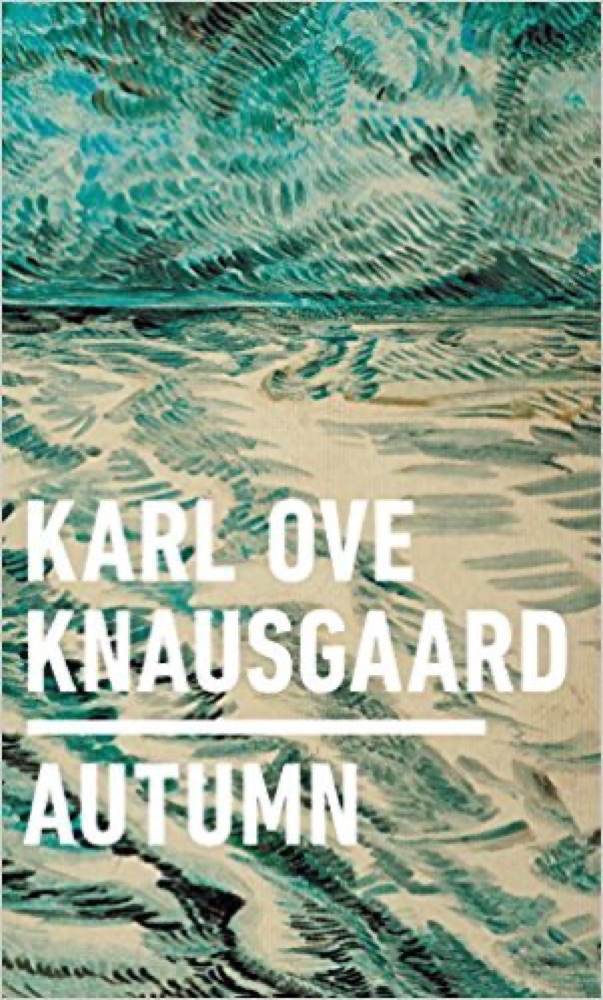 Autumn
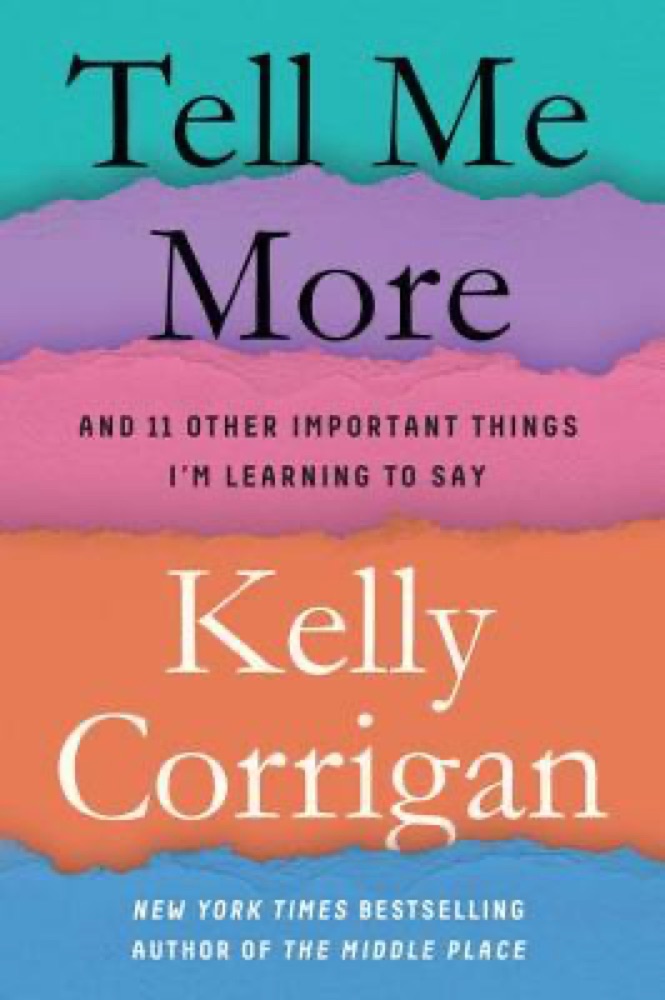 Tell Me More: Stories About the 12 Hardest Things I'm Learning to Say
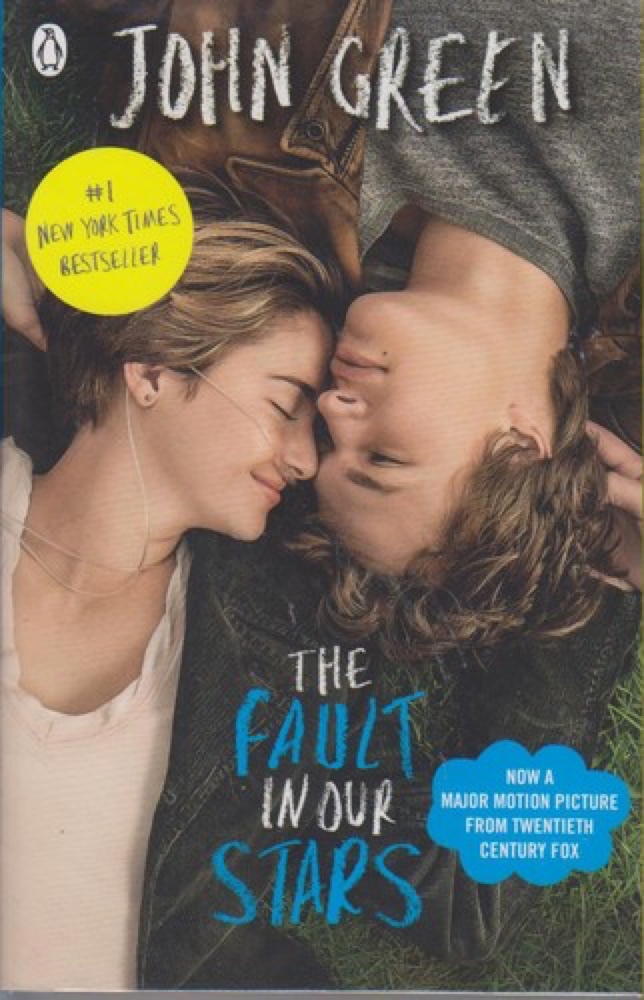 The Fault in Our Stars
 Here for It; Or, How to Save Your Soul in America: Essays
 Blueberries: Essays Concerning Understanding
 Ascension
 Buffering: Unshared Tales of a Life Fully Loaded
 I'm Thinking of Ending Things
 Upstream: Selected Essays
 The Abundance
 Slow Gods
 Orbital
 When Women Were Dragons
 Invisibility