
 Gathering Moss: A Natural and Cultural History of Mosses
Quotes from the Book
Recognizing “enoughness” is a radical act in an economy that is always urging us to consume more.
56
You can store meat in your own pantry or in the belly of your brother. Both have the result of keeping hunger at bay but with very different consequences for the people and for the land which provided that sustenance.
32
Public libraries seem to me a powerful example of the way that gift economies can coexist with market economies, at a larger scale. . . To me, they embody the civic-scale practice of a gift economy and the notion of common property. Libraries are models of gift economies, providing free access not only to books but also music, tools, seeds, and more. We don't each. have to own everything. The books at the library belong to everyone, serving the public with free books. . . Take the books, enjoy them, bring them back so someone else can enjoy them, with literary abundance for all. And all you need is a library card, which is a kind of agreement to respect and take care of the common good.
29
In a gift economy, wealth is understood as having enough to share, and the practice for dealing with abundance is to give it away. In fact, status is determined not by how much one accumulates, but by how much one gives away. The currency in a gift economy is relationship, which is expressed as gratitude, as interdependence and the ongoing cycles of reciprocity. A gift economy nurtures the community bonds that enhance mutual well-being; the economic unit is “we” rather than “I,” as all flourishing is mutual.
22
I’ve long believed that the ones who have more joy win.
19
Instead of changing the land to suit their convenience, they changed themselves. Eating with the seasons is a way of honoring abundance, by going to meet it when and where it arrives.
19
Know the ways of the ones who take care of you, so that you can take care of them. Introduce yourself. Be accountable as the one who comes asking for a life. Ask permission before taking. Abide by the answer. Never take the first one. Never take the last. Take only what you need. Take only that which is given. Never take more than half. Leave some for others. Harvest in a way that minimizes harm. Use it respectfully. Never waste what you have taken. Share. Give thanks for what you have been given. Give a gift in reciprocity for what you have taken. Sustain the ones who sustain you and the Earth will last forever.
17
Let’s remember that the “System” is led by individuals, by a relatively small number of people, who have names, with more money than God and certainly less compassion. They sit in boardrooms deciding to exploit fossil fuels for short-term gain while the world burns. They know the science, they know the consequences, but they proceed with ecocidal business as usual and do it anyway. Their behavior feels to me like the same kind of arrogant entitlement as Darren the Farm Stand thief or Darren the Planet Wrecker. They’re all thieves, stealing our future, while we pass around the zucchini.
15
When an economic system actively destroys what we love, isn't it time for a different system?
14
I want to live in a society where the currency of exchange is gratitude and the infinitely renewable resource of kindness, which multiplies every time it is shared rather than depreciating with use.
11
When we speak of these not as things or natural resources or commodities, but as gifts, our whole relationship to the natural world changes.
10
The next stage of human economy will parallel what we are beginning to understand about nature. It will call forth the gifts of each of us; it will emphasize cooperation over competition; it will encourage circulation over hoarding; and it will be cyclical, not linear. Money may not disappear anytime soon, but it will serve a diminished role even as it takes on more of the properties of the gift. The economy will shrink, and our lives will grow.
10
The practice of observing the living world and taking inspirations for human ways of living from its model is an essential element of indigenous science. It embraces the reality that there are intelligences other than our own, from whom we might learn.
9
In fact, the “monster” in Potawatomi culture is Windigo, who suffers from the illness of taking too much and sharing too little. It is a cannibal, whose hunger is never sated, eating through the world. Windigo thinking jeopardizes the survival of the community by incentivizing individual accumulation far beyond the satisfaction of “enoughness.” Contemporary Windigos who cannibalize life for accumulation of money need their own name.
9
Thriving is possible only if you have nurtured strong bonds with your community.
8
In the Anishinaabe worldview, it’s not just fruits that are understood as gifts, rather all of the sustenance that the land provides, from fish to firewood. Everything that makes our lives possible—the splints for baskets, roots for medicines, the trees whose bodies make our homes, and the pages of our books—is provided by the lives of more-than-human beings. This is always true whether it’s harvested directly from the forest or whether it’s mediated by commerce and harvested from the shelves of a store—it all comes from the Earth. When we speak of these not as things or natural resources or commodities, but as gifts, our whole relationship to the natural world changes.
7
thriving depends on more than meeting basic physical needs, and includes goods like a sense of community, mutual support, and equality. Wealth is much more than what GDP measures, and the market is not the only source of economic value. She urges policymakers to recognize the values of common lands, green space, biodiversity.
7
If there’s not enough of what you want, then want something else.
5
Enumerating the gifts you’ve received creates a sense of abundance, the knowing that you already have what you need. Recognizing “enoughness” is a radical act in an economy that is always urging us to consume more. Data tell the story that there are “enough” food calories on the planet for all 8 billion of us to be nourished. And yet people are starving. Imagine the outcome if we each took only enough, rather than far more than our share. The wealth and security we crave could be met by sharing what we have. Ecopsychologists have shown that the practice of gratitude puts brakes on hyper-consumption. The relationships nurtured by gift thinking diminish our sense of scarcity and want. In that climate of sufficiency, our hunger for more abates and we take only what we need, in respect for the generosity of the giver. Climate catastrophe and biodiversity loss are the consequences of unrestrained taking by humans. Might cultivation of gratitude be part of the solution?
5
The prosperity of the community grows from the flow of relationships, not the accumulation of goods. When the natural world is understood as a gift instead of private property, there are ethical constraints on the accumulation of abundance that is not yours to own. Gifts are not meant to be hoarded, and thus made scarce for others, but given away, which generates sufficiency for all.
4
If the Sun is the source of flow in the economy of nature, what is the “Sun” of a human gift economy, the source that consonantly replenishes the flow of gifts? Maybe it is love.
4
What if our metrics for well-being included birdsong, the crescendo of Crickets on a summer evening, and neighbors calling to each other across the road?
3
Harvest honorably, with restraint, respect, reverence, and reciprocity.
3
I cherish the notion of the gift economy, that we might back away from the grinding system, which reduces every to a commodity and leaves most of us bereft of what we really want: a sense of belonging and relationship and purpose and beauty, which can never be commoditized. I want to be part of a system in which wealth means having enough to share, and where the gratification of meeting your family needs is not poisoned by destroying that possibility for someone else. I want to live in a society where the currency of exchange is gratitude and the infinitely renewable resource of kindness, which multiples every it is shared rather than depreciating with use.
2
Always value people over things" "Without farmers you'd be naked, hungry, and sober
2
Ecopsychologists have shown that the practice of gratitude puts brakes on hyperconsumption. The relationships nurtured by gift thinking diminish our sense of scarcity and want. In that climate of sufficiency, our hunger for more abates and we take only what we need, in respect for the generosity of the giver.
2
Some powerful feminist thinkers call us to remember that gift giving is among the most primal of human relationships. Each of us begins our life as the recipient in what Genevieve Vaughan has called a “maternal gift economy,” the flow of “goods and services” from mother to newborn. When the mother nurses her child, the boundary of the individual self becomes permeable and the common good is the only one that matters. The maternal gift economy is a biological imperative. There is no meritocracy or earning of sustenance. Mothers do not sell their milk to their babies, it is pure gift, so that life can continue. The currency of this economy is the flow of gratitude, the flow of love, literally in support of life. By analogy, can the sustenance from the breast of Mother Earth be understood as a maternal gift economy? These feminist thinkers argue that giving and taking in this sense are a fundamental way of caring for each other, without the intervention of states or markets. Scholars like Miki Kashtan are exploring how the philosophy and practice of a maternal gift economy might move social organization toward justice and sustainability. If the Sun is the source of flow in the economy of nature, what is the “Sun” of a human gift economy, the source that constantly replenishes the flow of gifts? Maybe it is love.
2
Gratitude and reciprocity are the currency of a gift economy, and they have the remarkable property of multiplying with every exchange, their energy concentrating as they pass from hand to hand, a truly renewable resource. Can we imagine a human economy with a currency which emulates the flow from Mother Earth? A currency of gifts? When I speak about reciprocity as a relationship, let me be clear. I don’t mean a bilateral exchange in which an obligation is incurred, and can then be discharged with a reciprocal “payment.” I mean keeping the gift in motion in a way that is open and diffuse, so that the gift does not accumulate and stagnate, but keeps moving, like the gift of berries through an ecosystem. We ecologists think about the currency of ecosystems in terms of biogeochemistry—the cycling of life’s materials, between the living and the not.
2
Watch on YouTube
About Robin Wall Kimmerer
We have collected 58 quotes from 2 books by Robin Wall Kimmerer on BookQuoters.
More about the author →More by Robin Wall Kimmerer
Gathering Moss: A Natural and Cultural History of Mosses
About the book
From the #1 New York Times bestselling author of Braiding Sweetgrass, a bold and inspiring vision for how to orient our lives around gratitude, reciprocity, and community, based on the lessons of the natural world.
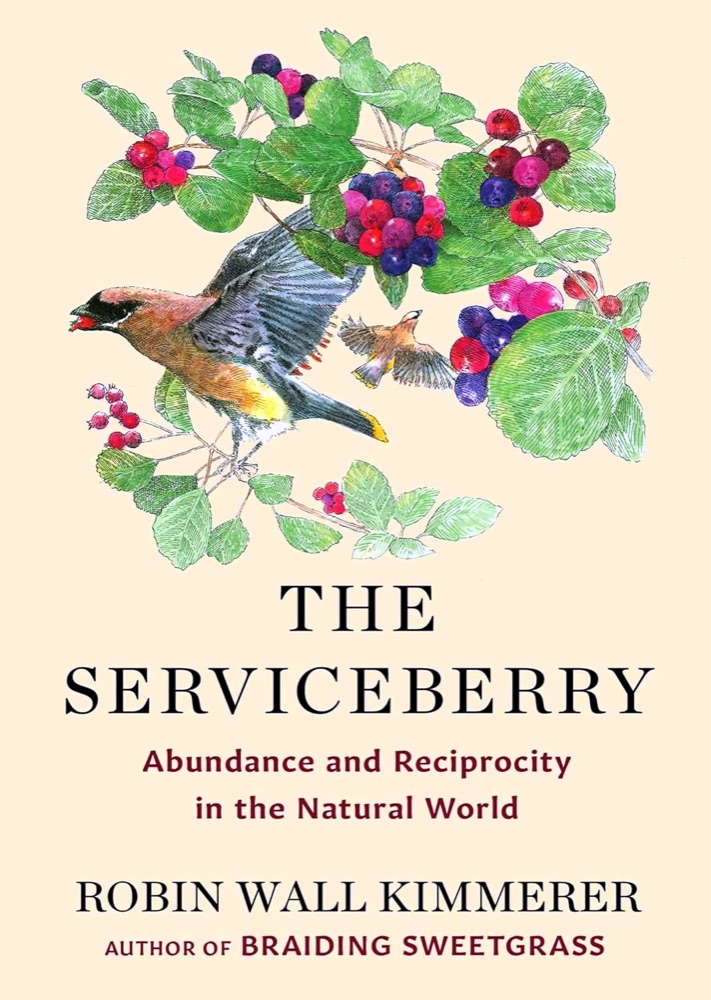
As Indigenous scientist Robin Wall Kimmerer harvests Serviceberries alongside the birds, she considers the ethic of reciprocity that lies at the heart of the gift economy. How, she asks, can we learn from Indigenous wisdom and the plant world to reimagine what we value most? Our economy is rooted in scarcity, competition, and the hoarding of resources, and we have surrendered our values to a system that actively harms what we love. Meanwhile, the Serviceberry’s relationship with the natural world is an embodiment of interconnectedness and gratitude. The tree distributes its wealth—its abundance of sweet, juicy berries—to meet the needs of its natural community. And this dis
Book details
- First published
- 2024
- Author
- Robin Wall Kimmerer
- Genre
- Nonfiction
- Goodreads rating
- 4.27 (70k ratings)
The buzz
- The Washington PostReview in The Washington Postprofessional review (via Book Marks)
- The GuardianReview in The Guardianprofessional review (via Book Marks)
- Kirkus ReviewsReview in Kirkus Reviewsprofessional review (via Book Marks)
- Publishers WeeklyReview in Publishers Weeklyprofessional review (via Book Marks)
- BooklistReview in Booklistprofessional review (via Book Marks)
- BookPageReview in BookPageprofessional review (via Book Marks)
Keep reading
 Sacred Economics: Money, Gift, and Society in the Age of Transition
 All We Can Save: Truth, Courage, and Solutions for the Climate Crisis
 The Art of the Commonplace: The Agrarian Essays
 The World-Ending Fire: The Essential Wendell Berry
 Bringing it to the Table: On Farming and Food
 Emergent Strategy: Shaping Change, Changing Worlds
 The One-Straw Revolution
 Small Is Beautiful: Economics as if People Mattered
 The Culture of Make Believe
 Endgame, Vol. 1: The Problem of Civilization
 How Adam Smith Can Change Your Life: An Unexpected Guide to Human Nature and Happiness
 Talking to My Daughter About the Economy: or, How Capitalism Works—and How It Fails
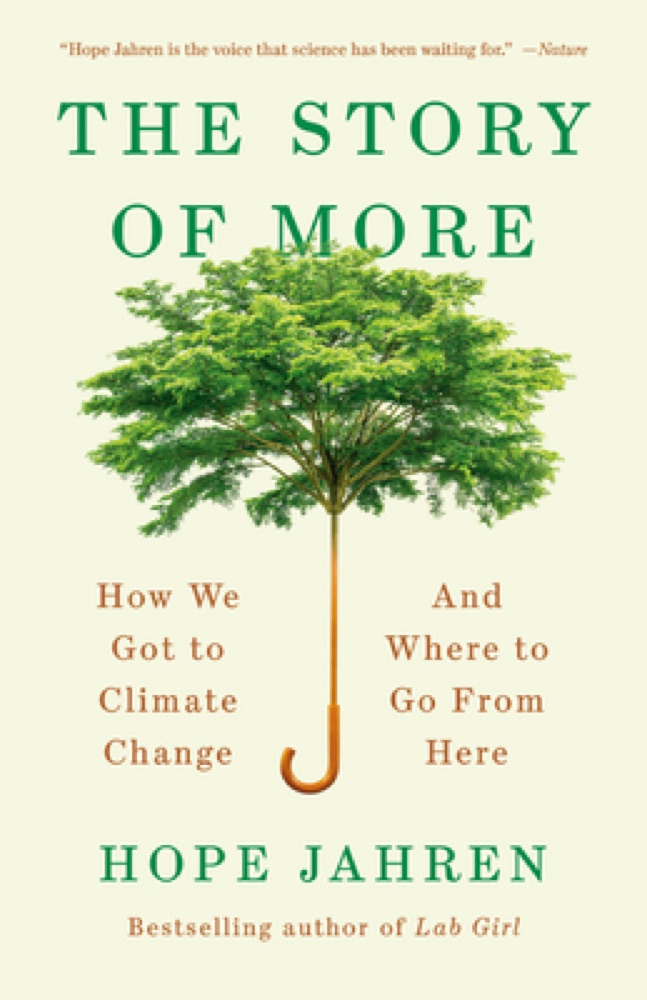 The Story of More: How We Got to Climate Change and Where to Go from Here
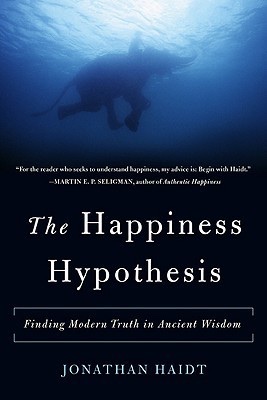 The Happiness Hypothesis: Finding Modern Truth in Ancient Wisdom
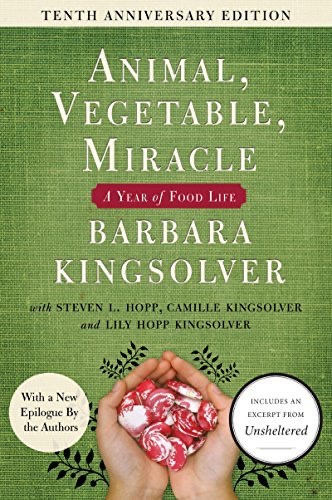 Animal, Vegetable, Miracle: A Year of Food Life
 The Life You Can Save: How to Do Your Part to End World Poverty
 Healing Our World: In an Age of Aggression
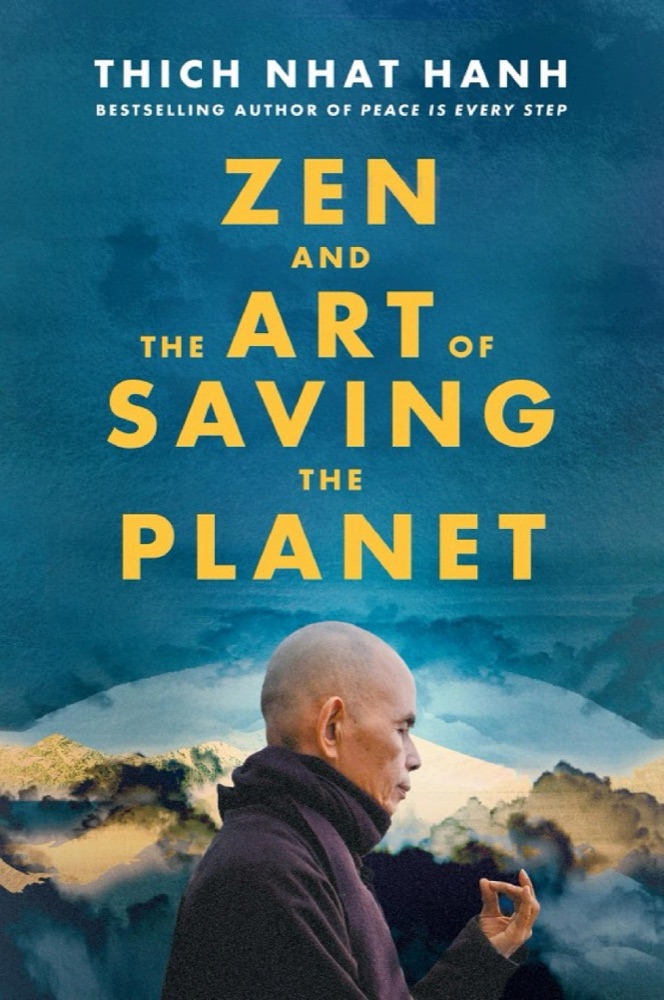 Zen and the Art of Saving the Planet
 The World Peace Diet
 Becoming Wise: An Inquiry into the Mystery and Art of Living
 Sapiens: A Brief History of Humankind
 Folks, This Ain't Normal: A Farmer's Advice for Happier Hens, Healthier People, and a Better World
 The Second Mountain
 Laudato Si': On the Care of Our Common Home
 United: Thoughts on Finding Common Ground and Advancing the Common Good
 Conscious Capitalism
 On Fire: The Case for the Green New Deal
 The Age of Empathy: Nature's Lessons for a Kinder Society
 Abundance: The Future Is Better Than You Think
 The Book of Hope: A Survival Guide for Trying Times
 The Wayfinders: Why Ancient Wisdom Matters in the Modern World
 Minimalism: Live a Meaningful Life
 Beyond Civilization: Humanity's Next Great Adventure
 The Rational Optimist: How Prosperity Evolves
 The Blue Sweater: Bridging the Gap Between Rich and Poor in an Interconnected World
 The Mushroom at the End of the World: On the Possibility of Life in Capitalist Ruins
 The Ultimate Gift
 This Is What Inequality Looks Like
 Money, Possessions, and Eternity: A Comprehensive Guide to What the Bible Says about Financial Stewardship, Generosity, Materialism, Retirement, Financial Planning, Gambling, Debt, and More
 The Omnivore's Dilemma: A Natural History of Four Meals
 Beyond Religion: Ethics for a Whole World
Gathering Moss: A Natural and Cultural History of Mosses
Beyond Religion: Ethics for a Whole World
Gathering Moss: A Natural and Cultural History of Mosses
 The Fifth Sacred Thing
 How to Be Perfect: The Correct Answer to Every Moral Question
 Standing for Something: 10 Neglected Virtues That Will Heal Our Hearts and Homes
 Feral: Rewilding the Land, the Sea and Human Life
 Small Wonder
 The Algebra of Wealth: A Simple Formula for Financial Security
 Humankind: A Hopeful History
 Practical Ethics
 Happiness Becomes You: A Guide to Changing Your Life for Good
 Saving Time: Discovering a Life Beyond the Clock
 How to Practice: The Way to a Meaningful Life
 A Life on Our Planet: My Witness Statement and a Vision for the Future
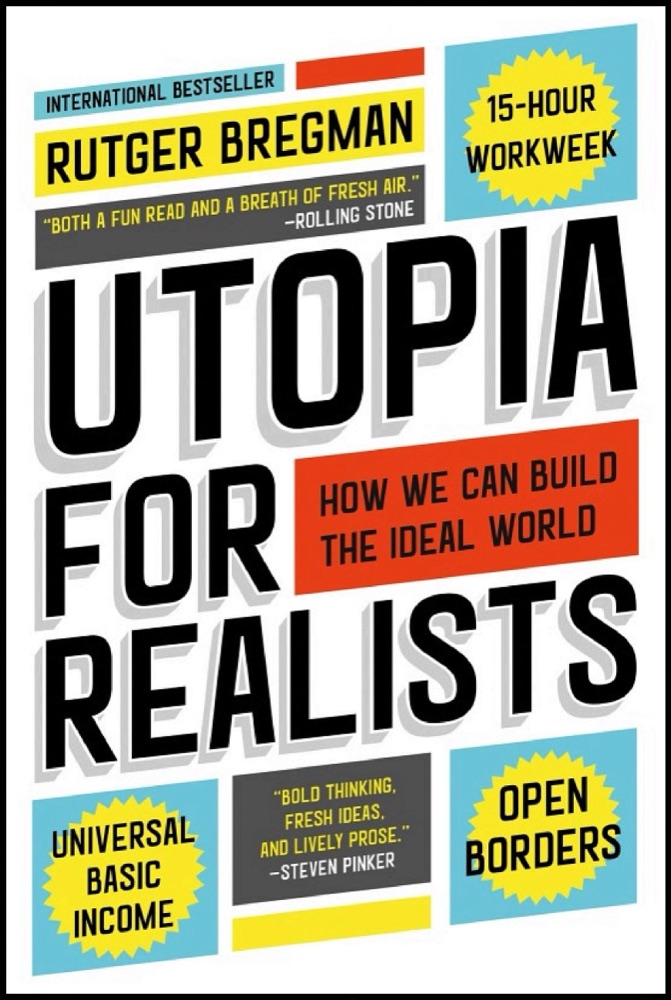 Utopia for Realists: How We Can Build the Ideal World
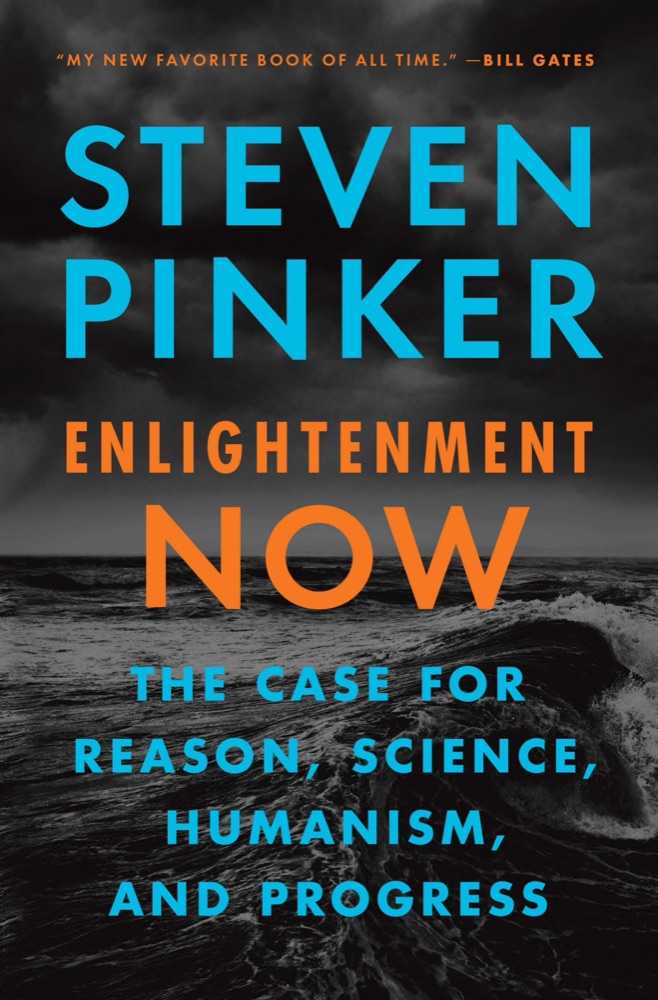 Enlightenment Now: The Case for Reason, Science, Humanism, and Progress
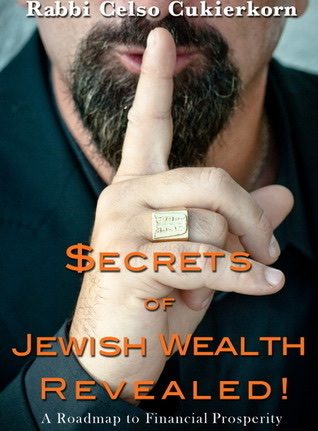 Secrets of Jewish Wealth Revealed!
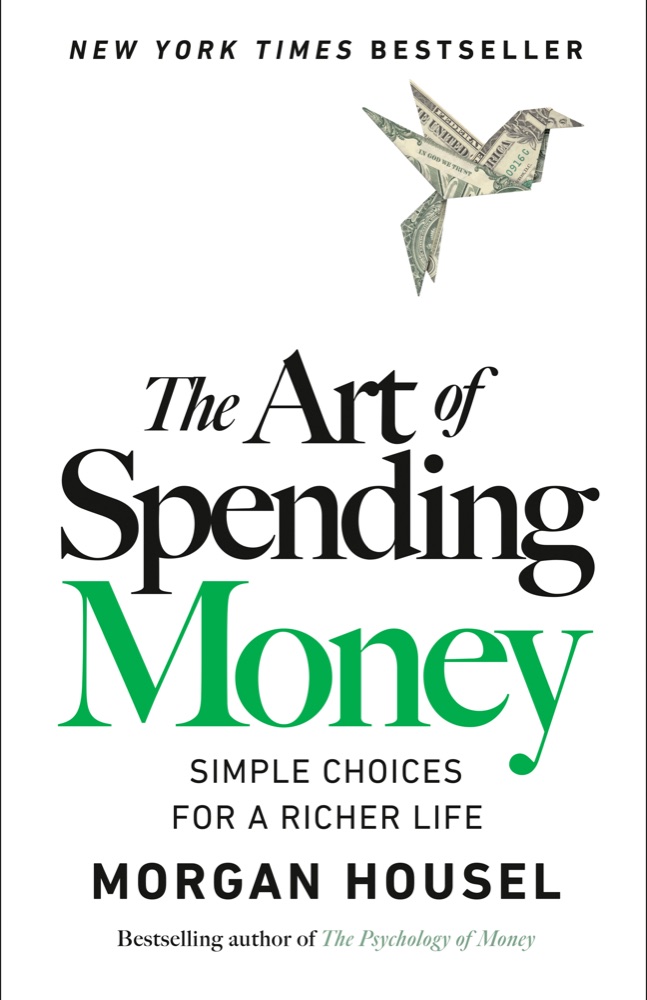 The Art of Spending Money: Simple Choices for a Richer Life