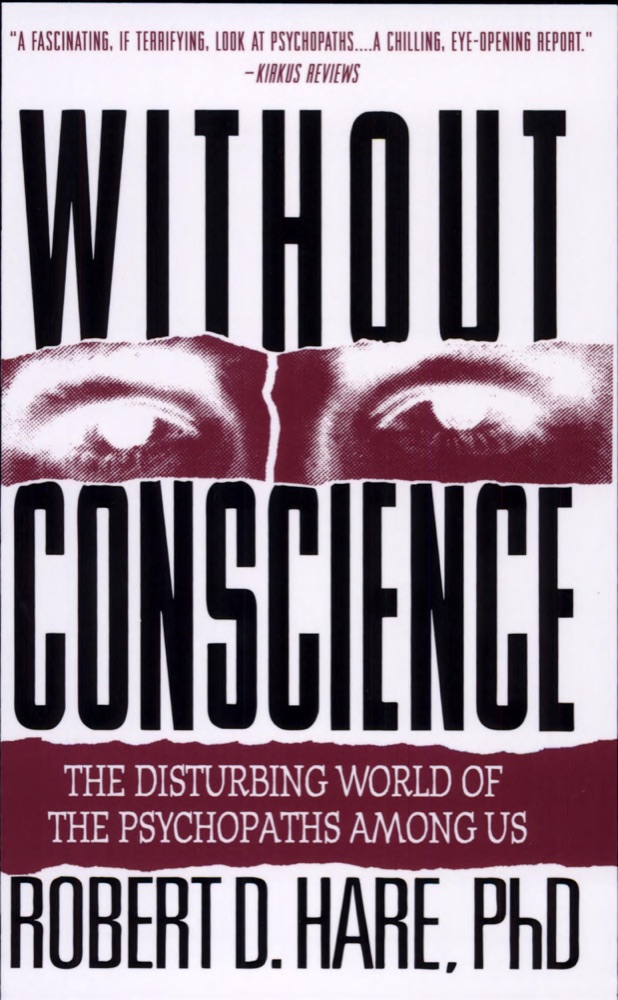

 The Wisdom of Psychopaths: What Saints, Spies, and Serial Killers Can Teach Us About Success
Quotes from the Book
He will choose you, disarm you with his words, and control you with his presence. He will delight you with his wit and his plans. He will show you a good time but you will always get the bill. He will smile and deceive you, and he will scare you with his eyes. And when he is through with you, and he will be through with you, he will desert you and take with him your innocence and your pride. You will be left much sadder but not a lot wiser, and for a long time you will wonder what happened and what you did wrong. And if another of his kind comes knocking on your door, will you open it? -From an essay signed "A psychopath in prison
57
The first victim of war is the truth.
21
Most therapy programs do little more than provide psychopaths with new excuses and rationalizations for their behavior and new insights into human vulnerability. They may learn new and better ways of manipulating other people, but they make little effort to change their own views and attitudes or to understand that other people have needs, feelings, and rights. In particular, attempts to teach psychopaths how to “really feel” remorse or empathy are doomed to failure.
16
Psychopaths are notorious for not answering the question posed them or for answering in a way that seems unresponsive to the question.
12
[G]ood people are rarely suspicious: they cannot imagine others doing the things they themselves are incapable of doing; usually they accept the undramatic solution as the correct one, and let matters rest there.
11
psychopaths are rational and aware of what they are doing and why. Their behavior is the result of choice, freely exercised.
10
The third point is that some of our efforts to treat psychopaths may be misplaced. The term treatment implies that there is something to treat: illness, subjective distress, maladaprive behaviors, and so forth. But, as far as we can determine, psychopaths are perfectly happy with themselves, and they see no need for treatment, at least in the traditional sense of the term.
9
…the subject is so important, and with such vast implications for society… The damage that psychopaths do to the global economy, and human civilization in general, is incalculable.
9
Psychopaths have a narcissistic and grossly inflated view of their self-worth and importance, a truly astounding egocentricity and sense of entitlement, and see themselves as the center of the universe, as superior beings who are justified in living according to their own rules.
8
But isn’t the behavior of psychopaths maladaprive? The answer is that it may be maladaprive for society but it is adaptive for the individuals themselves.
8
What makes psychopaths different from all others is the remarkable ease with which they lie, the pervasiveness of their deception, and the callousness with which they carry it out.
7
Lying, deceiving, and manipulation are natural talents for psychopaths.
6
Psychopaths often come across as arrogant, shameless braggarts—self-assured, opinionated, domineering, and cocky. They love to have power and control over others and seem unable to believe that other people have valid opinions different from theirs. They appear charismatic or “electrifying” to some people.
6
On a more personal level, it is very likely that at some time in your life you will come into painful contact with a psychopath. For your own physical, psychological, and financial well-being it is crucial that you know how to identify the psychopath, how to protect yourself, and how to minimize the harm done to you.
5
Guilt?” he remarked in prison. “It’s this mechanism we use to control people. It’s an illusion. It’s a kind of social control mechanism—and it’s very unhealthy. It does terrible things to our bodies. And there are much better ways to control our behavior than that rather extraordinary use of guilt.
5
A simple analogy here will help. The psychopath is like a color-blind person who sees the world in shades of gray but who has learned how to function in a colored world.
4
Evidence is emerging to show that victims of early sexual, physical, or emotional abuse frequently become perpetrators of the same as adults.
4
Psychopaths show a stunning lack of concern for the devastating effects their actions have on others. Often they are completely forthright about the matter, calmly stating that they have no sense of guilt, are not sorry for the pain and destruction they have caused, and that there is no reason for them to be concerned.
4
This raises an important issue: If their speech is sometimes peculiar, why are psychopaths so believable, so capable of deceiving and manipulating us? Why do we fail to pick up the inconsistencies in what they say? The short answer is, it is difficult to penetrate their mask of normalcy: The oddities in their speech are often too subtle for the casual observer to detect, and they put on a good show. We are sucked in not by what they say but by how they say it and by the emotional buttons they push while saying it.
3
The interviewer says, “You make it out that you’re the victim of a serial killer, but if you look at the record you’re a serial killer.” Henley replies, “I’m not.” “You’re not a serial killer?” the interviewer asks in disbelief, to which Henley replies, “I’m not a serial killer.” The interviewer then says, “You’re saying you’re not a serial killer now, but you’ve serially killed.” Henley replies, with some exasperation and condescension, “Well, yeah, that’s semantics.
2
The best strategy is to avoid becoming entangled with a psychopath in the first place.
1
Millions of men, women, and children daily suffer terror, anxiety, pain, and humiliation at the hands of the psychopaths in their lives.
1
Are we unknowingly allowing a society to evolve that is the perfect breeding ground, and perhaps even a “killing field,” for psychopaths?
1
This is a disturbing thought, because it suggests that the cases that come to the public’s attention represent only the tip of a very large iceberg. The rest of the iceberg is to be found nearly everywhere—in business, the home, the professions, the military, the arts, the entertainment industry, the news media, academe, and the blue-collar world. Millions of men, women, and children daily suffer terror, anxiety, pain, and humiliation at the hands of the psychopaths in their lives.
1
This book confronts psychopathy head-on and presents the disturbing topic for what it is—a dark mystery with staggering implications for society; a mystery that finally is beginning to reveal itself after centuries of speculation and decades of empirical psychological research.
1
Good people are rarely suspicious: they cannot imagine others doing things they themselves are incapable of doing; usually they accept the undramatic solution as the correct oe, and let matters rest there. Then too, the normal are inclined to visualize the [psychopath] as one who's as monstrous in appearance as he is in mind, whihch is about as far from the truth as one could well get...These monsters of real life usually looked and behaved in a more normal mannerthan their actually normal brothers and sisters; they presented a more convincing picture of virtue than virtue presented of itself--just as the wax rosebud or the plsatic peachseemd more perfect to the eye, more what the mind thought a rosebud or a peach should be, than the imperfect original from which it had been modelled.
1
We are far more likely to lose our life savings to an oily-tongued swindler than our lives to a steely-eyed killer.
1
Watch on YouTube
About Robert D. Hare
We have collected 27 quotes from 1 book by Robert D. Hare on BookQuoters.
More about the author →About the book
Most people are both repelled and intrigued by the images of cold-blooded, conscienceless murderers that increasingly populate our movies, television programs, and newspaper headlines. With their flagrant criminal violation of society's rules, serial killers like Ted Bundy and John Wayne Gacy are among the most dramatic examples of the psychopath. Individuals with this personality disorder are fully aware of the consequences of their actions and know the difference between right and wrong, yet they are terrifyingly self-centered, remorseless, and unable to care about the feelings of others. Perhaps most frightening, they often seem completely normal to unsuspecting targets--and they do not always ply their trade by killing. Presenting a compelling portrait of these dangerous men and women based on 25 years of distinguished scientific research, Dr. Robert D. Hare vividly describes a world
Book details
- First published
- 1993
- Author
- Robert D. Hare
- Genre
- Nonfiction
- Goodreads rating
- 4.06 (14k ratings)
Keep reading
The Wisdom of Psychopaths: What Saints, Spies, and Serial Killers Can Teach Us About Success
 The Sociopath Next Door
 The Psychopath Test
 Psychopath Free: Recovering from Emotionally Abusive Relationships With Narcissists, Sociopaths, and Other Toxic People
 Confessions of a Sociopath: A Life Spent Hiding in Plain Sight
 The Killer Across the Table: Unlocking the Secrets of Serial Killers and Predators with the FBI's Original Mindhunter
 The Lucifer Effect: Understanding How Good People Turn Evil
 In Sheep's Clothing: Understanding and Dealing With Manipulative People
 People of the Lie: The Hope for Healing Human Evil
 Crooked House
 The Girl in the Spider's Web
 For Your Own Good: Hidden Cruelty in Child-Rearing and the Roots of Violence
 The Stranger Beside Me: Ted Bundy The Shocking Inside Story
 The Laws of Human Nature
 Blood Sugar
 The Thirst
 Surrounded by Psychopaths: How to Protect Yourself from Being Manipulated and Exploited in Business
 In The Blood
 Evil Games
 The Hangman's Replacement: Sprout of Disruption
 The Blank Slate: The Modern Denial of Human Nature
 The Lives of Animals
 A First-Rate Madness: Uncovering the Links Between Leadership and Mental Illness
 The Journalist and the Murderer
 We Learn Nothing
 The Highly Sensitive Person's Guide to Dealing with Toxic People: How to Reclaim Your Power from Narcissists and Other Manipulators
 Mistakes Were Made (But Not by Me): Why We Justify Foolish Beliefs, Bad Decisions, and Hurtful Acts
 The Science of Evil: On Empathy and the Origins of Cruelty
 I Am Not A Serial Killer
 The Sane Society
 The Innocent
 I Hate You, Don't Leave Me: Understanding the Borderline Personality
 The Gift of Fear: Survival Signals That Protect Us from Violence
 Mr. Monster
 Adulthood Rites
 An Ordinary Man: An Autobiography
 Assuming Names: A Con Artist's Masquerade
 The Divided Self: An Existential Study in Sanity and Madness
 The Long Hard Road Out of Hell
 The Moral Animal: Why We Are the Way We Are - The New Science of Evolutionary Psychology
 Lila: An Inquiry Into Morals
 The Politics of Experience/The Bird of Paradise
 Deeply Odd
 Stigma: Notes on the Management of Spoiled Identity
 The Fifth Woman
 The Body of Christopher Creed
 Humankind: A Hopeful History
 The Interpretation of Murder
 The Honest Truth About Dishonesty: How We Lie to Everyone - Especially Ourselves
 The Asylum for Wayward Victorian Girls
 Bright Young Women
 Radical Honesty : How to Transform Your Life by Telling the Truth
 Repeat Offender: Sin City's Most Prolific Criminal and the Cop Who Caught Him
 The Girl in 6E
 Glass Houses
 Assholes: A Theory
 Alias Grace
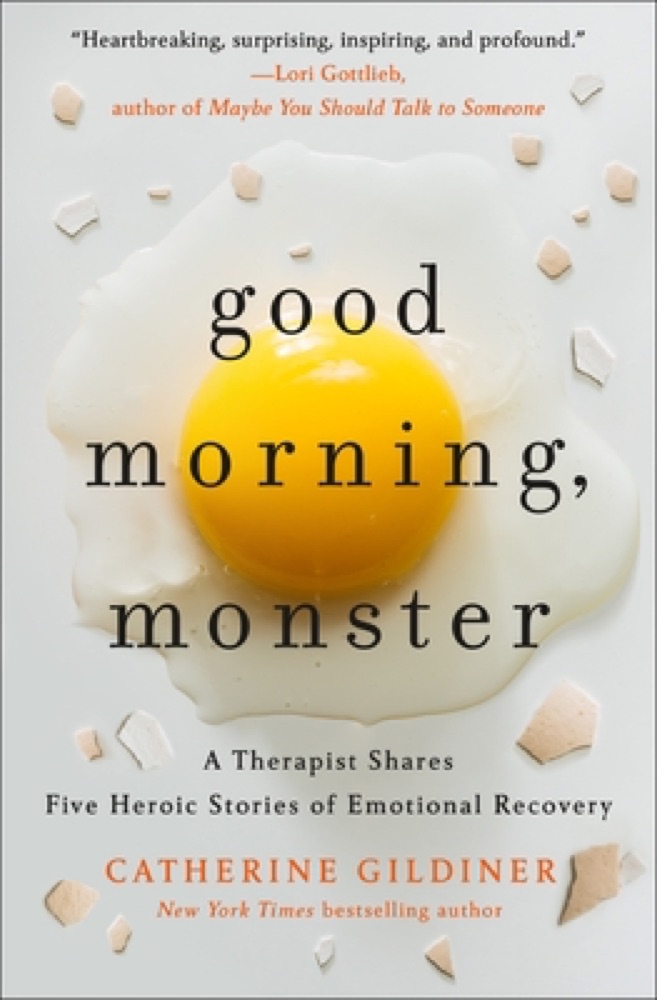 Good Morning, Monster: A Therapist Shares Five Heroic Stories of Emotional Recovery
 Loud in the House of Myself: Memoir of a Strange Girl