

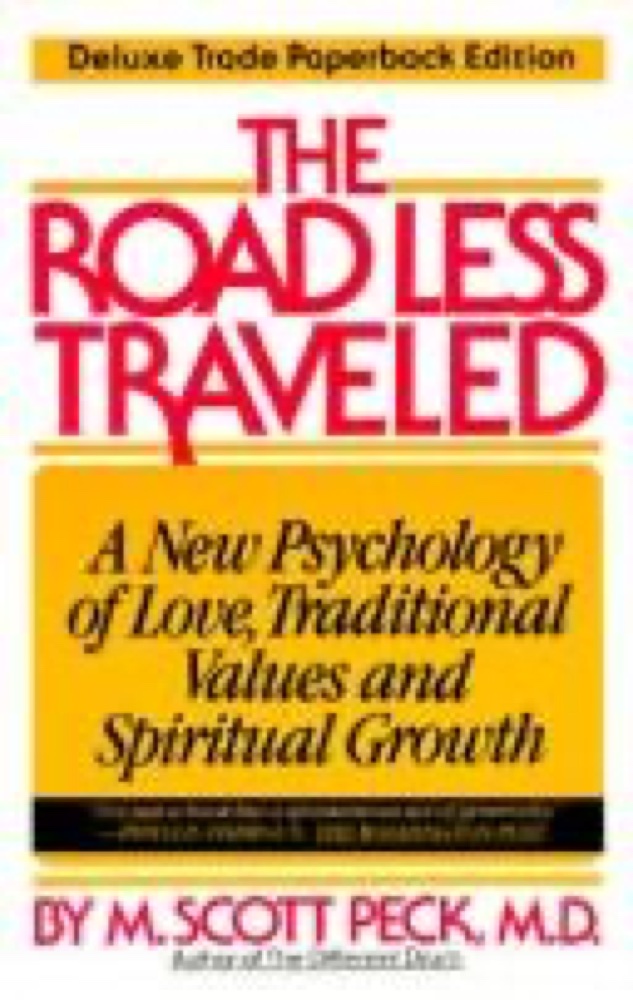
 The Road Less Travelled
Quotes from the Book
When I say that evil has to do with killing, I do not mean to restrict myself to corporeal murder. Evil is that which kills spirit. There are various essential attributes of life -- particularly human life -- such as sentience, mobility, awareness, growth, autonomy, will. It is possible to kill or attempt to kill one of these attributes without actually destroying the body. Thus we may "break" a horse or even a child without harming a hair on its head. Erich Fromm was acutely sensitive to this fact when he broadened the definition of necrophilia to include the desire of certain people to control others-to make them controllable, to foster their dependency, to discourage their capacity to think for themselves, to diminish their unpredectibility and originalty, to keep them in line. Distinguishing it from a "biophilic" person, one who appreciates and fosters the variety of life forms and the uniqueness of the individual, he demonstrated a "necrophilic character type," whose aim it is to avoid the inconvenience of life by transforming others into obedient automatons, robbing them of their humanity. Evil then, for the moment, is the force, residing either inside or outside of human beings, that seeks to kill life or liveliness. And goodness is its opposite. Goodness is that which promotes life and liveliness.
102
I feel compelled to make another 'nonapology.' Many readers are likely to be concerned about my use of masculine pronouns in relation to God. I think I both understand and appreciate this concern. It is a matter to which I have given much thought. I have generally been a strong supporter of the women's movement and action that is reasonable to combat sexist language. But first of all, God is not neuter. He is exploding with life and love and even sexuality of a sort. So 'It' is not appropriate. Certainly I consider God androgynous. He is as gentle and tender and nurturing and maternal as any woman could ever be. Nonetheless, culturally determined though it may be, I subjectively experience His reality as more masculine than feminine. While He nurtures us, He also desires to penetrate us, and while we more often than not flee from His love like a reluctant virgin, He chases after us with a vigor in the hunt that we most typically associate with males. As CS Lewis put it, in relation to God we are all female. Moreover, whatever our gender or conscious theology, it is our duty---our obligation---in response to His love to attempt to give birth, like Mary, to Christ in ourselves and in others. "I shall, however, break with tradition and use the neuter for Satan. While I know Satan to be lustful to penetrate us, I have not in the least experienced this desire as sexual or creative---only hateful and destructive. It is hard to determine the sex of a snake.
30
necrophilia to include the desire of certain people to control others—to make them controllable, to foster their dependency, to discourage their capacity to think for themselves, to diminish their unpredictability and originality, to keep them in line.
17
Having recently visited Las Vegas, my own latest vision of hell is that it is an endless slot-machine emporium, far removed from the variety of night and day, monotonously noisy with the repetitive clamor of meaningless jackpots, jammed with dull-eyed people spasmodically yet regularly yanking machines for all eternity.
1
The more closely we rub shoulders with or against evil, the more likely it is that we may become evil ourselves.
1
How could a whole people have gone to war not knowing why? The answer is simple. As a people we were too lazy to learn and too arrogant to think we needed to learn. We felt that whatever way we happened to perceive things was the right way without any further study. And that whatever we did was the right thing to do without reflection. We were so wrong because we never seriously considered that we might not be right.
1
Is it not strange that many pacifists are advocates of abortion? Or that those who would seek to deprive others of their choice to abort on the grounds that life is sacred are so often those who champion capital punishment?
1
Stress is the test for goodness. The truly good are they who in time of stress do not desert their integrity, their maturity, their sensitivity. Nobility might be defined as the capacity not to regress in response to degradation, not to become blunted in the face of pain, to tolerate the agonizing and remain intact.
Often enough to know that whenever we judge another evil we may ourselves be committing evil.
it is characteristic of those who are evil to judge others as evil.
the twin progenitors of evil: laziness and narcissism.
To do otherwise would have placed them in the painful and difficult position of having to rethink their attitudes. They did not take up the work required. It was easier to proceed blindly, as if nothing had changed.
Nothing can give us more pleasure than the sense that we are wanted and useful. Conversely, nothing is more productive of despair than a sense that we are useless and unwanted.
A draft—involuntary service—is the only thing that can keep our military sane. Without it the military will inevitably become not only specialized in its function but increasingly specialized in its psychology. No fresh air will be let In. It will become inbred and reinforce its own values, and then, when it is once again let loose, it will run amok as it did in Vietnam.
and need not hurt or involve the average American citizen at all until it is too late.
For the reality is that it is not only possible but easy and even natural for a large group to commit evil without emotional involvement simply by turning loose its specialists.
A young man of lower-middle-class origins who is both aggressive and conventional, for instance, would be quite likely to seek a position on the force.
Any specialty group is a particular breed as a result of both self-selection and group selection.
The sight of a single bloody, mangled body horrifies us. But if we see such bodies all around us every day, day after day, the horrible becomes normal and we lose our sense of horror.
to intensify the power of group pressure
the American people, at least during those war years, were also a people of the lie.
Orders are given and executed by individuals. In the last analysis, every single human act is ultimately the result of an individual choice.
of utter loneliness it breaks down and accepts the offer of friendship, and thereby in the end even Satan is converted.
its threats were empty. Satan’s threats are always empty. They are all lies.
Satan has no power except in a human body.
But these are only echoes; a punishing God does not enter the picture ever again.
I know now that one of the characteristics of evil is its desire to confuse.
Watch on YouTube
About M. Scott Peck
We have collected 54 quotes from 2 books by M. Scott Peck on BookQuoters.
More about the author →More by M. Scott Peck
The Road Less Travelled
About the book
In this absorbing and equally inspiring companion volume to his classic trilogy – The Road Less Traveled, Further Along the Road Less Traveled, and The Road Less Traveled and Beyond – Dr. M. Scott Peck brilliantly probes into the essence of human evil.People who are evil attack others instead of facing their own failures. Peck demonstrates the havoc these people of the lie work in the lives of those around them. He presents, from vivid incidents encountered in his psychiatric practice, examples of evil in everyday life.This book is by turns disturbing, fascinating, and altogether impossible to put down as it offers a strikingly original approach to the age-old problem of human evil.
Book details
- First published
- 1983
- Author
- M. Scott Peck
- Genre
- Nonfiction
- Goodreads rating
- 3.99 (9k ratings)
Keep reading
 The Lucifer Effect: Understanding How Good People Turn Evil
 On the Genealogy of Morals/Ecce Homo
 On the Genealogy of Morals
 Arguably: Selected Essays
 The Fall of Babel
 The True Believer: Thoughts on the Nature of Mass Movements
 Beyond Good and Evil
 The Devil and Miss Prym
 The Snowman
 God Emperor of Dune
 Parable of the Talents
 The Blank Slate: The Modern Denial of Human Nature
 The First Circle
 Alien Clay
 The Story of My Experiments With Truth
 Life and Fate
 Crime and Punishment
 The Moon is a Harsh Mistress
 The Screwtape Letters
 Scythe
 Shadow of the Hegemon
 Heretics
 How Long 'til Black Future Month?
 The Virtue of Selfishness: A New Concept of Egoism
 An Ordinary Man: An Autobiography
 Letters and Papers from Prison
 Persian Letters
 No Name in the Street
 Julian
 Soul of the Fire
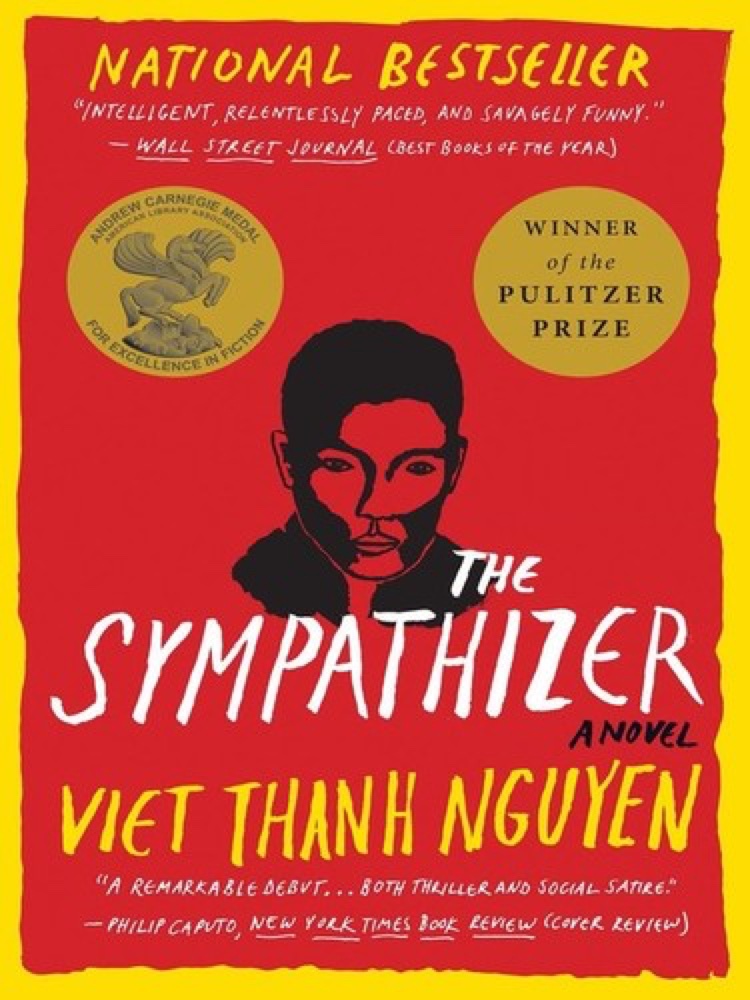 The Sympathizer
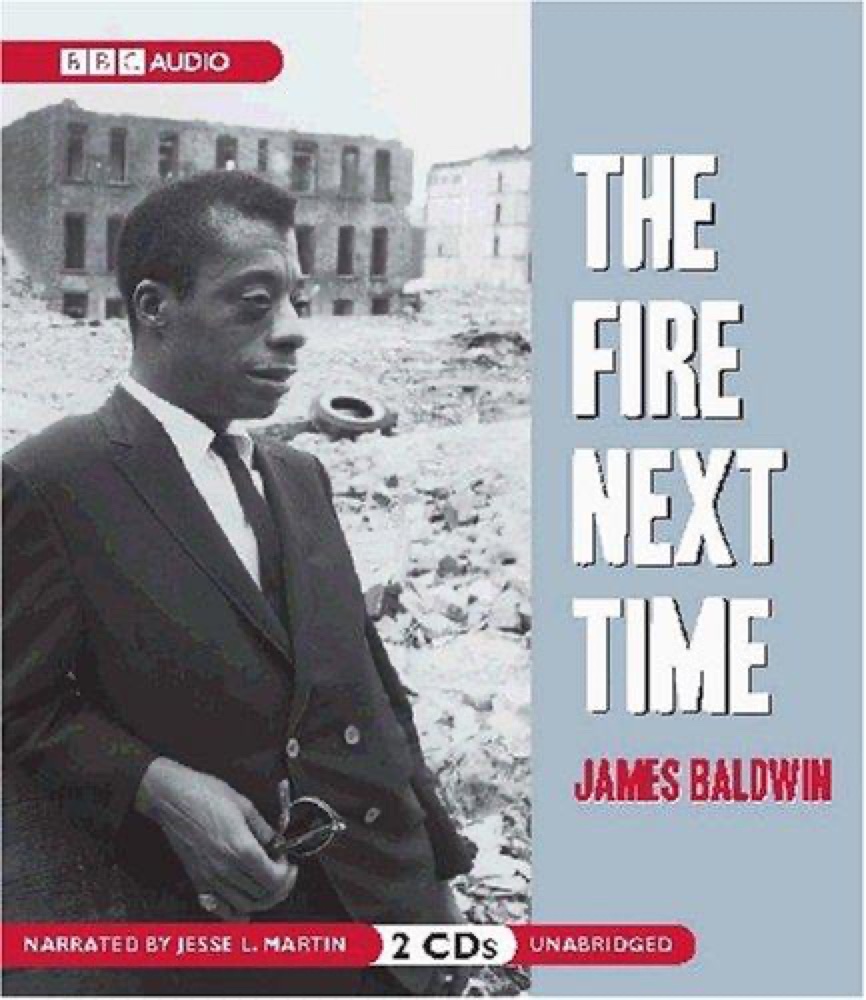 The Fire Next Time
 The Long Hard Road Out of Hell
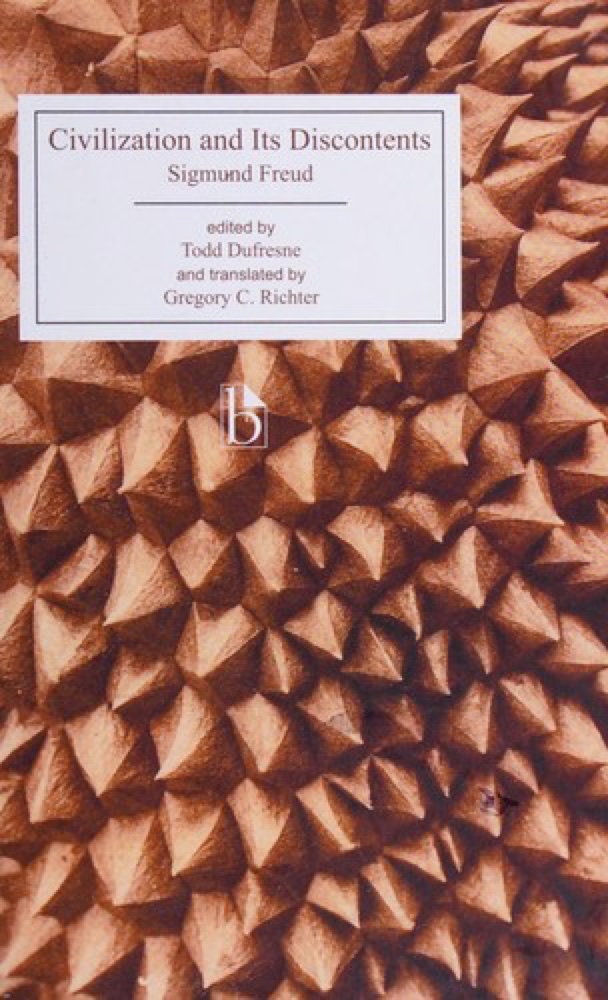 Civilization and Its Discontents
 Forge of Darkness
 The Children of Men
 Last Argument of Kings
 The Oath of the Vayuputras
 Crowds and Power
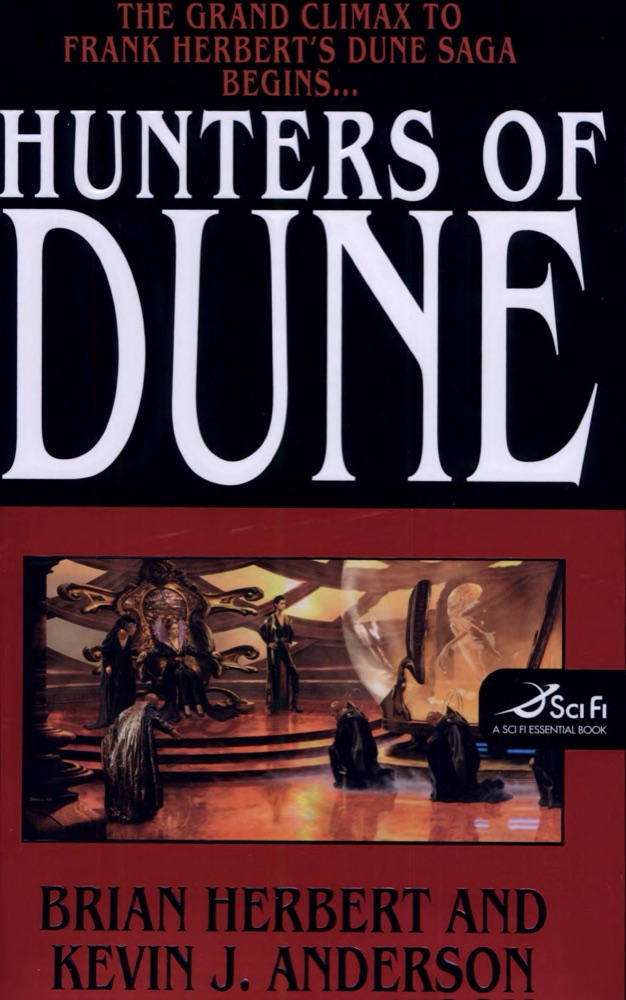 Hunters of Dune
 Regarding the Pain of Others
 Demonspawn
 The Book of Merlyn
 Sacred Hunger
 The Atlantis Gene
 Children of Dune
 The Jewel in the Crown
 World War Z: An Oral History of the Zombie War
 Evil Games
 Deeply Odd
 The House of the Dead
 Humankind: A Hopeful History
 The Parafaith War
 Man and Superman
 A Language Older Than Words
 Seven Deadly Sins: Settling the Argument Between Born Bad and Damaged Good
 12 Rules for Life: An Antidote to Chaos
 The Human Stain
 Anthills of the Savannah
 Rules for Radicals: A Pragmatic Primer for Realistic Radicals