
 Foe
Foe
Quotes from the Book
I want to find a way of speaking to fellow human beings that will be cool rather than heated, philosophical rather than polemical, that will bring enlightenment rather than seeking to divide us into the righteous and the sinners, the saved and the damned, the sheep and the goats.
66
Let me say it openly: we are surrounded by an enterprise of degradation, cruelty, and killing which rivals anything that the Third Reich was capable of, indeed dwarfs it, in that ours is an enterprise without end, self-regenerating, bringing rabbits, rats, poultry, livestock ceaselessly into the world for the purpose of killing them.
27
There are people who have the capacity to imagine themselves as someone else, there are people who have no such capacity (when the lack is extreme, we call them psychopaths), and there are people who have the capacity but choose not to exercise it.
18
I return one last time to the places of death all around us, the places of slaughter to which, in a huge communal effort, we close our hearts. Each day a fresh holocaust, yet, as far as I can see, our moral being is untouched. We do not feel tainted. We can do anything, it seems, and come away clean. We point to the Germans and Poles and Ukrainians who did and did not know of the atrocities around them. We like to think they were inwardly marked by the after-effects of that special form of ignorance. We like to think that in their nightmares the ones whose suffering they had refused to enter came back to haunt them. We like to think they woke up haggard in the mornings and died of gnawing cancers. But probably it was not so. The evidence points in the opposite direction: that we can do anything and get away with it; that there is no punishment.
7
For, seen from the outside, from a being who is alien to it, reason is simply a vast tautology.
5
To be full of being is to live as a body-soul. One name for the experience of full being is joy.
5
It's that I no longer seem to know where I am. I seem to move around perfectly easily among people, to have perfectly normal relations with them. Is it possible, I ask myself, that all of them are participants in a crime of stupefying proportions? Am I fantasizing it all? I must be mad! Yet every day I see the evidences. The very people I suspect produce the evidence, exhibit it, offer it to me. Corpses. Fragments of corpses they have bought for money.
4
To thinking, cogitation, I oppose fullness, embodiedness, the sensation of being – not a consciousness of yourself as a kind of ghostly reasoning machine thinking thoughts, but on the contrary the sensation – a heavily affective sensation – of being a body with limbs that have extension in space, of being alive to the world.
3
Kafka saw both himself and Red Peter as hybrids, as monstrous thinking devices mounted inexplicably on suffering animal bodies.
2
And to split hairs, to claim that there is no comparison, that Treblinka was so to speak a metaphysical enterprise dedicated to nothing but death and annihilation while the meat industry is ultimately devoted to life (once its vicitms are dead, after all, it does not burn them to ash or bury them but on the contrary cuts them up and refrigerates and packs them so that they can be consumed in the comfort of our homes) is as little consolation to those victims as it would have been - pardon the tastelesness of the following - to ask the dead of Treblinka to excuse their killers because their body fat was needed to make soap and their hair to stuff mattresses with.
1
Watch on YouTube
About J.M. Coetzee
We have collected 177 quotes from 11 books by J.M. Coetzee on BookQuoters.
More about the author →More by J.M. Coetzee
All books by J.M. Coetzee →

About the book
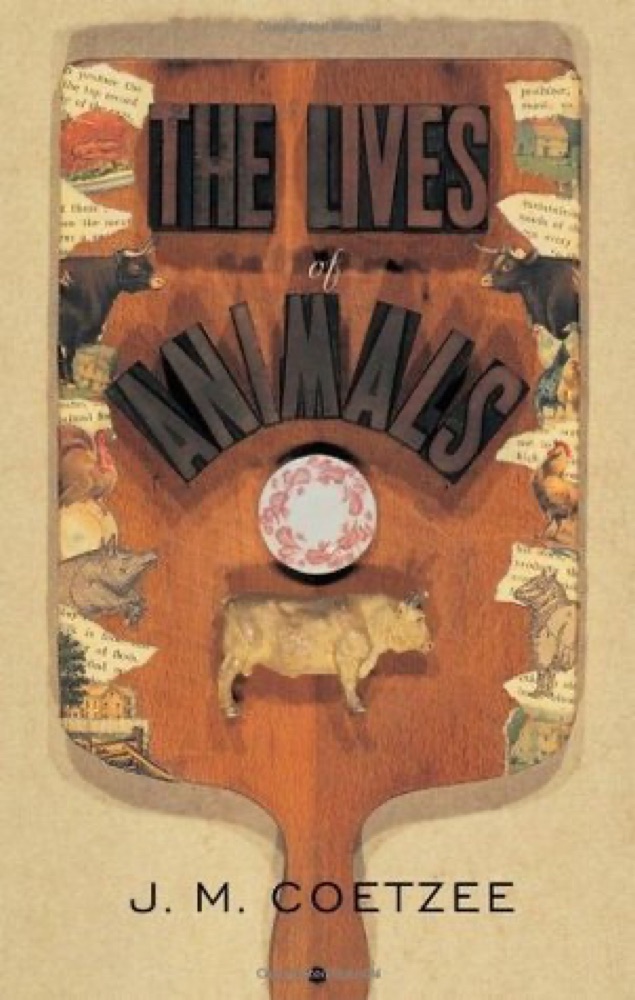
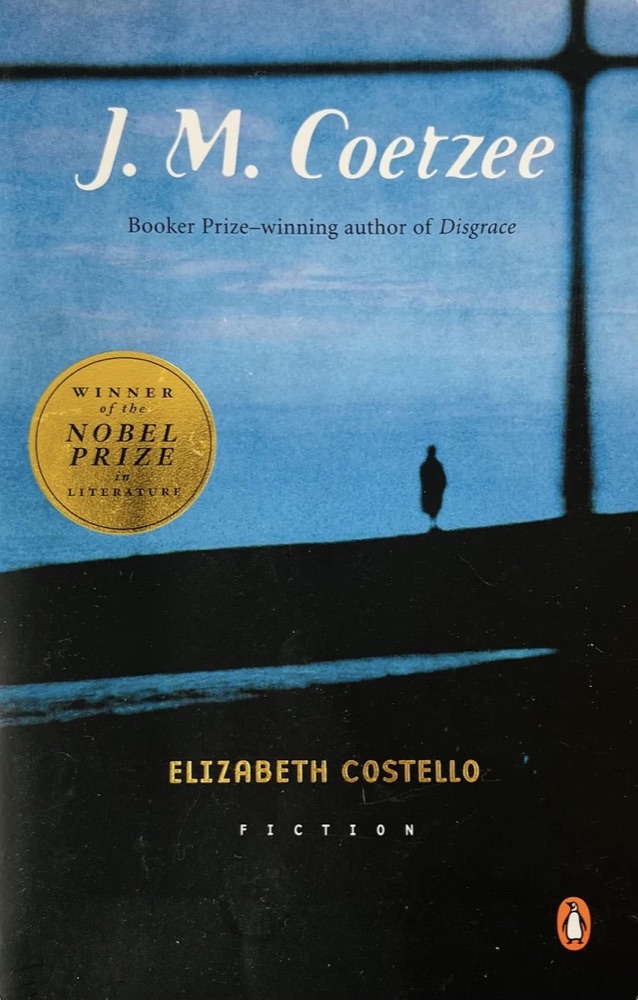
The idea of human cruelty to animals so consumes novelist Elizabeth Costello in her later years that she can no longer look another person in the eye: humans, especially meat-eating ones, seem to her to be conspirators in a crime of stupefying magnitude taking place on farms and in slaughterhouses, factories, and laboratories across the world.
Costello's son, a physics professor, admires her literary achievements, but dreads his mother's lecturing on animal rights at the college where he teaches. His colleagues resist her argument that human reason is overrated and that the inability to reason does not diminish the value of life; his wife denounces his mother's vegetarianism as a form of moral superiority.
At the dinner that follows her first lecture, the guests confront Costello with a range of sympathetic and skeptical reactions to issues of animal rights, touching on broad philo
Book details
- First published
- 1999
- Author
- J.M. Coetzee
- Genre
- Fiction
- Goodreads rating
- 3.68 (4k ratings)
Keep reading
 Drive Your Plow Over the Bones of the Dead
 Eyeless in Gaza
 Nothing to Be Frightened Of
 The Politics of Experience/The Bird of Paradise
 The Doors of Perception & Heaven and Hell
 On the Genealogy of Morals/Ecce Homo
 A Language Older Than Words
 The Empusium
 Moravagine
 The Gone-Away World
 Gnomon
 Living with a Wild God: A Nonbeliever's Search for the Truth about Everything
 The Magic Mountain
 Tender Is the Flesh
 The Guermantes Way
 The Source of Self-Regard: Selected Essays, Speeches, and Meditations
 The Conspiracy Against the Human Race
 The Denial of Death
 Genesis
 Twilight of the Idols/The Anti-Christ
 The Book of Joan
 Close to the Knives: A Memoir of Disintegration
 No Longer Human
 Underground: The Tokyo Gas Attack and the Japanese Psyche
 The Man in the High Castle
 American Pastoral
 The Braindead Megaphone
 The Varieties of Religious Experience
 The Will to Power
 The Doors of Perception
 Consider the Lobster and Other Essays
 The Blank Slate: The Modern Denial of Human Nature
 Sexus
Sexus
 The Fall of Babel
 Parade
 The Story of the Lost Child
 Speaker for the Dead
 The Hearing Trumpet
 Elizabeth Costello
 The Setting Sun
 The Golden Notebook
 Minima Moralia: Reflections on a Damaged Life
 The Fall
 Flights
 The Man Without Qualities
 The Counterlife
 Stella Maris
 When I Was a Child I Read Books
 The Myth of Sisyphus
 Red Pill
 The Western Lands
 The Book: On the Taboo Against Knowing Who You Are
 Good Bones and Simple Murders
 Daniel Deronda
 The Human Stain
 This Way for the Gas, Ladies and Gentlemen
 Too Like the Lightning
 Steppenwolf
 The Last Werewolf
 The Blazing World