
 Safely Home
Quotes from the Book
Abundance isn't God's provision for me to live in luxury. It's his provision for me to help others live. God entrusts me with his money not to build my kingdom on earth, but to build his kingdom in heaven.
31
God comes right out and tells us why he gives us more money than we need. It's not so we can find more ways to spend it. It's not so we can indulge ourselves and spoil our children. It's not so we can insulate ourselves from needing God's provision. It's so we can give and give generously (2 Corinthians 8:14; 9:11)
21
Tolstoy said, 'The antagonism between life and conscience may be removed either by a change of life or by a change of conscience.' Many of us have elected to adjust our consciences rather than our lives. Our powers of rationalization are unlimited. They allow us to live in luxury and indifference while others, whom we could help if we chose to, starve and go to hell.
15
Too often we assume that God has increased our income to increase our standard of living, when his stated purpose is to increase our standard of giving. (Look again at 2 Corinthians 8:14 and 9:11).
14
Are we truly obeying the command to love our neighbor as ourselves if we're storing up money for potential future needs when our neighbor is laboring today under actual present needs?
11
When I save, I lay something aside for future need. If I sense God's leading, I will give it away to meet greater needs. When I hoard, I'm unwilling to part with what I've saved to meet others' needs, because my possible future needs outweigh their actual present needs. I fail to love my neighbor as myself.
11
..tithing isn't something I do to clear my conscience so I can do whatever I want with the 90 percent--it also belongs to God! I must seek his direction and permission for whatever I do with the full amount. I may discover that God has different ideas than I do.
8
If we were to gain God's perspective, even for a moment, and were to look at the way we go through life accumulating and hoarding and displaying our things, we would have the same feelings of horror and pity that any sane person has when he views people in an asylum endlessly beating their heads against the wall.
8
Someday this upside-down world will be turned right side up. Nothing in all eternity will turn it back again. If we are wise, we will use our brief lives on earth positioning ourselves for the turn.
8
Parents who spoil their children out of 'love' should realize that they are performing acts of child abuse. Although there are no laws against such abuse--no man-made laws anyway--this spiritual mistreatment may result in as much long-term personal and social damage as the worst physical abuse.
7
...if I try to make only enough money for my family' immediate needs, it may violate Scripture. ...Even though earning just enough to meet the needs of my family may seem nonmaterialistic, it's actually selfish when I could earn enough to care for others as well.
7
What you do with your resources in this life is your autobiography.
7
If economic catastrophe does come, will it be a time that draws Christians together to share every resource we have, or will it drive us apart to hide in our own basements or mountain retreats, guarding at gunpoint our private stores from others? If we faithfully use our assets for his kingdom now, rather than hoarding them, can't we trust our faithful God to provide for us then?
5
God doesn't make us rich so we can indulge ourselves and spoil our children, or so we can insulate ourselves form needing God's provision. God gives us abundant material blessing so that we can give it away, and give it generously.
5
Whenever we have excess, giving should be our natural response. It should be the automatic decision, the obvious thing to do in light of Scripture and human need.
5
A disciple does not ask, "How much can I keep?" but, "How much more can I give?" Whenever we start to get comfortable with our level of giving, it's time to raise it again.
5
Why ask for your daily bread when you own the bakery?
5
Unless we learn how to humbly tell each other our giving stories, our churches will not learn to give.
4
To turn the tide of materialism in the Christian community, we desperately need bold models of kingdom-centered living. Despite our need to do it in a way that doesn't glorify people, we must hear each other's stories about giving or else our people will not learn to give.
4
Christians are God's delivery people, through whom he does his giving to a needy world. We are conduits of God's grace to others. Our eternal investment portfolio should be full of the most strategic kingdom-building projects to which we can disburse God's funds.
4
Some take pains to be biblical, but many [Christian financial teachers, writers, investment counselors, and seminar leaders] simply parrot their secular colleagues. Other than beginning and ending with prayer, mentioning Christ, and sprinkling in some Bible verses, there's no fundamental difference. They reinforce people's materialist attitudes and lifestyles. They suggest a variety of profitable plans in which people can spend or stockpile the bulk of their resources. In short, to borrow a term from Jesus, some Christian financial experts are helping people to be the most successful 'rich fools' they can be.
3
I feel like a child who has found a wonderful trail in the woods. Countless others have gone before and blazed the trail, but to the child it's as new and fresh as if it had never been walked before. The child is invariably anxious for others to join in the great adventure. It's something that can only be understood by actual experience. Those who've begun the journey, and certainly those who've gone further than I, will readily understand what I am saying.
3
A Greek philosopher said, 'All men think it is only the other man who is mortal'. The way we scurry about accumulating things is testimony to our unspoken doctrine that we are exceptions to the law of death. The events of September 11, 2001, were a shocking reminder to millions of Americans of something we should have already understood - our mortality.
2
God created us to love people and use things, but materialists love things and use people.
2
Shouldn't we just admit the obvious--that the New Testament call to discipleship, compassion, and giving leaves no room for the way many of us are thinking and living? Is it time to get beyond the theoretical stance of 'I'd be willing to give up anything if God asked me to,' and start actually giving up things in order to do what He's commanded us?
2
Given our abundance, the burden of proof should always be on keeping, not giving. Why would you not give? We err by beginning with the assumption that we should keep or spend the money God entrusts to us. Giving should be the default choice. Unless there is a compelling reason to spend it or keep it, we should give it.
2
If we can keep ourselves from interfering with the natural laws of life, mistakes can be our child's finest teachers.
2
Delaying giving as a strategy for future kingdom building is risky. We could hold on to assets out of fear of letting go or unwillingness to surrender control to the Lord. As long as money lies within our grasp, there's not only the danger that we'll lose the assets, but also that we'll change our minds or be seduced by the status, prestige, and recognition of controlling (or having our name attached to the distribution of) what belongs to God.
2
Giving up everything must mean giving over everything to kingdom purposes, surrendering everything to further the one central cause, loosening our grip on everything. For some of us, this may mean ridding ourselves of most of our possessions. But for all of us it should mean dedicating everything we retain to further the kingdom. (For true disciples, however, it cannot mean hoarding or using kingdom assets self-indulgently.)
2
Wealth is a relational barrier. It keeps us from having open relationships.
2
About Randy Alcorn
We have collected 73 quotes from 5 books by Randy Alcorn on BookQuoters.
More about the author →More by Randy Alcorn


About the book
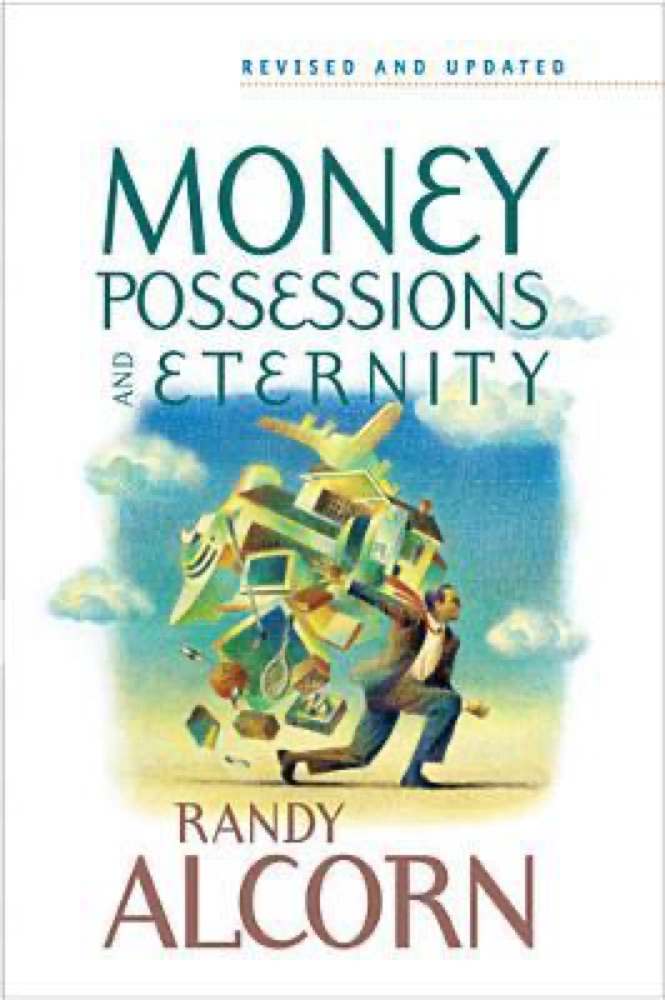
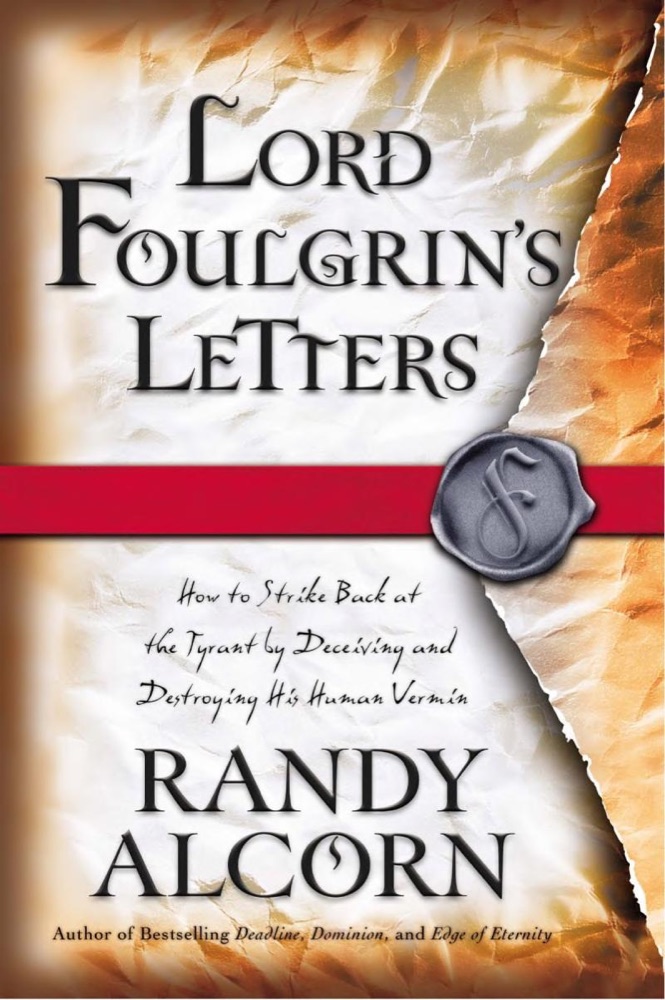
This practical and refreshing theology of money contains topical and Scripture indexes, a study guide, and five helpful appendixes.
Randy Alcorn presents a biblical and comprehensive view of money and possessions, including the Who wants to settle for fleeting treasures on earth . . . when God offers everlasting treasures in heaven? It’s time to rethink our perspectives on money and possessions. In this thoroughly researched classic, Randy Alcorn shows us how to view these things accurately―as God’s provision for our good, the good of others, and his glory.
About the Author Randy Alcorn is an author and the founder and director of Eternal Perspective Ministries, a nonprofit ministry dedicated to teaching principles of God’s Word and assisting the church in ministering to unreached, unfed, unborn, uneducated, unreconciled, and unsupported people around the world. A New York Times bestse
Book details
- First published
- 1989
- Author
- Randy Alcorn
- Genre
- Nonfiction
- Goodreads rating
- 4.28 (2k ratings)
Keep reading
 7: An Experimental Mutiny Against Excess
 Freedom of Simplicity: Finding Harmony in a Complex World
 All In: You Are One Decision Away From a Totally Different Life
 The Man Who Quit Money
 Secrets of Jewish Wealth Revealed!
 Discipline: The Glad Surrender
 Jesus Over Everything: Uncomplicating the Daily Struggle to Put Jesus First
 Generous Justice: How God's Grace Makes Us Just
 Counterfeit Gods: The Empty Promises of Money, Sex, and Power, and the Only Hope That Matters
 The Normal Christian Life
 Radical: Taking Back Your Faith from the American Dream
 Love Wins Low Price CD: Love Wins Low Price CD
 For the Love: Fighting for Grace in a World of Impossible Standards
 The Message Remix
 Desiring God: Meditations of a Christian Hedonist
 All These Things Shall Give Thee Experience
 Wild Goose Chase: Reclaim the Adventure of Pursuing God
 The Irresistible Revolution: Living as an Ordinary Radical
 The Explicit Gospel
 How People Change
 A Long Obedience in the Same Direction: Discipleship in an Instant Society
 A Little Book on the Christian Life
 The Divine Conspiracy: Rediscovering Our Hidden Life in God
 The Great Omission: Reclaiming Jesus's Essential Teachings on Discipleship
 The Secret Thoughts of an Unlikely Convert: An English Professor's Journey Into Christian Faith
 Renovation of the Heart: Putting On the Character of Christ
 Disciplines of a Godly Man
 When Helping Hurts: How to Alleviate Poverty without Hurting the Poor...and Yourself
 When God Writes Your Love Story
 Enemies of the Heart: Breaking Free from the Four Emotions That Control You
 Barking to the Choir: The Power of Radical Kinship
 Believing God
 Anything: The Prayer That Unlocked My God and My Soul
 When Strivings Cease: Replacing the Gospel of Self-Improvement with the Gospel of Life-Transforming Grace
 Just Like Jesus: Learning to Have a Heart Like His
 Waking the Dead: The Glory of a Heart Fully Alive
 Searching for God Knows What
 The Life You've Always Wanted: Spiritual Disciplines for Ordinary People
 Ten Words to Live By: Delighting in and Doing What God Commands
 The Cost of Discipleship
 Rediscover Catholicism
 New Morning Mercies: A Daily Gospel Devotional
 Celebration of Discipline: The Path to Spiritual Growth
 To Live Is Christ: Joining Paul's Journey of Faith
 The Autobiography of George Müller
 The Grand Weaver: How God Shapes Us through the Events in Our Lives
 Misreading Scripture with Western Eyes: Removing Cultural Blinders to Better Understand the Bible
 In His Image: 10 Ways God Calls Us to Reflect His Character
 Don't Waste Your Life
 Having a Mary Heart in a Martha World: Finding Intimacy with God in the Busyness of Life
 The Prodigal God: Recovering the Heart of the Christian Faith
 Leaving Church: A Memoir of Faith
 Emotionally Healthy Spirituality: Unleash A Revolution In Your Life in Christ
 Studies in the Sermon on the Mount
 Out of Sorts: Making Peace with an Evolving Faith
 Restless: Because You Were Made for More