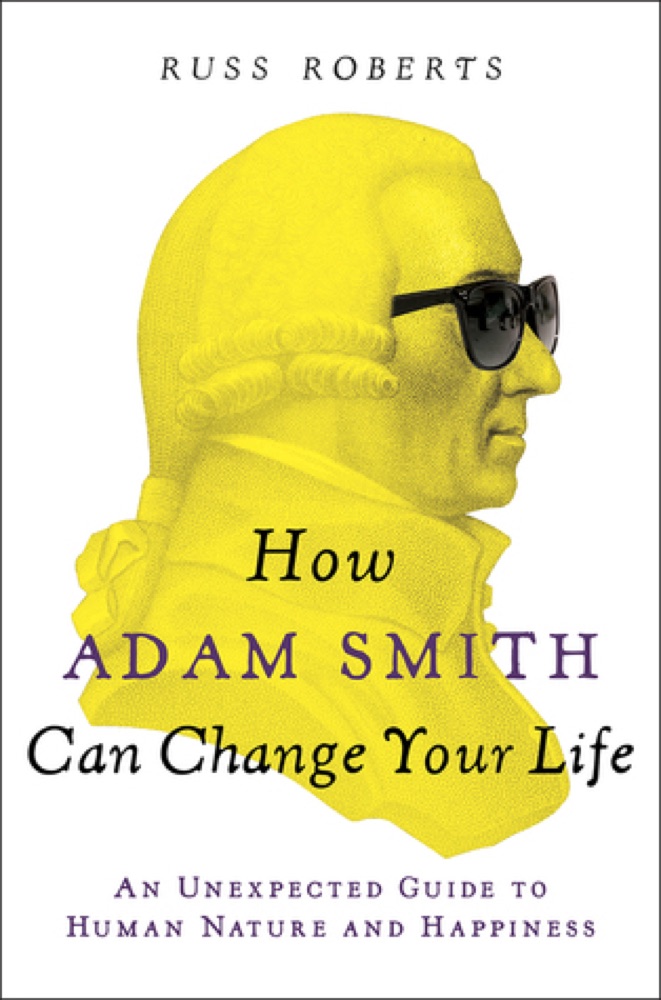
 The Happiness Hypothesis: Finding Modern Truth in Ancient Wisdom
Quotes from the Book
The Universe is full of dots. Connect the right ones and you can draw anything. The important question is not whether the dots you picked are really there, but why you chose to ignore all the others.
20
The first principle is that you must not fool yourself—and you are the easiest person to fool.
16
If you want to make the world a better place, work on being trustworthy, and honor those who are trustworthy. Be a good friend and surround yourself with worthy friends. Don’t gossip. Resist the joke that might hurt someone’s feelings even when it’s clever. And try not to laugh when your friend tells you that clever joke at someone’s expense. Being good is not just good for you and those around you, but because it helps others be good as well. Set a good example, and by your loveliness you will not only be loved, but you may influence the world.
11
Adam Smith was not a big fan of the pursuit of fame and fortune. His view of what we truly want, of what really makes us happy, cuts to the core of things. It takes him only twelve words to get to the heart of the matter: Man naturally desires, not only to be loved, but to be lovely.
10
When we honor bad people or avoid good people, we are playing a role in degrading the world around us. It’s a small role, almost negligible. But together, our combined actions are decisive. Each step we take away from loveliness is a step away from civilization. As more and more of us take those steps, our seemingly negligible actions are no longer negligible.
6
What can be added to the happiness of the man who is in health, who is out of debt, and has a clear conscience?
6
Life’s not a race. It’s a journey to savor and enjoy. Ambition—the relentless desire for more—can eat you up.
4
Smith is showing us a better path to contentment than the one the world holds out to seduce us with. There is another way to be loved. Instead of pursuing attention via wealth or fame or power, pursue wisdom and goodness. There are two ways to be loved, to satisfy the desire we all have in us to be noticed and to be somebody. The first path is to be rich, famous, powerful. The second path is to be wise and virtuous.
4
Economics helps you understand that money isn’t the only thing that matters in life. Economics teaches you that making a choice means giving up something. And economics can help you appreciate complexity and how seemingly unrelated actions and people can become entangled.
3
One important characteristic of civilization is trust. When you can trust the people you deal with—when you don’t have to fear that your trust will be exploited for someone else’s gain—life is lovelier and economic life is much easier. How does trust get created? By the myriad small interactions we have with each other when we honor our word and pass up the chance for opportunism.
3
A modern way to capture what Smith is talking about when he talks about being loved and being lovely is authenticity. We want to be real, and we want the people around us to be real in how they think about us. Respect or love or attention that is inaccurate because I don’t deserve it isn’t real. Someone who is thought to be lovely, but who knows he isn’t, is living a lie.
3
Emotional interaction is a duet in which we are constantly fine-tuning our volume to match that of our fellow.
2
We fool ourselves about our worldview, our ideology, our religion, the evidence of our senses, and the interpretation of the world that we use to construct our beliefs. All the evidence we notice and remember confirms our views. Everything else is ignored or forgotten—or, better, dismissed based on flaws in the analysis. A reader of mine, Sam Thomsen, said it very well: The Universe is full of dots. Connect the right ones and you can draw anything. The important question is not whether the dots you picked are really there, but why you chose to ignore all the others.
2
We tried buying local once; it was called the Middle Ages.
2
Rather than revving up our feelings of injustice, Smith is telling us a way to find serenity. Wag more, bark less.
2
For Smith, prudence means, in modern terms, taking care of yourself, justice means not hurting others, and beneficence means being good to others. That’s not a bad trio for thinking about how to live the good life.
1
And even though he’s the father of capitalism and wrote the most famous and maybe the best book ever on why some nations are rich and others are poor, Adam Smith in The Theory of Moral Sentiments wrote as eloquently as anyone ever has on the futility of pursuing money with the hope of finding happiness. How do you reconcile that with the fact that no one did more than Adam Smith to make capitalism and self-interest respectable? That is a puzzle I try to unravel toward the end of this book. Besides the emptiness of excessive materialism, Smith understood the potential we have for self-deception, the danger of unintended consequences, the seductive lure of fame and power, the limitations of human reason, and the unseen sources of what makes our lives both so complex and yet at times so orderly. The Theory of Moral Sentiments is a book of observations about what makes us tick. As a bonus, almost in passing, Smith tells us how to lead the good life in the fullest sense of that phrase.
1
How selfish soever man may be supposed, there are evidently some principles in his nature, which interest him in the fortune of others, and render their happiness necessary to him, though he derives nothing from it except the pleasure of seeing it. Forty-two words. A long sentence by modern standards. I had to read Smith’s opening sentence twice before I understood what he was saying: that even though people can be pretty selfish, they do care about other people’s happiness. Makes sense. I kept reading. I read the first page. Then the second page and the third. I closed the book. A second confession—I had no idea what Smith was talking about. The book appeared to begin in midstream. Unlike The Wealth of Nations, which is delightful and engaging prose from the get-go, The Theory of Moral Sentiments is very slow going.
1
Economics teaches you that making a choice means giving up something.
1
The idea that other people care about themselves is generally a good thing to remember if you want them to do something for you in return.
1
specialization is both the cause and the effect of prosperity, and it creates the modern economic life that allows us to move beyond subsistence. Small groups of people—no matter how talented, no matter how skilled or strong or smart—cannot be wealthy by modern standards over any sustained period of time.
1
I have a friend with an incredibly demanding job that he doesn't particularly enjoy. But he puts up with it because he makes a lot of money, much more than he could make working for another company of doing something else. He has high blood pressure. His children get older every year. He complains about the stresses of his life and asks for my advice. Quit your job, I tell him. Earn less money. Spend more time with your wife and kids. Be happier. I can’t, he says. I have all these big deals in the works. Let me win those contracts, bag those bonuses. Next year I'll quit and slow down. But when next year comes along, he tells me about the new deals and the new bonuses. Next year is always a year away. Every year his salary grows. Every few years he moves into a bigger house and gets a new car. Is he happier? Evidently not. Despite the larger salary and the bigger house and the nicer car, he's not content. “Just one more year”, he says, “then I’ll have enough
Smith in his book and with his life is telling us how to live. Seek wisdom and virtue. Behave as if an impartial spectator is watching you. Use the idea of an impartial spectator to step outside yourself and see yourself as others see you. Use that vision to know yourself. Avoid the seductions of money and fame, for they will never satisfy.
I always encourage the students to address their employer’s self-love and not just their humanity—to come up with some reason XYZ will benefit from hiring them. How would your skills serve the goals of XYZ? Do you have any idea what those goals are? The idea that other people care about themselves is generally a good thing to remember if you want them to do something for you in return. But
Hard-and-fast rules are easier to keep than rules that are slightly relaxed. The opposite
For Smith, prudence covers everything in your personal bearing, the “wise and judicious care” of your health, your money, and your reputation. So the modern prudent man doesn’t smoke. He’s physically active and keeps his weight under control. He works hard and avoids debt. He stays away from get-rich-quick schemes. I would suggest that he prefers indexed mutual funds to managed funds and stock picking. In short, he foregoes the potential of a large upside to avoid the downside. But
one very useful thing I’ve learned from economics is to be skeptical of advice from stockbrokers about the latest stock that’s sure to skyrocket. Saving you from losses isn’t as exciting as promising you millions, but it’s still pretty valuable. But the real point is that economics is about something more important than money. Economics helps you understand that money isn’t the only thing that matters in life. Economics teaches you that making a choice means giving up something. And economics can help you appreciate complexity and how seemingly unrelated actions and people can become entangled. These insights and others are sprinkled throughout The Theory of Moral Sentiments. Money is nice, but knowing how to deal with it may be nicer. A student once told me that a professor of hers said that economics is the study of how to get the most out of life. That may strike some of you, even those of you who majored in economics, as an absurd claim. But life is all about choices. Getting the most out of life means choosing wisely and well. And making choices—being aware of how choosing one road means not taking another, being aware of how my choices interact with the choices of others—that’s the essence of economics. If
Undeserved praise is a reprimand—a reminder of what I could be.
Watch on YouTube
About Russell "Russ" Roberts
About the book
A forgotten book by one of history’s greatest thinkers reveals the surprising connections between happiness, virtue, fame, and fortune.
Adam Smith may have become the patron saint of capitalism after he penned his most famous work, The Wealth of Nations. But few people know that when it came to the behavior of individuals—the way we perceive ourselves, the way we treat others, and the decisions we make in pursuit of happiness—the Scottish philosopher had just as much to say. He developed his ideas on human nature in an epic, sprawling work titled The Theory of Moral Sentiments.
Most economists have never read it, and for most of his life, Russ Roberts was no exception. But when he finally picked up the book by the founder of his field, he realized he’d stumbled upon what might be the greatest self-help book that almost no one has read.
In How Adam Smith Can Change Your Life, Ro
Book details
- First published
- 2014
- Author
- Russell "Russ" Roberts
- Genre
- Philosophy
- Goodreads rating
- 3.94 (3k ratings)
Keep reading
The Happiness Hypothesis: Finding Modern Truth in Ancient Wisdom
 How to Be Perfect: The Correct Answer to Every Moral Question
 The Algebra of Wealth: A Simple Formula for Financial Security
 The Socrates Express: In Search of Life Lessons from Dead Philosophers
 The Art of Living: The Classical Manual on Virtue, Happiness and Effectiveness
 Finding Flow: The Psychology of Engagement with Everyday Life
 7 Strategies for Wealth & Happiness: Power Ideas from America's Foremost Business Philosopher
 Will
Will
 The Happiness Equation: Want Nothing + Do Anything = Have Everything
 The Art of Thinking Clearly
 Tribe Of Mentors: Transformative Wisdom From Icons and Innovators to Help You Navigate Life's Challenges
 Your Erroneous Zones: Step-By-Step Advice for Escaping the Trap of Negative Thinking and Taking Control of Your Life
 Choose Yourself: Be Happy, Make Millions, Live the Dream
 Same as Ever: A Guide to What Never Changes
 The 7 Habits of Highly Effective People: Personal Workbook
 The Art of Spending Money: Simple Choices for a Richer Life
 The Algebra of Happiness: Notes on the Pursuit of Success, Love, and Meaning
 12 Rules for Life: An Antidote to Chaos
 The Things You Can See Only When You Slow Down: How to Be Calm in a Busy World
 A Calendar of Wisdom: Daily Thoughts to Nourish the Soul
 Principles: Life and Work
 The Snowball: Warren Buffett and the Business of Life
 How to Stop Worrying and Start Living
 The Path: What Chinese Philosophers Can Teach Us About the Good Life
 The Elephant in the Brain: Hidden Motives in Everyday Life
 Stoicism and the Art of Happiness
 How to Use Your Enemies
 The Tao of Pooh
 Humankind: A Hopeful History
 The Laws of Human Nature
 Ethics for the New Millennium
 Rich Dad Poor Dad
 In Praise of Idleness and Other Essays
 The Daily Stoic: 366 Meditations on Wisdom, Perseverance, and the Art of Living
 Barking Up the Wrong Tree: The Surprising Science Behind Why Everything You Know About Success Is (Mostly) Wrong
 Stillness Is the Key
 Success Through a Positive Mental Attitude
 Delivering Happiness: A Path to Profits, Passion, and Purpose
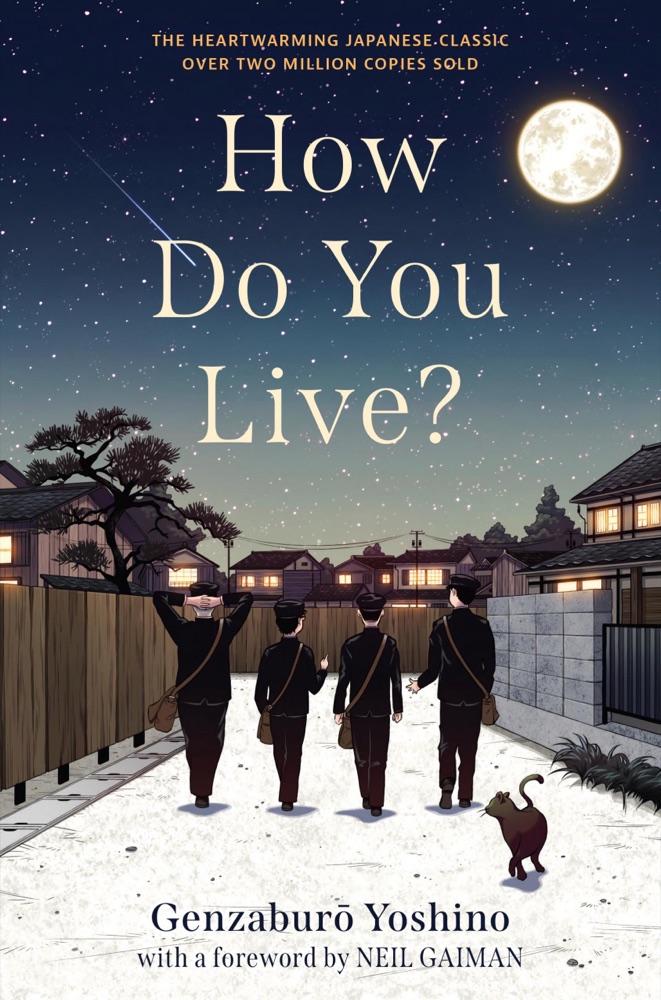 How Do You Live?
 Bright-Sided: How the Relentless Promotion of Positive Thinking Has Undermined America
 The World According to Mister Rogers: Important Things to Remember
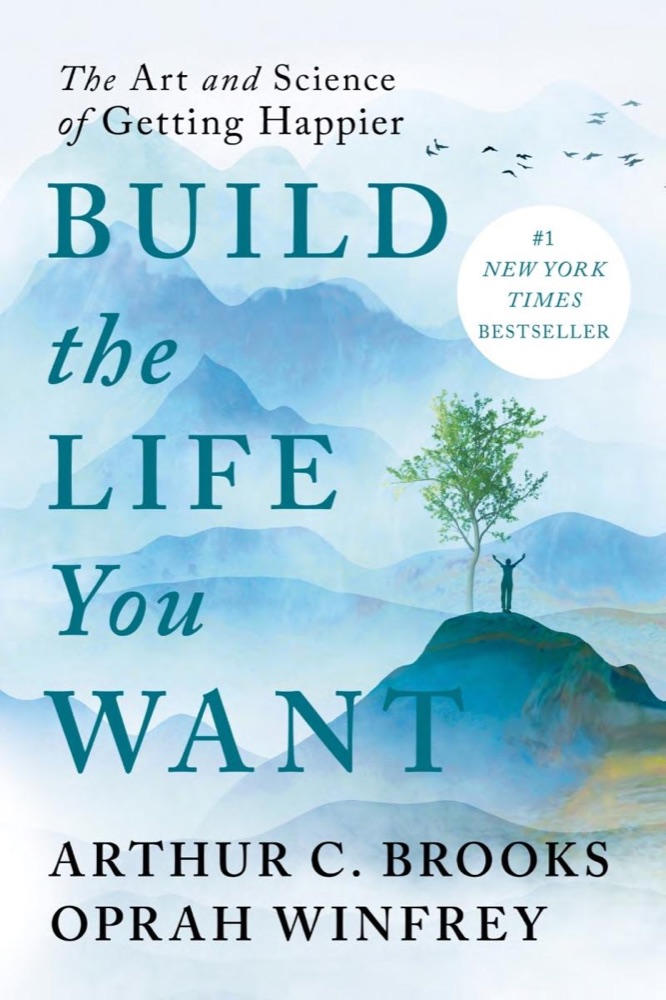 Build the Life You Want: The Art and Science of Getting Happier
 The Social Animal: The Hidden Sources of Love, Character, and Achievement
 The Ultimate Gift
 Let's Talk: ...About Making Your Life Exciting, Easier, And Exceptional
 What If This Were Enough?: Essays
 A Guide to the Good Life: The Ancient Art of Stoic Joy
 Notes on a Nervous Planet
 Happiness Becomes You: A Guide to Changing Your Life for Good
 The Soul of Man Under Socialism
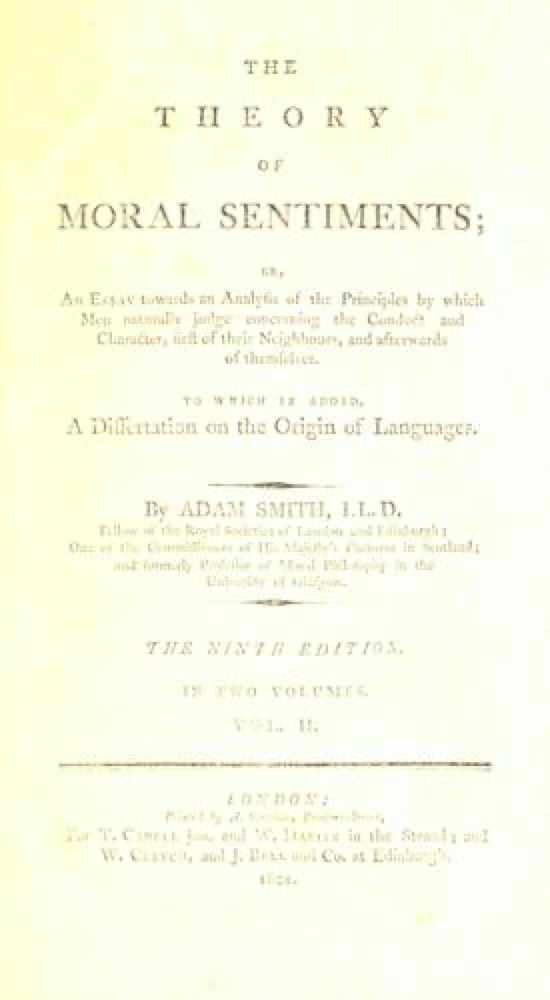 The Theory of Moral Sentiments
 101 Essays That Will Change The Way You Think
 The Four Agreements: A Practical Guide to Personal Freedom
 The Second Mountain
 The Happiness Project
 The Science of Getting Rich
 The Last Lecture