
 Men Are from Mars, Women Are from Venus
Quotes from the Book
Most people today think they belong to a species that can be master of its destiny. This is faith, not science. We do not speak of a time when whales or gorillas will be masters of their destinies. Why then humans?
69
Humans cannot live without illusions. For the men and women of today, an irrational faith in progress may be the only antidote to nihilism. Without the hope that the future will be better than the past, they could not go on.
67
We think our actions express our decisions. But in nearly all of our life, willing decides nothing. We cannot wake up or fall asleep, remember or forget our dreams, summon or banish our thoughts, by deciding to do so. When we greet someone on the street we just act, and there is no actor standing behind what we do. Our acts are end points in long sequences of unconscious responses. They arise from a structure of habits and skills that is almost infinitely complicated. Most of our life in enacted without conscious awareness. Nor can it be made conscious. No degree of self-awareness can make us self-transparent.
58
Today, for the mass of humanity, science and technology embody 'miracle, mystery, and authority'. Science promises that the most ancient human fantasies will at last be realized. Sickness and ageing will be abolished; scarcity and poverty will be no more; the species will become immortal. Like Christianity in the past, the modern cult of science lives on the hope of miracles. But to think that science can transform the human lot is to believe in magic. Time retorts to the illusions of humanism with the reality: frail, deranged, undelivered humanity. Even as it enables poverty to be diminished and sickness to be alleviated, science will be used to refine tyranny and perfect the art of war.
51
Humans think they are free, conscious beings, when in truth they are deluded animals. At the same time they never cease trying to escape from what they imagine themselves to be. Their religions are attempts to be rid of a freedom they have never possessed. In the twentieth century, the utopias of Right and Left served the same function. Today, when politics is unconvincing even as entertainment, science has taken on the role of mankind's deliverer.
45
humankind's presence on Earth is nothing but a cancer
34
Those who struggle to change the world see themselves as noble, even tragic figures. Yet most of those who work for world betterment are not rebels against the scheme of things. They seek consolation for a truth they are too weak to bear. At bottom, their faith that the world can be transformed by human will is a denial of their own mortality.
32
It is a strange fancy to suppose that science can bring reason to an irrational world, when all it can ever do is give another twist to a normal madness.
30
Nothing is more alien to the present age than idleness. If we think of resting from our labours, it is only in order to return to them. In thinking so highly of work we are aberrant. Few other cultures have ever done so. For nearly all of history and all prehistory, work was an indignity.
29
Human knowledge is one thing, human wellbeing another. There is no predetermined harmony between the two. The examined life may not be worth living.
28
Long after the traces of the human animal have disappeared, many of the species it is bent on destroying will still be around, along with others that have yet to spring up. The Earth will forget mankind. The play of life will go on.
25
Tragedy is born of myth, not morality. Prometheus and Icarus are tragic heroes. Yet none of the myths in which they appear has anything to do with moral dilemmas. Nor have the greatest Greek tragedies. If Euripides is the most tragic of the Greek playwrights, it is not because he deals with moral conflicts but because he understood that reason cannot be the guide of life.
23
Today we have made a fetish of choice; but a chosen death is forbidden. Perhaps what distinguishes humans from other animals is that humans have learnt to cling more abjectly to life.
17
Anyone who truly wants to escape human solipsism should not seek out empty places. Instead of fleeing to desert, where they will be thrown back into their own thoughts, they will d better to seek out the company of other animals. A zoo is a better window from which to look out of the human world than a monastery.
14
If you believe that humans are animals, there can be no such thing as the history of humanity, only the lives of particular humans. If we speak of the history of the species at all, it is only to signify the unknowable sum of these lives. As with other animals, some lives are happy, others wretched. None has a meaning that lies beyond itself.
13
In Europe and Japan, bourgeois life lingers on. In Britain and America it has become the stuff of theme parks. The middle class is a luxury capitalism can no longer afford.
12
Genocide is as human as art or prayer.
11
The human mind serves evolutionary success, not truth. To think otherwise is to resurrect the pre-Darwinian error that humans are different from all other animals.
10
The destruction of the natural world is not the result of global capitalism, industrialisation, ‘Western civilisation’ or any flaw in human institutions. It is a consequence of the evolutionary success of an exceptionally rapacious primate. Throughout all of history and prehistory, human advance has coincided with ecological devastation.
9
But the idea that we can rid ourselves of animal illusion is the greatest illusion of all. Meditation may give us a fresher view of things, but it cannot uncover them as they are in themselves. The lesson of evolutionary psychology and cognitive science is that we are descendants of a long lineage, only a fraction of which is human. We are far more than the traces that other humans have left in us. Our brains and spinal cords are encrypted with traces of far older worlds.
8
Homo rapiens is only one of very many species, and not obviously worth preserving. Later or sooner, it will become extinct. When it is gone the Earth will recover. Long after the last traces of the human animal have disappeared, many of the species it is bent on destroying will still be around, along with others that have yet to spring up. The earth will forget mankind. The play of life will go on.
7
If a lion could talk, we could not understand him,' the philosopher Ludwig Wittgenstein once said. 'It's clear that Wittgenstein hadn't spent much time with lions,' commented the gambler and conservationist John Aspinall.
7
In a competition for mates, a well developed capacity for self-deception is an advantage, The same is true in politics and other contexts.
6
The calls of birds and the traces left by wolves to mark off their territories are no less forms of language than the sings of humans. What is distinctively human is not the capacity for language. It is the crystallisation of language in writing.
6
Among Christians, only Protestants have ever believed that work smacks of salvation; the work and prayer of medieval Christendom were interspersed with festivals. The ancient Greeks sought salvation in philosophy, the Indians in meditation, the Chinese in poetry and the love of nature. The pygmies of the African rainforests – now nearly extinct – work only to meet the needs of the day, and spend most of their lives idling.
4
Societies founded on a faith in progress cannot admit the normal unhappiness of human life.
3
Today liberal humanism has the pervasive power that was once possessed by revealed religion. Humanists like to think they have a rational view of the world; but their core belief in progress is a superstition, further from the truth about the human animal than any of the world’s religions.
3
The cult of choice reflects the fact that we must improvise our lives. That we cannot do otherwise is a mark of our unfreedom. Choice has become a fetish; but the mark of a fetish is that it is unchosen.
3
Moral philosophy is very largely a branch of fiction. Despite this, a philosopher has yet to write a great novel. The fact should not be surprising. In philosophy the truth about human life is of no interest
3
As commonly practiced, philosophy is the attempt to find good reasons for conventional beliefs.
3
Watch on YouTube
About John Gray
We have collected 51 quotes from 2 books by John Gray on BookQuoters.
More about the author →More by John Gray
Men Are from Mars, Women Are from Venus
About the book
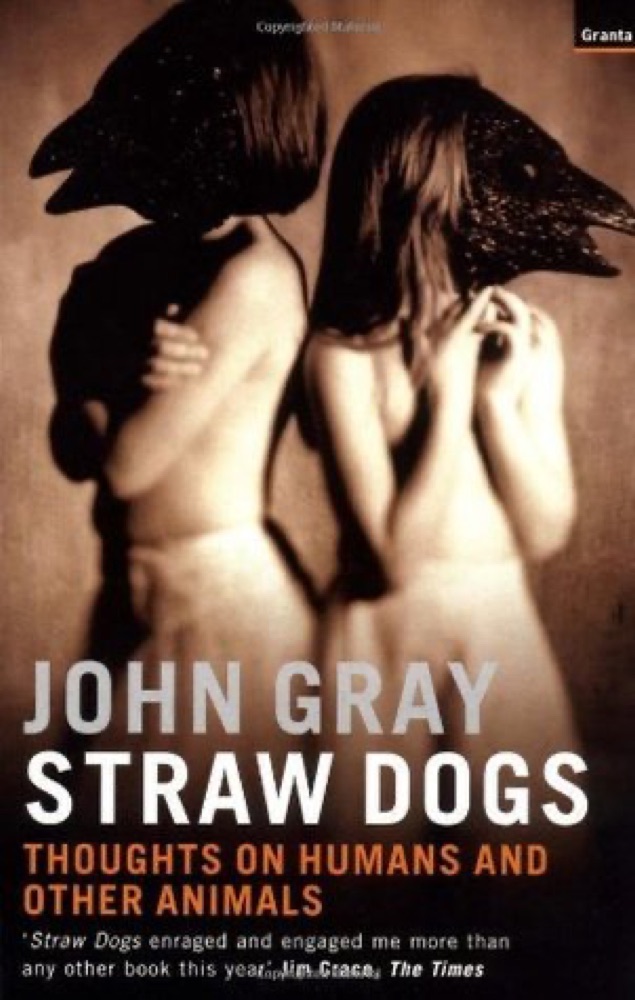
Straw Dogs is a work of philosophy, which sets out to challenge our most cherished assumptions about what it means to be human. From Plato to Christianity, from the Enlightenment to Nietzsche, the Western tradition has been based on arrogant and erroneous beliefs about human beings and their place in the world. Philosophies such as liberalism and Marxism think of humankind as a species whose destiny is to transcend natural limits and conquer the Earth. Even in the present day, despite Darwin's discoveries, nearly all schools of thought take as their starting point the belief that humans are radically different from other animals. John Gray argues that this humanist belief is an illusion. The aim of Straw Dogs is to explore how the world and human life look once humanism has been finally abandoned. Straw Dogs explores philosophical issues such as the nature of the self, free will, morali
Book details
- First published
- 2002
- Author
- John Gray
- Genre
- Philosophy
- Goodreads rating
- 3.93 (5k ratings)
Keep reading
 The Social Conquest of Earth
 Sapiens: A Brief History of Humankind
 Homo Deus: A History of Tomorrow
 The Blank Slate: The Modern Denial of Human Nature
 Enlightenment Now: The Case for Reason, Science, Humanism, and Progress
 21 Lessons for the 21st Century
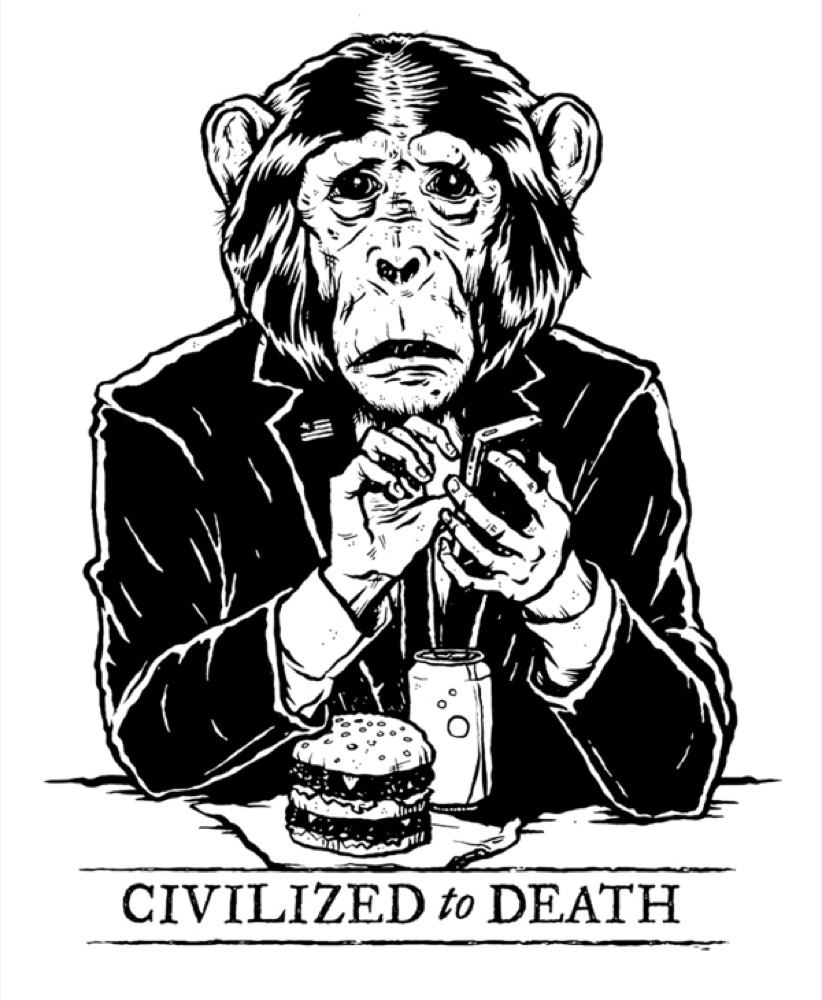 Civilized to Death: What Was Lost on the Way to Modernity
 Humankind: A Hopeful History
 The Occult
 Dragons of Eden: Speculations on the Evolution of Human Intelligence
 A Language Older Than Words
 Endgame, Vol. 1: The Problem of Civilization
 The Conspiracy Against the Human Race
 The Story of B: An Adventure of the Mind and Spirit
 Daybreak: Thoughts on the Prejudices of Morality
 Untimely Meditations
 Ishmael: An Adventure of the Mind and Spirit
 On Human Nature
 The Lost World
 How Should We Then Live? The Rise and Decline of Western Thought and Culture
 Brave New World Revisited
 A Short History of Progress
 Shadows of Forgotten Ancestors
 The Soul of Man Under Socialism
 The Moral Animal: Why We Are the Way We Are - The New Science of Evolutionary Psychology
 Consilience: The Unity of Knowledge
 The Moral Landscape: How Science Can Determine Human Values
 The Better Angels of Our Nature: Why Violence Has Declined
 The Sane Society
 The Fifth Science
 The Will to Power
 Genesis
 The Wayfinders: Why Ancient Wisdom Matters in the Modern World
 Walden Two
 The Perennial Philosophy
 A Hunter-Gatherer's Guide to the 21st Century: Evolution and the Challenges of Modern Life
 Myths to Live By
 What I Believe
 The Human Condition
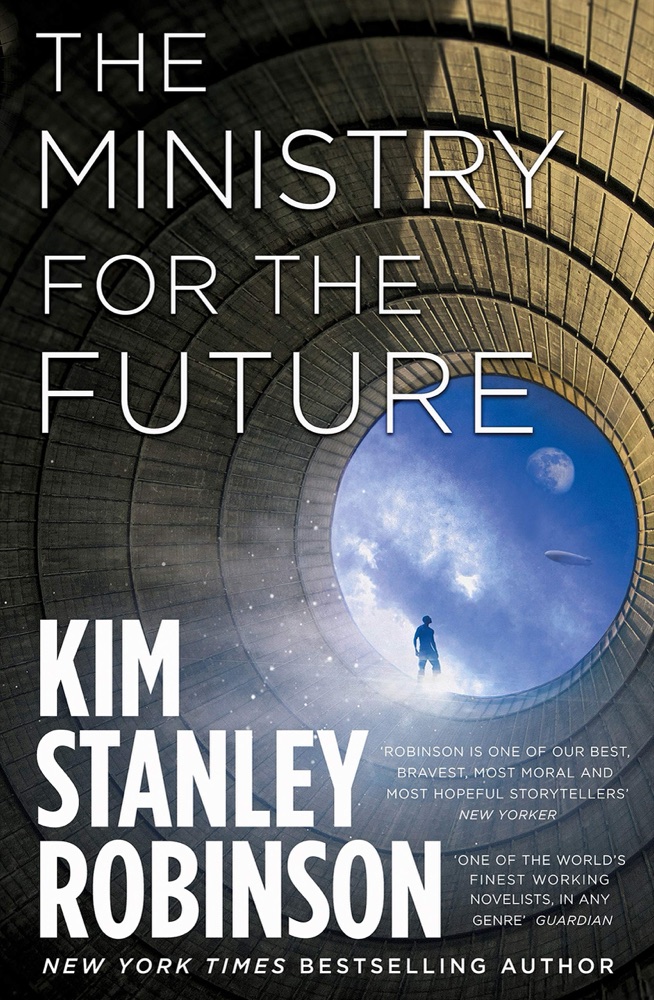 The Ministry for the Future
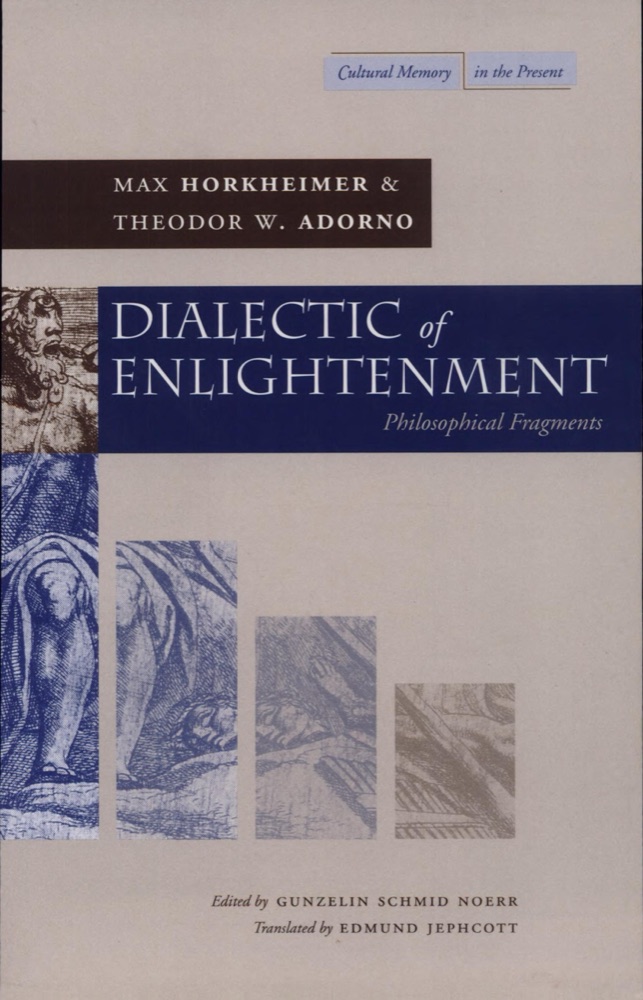 Dialectic of Enlightenment: Philosophical Fragments
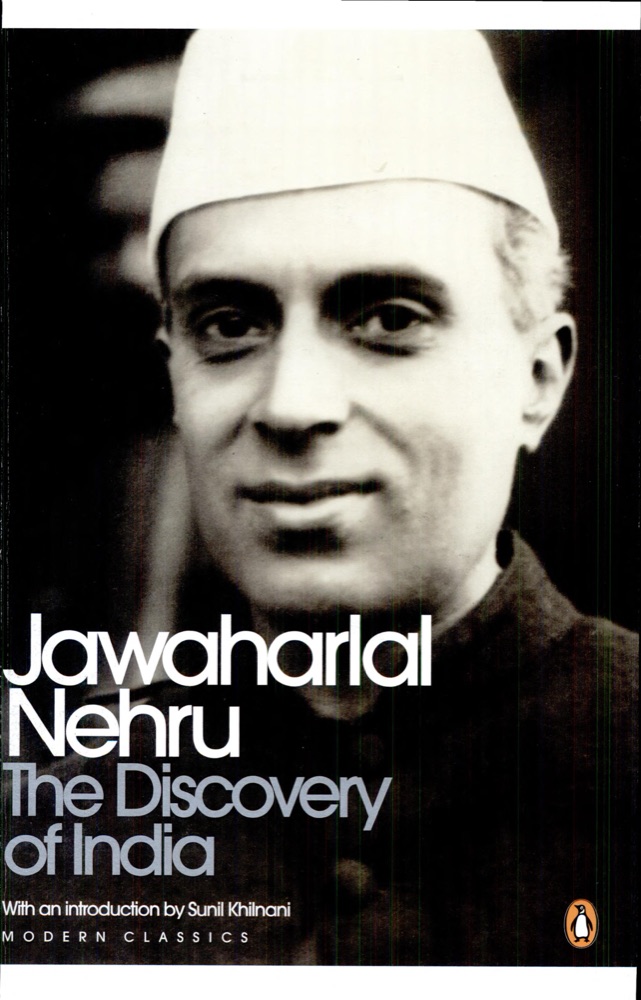 The Discovery of India
 Heretics
 Starry Messenger: Cosmic Perspectives on Civilization
 The Everlasting Man
 The Ascent of Man
 Man and His Symbols
 After Virtue
 Religion Explained: The Evolutionary Origins of Religious Thought
 The Mountain in the Sea
 The Dawn of Everything: A New History of Humanity
 In Praise of Idleness and Other Essays
 The Closing of the American Mind
 The Abolition of Man
 Darwin's Dangerous Idea: Evolution and the Meanings of Life
 Food of the Gods: The Search for the Original Tree of Knowledge
 The One-Straw Revolution
 Breaking the Spell: Religion as a Natural Phenomenon
 A Brief History of Thought: A Philosophical Guide to Living
 A Devil's Chaplain: Reflections on Hope, Lies, Science, and Love