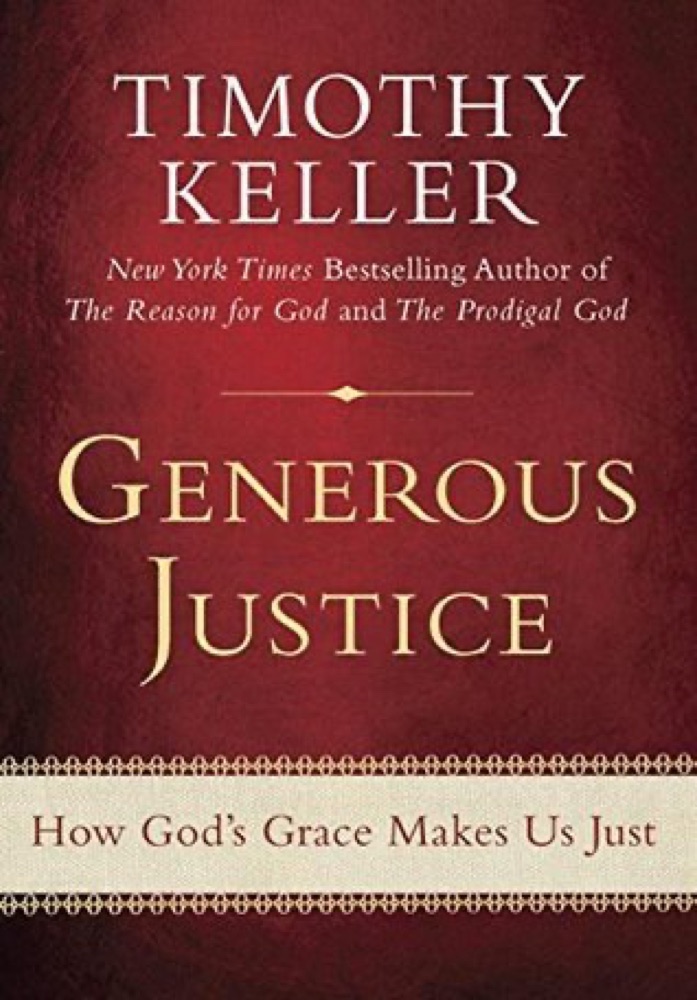
 Generous Justice: How God's Grace Makes Us Just
Quotes from the Book
Until we embrace our mutual brokenness, our work with low-income people is likely to do more harm than good. I sometimes unintentionally reduce poor people to objects that I use to fulfill my own need to accomplish something. I am not okay, and you are not okay. But Jesus can fix us both.
14
We are not bringing Christ to poor communities. He has been active in these communities since the creation of the world, sustaining them, Hebrews 1:3 says, by His powerful Word. Hence, a significant part of working in poor communities involves discovering and appreciating what God has been doing there for a LONG time.
12
Poverty alleviation occurs when the power of Christ's resurrection reconciles our key relationships through the transformation of both individual lives and local, national, and international systems.
9
Personal piety and formal worship are essential to the Christian life, but they must lead to lives that “act justly and love mercy” (Mic. 6:8).
6
While poor people mention having a lack of material things, they tend to describe their condition in far more psychological and social terms than our North American audiences. Poor people typically talk in terms of shame, inferiority, powerlessness, humiliation, fear, hopelessness, depression, social isolation, and voicelessness. North American audiences tend to emphasize a lack of material things such as food, money, clean water, medicine, housing, etc.
5
The same is true when we work with poor people. If we treat only the symptoms or if we misdiagnose the underlying problem, we will not improve their situation, and we might actually make their lives worse.
3
If we reduce human beings to being simply physical—as Western thought is prone to do—our poverty-alleviation efforts will tend to focus on material solutions. But if we remember that humans are spiritual, social, psychological, and physical beings, our poverty-alleviation efforts will be more holistic in their design and execution.
2
If you are a North American Christian, the reality of our society’s vast wealth presents you with an enormous responsibility, for throughout the Scriptures God’s people are commanded to show compassion to the poor. In fact, doing so is simply part of our job description as followers of Jesus Christ (Matt. 25:31–46). While the biblical call to care for the poor transcends time and place, passages such as 1 John 3:17 should weigh particularly heavy on the minds and hearts of North American Christians: “If anyone has material possessions and sees his brother in need but has no pity on him, how can the love of God be in him?” Of course, there is no “one-size-fits-all” recipe for how each Christian should respond to this biblical mandate. Some are called to pursue poverty alleviation as a career, while others are called to do so as volunteers. Some are called to engage in hands-on, relational ministry, while others are better suited to support frontline workers through financial donations, prayer, and other types of support. Each Christian has a unique set of gifts, callings, and responsibilities that influence the scope and manner in which to fulfill the biblical mandate to help the poor.
2
long-standing debate in the political arena concerns the extent to which people are materially poor due to their personal failures or to the effects of broken systems on their lives. Political conservatives tend to stress the former, while political liberals tend to emphasize the latter. Which view is correct? Many of us learned as children in Sunday school that Adam and Eve’s sin messed up absolutely everything, implying that both individuals and systems are broken. Hence, Christians should be open to the idea that individuals and/or systems could be the problem as we try to diagnose the causes of poverty in any particular context. This much we learned in Sunday school. Unfortunately, what few of us seem to have learned in Sunday school is that Jesus’ redemption is cosmic in scope, bringing reconciliation to both individuals and systems. And as ministers of reconciliation, His people need to be concerned with both as well, the subject to which we now turn.
1
Reverend Marsh sought the King without the kingdom. The civil rights workers sought the kingdom without the King.
1
It is important to note that the Great Reversal preceded the rise of the welfare state in America. Lyndon Johnson’s War on Poverty did not occur until the 1960s, and even FDR’s relatively modest New Deal policies were not launched until the 1930s. In short, the evangelical church’s retreat from poverty alleviation was fundamentally due to shifts in theology and not—as many have asserted—to government programs that drove the church away from ministry to the poor. While the rise of government programs may have exacerbated the church’s retreat, they were not the primary cause. Theology matters, and the church needs to rediscover a Christ-centered, fully orbed perspective of the kingdom.
1
When people seek to fulfill their callings by glorifying God in their work, praising Him for their gifts and abilities, and seeing both their efforts and its products as an offering to Him, then work is an act of worship to God.
1
the materially poor have an even deeper walk with God and have insights and experiences that they can share with us, if we would just stop talking and listen.
Here then from both James and Paul is a central witness drawn from all of Scripture: God has sovereignly chosen to work in the world by beginning with the weak who are on the ‘outside,’ not the powerful who are on the ‘inside.
While Reverend Marsh preached personal piety and the hope of heaven, African Americans were being lynched in Mississippi through the plotting of Sam Bowers. Less dramatic but even more pervasive was the entire social, political, and economic system designed to keep African Americans in their place. What would King Jesus do in this situation? Would He simply evangelize the African Americans, saying, “I have heard your cries for help, but your earthly plight is of no concern to Me. Believe in Me, and I will transport your soul to heaven someday. In the meantime, abstain from alcohol, drugs, and sexual impurity”? Is this how Jesus responded to the blind beggar who pleaded for mercy?
How useless it would have been if Jesus had only used words and not deeds to declare the kingdom. Imagine reading the story in Luke 18:35–43 about the blind beggar who was sitting along the roadside. Learning that Jesus was walking by, he called out, “Jesus, Son of David, have mercy on me!” What if Jesus had said, “I am the fulfillment of all prophecy. I am the King of kings and Lord of lords. I have all the power in heaven and earth. I could heal you today of your blindness, but I only care about your soul. Believe in Me”? Who would have believed that Jesus was the promised King if He had not given any evidence to prove it?
Poverty is rooted in broken relationships, so the solution to poverty is rooted in the power of Jesus’ death and resurrection to put all things into right relationship again.
Sin arrepentimiento, nuestros esfuerzos para ayudar continuarán caracterizándose por dar recursos materiales a los pobres más que caminar con ellos de forma humilde mientras llamamos al Rey Jesús a sanar los orígenes de la totalidad de nuestras pobrezas.
Lo que esto significa es que Parkview necesita entender que las cosas van realmente más despacio en el mundo mayoritario, por lo que sus expectativas tardarán más tiempo en cumplirse. Si no lo entiende, Parkview se frustrará rápido y querrá controlar áreas que no le correspondan, con la suposición errónea de que la falta de movimiento implica una falta de habilidad por parte de la gente del mundo mayoritario.
We do not necessarily need to feel guilty about our wealth. But we do need to get up every morning with a deep sense that something is terribly wrong with the world and yearn and strive to do something about it. There is simply not enough yearning and striving going on.
El desarrollo solo puede ocurrir cuando las personas están dispuestas a cambiar. Si la gente no cree ser la responsable de tomar decisiones que repercutan en cambios positivos en su vida, va a ser muy difícil avanzar.
En última instancia, un cambio positivo no va a ser posible sin el poder del Espíritu Santo, así que orar por un cambio tiene que ser la herramienta principal para este proceso de desarrollo personal.
All of us need to remember that the materially poor really are created in the image of God and have the ability to think and to understand the world around them. They actually know something about their situation, and we need to listen to them! This does not need to degenerate into some sort of new-age, “the-truth-is-within-you” quagmire. Like all of us, the materially poor are often wrong about how the world works and can benefit from the knowledge of others. In fact, a key trigger point for change in a community is often being exposed to a new way of understanding or of doing something. But it is reflective of a god-complex to assume that we have all the knowledge and that we always know what is best.
Los problemas de empleo de la gente pobre no son causados solamente por los sistemas económicos nacionales e internacionales. Muchas personas pobres tienen problemas de conducta que no las transforma en mano de obra ideal.
Siempre y cuando la Biblia hable específicamente sobre la vida de la iglesia, es necesario obedecerla. Pero cuando no dice nada, los pastores deben tener cuidado de no imponer sus propios estilos ministeriales determinados por su cultura en contextos en los cuales los pastores locales pueden saber más sobre la manera más eficaz de ministrar.
Watch on YouTube
About Steve Corbett
We have collected 25 quotes from 1 book by Steve Corbett on BookQuoters.
More about the author →About the book
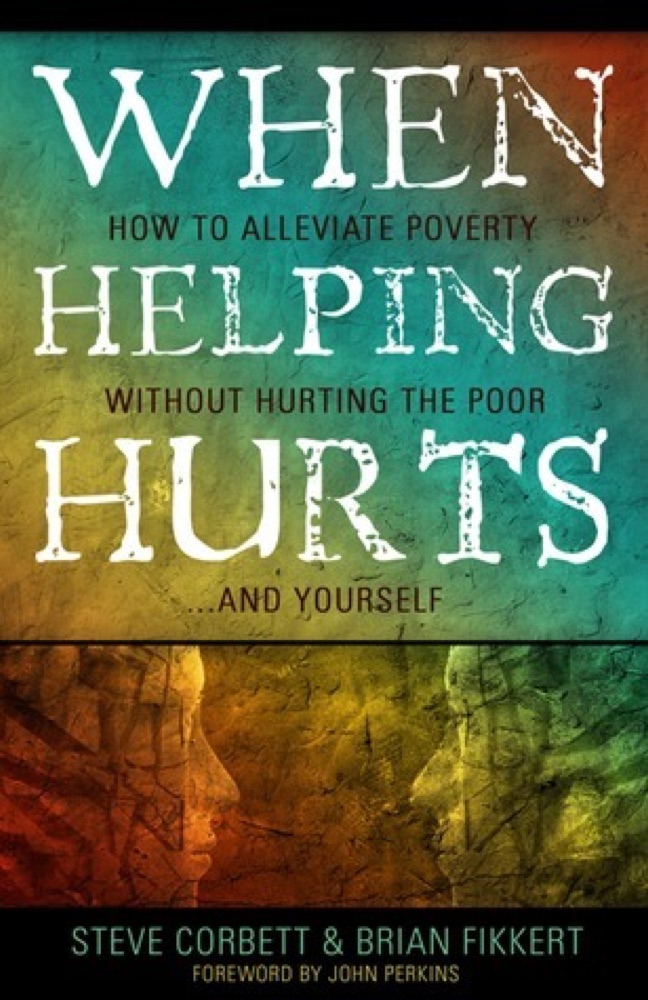
Churches and individual Christians typically have faulty assumptions about the causes of poverty, resulting in the use of strategies that do considerable harm to poor people and themselves. Don't let this happen to you, your ministry or ministries you help fund! A must read for anyone who works with the poor or in missions, When Helping Hurts provides foundational concepts, clearly articulated general principles and relevant applications. The result is an effective and holistic ministry to the poor, not a truncated gospel."Initial thoughts" at the beginning of chapters and "reflection questions and excercises" at the end of chapters assist greatly in learning and applying the material. A situation is assessed for whether relief, rehabilitation, or development is the best response to a situation. Efforts are characterized by an "asset based" approach rather than a "needs based" approach.
Book details
- First published
- 2009
- Author
- Steve Corbett
- Genre
- Nonfiction
- Goodreads rating
- 4.20 (14k ratings)
Keep reading
Generous Justice: How God's Grace Makes Us Just
 Instruments in the Redeemer's Hands: People in Need of Change Helping People in Need of Change
 The Irresistible Revolution: Living as an Ordinary Radical
 A Theology of Liberation
 Jesus and the Disinherited
 Freedom of Simplicity: Finding Harmony in a Complex World
 Money, Possessions, and Eternity: A Comprehensive Guide to What the Bible Says about Financial Stewardship, Generosity, Materialism, Retirement, Financial Planning, Gambling, Debt, and More
 The Prodigal God: Recovering the Heart of the Christian Faith
 7: An Experimental Mutiny Against Excess
 Jesus of Nazareth: The Infancy Narratives
 Jesus for President: Politics for Ordinary Radicals
 The Long Loneliness: The Autobiography of the Legendary Catholic Social Activist ― A Memoir about the Worker Movement and Spiritual Conversion
 The Life You Can Save: How to Do Your Part to End World Poverty
 The Holy Longing: The Search for a Christian Spirituality
 Counterfeit Gods: The Empty Promises of Money, Sex, and Power, and the Only Hope That Matters
 Renovation of the Heart: Putting On the Character of Christ
 Ethics
 The Divine Conspiracy: Rediscovering Our Hidden Life in God
 The Secret Thoughts of an Unlikely Convert: An English Professor's Journey Into Christian Faith
 Laudato Si': On the Care of Our Common Home
 The Spirit of the Disciplines: Understanding How God Changes Lives
 Radical: Taking Back Your Faith from the American Dream
 Tattoos on the Heart: The Power of Boundless Compassion
 Simply Christian
 The Man Who Quit Money
 A Long Obedience in the Same Direction: Discipleship in an Instant Society
 Banker to the Poor: Micro-Lending and the Battle Against World Poverty
 Rich Christians in an Age of Hunger: Moving from Affluence to Generosity
 How People Change
 Letters and Papers from Prison
 The Jesus I Never Knew
 Discipline: The Glad Surrender
 The Deeply Formed Life: Five Transformative Values to Root Us in the Way of Jesus
 Rediscover Catholicism
 Let Us Dream: The Path to a Better Future
 The Cost of Discipleship
 Barking to the Choir: The Power of Radical Kinship
 Hope for the Troubled Heart: Finding God in the Midst of Pain
 Resident Aliens: Life in the Christian Colony
 Studies in the Sermon on the Mount
 Building a Bridge: How the Catholic Church and the LGBT Community Can Enter into a Relationship of Respect, Compassion, and Sensitivity
 We Who Wrestle with God: Perceptions of the Divine
 Searching for God Knows What
 The Explicit Gospel
 Christless Christianity: The Alternative Gospel of the American Church
 Celebration of Discipline: The Path to Spiritual Growth
 For the Love: Fighting for Grace in a World of Impossible Standards
 Love Wins Low Price CD: Love Wins Low Price CD
 Just Like Jesus: Learning to Have a Heart Like His
 The Case for Faith: A Journalist Investigates the Toughest Objections to Christianity
 Total Truth: Liberating Christianity from its Cultural Captivity
 Leaving Church: A Memoir of Faith
 The Benedict Option: A Strategy for Christians in a Post-Christian Nation
 Life of Christ
 The Wounded Healer
 40 Days of Decrease: A Different Kind of Hunger. A Different Kind of Fast.
 The Bible Jesus Read
 Adopted for Life: The Priority of Adoption for Christian Families & Churches
 The Grand Weaver: How God Shapes Us through the Events in Our Lives