

 The Sea, the Sea
Quotes from the Book
I hate solitude, but I'm afraid of intimacy. The substance of my life is a private conversation with myself which to turn into a dialogue would be equivalent to self-destruction. The company which I need is the company which a pub or a cafe will provide. I have never wanted a communion of souls. It's already hard enough to tell the truth to oneself.
342
For most of us, for almost all of us, truth can be attained, if at all, only in silence. It is in silence that the human spirit touches the divine.
84
When does one ever know a human being? Perhaps only after one has realized the impossibility of knowledge and renounced the desire for it and finally ceased to feel even the need of it. But then what one achieves is no longer knowledge, it is simply a kind of co-existence; and this too is one of the guises of love.
23
Events stream past us like these crowds and the face of each is seen only for a minute. What is urgent is not urgent for ever but only ephemerally. All work and all love, the search for wealth and fame, the search for truth, like itself, are made up of moments which pass and become nothing. Yet through this shaft of nothings we drive onward with that miraculous vitality that creates our precarious habitations in the past and the future. So we live; a spirit that broods and hovers over the continual death of time, the lost meaning, the unrecaptured moment, the unremembered face, until the final chop that ends all our moments and plunges that spirit back into the void from which it came.
22
All the time when I speak to you, even now, I'm saying not precisely what I think, but what will impress you and make you respond. That's so even between us - and how much more it's so where there are stronger motives for deception. In fact, one's so used to this one hardly sees it. The whole language is a machine for making falsehoods.
19
I took a deep breath, however, and followed my rule of never speaking frankly to women in moments of emotion. No good ever comes of this.
13
So we live; a spirit that broods and hovers over the continual death of time, the lost meaning, the unrecaptured moment, the unremembered face, until the final chop that ends all our moments and plunges that spirit back into the void from which it came.
11
I remember a conversation which we had once about translating. Hugo knew nothing about translating, but when he learnt that I was a translator he wanted to know what it was like. I remember him going on and on, asking questions such as: What do you mean when you say that you think the meaning in French? How do you know you’re thinking it in French? If you see a picture in your mind how do you know it’s a French picture? Or is it that you say the French word to yourself? What do you see when you see that the translation is exactly right? Are you imagining what someone else would think, seeing it for the first time? Or is it a kind of feeling? What kind of feeling? Can’t you describe it more closely? And so on and so on, with a fantastic patience. This sometimes became very exasperating. What seemed to me to be the simplest utterance soon became, under the repeated pressure of Hugo’s ‘You mean’, a dark and confused saying of which I no longer myself knew the meaning. The activity of translating, which had seemed the plainest thing in the world, turned out to be an act so complex and extraordinary that it was puzzling to see how any human being could perform it.
8
Hegel says that Truth is a great word and the thing is greater still. With Dave we never seemed to get past the word.
7
When the sun was set I might perhaps go to sleep. I never let myself sleep during the day. Daytime sleep is a cursed slumber from which one wakes in despair. The sun will not tolerate it. If he can he will pry under your eyelids and prise them apart; and if you hang black curtains at your windows he will lay siege to your room until it is so stifling that at last you stagger with staring eyes to the window and tear back the curtains to see that most terrible of sights, the broad daylight outside a room where you have been sleeping.
6
The next day round about ten o'clock I was walking down Welbeck Street. I was in a bad temper. By daylight the whole project seemed very much less attractive. I felt that to be snubbed by a film star would put me in a bad state of mind for months. But I regarded the matter as something which had been decided and which now simply had to be carried out. I often use this method for deciding difficult cases. In stage one I entertain the thing purely as a hypothesis, and in stage two I count my stage one thinking as a fixed decision on which there is no going back. I recommend this technique to any of you who are not good at making decisions.
4
When I'm up to something I find it very hard to realize that I probably look no different from the way I look on other occasions.
4
All theorizing is flight. We must be ruled by the situation itself and this is unutterably particular. Indeed it is something to which we can never get close enough, however hard we may try as it were to crawl under the net.
3
To find a person inexhaustible is simply the definition of love.
3
Why have you LEFT POLITICS? LEFT POLITICS needs you!
3
What is more tormenting than a meeting after a long time, when all the words fall to the ground like dead things, and the spirit that should animate them floats disembodied in the air? We both felt its presence.
3
There are special nightmares for the daytime sleeper: little nervous dreams tossed into some brief restless moments of unconsciousness and breaking through the surface of the mind to become confused at once with the horror of some waking vision. Such are these awakenings, like an awakening in the grave, when one opens one's eyes, stretched out rigid with clenched hands, waiting for some misery to declare itself; but for a long time it lies to suffocation upon the chest and utters no word.
3
ANNANDINE: If by expressing a theory you mean that someone else could make a theory about what you do, of course that is true and uninteresting. What I speak of is the real decision as we experience it; and here the movement away from theory and generality is the movement toward truth. All theorizing is flight. We must be ruled by the situation itself and this is unutterably particular. Indeed it is something to which we can never get close enough, however hard we may try as it were to crawl under the net.
2
We all live in the interstices of each other’s lives, and we would all get a surprise if we could see everything.
2
This is the fundamental wisdom that suffuses Iris Murdoch’s fiction from Under the Net onward. True virtue, true goodness, true love flow from respect for the strangeness and the mystery of other people and the world that surrounds us. They flow from the refusal to inflict our own designs on them, to deny their innate elusiveness, their impenetrable quiddity.
2
Dave does extra-mural work for the University, and collects about him many youths who have a part-time interest in truth. Dave’s pupils adore him, but there is a permanent fight on between him and them. They aspire like sunflowers. They are all natural metaphysicians, or so Dave says in a tone of disgust. This seems to me a wonderful thing to be, but it inspires in Dave a passion of opposition. To Dave’s pupils the world is a mystery; a mystery to which it should be reasonably possible to discover a key. The key would be something of the sort that could be contained in a book of some eight hundred pages. To find the key would not necessarily be a simple matter, but Dave’s pupils feel sure that the dedication of between four and ten hours a week, excluding University vacations, should suffice to find it. They do not conceive that the matter should be either more simple or more complex than that. They are prepared within certain limits to alter their views. Many of them arrive as theosophists and depart as Critical Realists or Bradeians. It is remarkable how Dave’s criticism seems os often to be purely catalytic in its action. He blazes upon them with the destructive fury of the sun, but instead of shrivelling up their metaphysical pretensions, achieves merely their metamorphosis from one rich stage into another. This curious fact makes me think that perhaps after all Dave is, in spite of himself, a good teacher. Occasionally he succeeds in converting some peculiarly receptive youth to his own brand of linguistics analysis; after which as often as not the youth loses interest in philosophy altogether. To watch Dave at work on these young men is like watching someone prune a rose bush. It is all the strongest and most luxuriant shoots which have to come off. Then later perhaps there will be blossoms; but not philosophical ones, Dave trusts. His great aim is to dissuade the young from philosophy. He always warns me off it with particular earnestness.
2
This talk of love means very little. Love is not a feeling. It can be tested. Love is action, it is silence. It's not the emotional straining and scheming for possession that you used to think it was.
2
The substance of my life is a private conversation with myself which to turn into a dialogue would be equivalent to self-destruction.
2
My personal peculiarities could not offend her since she was totally uninterested in my pretensions to be a person.
2
I had better spend the day quietly, sleep in the afternoon perhaps, and then start again hunting for Hugo. I would have much preferred to look for Anna. But I had no idea now where to start looking. Also I wanted to lay quickly to rest the terrible suspicion that where I found Hugo now I would also find Anna. This idea didn't bear thinking about and so I didn't think about it.
2
He himself never appeared to notice the extent of the impression he made on me. In conversation he was completely without any sort of desire to score points, and although he often silenced me, he seemed unaware of having done so. It was not that I always agreed with him. His failure to grasp certain kinds of ideas often filled me with annoyance. But it was as if his very mode of being revealed to me how hopelessly my own vision of the world was blurred by generality. I felt like a man who, having vaguely thought that flowers are all much the same, goes for a walk with a botanist. Only this simile doesn’t fit Hugo either, for a botanist not only notices details but classifies. Hugo only noticed details. He never classified. It was as if his vision were sharpened to the point where even classification was impossible, for each thing was seen as absolutely unique. I had the feeling that I was meeting for the first time an almost completely truthful man
1
One does make far too many concessions to the need to communicate |...] all the time when I speak to you, even now, I’m saying not precisely what I think, but what will impress you and make you respond [...] the whole language is a machine for making falsehoods.’ ‘What would happen if one were to speak the truth?’ I asked. ‘Would it be possible?’ ‘I know myself,’ said Hugo, ‘that when I really speak the truth the words fall from my mouth absolutely dead, and I see complete blankness in the face of the other person.
1
Watch on YouTube
About Iris Murdoch
We have collected 189 quotes from 8 books by Iris Murdoch on BookQuoters.
More about the author →More by Iris Murdoch
All books by Iris Murdoch →


About the book
Jake Donaghue, garrulous artist, meets Hugo Belfounder, silent philosopher.
Jake, hack writer and sponger, now penniless flat-hunter, seeks out an old girlfriend, Anna Quentin, and her glamorous actress sister, Sadie. He resumes acquaintance with formidable Hugo, whose ‘philosophy’ he once presumptuously dared to interpret. These meetings involve Jake and his eccentric servant-companion, Finn, in a series of adventures that include the kidnapping of a film-star dog, and a political riot in a film-set of ancient Rome. Jake, fascinated, longs to learn Hugo’s secret. Perhaps Hugo’s secret is Hugo himself? Admonished, enlightened, Jake hopes at last to become a real writer.
Book details
- First published
- 1954
- Author
- Iris Murdoch
- Genre
- Fiction
- Goodreads rating
- 3.78 (17k ratings)
Keep reading
 Sexus
Sexus
 The Secret History
 Stories of Your Life and Others
 Identity
 The Fall
 Anthropology of an American Girl
 The Fountainhead
 Just Above My Head
 Sexing the Cherry
 The Wind-Up Bird Chronicle
 The Book of Dreams
 Make It Scream, Make It Burn
 Girl with Curious Hair
 Either/Or: A Fragment of Life
 The Joke
 Embers
 Drive Your Plow Over the Bones of the Dead
 The Reader
 Gnomon
 The Manticore
 The Pale King
 Seven Types of Ambiguity
 The Passion According to G.H.
 Night Train to Lisbon
 The Golden Notebook
 Journal of a Solitude
 The Gay Science
 Point Omega
 The Rose Field
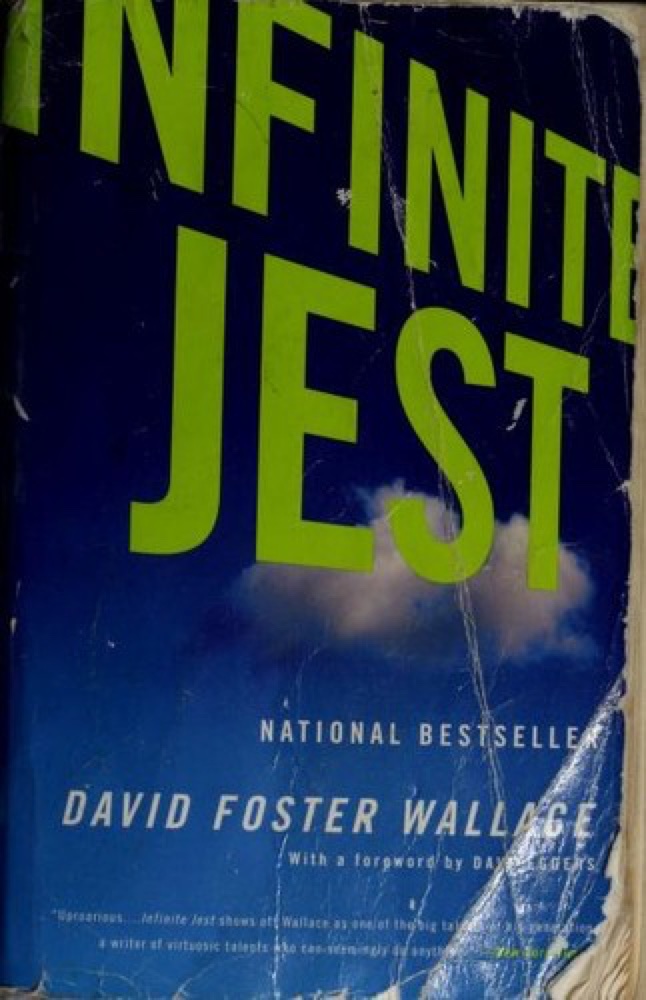 Infinite Jest
 No One Writes Back
 The Magus
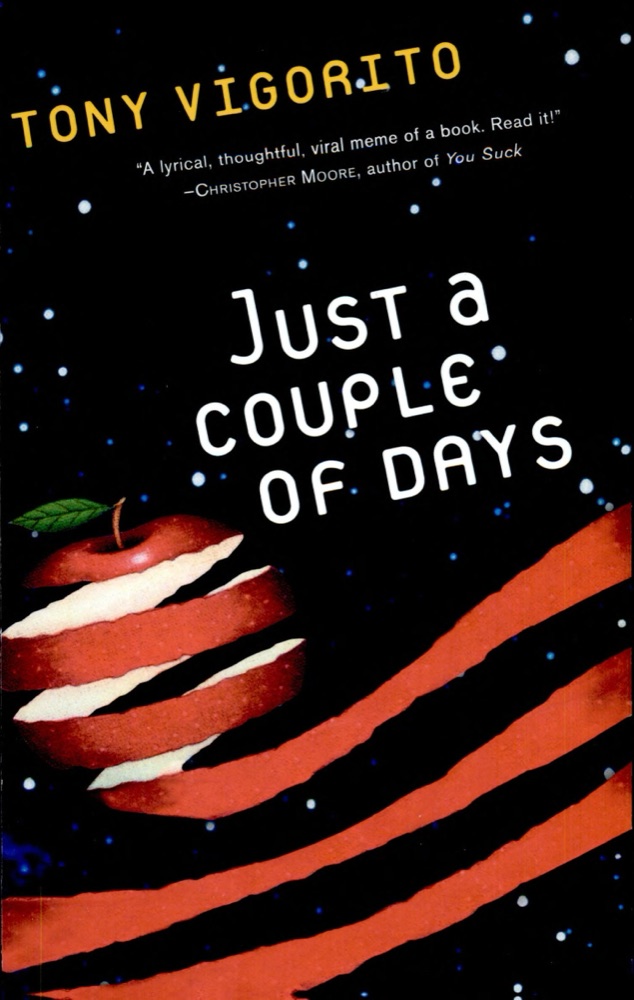 Just a Couple of Days
 Trust
Trust
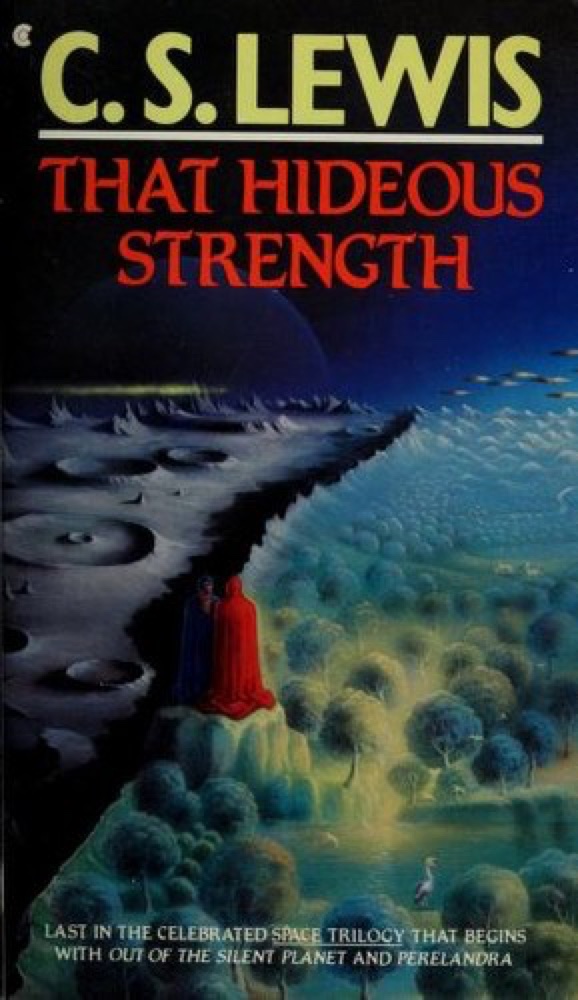 That Hideous Strength
 What I Loved
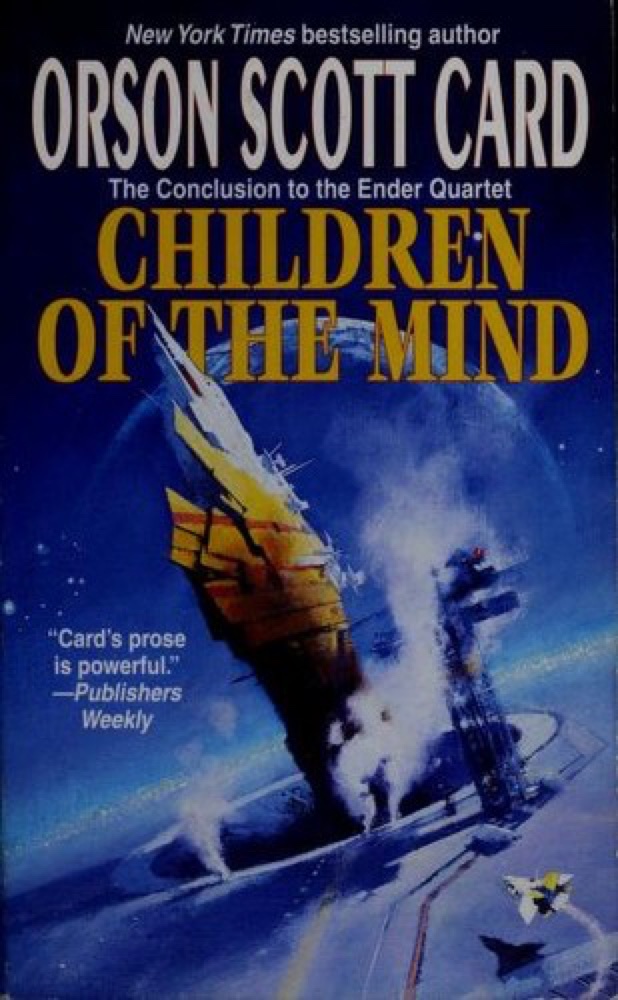 Children of the Mind
 Flights
 The Stone Gods
 Eyeless in Gaza
 Speak
Speak
 The Adolescent
 Nutshell
 Nod
Nod
 Outline
 Biography of X
 A Luminous Republic
 The Stories of Vladimir Nabokov
 The Notebooks of Malte Laurids Brigge
 Summertime
 In the Dream House
 My Friends
 The Book That Broke the World
 The Hundred Secret Senses
 The Guermantes Way
 The Friend
![What Was She Thinking? [Notes on a Scandal]](/i/book/g/08/what-was-she-thinking-notes-on-a-scandal.jpg) What Was She Thinking? [Notes on a Scandal]
What Was She Thinking? [Notes on a Scandal]
 The Story of My Experiments With Truth
 Diary of a Drug Fiend