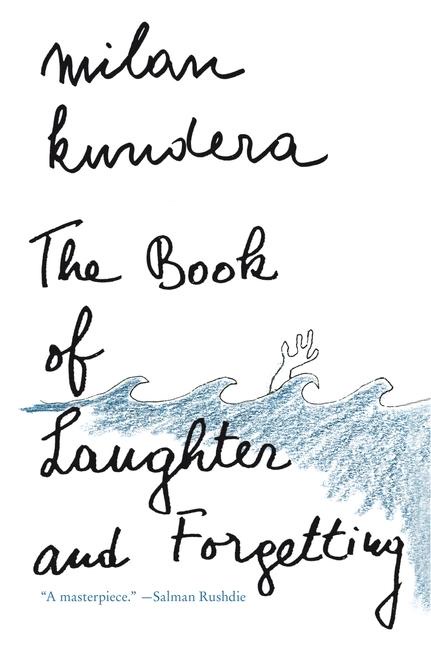
 The Book of Laughter and Forgetting
Quotes from the Book
Man proceeds in the fog. But when he looks back to judge people of the past, he sees no fog on their path. From his present, which was their faraway future, their path looks perfectly clear to him, good visibility all the way. Looking back, he sees the path, he sees the people proceeding, he sees their mistakes, but not the fog.
39
Orwell's 1984 [...] is political thought disguised as a novel; the thinking is certainly lucid and correct, but it is distorted by its guise as a novel, which renders it imprecise and vague. [...] the situations and the characters are as flat as a poster. The pernicious influence of Orwell's novel resides in its implacable reduction of a reality to its political dimension alone, and in its reduction of that dimension to what is exemplarily negative about it. I refuse to forgive this reduction on the grounds that it was useful as propaganda in the struggle against totalitarian evil. For that evil is, precisely, the reduction of life to politics and of politics to propaganda. So despite its intentions, Orwell's novel itself joins in the totalitarian spirit, the spirit of propaganda. It reduces (and teaches others to reduce) the life of a hated society to the simple listing of its crimes.
9
Suspending moral judgment is not the immorality of the novel; it is its morality. The morality that stands against the ineradicable human habit of judging instantly, ceaselessly, and everyone; of judging before, and in the absence of, understanding. From the viewpoint of the novel's wisdom, that fervid readiness to judge is the most detestable stupidity, the most pernicious evil. Not that the novelist utterly denies that moral judgment is legitimate, but that he refuses it a place in the novel. If you like, you can accuse Panurge of cowardice, accuse Emma Bovary, accuse Rastignac—that's your business; the novelist has nothing to do with it.
6
Humor: the divine flash that reveals the world in its moral ambiguity and man in his profound incompetence to judge others; humor: the intoxicating relativity of human things; the strange pleasure that conies of the certainty that there is no certainty. But humor, to recall Octavio Paz, is "the great invention of the modern spirit." It has not been with us forever, and it won't be with us forever either. With a heavy heart, I imagine the day when Panurge no longer makes people laugh.
4
For a translator, the supreme authority should be the author's personal style. But most translators obey another authority: that of the conventional version of “good French” (or good German, good English, et cetera), namely, the French (the German, et cetera) we learn in school. The translator considers himself the ambassador from that authority to the foreign author. That is the error: every author of some value transgresses against “good style,” and in that transgression lies the originality (and hence the raison d'être) of his art. The translator's primary effort should be to understand that transgression. This is not difficult when it is obvious, as for example with Rabelais, or Joyce, or Celine. But there are authors whose transgression against “good style” is subtle, barely visible, hidden, discreet; as such, it is not easy to grasp. In such a case, it is all the more important to do so.
3
Through ecstasy, emotion reaches its climax, and thereby at the same time its negation (its oblivion). Ecstasy means being "outside oneself," as indicated by the etymology of the Greek word: the act of leaving one's position (stasis). To be "outside oneself" does not mean outside the present moment, like a dreamer escaping into the past or the future. Just the opposite: ecstasy is absolute identity with the present instant, total forgetting of past and future. If we obliterate the future and the past, the present moment stands in empty space, outside life and its chronology, outside time and independent of it (this is why it can be likened to eternity, which too is the negation of time). [...] Man desires eternity, but all he can get is its imitation: the instant of ecstasy. [...] Living is a perpetual heavy effort not to lose sight of ourselves, to stay solidly present in ourselves, in our stasis. Step outside ourselves for a mere instant, and we verge on death's dominion.
2
I have always, deeply, violently, detested those who look for a position (political, philosophical, religious, whatever) in a work of art rather than searching it for an effort to know, to understand, to grasp this or that aspect of reality. Until Stravinsky, music was never able to give barbaric rites a grand form. We could not imagine them musically. Which means: we could not imagine the beauty of the barbaric. Without its beauty, the barbaric would remain incomprehensible. (I stress this: to know any phenomenon deeply requires understanding its beauty, actual or potential.) Saying that a bloody rite does possess some beauty—there's the scandal, unbearable, unacceptable. And yet, unless we understand this scandal, unless we get to the very bottom of it, we cannot understand much about man. Stravinsky gives the barbaric rite a musical form that is powerful and convincing but does not lie: listen to the last section of the Sacre, the "Danse sacrale" ("Sacrificial Dance"): it does not dodge the horror. It is there. Merely shown? Not denounced? But if it were denounced—stripped of its beauty, shown in its hideousness—it would be a cheat, a simplification, a piece of "propaganda." It is because it is beautiful that the girl's murder is so horrible.
1
Suspender el juicio moral no es lo inmoral de la novela, es su moral. La moral que se opone a la indesarraigable práctica humana de juzgar enseguida, continuamente, y a todo el mundo, de juzgar antes y sin comprender. Esta ferviente disponibilidad para juzgar es, desde el punto de vista de la sabiduría de la novela, la más detestable necedad, el mal más dañino. No es que el novelista cuestione, de un modo absoluto, la legitimidad del juicio moral, sino que lo remite más allá de la novela. Allá, si le place, acuse usted a Panurgo por su cobardía, acuse a Emma Bovary, acuse a Rastignac, es asunto suyo; el novelista ya ni pincha ni corta. La creación del campo imaginario en el que se suspende el juicio moral fue una hazaña de enorme alcance: sólo en él pueden alcanzar su plenitud los personajes novelescos, o sea individuos concebidos no en función de una verdad preexistente, como ejemplos del bien o del mal, o como representaciones de leyes objetivas enfrentadas, sino como seres autónomos que se basan en su propia moral, en sus propias leyes. La sociedad occidental ha adquirido la costumbre de presentarse como la sociedad de los derechos del hombre; pero, antes de que un hombre pudiera tener derechos, tuvo que constituirse en individuo, considerarse como tal y ser considerado como tal; esto no habría podido producirse sin una larga práctica de las artes europeas y de la novela en particular, que enseña al lector a sentir curiosidad por el otro y a intentar comprender las verdades que difieren de las suyas.
An important note: imitation does not mean lack of authenticity, for the individual cannot do otherwise than imitate what has already happened, sincere as he may be, he is only a reincarnation, truthful as he may be, he is only a sum of the suggestions and requirements that emanate from the well of the past.
Imitation does not mean lack of authenticity, for the individual cannot do otherwise and imitate what has already happened; sincere as he may be, he is only a reincarnation; truthful as he may be, he is only a sum of the suggestions and requirements that emanate from the well of the pass.
novel: the realm where moral judgement is suspended. Suspending moral judgement is not the immorality of the novel; it is its morality. The morality that stands against the ineradicable human habit of judging instantly, ceaselessly, and everyone; of judging before, and in the absence of, understanding. the art of the novel, which teaches the reader to be curious about others and to try to comprehend truths that differ from his own.
De man-met-vaste-overtuigingen; politici noemen zichzelf graag zo; maar wat is een overtuiging? Dat is een denken dat tot stilstand is gekomen, verstard is, en de man-met-vaste-overtuigingen is een geborneerde man; het experimentele denken wenst niet te overtuigen, maar te inspireren; te inspireren tot een ander denken, het denken in beweging te zetten; daarom moet een romanschrijver zijn denken systematisch onsystemetiseren, schoppen tegen barricaden die hij zelf rond zijn ideeën heeft opgericht.
Daarom betekende romanschrijver zijn voor mij meer dan het beoefenen van een van de vele 'literaire genres'; het was een houding, een weten, een positie, een positie die elke identificatie met een politiek, met een religie, met een ideologie, met een moraal of een collectiviteit uitslot; een bewuste, hardnekkige, woedende niet-identificatie, niet opgevat als ontsnapping of passiviteit, maar als verzet, als uitdaging, als revolte.
Op het toneel: de dialoog moet de toeschouwer een zo begrijpelijk en helder mogelijk idee verschaffen van het dramatisch conflict van de personages; in werkelijkheid: de persoanges die met elkaar praten, kennen elkaar en weten waarover ze het hebben; daardoor is hun dialoog voor een derde nooit helemaal begrijpelijk; hij blijft raadeslachtig, als het dunne oppervlak van het gezegde boven de onmetelijkheid vna het ongezegde.
Ik denk.' Nietzsche trekt deze bewering, gedicteerd door een grammaticale conventie die eist dat elk werkwoord een onderwerp heeft, in twijfel. In feite, zegt hij, 'komt een gedachte wanneer 'zij' wil, zodanig dat het een vervalsing van de feiten is om te zeggen: het subject 'ik' is de voorwaarde van het predikaat 'denk'. Een gedachte komt tot de filosoof 'van buitenaf, uit de hoogte of uit de diepte, als gebeurtenissen of bliskemschichten die voor hem bestemd zijn'.
Imitatie betekent geen gebrek aan authenticiteit, want het individu kan niet anders dan imiteren wat al heeft plaats gevonden; hoe oprecht hij ook is, hij is slechts een resultante van de suggesities en aanmaningen die voortkomen uit de put van het verleden.
Watch on YouTube
About Milan Kundera
We have collected 272 quotes from 13 books by Milan Kundera on BookQuoters.
More about the author →More by Milan Kundera
All books by Milan Kundera →
About the book
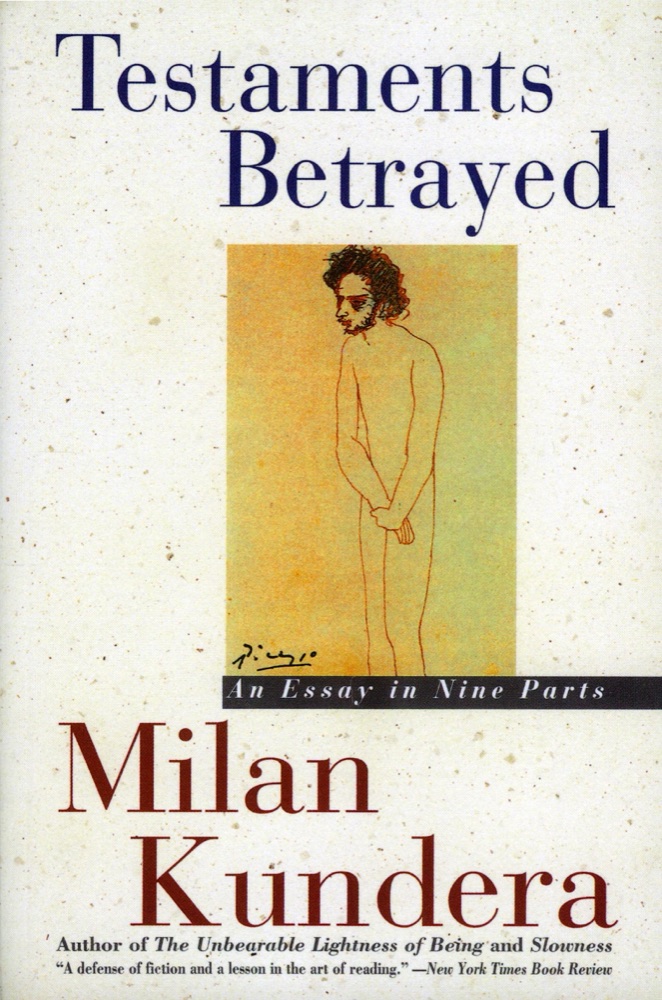
Cu cât un scriitor sau un compozitor e mai mare, cu atât crește și tentația interpretărilor abuzive: posteritatea riscă să-i falsifice opera de dragul scandalului biografic sau pentru a se conforma clișeelor artistice în vigoare. Aceasta e tema pe care Kundera o dezvoltă în variațiuni în Testamente trădate, urmărind în paralel evoluția romanului și a muzicii, iar exemplele sale țin de răscrucea artistică a secolului XX. Criticii pot ignora ce e pur și simplu literatură într-o povestire de Hemingway doar pentru a o citi în cheia vieții scriitorului, dirijorii pot opera tăieturi în compozițiile lui Stravinski fiindcă așa li se pare lor că „sună“ mai bine. Cele mai pregnante exemple invocate de Kundera sunt însă Kafka și Janácek: amândoi îi datorează enorm lui Max Brod, amândoi au fost trădați (în spiritul artei lor) de același Max Brod, cu cele mai bune intenții și cu totală neînțelegere.
Book details
- First published
- 1993
- Author
- Milan Kundera
- Genre
- Nonfiction
- Goodreads rating
- 4.05 (3k ratings)
Keep reading
 The Temptation to Exist
 The Curtain: An Essay in Seven Parts
 Twilight of the Idols/The Anti-Christ
 The Art of the Novel
 The Genius and the Goddess: a Novel
 Daybreak: Thoughts on the Prejudices of Morality
 Diary of a Bad Year
 Doctor Faustus
 A Thousand Plateaus: Capitalism and Schizophrenia
 Literary Theory: An Introduction
 Old Masters: A Comedy
 The Big Green Tent
 Ficciones
 De Profundis and Other Writings
 Brodeck
 Basic Writings of Nietzsche
 Dear Mr. M
 The Kreutzer Sonata
 The Scent of Time: A Philosophical Essay on the Art of Lingering
 The Mind of the Maker: Dorothy L. Sayers' Witty Classic on the Trinity, Christianity, and Human Creativity
 The Captive Mind
 Truth and Method
 Sculpting in Time
 After Virtue
 Travels with Herodotus
 Elizabeth Costello
 The Ego and Its Own
 Eyeless in Gaza
 The Age of Absurdity: Why Modern Life makes it Hard to be Happy
 G.
G.
 Heretics
 Gargantua and Pantagruel
 Death in the Afternoon
 From Dawn to Decadence: 500 Years of Western Cultural Life, 1500 to the Present
 Cultural Amnesia: Necessary Memories from History and the Arts
 The Perennial Philosophy
 The Dwarf
 Identity
 Selections from the Prison Notebooks
 Soul Mountain
 The Discovery of Heaven
 Phaedo
 Minima Moralia: Reflections on a Damaged Life
 The Floating Opera
 The Little Virtues
 How to Be a Stoic: Using Ancient Philosophy to Live a Modern Life
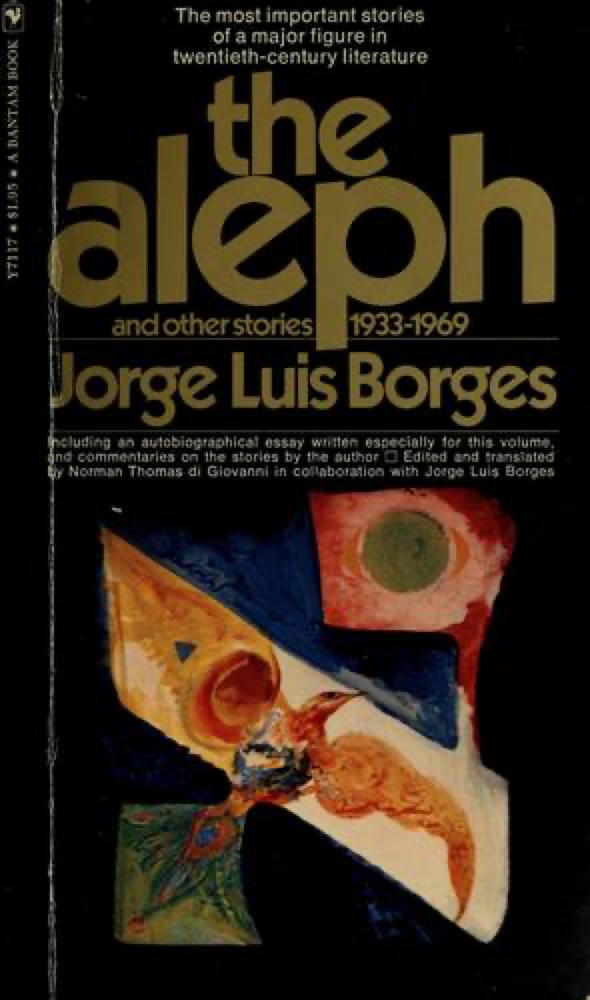 The Aleph and Other Stories
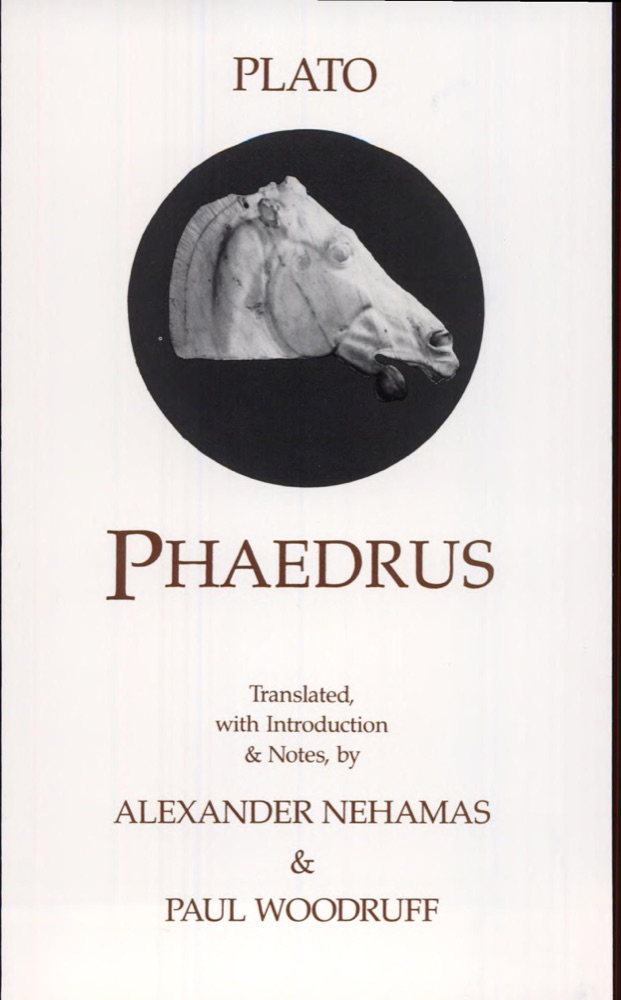 Phaedrus
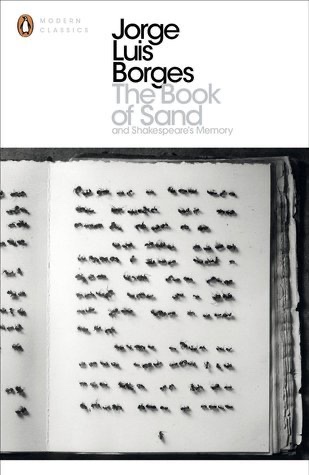 The Book of Sand and Shakespeare's Memory
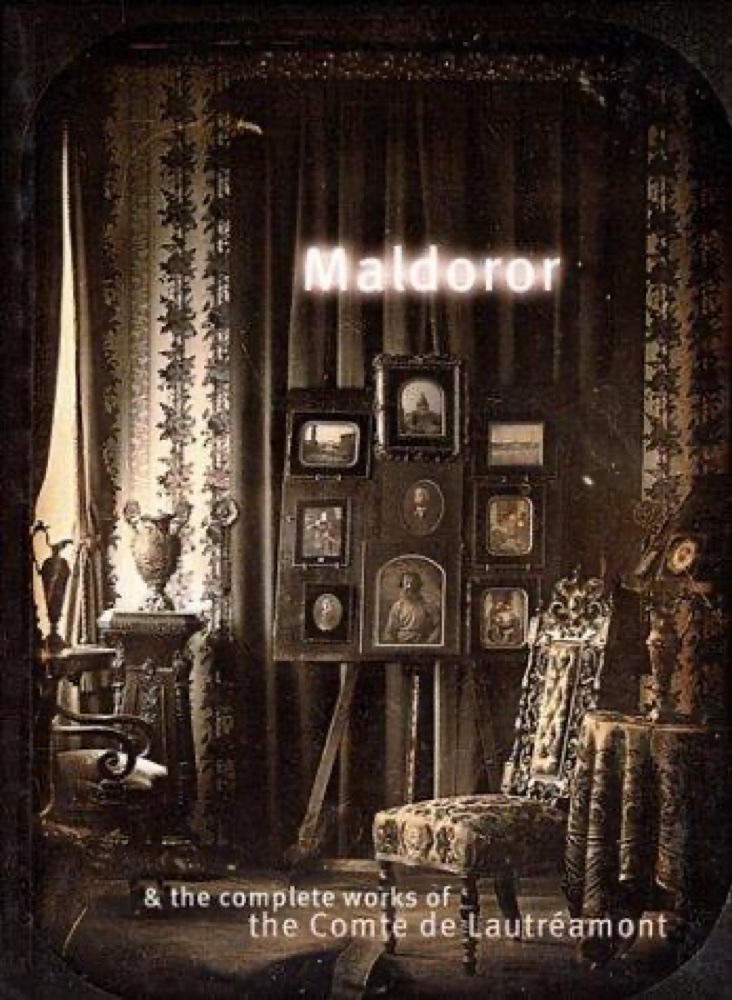 Maldoror and the Complete Works
 The Labyrinth of Solitude and Other Writings
 Max Havelaar, or the Coffee Auctions of the Dutch Trading Company
 Buddenbrooks: The Decline of a Family
 Memories, Dreams, Reflections
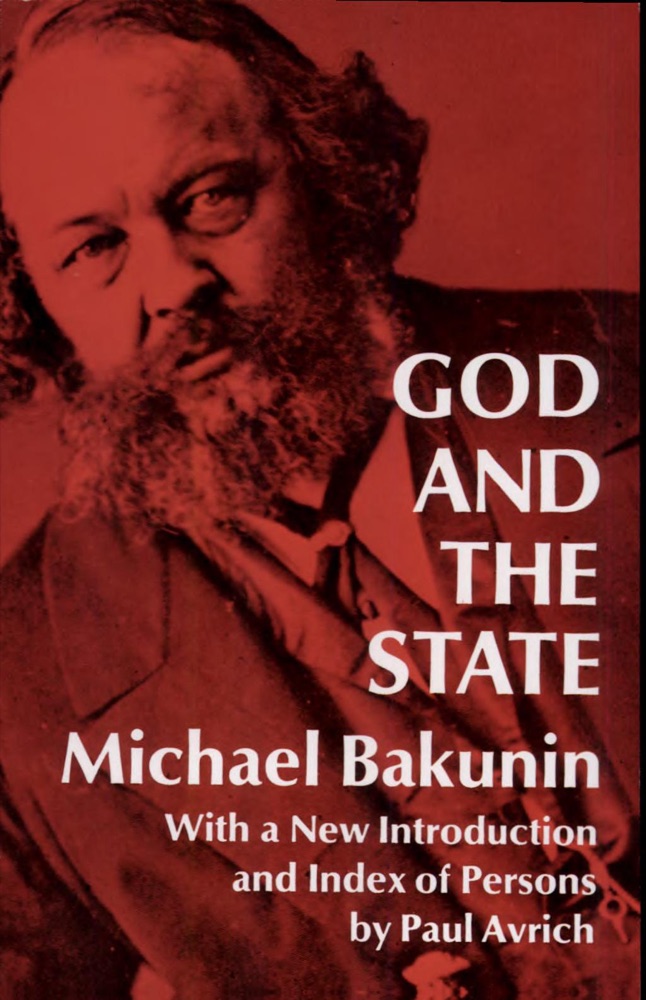 God and the State
 Tragic Sense of Life
 The Crisis of the Modern World
 Psychology and Religion
 Doctor Glas