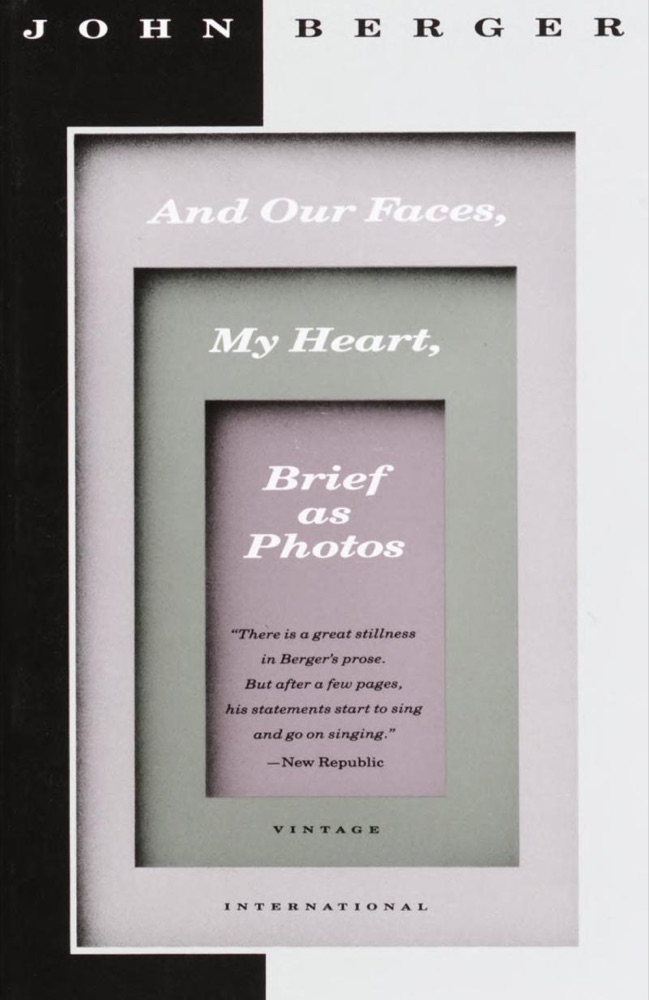
 And Our Faces, My Heart, Brief as Photos
Quotes from the Book
Of the reality of politics most of the crowd are ignorant. Politics are the means by which they are kept suppressed and impoverished. Politics are the means by which they are deceived and disarmed. Politics is the State which oppresses them. In the heart of each there is a desire to challenge the entire political armoury of their oppressors with the single and simple weapon of justice: the justice of their own cause, crying out to the sky above Milan and to the future. Yet justice implies a judge. And there is no judge and no judgement.
2
You were like no man I had ever heard of. You could have made whatever you liked of me. But you did nothing. A woman isn't like money that put in a bank and it will bring you interest without you doing anything about it. A woman is a person.
2
To be mounted is already to be a master, a knight. To represent the noble (in the ethical as well as the social sense). To vanquish. To feature, however modestly, in the annals of battle. Honour begins with a man and a horse.
1
A line of cavalry approaches. The nearest horse rears above a huddled group. The boy has never as yet seen from the ground a horse used as a weapon. Like his uncle he has always been a rider. The under-side of a rearing horse seen from below is awful in a very particular way. The body is large and heavy with four metal-shod hooves on legs whose pounding power is utterly evident. But the physical threat is compounded with something else. The horse too is made of sinews, bones, flesh and blood. It is breathing hard and is frightened. The rider’s violence has already distorted its nature. The horse shares your defencelessness as it is about to crush you. It is as though your fear has uncontrollably entered the horse which threatens you.
1
They try to talk but the boy understands nothing. The young man puts his arm round the boy’s shoulders. Within a few seconds his whole attitude is reversed. If the boy cannot understand their language, he is immune to the hypocrisy of deception of words and thus can be the pure witness of their actions. The boy’s wordlessness now appears to him, in an unclear paradoxical way, to be comparable with the universality of the Revolution in which he believes. He calls to his sister in a nearby group of mill-girls: Come and meet our pulcino, he says. Ecco il nostro pulcino.
1
Falling in love at five or six, although rare, is the same as falling in love at fifty. One may interpret one's feelings differently, the outcome may be different, but the state of feeling and of being is the same.
1
Some say of my writing that it is too overburdened with metaphor and simile: that nothing is ever what it is but is always something else. This is true, but why is it so? Whatever I perceive or imagine amazes me by its particularity. The qualities it has in common with other things—leaves, a trunk, branches, if it is a tree: limbs, eyes, hair, if it is a person—appear to me to be superficial. I am deeply struck by the uniqueness of each event. From this arises my difficulty as a writer—perhaps the magnificent impossibility of my being a writer. How am I to convey such uniqueness? The obvious way is to establish uniqueness through development. To persuade you, for example, of the uniqueness of Leonie’s experience by telling you the story of what happened when Eduard discovered that Leonie had been unfaithful to him. In this way the uniqueness of an event can be explained by its causes and effects. But I have little sense of unfolding time. The relations which I perceive between things—and these often include casual and historical relations—tend to form in my mind a complex synchronic pattern. I see fields where others see chapters. And so I am forced to use another method to try to place and define events. A method which searches for co-ordinates extensively in space, rather than consequentially in time. I write in the spirit of a geometrician. One of the ways in which I establish co-ordinates extensively is by likening aspect to aspect, by way of metaphor. I do not wish to become a prisoner of the nominal, believing that things are what I name them. On the bed they were not such prisoners.
At the age of fourteen his face was no longer that of a child. The change is sometimes thought of as a coarsening process; this misses the point. The change—which may occur any time between fourteen and twenty-four—involves a simultaneous gain and loss in expressiveness. The texture of the skin, the form of the flesh over the bones, become mute; their appearance becomes a covering, whereas in childhood it is a declaration of being. (Compare our response to children and to adults: we give to the existence of children the value we give to the intentions of adults.) However, the openings in the covering—especially the eyes and mouth—become more expressive, precisely because they now offer indications of what lies hidden behind.
Kadınlar, başkalarının yanında her zaman odak dışında görünürlerdi ona. İlgisini onlarda yoğunlaştıramadığından değil, kadınların çevredekilerin baskılarına ve beklentilerine uyup sürekli olarak yüz değiştirmelerinden.
The great pole of history is notched across at the same point as the small stick of one’s own life.
About John Berger
We have collected 61 quotes from 4 books by John Berger on BookQuoters.
More about the author →More by John Berger
About the book
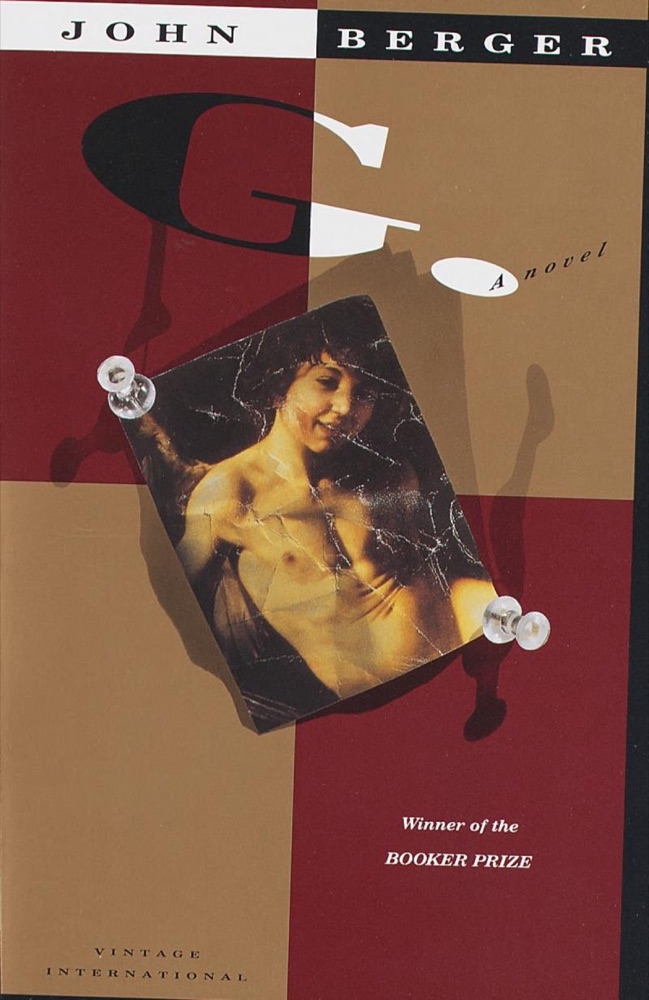
In this luminous novel — winner of Britain's prestigious Booker Prize — John Berger relates the story of "G.," a young man forging an energetic sexual career in Europe during the early years of the last century. With profound compassion, Berger explores the hearts and minds of both men and women, and what happens during sex, to reveal the conditions of the Don Juan's success: his essential loneliness, the quiet cumulation in each of his sexual experiences of all of those that precede it, the tenderness that infuses even the briefest of his encounters, and the way women experience their own extraordinariness through their moments with him. All of this Berger sets against the turbulent backdrop of Garibaldi and the failed revolution of Milanese workers in 1898, the Boer War, and the first flight across the Alps, making G. a brilliant novel about the search for intimacy in history's private
Book details
- First published
- 1972
- Author
- John Berger
- Genre
- Fiction
- Goodreads rating
- 3.72 (5k ratings)
Keep reading
 Identity
 Sword & Citadel
 The Human Stain
 The Elementary Particles
 The Joke
 The Fencing Master
 Selected Stories
 The Dwarf
 Sexus
Sexus
 Dust of Dreams
 Selected Stories of Anton Chekhov
 Wolf Hall
 Girl with Curious Hair
 Arch of Triumph
 Nutshell
 The Memoirs of Cleopatra
 All the King's Men
 Fall of Light
 Oblomov
 Arm of the Sphinx
 The Post-Birthday World
 Dear Mr. M
 Ninety-Three
 Just Above My Head
 Complete Works of Oscar Wilde
 Flight To Arras
 Black Lamb and Grey Falcon
 Either/Or: A Fragment of Life
 Cocaine
 Shōgun
 Stories of Your Life and Others
 Embers
 Hitch-22: A Memoir
 A Soldier of the Great War
 The Fall
 The Volcano Lover: A Romance
And Our Faces, My Heart, Brief as Photos
The Volcano Lover: A Romance
And Our Faces, My Heart, Brief as Photos
 The Lives of Others
 Creation Lake
 Varina
 The Good Soldier
 The Adolescent
 The Ides of March
 Moth Smoke
 Eyeless in Gaza
 The Left Hand of Darkness
 The Aleph and Other Stories
 Soul Mountain
 All That I Am
 Letter to a Child Never Born
 A Tale of Love and Darkness
 You Can't Go Home Again
 A Luminous Republic
 The Fountainhead
 If This Is a Man / The Truce
 The Magus
 The Hangman's Replacement: Sprout of Disruption
 The Blue Flower
 A Moth to a Flame
 One Man's Meat