
 The Omnivore's Dilemma: A Natural History of Four Meals
Quotes from the Book
A garden should make you feel you've entered privileged space -- a place not just set apart but reverberant -- and it seems to me that, to achieve this, the gardener must put some kind of twist on the existing landscape, turn its prose into something nearer poetry.
75
Anthropocentric as [the gardener] may be, he recognizes that he is dependent for his health and survival on many other forms of life, so he is careful to take their interests into account in whatever he does. He is in fact a wilderness advocate of a certain kind. It is when he respects and nurtures the wilderness of his soil and his plants that his garden seems to flourish most. Wildness, he has found, resides not only out there, but right here: in his soil, in his plants, even in himself... But wildness is more a quality than a place, and though humans can't manufacture it, they can nourish and husband it... The gardener cultivates wildness, but he does so carefully and respectfully, in full recognition of its mystery.
41
Seeds have the power to preserve species, to enhance cultural as well as genetic diversity, to counter economic monopoly and to check the advance of conformity on all its many fronts.
31
Tree planting is always a utopian enterprise, it seems to me, a wager on a future the planter doesn't necessarily expect to witness.
28
The green thumb is equable in the face of nature's uncertainties; he moves among her mysteries without feeling the need for control or explanations or once-and-for-all solutions. To garden well is to be happy amid the babble of the objective world, untroubled by its refusal to be reduced by our ideas of it, its indomitable rankness.
25
Mowing the lawn, I felt like I was battling the earth rather than working it; each week it sent forth a green army and each week I beat it back with my infernal machine. Unlike every other plant in my garden, the grasses were anonymous, massified, deprived of any change or development whatsoever, not to mention any semblance of self-determination. I ruled a totalitarian landscape. Hot monotonous hours behind the mower gave rise to existential speculations. I spent part of one afternoon trying to decide who, it the absurdist drama of lawn mowing, was Sisyphus. Me? The case could certainly be made. Or was it the grass, pushing up through the soil every week, one layer of cells at a time, only to be cut down and then, perversely, encouraged (with lime, fertilizer, etc.) to start the whole doomed process over again? Another day it occurred to me that time as we know it doesn't exist in the lawn, since grass never dies or is allowed to flower and set seed. Lawns are nature purged of sex or death. No wonder Americans like them so much.
22
In the same way that the picturesque designers were always careful to include some reminder of our mortality in their gardens -- a ruin, sometimes even a dead tree -- the act of leaving parts of the garden untended, and calling attention to its margins, seems to undermine any pretense to perfect power or wisdom on the part of the gardener. The margins of our gardens can be tropes too, but figures of irony rather than transcendence -- antidotes, in fact, to our hubris. It may be in the margins of our gardens that we can discover fresh ways to bring our aesthetics and our ethics about the land into some meaningful alignment.
19
Of the seven deadly sins, surely it is pride that most afflicts the gardener.
10
We are at once the problem and the only possible solution to the problem.
10
All the accomplished gardeners I know are surprisingly comfortable with failure. They may not be happy about it, but instead of reacting with anger or frustration, they seem freshly intrigued by the peony that, after years of being taken for granted, suddenly fails to bloom. They understand that, in the garden at least, failure speaks louder than success. By that I don’t mean that the gardener encounters more failure than success (though in some years he will), only that his failures have more to say to him—about his soil, the weather, the predilections of local pests, the character of his land. The gardener learns nothing when his carrots thrive, unless that success is won against a background of prior disappointment. Outright success is dumb, disaster frequently eloquent. At least to the gardener who knows how to listen.
9
Lawns are a form of television
9
Much of gardening is a return, an effort at recovering remembered landscapes.
4
The more serious about gardening I became, the more dubious lawns seemed. The problem for me was not, as it was for my father, the relation to my neighbors that a lawn implied; it was the lawn’s relationship to nature. For however democratic a lawn may be with respect to one’s neighbors, with respect to nature it is authoritarian. Under the mower’s brutal indiscriminate rotor, the landscape is subdued, homogenized, dominated utterly. I became convinced that lawn care had about as much to do with gardening as floor waxing, or road paving. Gardening was a subtle process of give and take with the landscape, a search for some middle ground between culture and nature. A lawn was nature under culture’s boot. Mowing the lawn, I felt like I was battling the earth rather than working it; each week it sent forth a green army and each week I beat it back with my infernal machine. Unlike every other plant in my garden, the grasses were anonymous, massified, deprived of any change or development whatsoever, not to mention any semblance of self-determination. I ruled a totalitarian landscape. Hot monotonous hours behind the mower gave rise to existential speculations. I spent part of one afternoon trying to decide who, in the absurdist drama of lawn mowing, was Sisyphus. Me? A case could certainly be made. Or was it the grass, pushing up through the soil every week, one layer of cells at a time, only to be cut down and then, perversely, encouraged (with fertilizer, lime, etc.) to start the whole doomed process over again? Another day it occurred to me that time as we know it doesn’t exist in the lawn, since grass never dies or is allowed to flower and set seed. Lawns are nature purged of sex and death. No wonder Americans like them so much.
3
Improving the soil improved the man.
3
worshippers of the market are a bit more realistic than worshippers of nature: they long ago stopped relying on the free market to supply us with such necessities as food and shelter. Though they don’t like to talk about it much, they accept the need for society to “garden” the market.)
2
To plant trees,” Russell Page wrote in his memoir, “is to give body and life to one’s dreams of a better world.
2
we need, and now more than ever, to learn how to use nature without damaging it.
2
What memoir of childhood doesn't at some point turn on the scent of a sweet pea or a freshly cut lawn or a boxwood hedge, to leap the fence of years?
2
Lawns are nature purged of sex or death. No wonder Americans like them so much.
1
The gardener learns nothing when his carrots thrive, unless that success is won against a background of prior disappointment. Outright success is dumb, disaster frequently eloquent.
1
Weeds, as the field guides indicate, are plants particularly well adapted to man-made places. They don’t grow in forests or prairies—in “the wild.” Weeds thrive in gardens, meadows, lawns, vacant lots, railroad sidings, hard by dumpsters and in the cracks of sidewalks. They grow where we live, in other words, and hardly anywhere else.
1
Lawns are a form of television.
1
Among the many, many things the green thumb knows is the consolation of the compost pile, where nature, ever obliging, redeems this season’s deaths and disasters in the fresh promise of next spring.
1
Gardening was a subtle process of give and take with the landscape, a search for some middle ground between culture and nature.
1
A single unmowed lawn ruins the whole effect, announcing to the world that all is not well here in utopia.
1
The garden is an unhappy place for the perfectionist. Too much stands beyond our control here, and the only thing we can absolutely count on is eventual catastrophe.
1
It’s astonishing, actually, how much anger an animal’s assault on your garden can incite.
1
It is too late in the day-there are simply too many of us now-to follow Thoreau into the woods, to look to nature to somehow cure or undo culture.
1
The gardener feels he has a legitimate quarrel with nature— with her weeds and storms and plagues, her rot and death. What’s more, that quarrel has produced much value, not only in his own time here (this garden, these fruits), but over the whole Western History. Civilization itself, as Freud and Frazer and many others have observed, is the product of that quarrel. But at the same time, the gardener appreciates that it would probably not be in his interest, or in nature’s, to push his side of the argument too hard. Many points of contention that humankind thought it had won— DDT’s victory over insects, say, or medicine’s conquest over infectious disease— turned out to be Pyrrhic or illusory triumphs. Better to keep the quarrel going, the good gardener reasons, than to reach for outright victory, which is dangerous in the attempt and probably impossible anyway.
And yet I know there have been moments when I've seen my garden as the green thumb would, times when I've moved among my plants with ease. There is a mood that sometimes overtakes you in the garden, a form of consciousness, even, that feels like nothing so much as a waking dream.
Watch on YouTube
About Michael Pollan
We have collected 182 quotes from 7 books by Michael Pollan on BookQuoters.
More about the author →More by Michael Pollan
The Omnivore's Dilemma: A Natural History of Four Meals
 The Botany of Desire: A Plant's-Eye View of the World
 In Defense of Food: An Eater's Manifesto
 How to Change Your Mind: The New Science of Psychedelics
About the book
In his articles and in best-selling books such as The Botany of Desire, Michael Pollan has established himself as one of our most important and beloved writers on modern man's place in the natural world. A new literary classic, Second Nature has become a manifesto not just for gardeners but for environmentalists everywhere. "As delicious a meditation on one man's relationships with the Earth as any you are likely to come upon" (The New York Times Book Review), Second Nature captures the rhythms of our everyday engagement with the outdoors in all its glory and exasperation. With chapters ranging from a reconsideration of the Great American Lawn, a dispatch from one man's war with a woodchuck, to an essay about the sexual politics of roses, Pollan has created a passionate and eloquent argument for reconceiving our relationship with nature.
Book details
- First published
- 1991
- Author
- Michael Pollan
- Genre
- Nonfiction
- Goodreads rating
- 3.93 (9k ratings)
Keep reading
 The Well-Gardened Mind: The Restorative Power of Nature
The Botany of Desire: A Plant's-Eye View of the World
The Well-Gardened Mind: The Restorative Power of Nature
The Botany of Desire: A Plant's-Eye View of the World
 A Sand County Almanac and Sketches Here and There
 Bringing it to the Table: On Farming and Food
 Pastoral Song: A Farmer’s Journey
 Feral: Rewilding the Land, the Sea and Human Life
 The One-Straw Revolution
 The World-Ending Fire: The Essential Wendell Berry
 The Overstory
 Gathering Moss: A Natural and Cultural History of Mosses
 Wilding
 The Nature Fix: Why Nature Makes Us Happier, Healthier, and More Creative
 The Secret Life of Plants: A Fascinating Account of the Physical, Emotional and Spiritual Relations Between Plants and Man
 The Light Eaters: How the Unseen World of Plant Intelligence Offers a New Understanding of Life on Earth
 Orwell's Roses
 Silent Spring
 Regenesis: Feeding the World Without Devouring the Planet
 Elizabeth and Her German Garden
 The Art of the Commonplace: The Agrarian Essays
 Small Wonder
 The Journey Home: Some Words in Defense of the American West
 Desert Solitaire
 The Forest Unseen: A Year’s Watch in Nature
 The Mushroom at the End of the World: On the Possibility of Life in Capitalist Ruins
 Arctic Dreams
 The Wild Places
 All We Can Save: Truth, Courage, and Solutions for the Climate Crisis
 Where the Bluebird Sings to the Lemonade Springs: Living and Writing in the West
 Walden & Civil Disobedience
 Folks, This Ain't Normal: A Farmer's Advice for Happier Hens, Healthier People, and a Better World
 Nature and Selected Essays
 Under a White Sky: The Nature of the Future
 On Trails: An Exploration
 The Orchid Thief: A True Story of Beauty and Obsession
 The Outermost House: A Year of Life on the Great Beach of Cape Cod
 Why Fish Don’t Exist: A Story of Loss, Love, and the Hidden Order of Life
 Seedfolks
 The Seed Keeper
 Semiosis
 Walking
 The Dirty Life: On Farming, Food, and Love
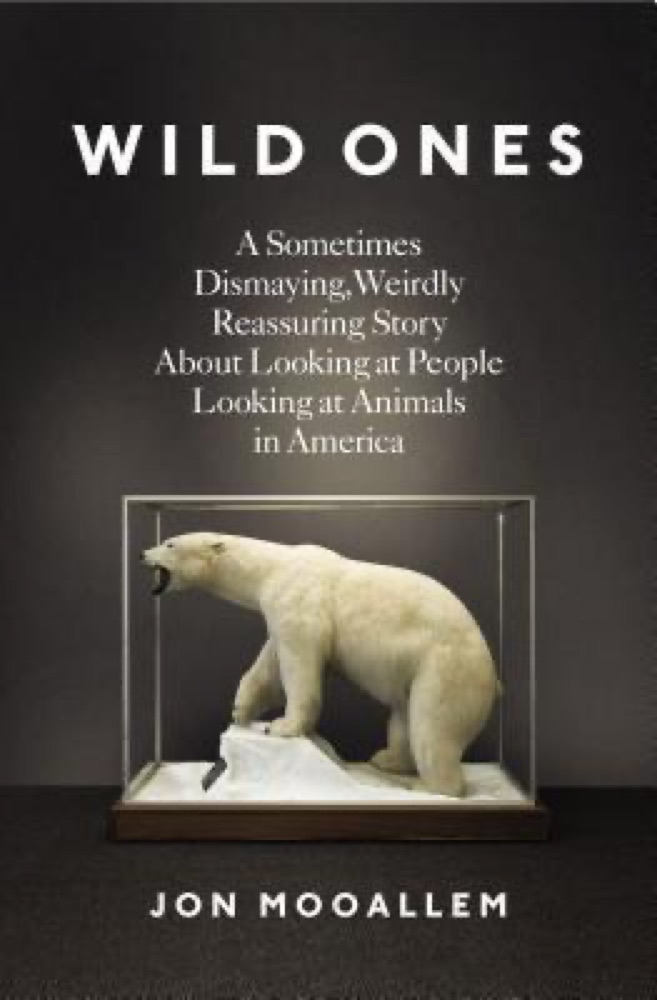 Wild Ones: A Sometimes Dismaying, Weirdly Reassuring Story About Looking at People Looking at Animals in America
 The Poison Diaries
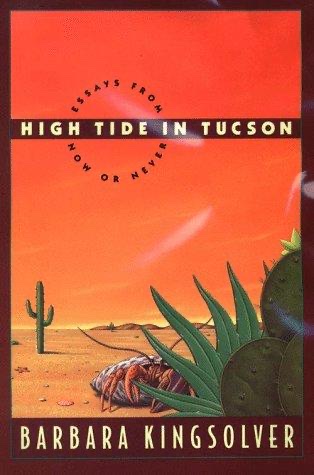 High Tide in Tucson
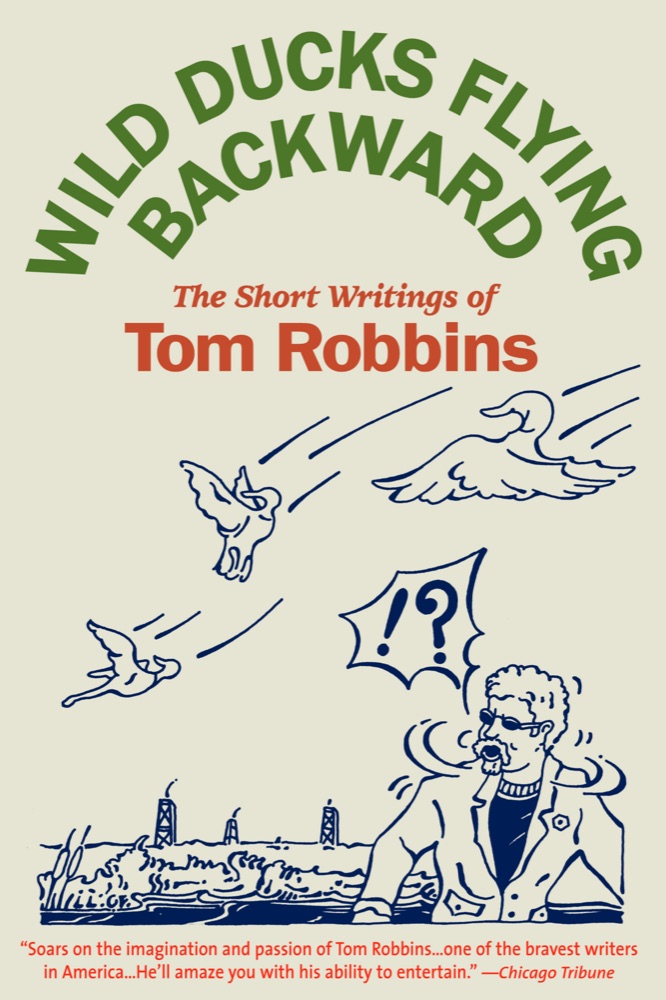 Wild Ducks Flying Backward
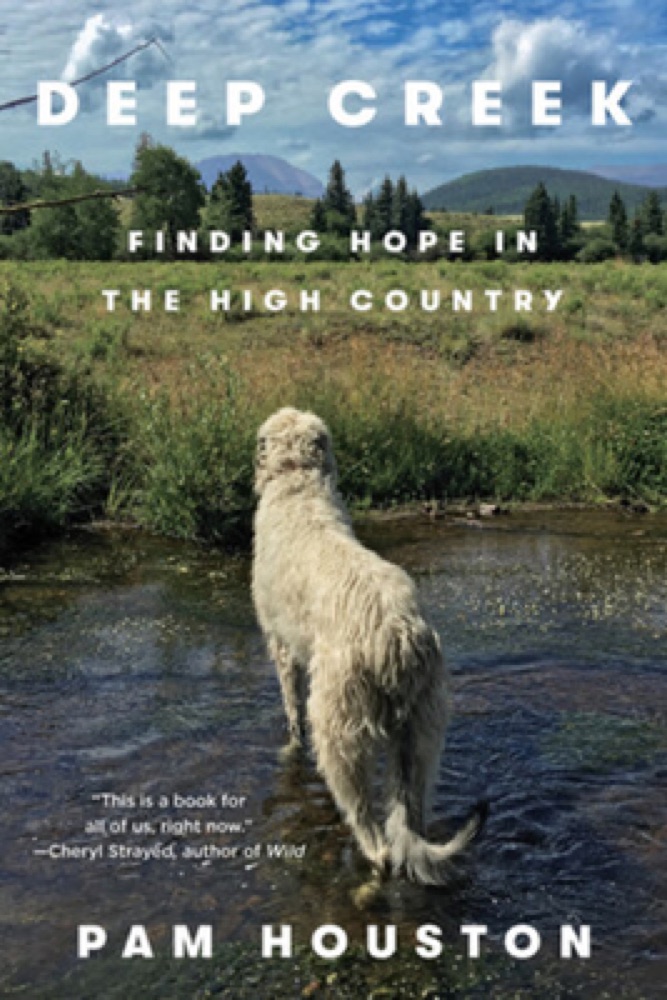 Deep Creek: Finding Hope in the High Country
 The Family Tree
 H is for Hawk
 A Life on Our Planet: My Witness Statement and a Vision for the Future
 The Third Plate: Field Notes on the Future of Food
 A Place of My Own: The Education of an Amateur Builder
 Villa Incognito
 Barkskins
 Essays of E.B. White
 The Solace of Open Spaces
 O Pioneers!
 Upstream: Selected Essays
 The Last American Man
 Animal, Vegetable, Miracle: A Year of Food Life