
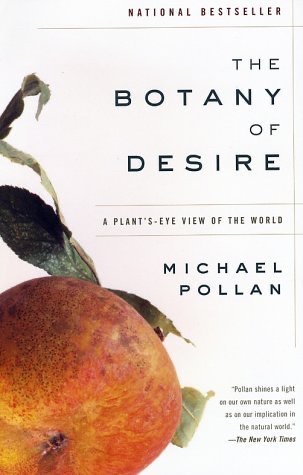
 The Botany of Desire: A Plant's-Eye View of the World
Quotes from the Book
The small pleasures of life are not so small really, it is just that we get into the habit of taking them for granted.
6
Gardening is about a balance of different forces, human and natural, life and death. When it comes to contemplating the inevitability of death, decay, and decomposition, however, much of the garden’s power derives from a direct and earthy engagement with it. If you are not a gardener, it may seem strange to think that scrabbling about in the soil can be a source of existential meaning, but gardening gives rise to its own philosophy, and it is one that gets worked out in the flower beds.
2
The eighteenth-century philosopher Immanuel Kant described how we love flowers “freely and on their own account.” Kant used flowers to illustrate his concept of “free” beauty, that is a form of beauty which we respond to regardless of utility or cultural value. Certainly, we know beauty when we see it. We recognize it as if something in us has been lying in wait for it. Beauty holds our gaze and saturates our awareness. Somehow the boundary between our self and the world shifts and we feel more alive in the moment of flourishing that it offers. Although the experience may be fleeting, beauty leaves a trace in the mind that survives its passing.
1
«La paz no es solo la ausencia de guerra, sino un estado positivo de afirmación [...], el jardín no representa solamente un refugio, una pausa, sino la afirmación de un estado ideal, un modelo que hay que emular».
1
«El goce de la belleza —escribió— se acompaña de una sensación particular, de suave efecto embriagador», y si bien la belleza no puede protegernos del sufrimiento, sí puede, según Freud, «resarcir de muchas cosas».
1
To look after a garden involves a kind of getting to know that is somehow always in process. It entails refining and developing an understanding of what works and what does not. You have to build a relationship with the place in its entirety – its climate, its soil, and the plants growing within it.
Transitional processes allow us to imaginatively endow the world and feel part of something larger than ourselves. They are central to children’s play, and in adult life they play a role in the creative arts and in religion.
All truly wise thoughts have been thought already thousands of times; but to make them truly ours, we must think them over again honestly, till they take root in our personal experience. Johann Wolfgang von Goethe
Flowers first appeared on the planet after the age of the dinosaurs
They are associated with our dopamine, serotonin, and endogenous opioid systems and damp down our fear and stress responses. Hence, beauty calms and revitalizes us at the same time.
What is the secret of beauty’s hold on us? Intuition suggests that it may be linked to our capacity to experience love, and research indicates that this is indeed the case.
Beauty holds our gaze and saturates our awareness. Somehow the boundary between our self and the world shifts and we feel more alive in the moment of flourishing that it offers. Although the experience may be fleeting, beauty leaves a trace in the mind that survives its passing.
Kant used flowers to illustrate his concept of “free” beauty, that is a form of beauty which we respond to regardless of utility or cultural value.
The death of someone we love is a traumatic wrench – the finality, the irreversibility and the inhumanness – it is beyond our grasp. Death fractures our sense of the continuity of time, of a future with this person alongside us. Everything has to be reconfigured. There is a great deal of work in this, not work we have done before, for each loss is different. I think it is how it comes about that death, the most natural, inevitable biological happening, can come to feel so unnatural. Our innermost nature rises up in the urge to revolt against it, as if death should not be.
Since ancient times, gardens have helped people bridge the gap between doing on the one hand and being on the other.
In this age of climate crisis and separation from nature, we can no longer escape the connection between human nature and green nature, between human health and the health of the planet. How did it ever happen that we did? In ages gone by, people spent time meditating on such truths. They reflected on the mystery of life, and they often did it in a garden. Indeed, the origin of the garden goes back to ancient Persia when gardens provided respite from the desert heat and dust and were designed to nurture life spiritually as well as physically. The dramatic contrast with the harsh, arid surroundings was part of the effect. To sit in the restful shade of a garden accompanied by flowing water and vibrant greenery is an experience of peaceful plenitude that cannot fail to bring with it a sense of gratitude for the flourishing of the earth.
the beauty of the natural world, especially the beauty of flowers, can sometimes help awaken or reawaken a love of life.
The human aesthetic response includes an affinity for patterns in which regularity and order are combined with variation and repetition. The simple geometries we find in nature are perhaps at their most concentrated and compelling in the beauty of a flower’s form. Wildflowers, for example, commonly have five petals arranged in pentagonal symmetry. But no matter how elaborate or simple, the structure of any flower displays proportion, balance, and harmony, and we respond to this much as we respond to rhythm and harmony in music. This reaction may be linked to Zeki’s findings on mathematical beauty, for in the evolution of human culture, botanical patterning must surely have played a part in awakening the human mind to the possibilities of abstract beauty and mathematical form. Flowers
The enjoyment of the choicest natural scenes in the country and the means of recreation connected with them is thus a monopoly, in a very peculiar manner, of a very few very rich people. The great mass of society, including those to whom it would be of the greatest benefit, is excluded from it.
The idea that we can cultivate the soul or the self like a garden goes back to ancient times and is beginning to be applied to the brain in contemporary science. It is, of course, replacing one metaphor with another, but we cannot think in any sophisticated way without metaphors.
If there were no loss in the world, we would lack the motivation to create. As the psychoanalyst Hanna Segal wrote: “It is when the world within us is destroyed, when it is dead and loveless, when our loved ones are in fragments, and we ourselves in helpless despair—it is then that we must recreate our world anew, reassemble the pieces, infuse life into dead fragments, recreate life.” Gardening is about setting life in motion, and seeds, like dead fragments, help us re-create the world anew.
A garden puts us in touch with a set of metaphors that have profoundly shaped the human psyche for thousands of years—metaphors so deep they are almost hidden within our thinking. Gardening is what happens when two creative energies meet—human creativity and nature’s creativity.
I am in the kind of company that allows me to be alone and enter my own world. Both daydreaming and playing are increasingly recognized to contribute to psychological health and these benefits do not stop with the end of childhood.
Like a suspension in time, the protected space of a garden allows our inner world and the outer world to coexist free from the pressures of everyday life. Gardens in this sense offer us an in-between space which can be a meeting place for our innermost, dream-infused selves and the real physical world. This kind of blurring of boundaries is what Donald Winnicott called a “transitional” area of experience. Transitional processes allow us to imaginatively endow the world and feel part of something larger than ourselves. They are central to children’s play, and in adult life they play a role in the creative arts and in religion.
A close contact with nature affects us on different levels; sometimes we are filled with it, fully present and conscious of its effects, but it also works on us slowly and subconsciously in a way that can be particularly helpful for people suffering from trauma, illness, and loss.
A garden gives you a protected physical space, which helps increase your sense of mental space, and it gives you quiet, so you can hear your own thoughts. The more you immerse yourself in working with your hands, the more free you are internally to sort things out and work them through.
The study, which was published in the British Journal of Psychiatry in 2018, was the first horticultural therapy trial to be included in the journal, and its inclusion is an indication that gardening is gaining credibility
El miedo a la muerte es un temor primario generado por el instinto de supervivencia. Los antiguos egipcios abordaban ese miedo centrándose en el viaje al más allá, pero también hay un viaje psicológico que tenemos que hacer en esta vida para reconciliarnos con la muerte. El simbolismo del jardín puede consolarnos y sustentarnos al ir a emprenderlo. La jardinería se basa en un equilibrio de fuerzas distintas, humanas y naturales, de vida y muerte. A la hora de plantearnos la inevitabilidad de la muerte y la descomposición, la fuerza del jardín procede en gran parte de nuestra relación directa y material con él. Si no eres jardinera ni hortelana, quizá te parezca raro creer que remover la tierra puede dar sentido a la existencia, pero la jardinería crea su propia filosofía, que se refleja en los parterres de flores.
Watch on YouTube
About Sue Stuart-Smith
We have collected 28 quotes from 1 book by Sue Stuart-Smith on BookQuoters.
More about the author →About the book
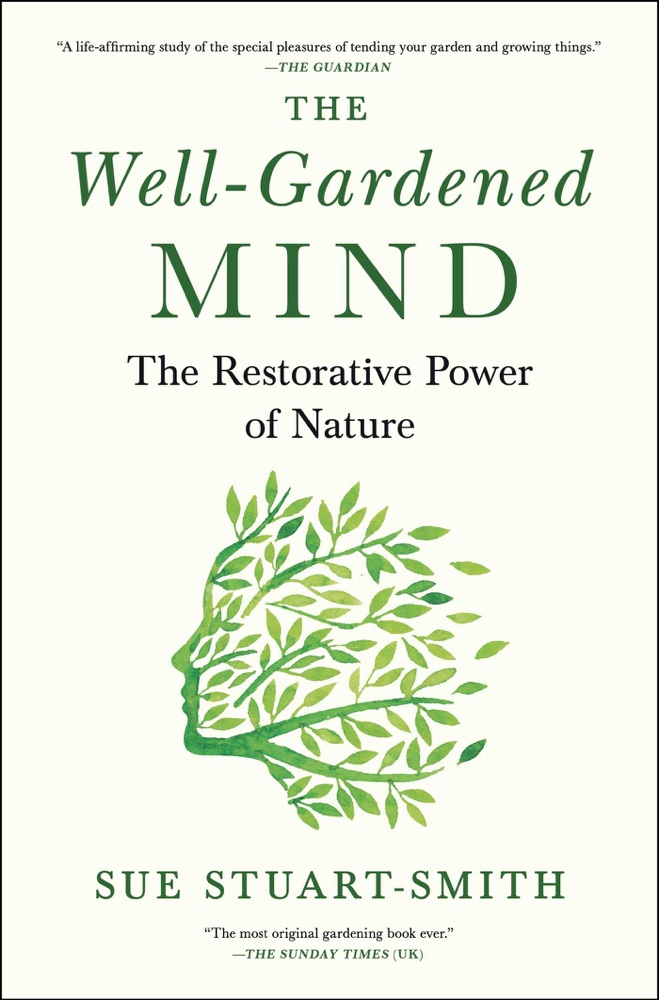
A distinguished psychiatrist and avid gardener offers an inspiring and consoling work about the healing effects of gardening and its ability to decrease stress and foster mental well-being in our everyday lives.The garden is often seen as a refuge, a place to forget worldly cares, removed from the “real” life that lies outside. But when we get our hands in the earth we connect with the cycle of life in nature through which destruction and decay are followed by regrowth and renewal. Gardening is one of the quintessential nurturing activities and yet we understand so little about it. The Well-Gardened Mind provides a new perspective on the power of gardening to change people’s lives. Here, Sue Stuart-Smith investigates the many ways in which mind and garden can interact and explores how the process of tending a plot can be a way of sustaining an innermost self. Stuart-Smith’s own love of g
Book details
- First published
- 2020
- Author
- Sue Stuart-Smith
- Genre
- Nonfiction
- Goodreads rating
- 4.12 (3k ratings)
Keep reading
The Botany of Desire: A Plant's-Eye View of the World
 Gathering Moss: A Natural and Cultural History of Mosses
 Second Nature: A Gardener's Education
 The Nature Fix: Why Nature Makes Us Happier, Healthier, and More Creative
 A Natural History of the Senses
 The Sense of Wonder
 The Secret Life of Plants: A Fascinating Account of the Physical, Emotional and Spiritual Relations Between Plants and Man
 Art as Therapy
 Journal of a Solitude
 How To Catch A Mole
 Care of the Soul: A Guide for Cultivating Depth and Sacredness in Everyday Life
 The Book of Secrets: Unlocking the Hidden Dimensions of Your Life
 The One-Straw Revolution
 How to Change Your Mind: The New Science of Psychedelics
 A Joseph Campbell Companion: Reflections on the Art of Living
 Emergent Strategy: Shaping Change, Changing Worlds
 The Forest Unseen: A Year’s Watch in Nature
 Finding Meaning in the Second Half of Life: How to Finally, Really Grow Up
 Anam Cara: A Book of Celtic Wisdom
 Many Lives, Many Masters: The True Story of a Prominent Psychiatrist, His Young Patient, and the Past Life Therapy That Changed Both Their Lives
 Creativity: Flow and the Psychology of Discovery and Invention
 Drive Your Plow Over the Bones of the Dead
 Maps of Meaning: The Architecture of Belief
 Eastern Body, Western Mind: Psychology and the Chakra System as a Path to the Self
 Becoming Wise: An Inquiry into the Mystery and Art of Living
 The Light Eaters: How the Unseen World of Plant Intelligence Offers a New Understanding of Life on Earth
 Happiness: A Guide to Developing Life's Most Important Skill
 Why Fish Don’t Exist: A Story of Loss, Love, and the Hidden Order of Life
 The Architecture of Happiness
 The Happiness Hypothesis: Finding Modern Truth in Ancient Wisdom
 The Wise Heart: A Guide to the Universal Teachings of Buddhist Psychology
 The Spell of the Sensuous: Perception and Language in a More-Than-Human World
 Myths to Live By
 The Book: On the Taboo Against Knowing Who You Are
 The Art of the Commonplace: The Agrarian Essays
 A General Theory of Love
 Figuring
 Women's Bodies, Women's Wisdom: Creating Physical and Emotional Health and Healing
 Living Beautifully with Uncertainty and Change
 The Outermost House: A Year of Life on the Great Beach of Cape Cod
 Silence: The Power of Quiet in a World Full of Noise
 Journey of Souls: Case Studies of Life Between Lives
 Upstream: Selected Essays
 Mindsight: The New Science of Personal Transformation
 The Dalai Lama's Cat and the Power of Meow
 Women Who Run With the Wolves
 Peace Is Every Step: The Path of Mindfulness in Everyday Life
 Full Catastrophe Living: Using the Wisdom of Your Body and Mind to Face Stress, Pain, and Illness
 The Lost Garden
 Inciting Joy: Essays
 The Poetics of Space
 No Mud, No Lotus: The Art of Transforming Suffering
 In Love with the World: A Monk's Journey Through the Bardos of Living and Dying
 The Joy of Living: Unlocking the Secret and Science of Happiness
 Waking Up: A Guide to Spirituality Without Religion
 Autumn
 Love and Will
 Belonging: Remembering Ourselves Home
 Messages from the Masters: Tapping into the Power of Love
 Solitude: A Return to the Self