Quotes from the Book
Action focussed on intent is better than action focussed on outcome.
25
The Gita does not speak of changing the world. It speaks of appreciating the world that is always changing.
23
We are not rational creatures who feel; we are emotional creatures who rationalize.
18
Krishna replies that nothing is wasted or destroyed in the cosmos. All efforts are recorded and they impact future lives. Knowledge acquired in the past plays a role in the wisdom of future lives.
12
Those who believe in karma do not blame. They do not judge. They accept that humans live in a sea of consequences, over which there is limited control. So they accept every moment as it is supposed to be. They act without expectation.
11
Dharma is more about empathy than ethics, about intent rather than outcome. I follow dharma when I am concerned about your material, emotional or intellectual hunger. I follow adharma when I focus on my hunger at the cost of yours.
8
Like animals that seek food for their survival, humans yearn for meaning for their sanity: what is our value, our purpose and our identity in this world?
7
Arjuna, immerse your mind in me and I will uplift you from the ocean of recurring death. If you cannot do that, then practise yoga and work on your mind. If you cannot do that, then do your work as if it is my work. If you cannot do that, then make yourself my instrument and do as I say. If you cannot do that, then simply do your job and leave the results to me.—Bhagavad Gita: Chapter 12, verses 6 to 11 (paraphrased).
7
When we understand, we do not seek control of the other, hence are liberated. We
6
As long as we cling (moha), we are trapped. As soon as we let go, we are liberated (moksha). We become independent and content in our own company (atma-rati) yet generous and dependable for the other (brahma-nirvana).
6
There is no one but ourselves to blame for our problems: neither God nor any oppressors.
5
Only the ignorant think they alone are responsible for an outcome
5
The devotee looks at the deity (darshan) and the deity, with large unblinking eyes, looks back; the relationship is ‘two-way’ not ‘one-way’.
4
Each moment is a fruit of the past and seed of future.
3
Dharma thus has nothing to with rules or obligations. It has to do with intent and caring for the other, be it your kingdom or your family.
3
Do you see me as hero, villain or victim? If yes, then you are not doing darshan. If you can empathize with the fears that make people heroes, villains and victims, then you are doing darshan. For then you look beyond the boundaries that separate you from the rest.
3
Rules vary with context. In the Ramayana, which takes place in Treta yuga, Vishnu is Ram, eldest son of a royal family. In the Mahabharata, which takes place in Dvapara yuga, Vishnu is Krishna, youngest son of a noble family, who is raised by cowherds but who performs as a charioteer. They are expected to behave differently. Ram is obligated to follow the rules of the family, clan and kingdom, and uphold family honour. Krishna is under no such obligation. This is why Krishna tells Arjuna to focus on dharma in his context (sva-dharma) rather than dharma in another’s context (para-dharma). Arjuna, better to do what you have been asked to do imperfectly than try to do perfectly what others have been asked to. All work has inadequacies; even fire is enveloped by smoke.—Bhagavad Gita: Chapter 18, verses 47 and 48 (paraphrased). In the Ramayana Ram upholds rules, while Ravana breaks them. In the Mahabharata Duryodhana upholds rules, while Krishna breaks them. As eldest sons of their respective clans, Ram and Duryodhana are obliged to uphold rules. Ravana, son of a Brahmin, and Krishna, raised by cowherds, are under no such obligations. Dharma, however, is upheld only by Ram and Krishna, not Ravana and Duryodhana. Ram is constantly concerned about his city Ayodhya’s welfare, while Ravana does not care if his Lanka burns. Krishna cares for the Pandavas, who happen to be the children of his aunt, but the Kauravas do not care for the Pandavas, who happen to be the children of their uncle. Dharma thus has nothing to with rules or obligations. It has to do with intent and caring for the other, be it your kingdom or your family.
3
Taken psychologically, the idea of rebirth is about having multiple opportunities to break the cycle of fear and find meaning, without ‘consuming’ anyone.
3
Yagna is the outer journey, while yoga is the inner journey that Arjuna has to undertake.
2
Arjuna, ignore the onslaught of external stimuli and focus between your eyebrows, regulating inhalation and exhalation at the nostrils, to liberate yourself from fear, desire and anger, and discover me within you, I who receive and consume every offering of your yagnas.—Bhagavad Gita: Chapter 5, verses 27 to 29 (paraphrased).
2
This is complete, that is complete, from completeness comes completeness, when completeness is added or subtracted, it still remains complete.’ This
2
In the absence of conceptual clarity, the dominant emotion is fear, fear of losing opportunities, fear of threats, fear of achievement, fear of abandonment, fear of invalidation. The emotion of fear impacts the way we think and what we believe. It contaminates the filtering of sensations and choice of responses. It creates a vicious cycle where atma is eclipsed by aham, our judgemental self.
2
showing does not guarantee seeing. Telling does not guarantee hearing. Gyana is not vi-gyana.
2
Identity based on what we have is aham, not atma.
2
Arjuna, you have control over your action alone, not the fruits of your action. So do not be drawn to expectation, or inaction.
1
The wise want nothing but accept whatever comes their way, letting it pass when it is time to part ways. Ram is
1
Watch on YouTube
About Devdutt Pattanaik

We have collected 93 quotes from 3 books by Devdutt Pattanaik on BookQuoters.
More about the author →More by Devdutt Pattanaik
 Sita: An Illustrated Retelling of the Ramayana
About the book
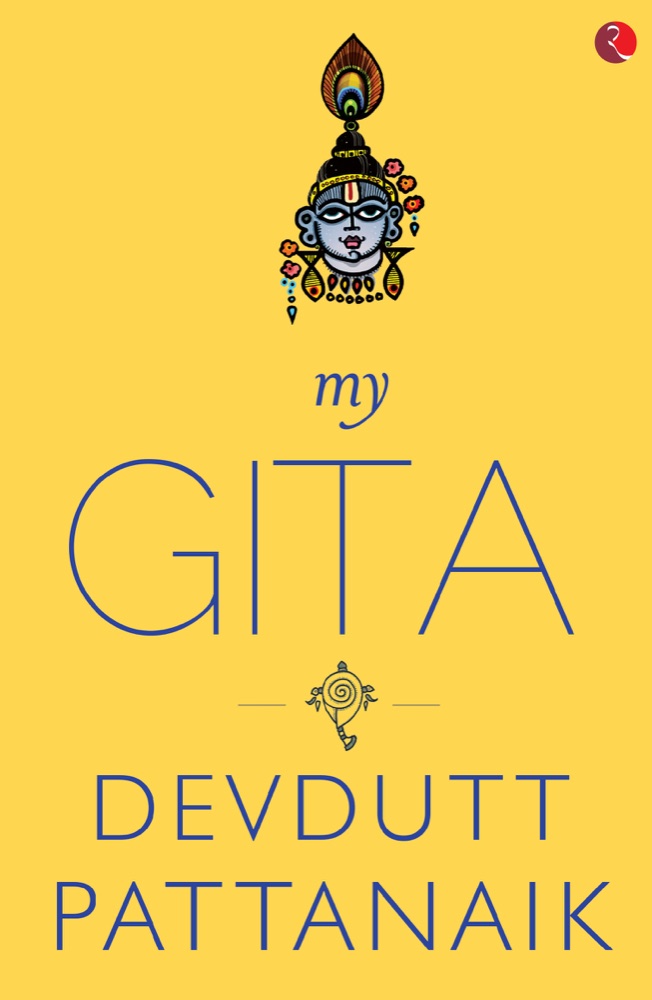
In My Gita, acclaimed mythologist Devdutt Pattanaik demystifies The Bhagavad Gita for the contemporary reader. His unique approach—thematic rather than verse-by-verse—makes the ancient treatise eminently accessible, combined as it is with his trademark illustrations and simple diagrams. In a world that seems spellbound by argument over dialogue, vi-vaad over sam-vaad, Devdutt highlights how Krishna nudges Arjuna to understand rather than judge his relationships. This becomes relevant today when we are increasingly indulging and isolating the self (self-improvement, self-actualization, self-realization—even selfies!).We forget that we live in an ecosystem of others, where we can nourish each other with food, love and meaning, even when we fight. So let My Gita inform your Gita.
Book details
- First published
- 2015
- Author
- Devdutt Pattanaik
- Genre
- Philosophy
- Goodreads rating
- 3.98 (8k ratings)
Keep reading
Sita: An Illustrated Retelling of the Ramayana
 Bhagavad-Gita As It Is
 The Bhagavad Gita
 The Upanishads
 Awakening the Buddha Within
 The Difficulty of Being Good: On the Subtle Art of Dharma
 The Yoga Sutras of Patanjali
 Rise of Kali: Duryodhana's Mahabharata
 The Oath of the Vayuputras
 The Book of Secrets
 What the Buddha Taught
 Autobiography of a Yogi
 The Immortals of Meluha
 Raja-Yoga
 The Yoga Sutras of Pantanjali
 The Dhammapada
 The World's Religions
 The I Ching or Book of Changes
 The Journey Home
 The Way of the Bodhisattva
 Complete Works of Swami Vivekananda, 9 Vols.
 Tibetan Book of the Dead
 Mahabharata
 Buddhism Plain & Simple: The Practice of Being Aware, Right Now, Every Day
 The Wise Heart: A Guide to the Universal Teachings of Buddhist Psychology
 Myths to Live By
 Against the Stream: A Buddhist Manual for Spiritual Revolutionaries
 Zen and the Art of Saving the Planet
 The Third Jesus: The Christ We Cannot Ignore
 The Book of Wisdom
 Be Here Now
 365 Tao: A Study of Taoist Wisdom for Daily Life
 The Secret of Nagas
 Eastern Body, Western Mind: Psychology and the Chakra System as a Path to the Self
 A Joseph Campbell Companion: Reflections on the Art of Living
 The Art of Being
 In Love with the World: A Monk's Journey Through the Bardos of Living and Dying
 The Way of Zen
 The Disappearance of the Universe: Straight Talk about Illusions, Past Lives, Religion, Sex, Politics, and the Miracles of Forgiveness
 Total Freedom: The Essential Krishnamurti
 The Dalai Lama's Cat and the Power of Meow
 Comfortable with Uncertainty: 108 Teachings on Cultivating Fearlessness and Compassion
 Freedom from the Known
 The Tibetan Book of Living and Dying
 The God Who Weeps: How Mormonism Makes Sense of Life
 Tao Te Ching
 Everyday Zen: Love & Work
 How to Practice: The Way to a Meaningful Life
 Cuckold
 The Liberation of Sita
 The Book of Chuang Tzu
 The Seven Spiritual Laws of Success: A Practical Guide to the Fulfillment of Your Dreams
 Be Water, My Friend: The Teachings of Bruce Lee
 The Book of Secrets: Unlocking the Hidden Dimensions of Your Life
 When Nietzsche Wept
 Going to Pieces without Falling Apart: A Buddhist Perspective on Wholeness
 Striking Thoughts: Bruce Lee's Wisdom for Daily Living
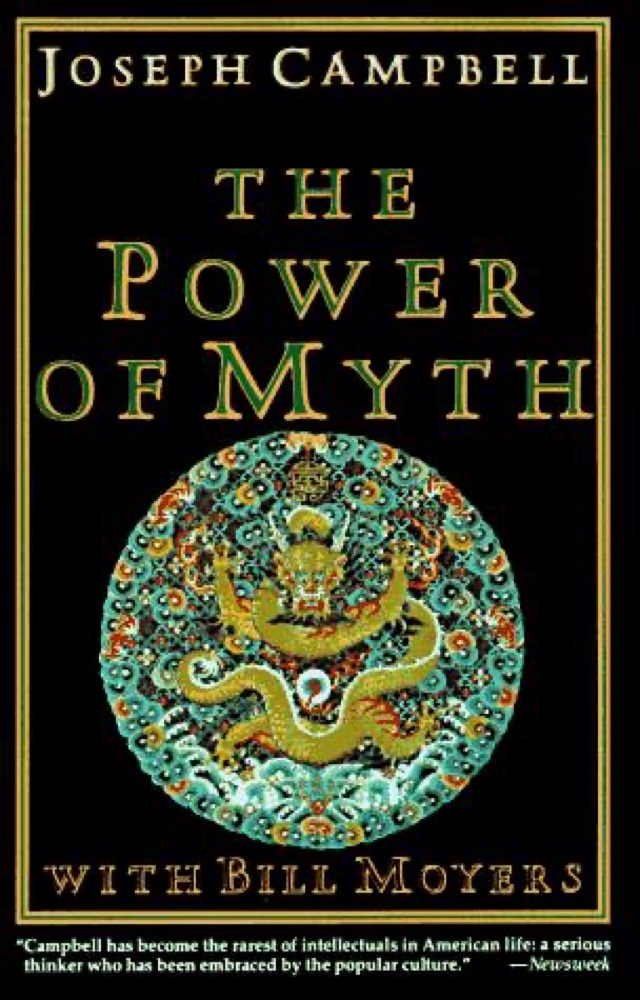 The Power of Myth