
 India Unbound: The Social and Economic Revolution from Independence to the Global Information Age
Quotes from the Book
One should never do to another what one regards as injurious to oneself. This, in brief, is the law of dharma. —Mahabharata XVIII.113.
5
a man who wishes to profess goodness at all times will come to ruin among so many who are not so good. Hence it is necessary for a prince who wishes to maintain his position to learn how not to be good, and to use this knowledge . . . according to necessity.’25
4
What sort of ideas, I wondered, might help to give meaning to life when one is in the midst of fundamentalist persons of all kinds who believe that they have a monopoly on truth and some are even willing to kill to prove that?
3
The human tendency to evaluate one’s well-being by comparing it with that of another is the cause of Duryodhana’s distress.
2
So when Yudhishthira tells Draupadi that eventually human acts do bear fruit, even though the fruit is invisible,56 one might interpret ‘fruit’ to mean the building of character through repeated actions. Yudhishthira was certainly aware that repeated actions had a way of changing one’s inclinations to act in a certain way. That inclination is character.
2
Despite the many occasions when its characters feel frustrated before the weight of circumstances, and despite blaming their feeling of impotence on daiva, 'fate', moral autonomy shines through in the epic. Because they have some freedom to choose they can be praised when they follow dharma or blamed when they follow adharma. At the moment of making a decision they become conscious of their freedom, and it is this perception of autonomy that gives them the ability to lead authentic moral lives.
2
Its own position veers towards the pragmatic evolutionary principle of reciprocal altruism: adopt a friendly face to the world but do not allow yourself to be exploited.
2
Be intent on the action, not on the fruits of action.
1
I have learned that the Mahabharata is about the way we deceive ourselves, how we are false to others, how we oppress fellow human beings, and how deeply unjust we are in our day-to-day lives. But is this moral blindness an intractable human condition, or can we change it? Some of our misery is the result of the way the state also treats us, and can we redesign our institutions to have a more sympathetic government?
1
Yudhishthira taught me that moral integrity begins with the awareness of other human beings. The reality of others looms large in Yudhishthira’s consciousness—it is the shining feature of his personality,
1
ahimsa paramo dharma’, ‘non-violence is the highest dharma’.
1
The concept of dharma evolved over time, its meaning shifting from a ‘ritual ethics of deeds’ to a more personal virtue based on one’s conscience.
1
The envy I encountered in the business world, however, was nothing compared to what I would see later in the academic world. ‘The reason academic politics are so bitter is that so little is at stake,’ Henry Kissinger was fond of saying.59 There is a certain misery attached to the academic life, no doubt, in which envy plays a considerable part. As Max Weber noted, ‘Do you think that, year after year, you will be able to stand to see one mediocrity after another promoted over you, and still not become embittered and dejected? Of course, the answer is always: “Naturally, I live only for my calling." Only in a very few cases have I found [young academics] able to undergo it without suffering spiritual damage.’60
1
Yudhishthira answers Yaksha's question - what is man? by saying, 'The repute of a good deed touches heaven and earth; one is called a man as long as his repute lasts.
1
By deceiving Drona, Yudhishthira corrupts his teacher's relationship with the world. So do we every time we lie - we corrupt the 'other' in the same way.
1
envy is a sin of socialism, greed is the failing of capitalism
It was an unhurried pursuit. I did not want information. I wanted to be cultivated, and thus I read at leisure with lingering appreciation.
If a good person suffers, then the bad person should suffer even more: this is an idea that seems embedded in the human psyche. Consciously one denies it, of course, and proclaims piously, ‘I’m not the sort of person who holds grudges.’ Yet one unconsciously applauds when the villain ‘gets what he deserves’. Wanting to punish a villain or seeing him punished is ubiquitous in literature, movies and politics.
You’ll waste a lot less time worrying about what others think of you if only you realized how seldom they do.’ To this we might add Albert Camus’ wise words: ‘To be happy one must not be too concerned with the opinion of others. One should pursue one’s goals single-mindedly, with a quiet confidence, without thinking of others.
However, ‘tit-for-tat’ should not be confused with an aggressive strategy. It calls for presenting a friendly face to the world—the first move in the game is always to be nice. Yudhishthira presents an affable face during the interminable peace negotiations. And he will make an exceptionally generous offer to Duryodhana, as we shall soon see. The difference is that Yudhishthira is no longer willing to be exploited. It has taken him thirteen long years to realize that Draupadi may have been right.
Manu’s verse quoted above, declares that the ‘satisfaction of the mind is the only authority in cases of conflicting alternatives’. 54 The classical poet, Kalidasa, who lived in the fifth century AD , was of the same view: ‘In matters where doubt intervenes, the [natural] inclination of the heart of the good person becomes the “authority" or the decisive factor.’ 55
to remember this in a country that has long been mesmerized by the romantic figure of ‘the renouncer’, even before the Buddha came along.6 My mother, however, was spot on in recognizing ‘my third stage melancholy’. During my second stage, I had felt as though I was waking up each morning, going to work, and feeding my family—only to repeat it the following day, as my children would after me and their children after them. What was the point of it all? Now in my third stage, I wanted to find a better way to live. Meanwhile, my friends and acquaintances were incredulous. ‘So, what is this I hear about wanting to go away to read old books?’ one asked me at a dinner party. ‘Don’t tell me you are going to turn religious on us!’ exclaimed another. My wife began to explain my idea of an ‘academic holiday’ to some of the guests, who reciprocated with suitable looks of sympathy. ‘Tell us, what books are you planning to read?’ asked a retired civil servant. A self-proclaimed ‘leftist and secularist’, who had once been a favourite of former prime minister Indira Gandhi, he had the gruff, domineering accent of an English aristocrat, not surprising in a former civil servant of the old school. I admitted reluctantly that I had been thinking of reading the Mahabharata, the Manusmriti, the Kathopanishad perhaps, and ... ‘Good Lord, man!’ he exclaimed. ‘You haven’t turned saffron, have you?’ The remark upset me. Saffron is, of course, the colour of Hindu right-wing nationalism, and I wondered what sort of secularism is it that regards the reading of Sanskrit texts as a political act. I was disturbed that I had to fear the intolerance of my ‘secular’ friends as much as the bigotry of the Hindu Right, which had become a force in Indian politics over the past two decades with the rise of the Bharatiya Janata Party.
Envy is felt more strongly between near equals than those widely separated in fortune. It does not make sense to envy the Queen of England.
Why should one like you envy Yudhishthira? . . . Be content with what you have, stay with your own dharma—that is the way to happiness. —Dhritarashtra to Duryodhana, Mahabharata II.5.3, 61
The Mahabharata reminds us that it is natural and desirable for human beings to want happiness and pleasure as they seek to be good. Kama is one of the legitimate goals of human life. The Christian denial of physical pleasure, especially sexual pleasure, is happily absent from the epic and most ancient Indian texts. So is the ‘thou shalt not’ approach, which makes one feel guilty, and turns one off the moral project. The notion of dharma as it emerges from the Mahabharata is a plural one. Being plural makes greater demands on one’s reason, for human objectives sometimes conflict with each other, and this forces one to choose. The attraction of a clean ethical theory like Utilitarianism is that it attempts to resolve moral issues on the basis of a single criterion. Pluralism is more complex but no less rational. One needs to order different virtues in a hierarchy in order to help one to choose in the case of a conflict.
people do, in fact, act against their moral convictions and this is an unhappy fact about ourselves’.
Dharma, the word at the heart of the epic, is in fact untranslatable. Duty, goodness, justice, law and custom all have something to do with it, but they all fall short.
The task of an inspiring leader in Kali Yuga is not just to think about the difficulty of being good but how to confront that difficulty—and to place that thinking in the great textual confrontations of the past.
It was a stronger, more positive attitude, exhibiting maitri, ‘benevolence’, which is entailed in acting ‘for the sake of others’, and this is ultimately ‘the highest dharma’.
The Upanishads trace these problems of the self to our sense of ‘Iness’ or ahamkara (literally ‘I-maker’) which is our subjective sense of identity and which has its origin in our consciousness (aham). In classical Sankhya philosophy, the empirical world of the senses and the mind emerges from the evolution of the aham, and liberation from this empirical existence requires the negation of ahamkara.
Watch on YouTube
About Gurcharan Das
We have collected 46 quotes from 2 books by Gurcharan Das on BookQuoters.
More about the author →More by Gurcharan Das
India Unbound: The Social and Economic Revolution from Independence to the Global Information Age
About the book
In his new book, Gurcharan Das turns to the Mahabharata in order to answer the question, "why be good'', and discovers that the epic's world of moral haziness and uncertainty is closer to our experience as ordinary human beings than the narrow and rigid positions that define most debate in this fundamentalist age of moral certainty.
The Mahabharata is obsessed with the elusive notion of dharma - in essence, doing the right thing. When a hero falters, the action stops and everyone weighs in with a different and often contradictory take on dharma. The epic's characters are flawed, but their incoherent experiences throw light on our familiar dilemmas.
Gurcharan Das's best-selling book India Unbound examined the classical aim of artha, material well being. This, his first book in seven years, dwells on the goal of dharma, moral well being. It addresses the central problem of how to l
Book details
- First published
- 2009
- Author
- Gurcharan Das
- Genre
- Philosophy
- Goodreads rating
- 4.12 (5k ratings)
Keep reading
 Sita: An Illustrated Retelling of the Ramayana
 Rise of Kali: Duryodhana's Mahabharata
 My Gita
 Mahabharata
 The Immortals of Meluha
 Daybreak: Thoughts on the Prejudices of Morality
 Ajaya: Roll of the Dice
 The Will to Power
 Bhagavad-Gita As It Is
 Ethics for the New Millennium
 The Oath of the Vayuputras
 The Way of the Bodhisattva
 Sita: Warrior of Mithila
 The Discovery of India
 Yayati: A Classic Tale of Lust
 The Story of My Experiments With Truth
 How to Be Perfect: The Correct Answer to Every Moral Question
 On the Genealogy of Morals
 The World's Religions
 After Virtue
 Karna's Wife: The Outcast's Queen
 What the Buddha Taught
 Twelve Steps to a Compassionate Life
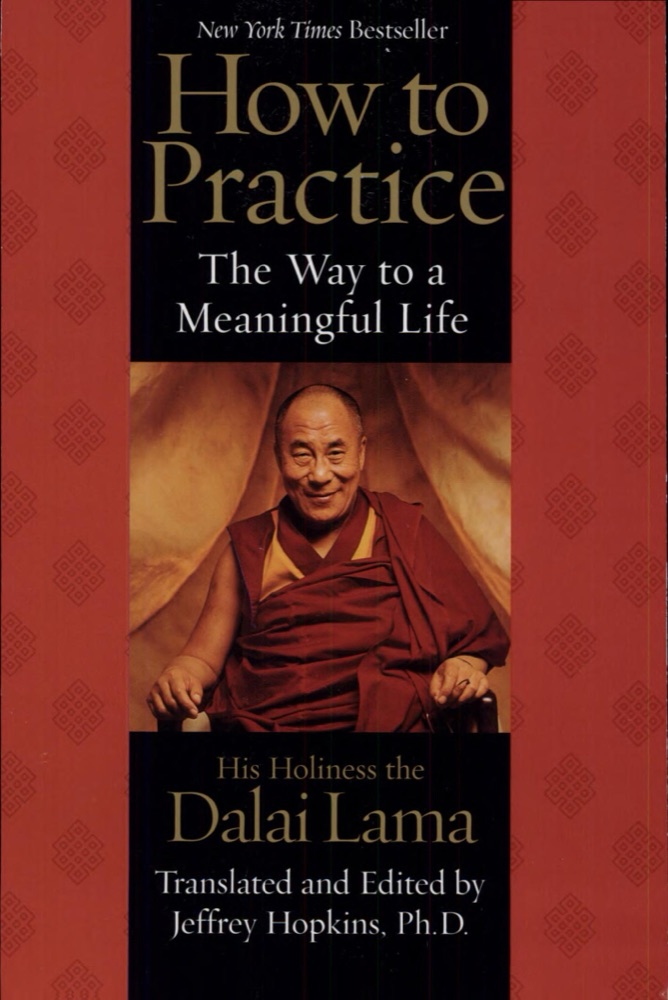 How to Practice: The Way to a Meaningful Life
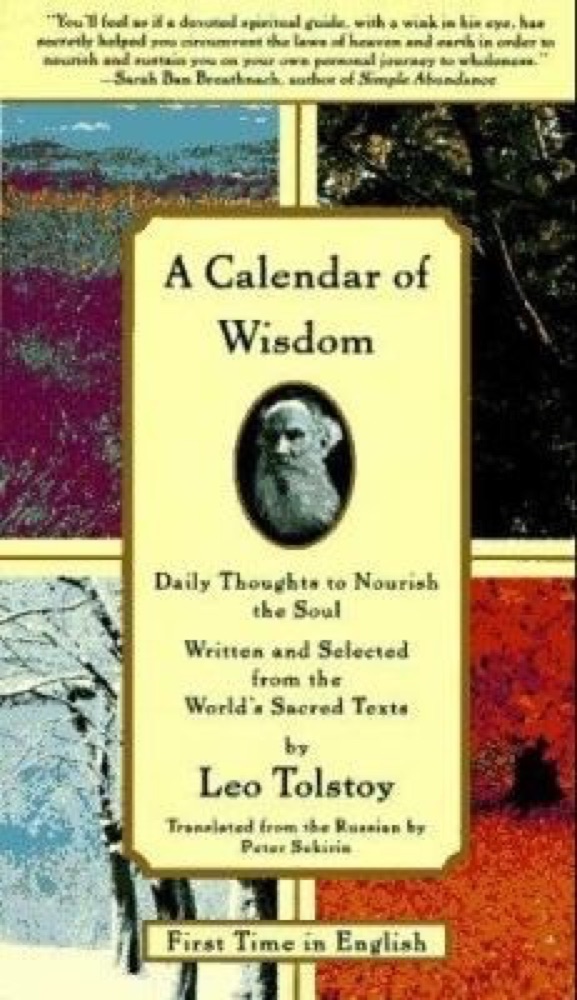 A Calendar of Wisdom: Daily Thoughts to Nourish the Soul
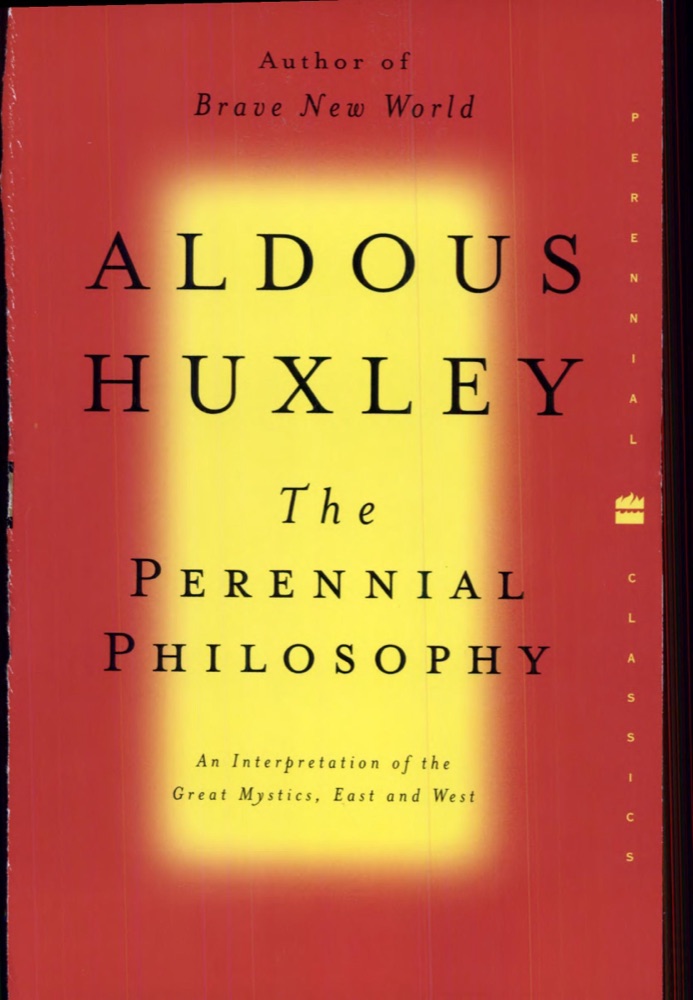 The Perennial Philosophy
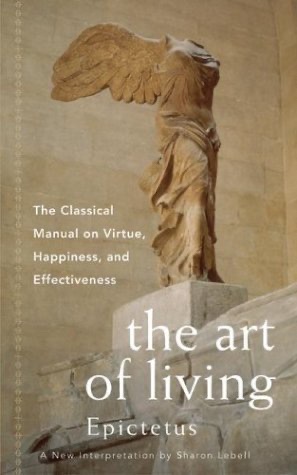 The Art of Living: The Classical Manual on Virtue, Happiness and Effectiveness
 The Nicomachean Ethics
 Stoicism and the Art of Happiness
 Complete Works of Swami Vivekananda, 9 Vols.
 Heretics
 Sojourn
 Myths to Live By
 The Ego and Its Own
 My Spiritual Journey: Personal Reflections, Teachings, and Talks
 The Consolation of Philosophy
 Awakening the Buddha Within
 The I Ching or Book of Changes
 The Varieties of Religious Experience
 The Theory of Moral Sentiments
 The Yoga Sutras of Patanjali
 The Second Mountain
 The Argumentative Indian: Writings on Indian History, Culture and Identity
 The Happiness Hypothesis: Finding Modern Truth in Ancient Wisdom
 The Bhagavad Gita
 Ethics
 The Wise Heart: A Guide to the Universal Teachings of Buddhist Psychology
 Self-Reliance and Other Essays
 The Laws of Plato
 12 Rules for Life: An Antidote to Chaos
 The Wisdom of Life
 Maps of Meaning: The Architecture of Belief
 The Book of Wisdom
 We Who Wrestle with God: Perceptions of the Divine
 Self-Reliance: An Excerpt from Collected Essays, First Series
 When Nietzsche Wept
 The Art of Being
 The Upanishads
 The Yoga Sutras of Pantanjali