 The Yoga Sutras of Patanjali
Quotes from the Book
Religion without philosophy is sentiment, or sometimes fanaticism, while philosophy without religion is mental speculation.
20
One whose happiness is within, who is active within, who rejoices within and is illumined within, is actually the perfect mystic. He is liberated in the Supreme, and ultimately he attains the Supreme.
20
The cause of the distress of a living entity is forgetfulness of his relationship with God.
16
Because materialists cannot understand Krsna spiritually, they are advised to concentrate the mind on physical things and try to see how Krsna is manifested by physical representations.
15
Such deluded persons, symptomatically, dwell in dualities of dishonor and honor, misery and happiness, woman and man, good and bad, pleasure and pain, etc., thinking, "This is my wife; this is my house; I am the master of this house; I am the husband of this wife." These are the dualities of delusion. Those who are so deluded by dualities are completely foolish and therefore cannot understand the Supreme Personality of Godhead.
15
Out of many thousands among men, one may endeavor for perfection, and of those who have achieved perfection, hardly one knows Me in truth.
15
For man, mind is the cause of bondage and mind is the cause of liberation. Mind absorbed in sense objects is the cause of bondage, and mind detached from the sense objects is the cause of liberation.
14
From anger, complete delusion arises, and from delusion bewilderment of memory. When memory is bewildered, intelligence is lost, and when intelligence is lost one falls down again into the material pool.
12
My dear Arjuna, only by undivided devotional service can I be understood as I am, standing before you, and can thus be seen directly. Only in this way can you enter into the mysteries of My understanding.
11
A yogī is greater than the ascetic, greater than the empiricist and greater than the fruitive worker. Therefore, O Arjuna, in all circumstances, be a yogī.
11
Nothing should be accepted blindly; everything should be accepted with care and with caution.
10
God accepts only the love with which things are offered to Him.
9
For sense gratification, a man in the mode of passion wants some honor in society, or in the nation, and he wants to have a happy family, with nice children, wife and house. These are the products of the mode of passion. As long as one is hankering after these things, he has to work very hard. Therefore it is clearly stated here that he becomes associated with the fruits of his activities and thus becomes bound by such activities. In order to please his wife, children and society and to keep up his prestige, one has to work. Therefore the whole material world is more or less in the mode of passion.
9
While contemplating the objects of the senses, a person develops attachment for them, and from such attachment lust develops, and from lust anger arises.
8
Devotional service is more or less a declaration of war against the illusory energy.
8
One cannot reach the real point of factual knowledge without being helped by the right person who is already established in that knowledge. There
7
The Bhagavad-gītā teaches one how to absorb the mind and intelligence in the thought of the Lord. Such absorption will enable one to transfer himself to the kingdom of the Lord. If the mind is engaged in Kṛṣṇa’s service, then the senses are automatically engaged in His service.
6
But for one who takes pleasure in the Self, whose human life is one of self-realization, and who is satisfied in the Self only, fully satiated – for him there is no duty.
6
Although one who is situated in Kṛṣṇa consciousness may not have any interest in the world, he still works to teach the public how to live and how to act. Experienced persons in Kṛṣṇa consciousness can act in such a way that others will follow,
6
The mind is restless, turbulent, obstinate and very strong, O Kṛṣṇa, and to subdue it, I think, is more difficult than controlling the wind.
6
Therefore the doubts which have arisen in your heart out of ignorance should be slashed by the weapon of knowledge.
6
We are all hankering after pleasure. Ānanda-mayo ’bhyāsāt (Vedānta-sūtra 1.1.12). The living entities, like the Lord, are full of consciousness, and they are after happiness. The Lord is perpetually happy, and if the living entities associate with the Lord, cooperate with Him and take part in His association, then they also become happy.
5
Bhagavad-gītā, and the doors of this knowledge are open for everyone. No one is barred out. All classes of men can approach Lord Kṛṣṇa by thinking of Him, for hearing and thinking of Him are possible for everyone. The Lord further says (Bg. 9.32–33): māṁ hi pārtha vyapāśritya ye ’pi syuḥ pāpa-yonayaḥ striyo vaiśyās tathā śūdrās te ’pi yānti parāṁ gatim
5
O son of Kunti, the nonpermanent appearance of happiness and distress, and their disappearance in due course, are like the appearance and disappearance of winter and summer seasons. They arise from sense perception, O scion of Bharata, and one must learn to tolerate them without being disturbed.
5
The immediate symptom of a Kṛṣṇa conscious man is that he speaks only of Kṛṣṇa and of matters relating to Him. Other symptoms then automatically follow, as stated below.
4
First of all he makes a determination to act in a certain way, and then he is entangled in the actions and reactions of his own karma. After giving up one type of body, he enters another type of body, as we take off and put on clothes. As the soul thus migrates, he suffers the actions and reactions of his past activities. These activities can be changed when the living being is in the mode of goodness, in sanity, and understands what sort of activities he should adopt. If he does so, then all the actions and reactions of his past activities can be changed. Consequently, karma is not eternal. Therefore we stated that of the five items (īśvara, jīva, prakṛti, time and karma) four are eternal, whereas karma is not eternal.
4
abhyāsa-yoga-yuktena cetasā nānya-gāminā paramaṁ puruṣaṁ divyaṁ yāti pārthānucintayan “He who meditates on Me as the Supreme Personality of Godhead, his mind constantly engaged in remembering Me, undeviated from the path, he, O Arjuna, is sure to reach Me.” (Bg. 8.8)
4
we are related to the Supreme Lord in service. The Supreme Lord is the supreme enjoyer, and we living entities are His servitors. We are created for His enjoyment, and if we participate in that eternal enjoyment with the Supreme Personality of Godhead, we become happy. We cannot become happy otherwise. It is not possible to be happy independently,
3
This “oneness with the Supreme” is called kaivalyam by the monist.
3
One who takes shelter of the Supreme Lord has nothing to fear, even in the midst of the greatest calamity.
3
Watch on YouTube
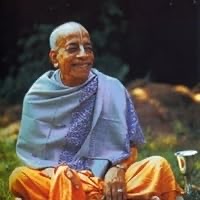
About A.C. Bhaktivedanta
We have collected 30 quotes from 1 book by A.C. Bhaktivedanta on BookQuoters.
More about the author →About the book
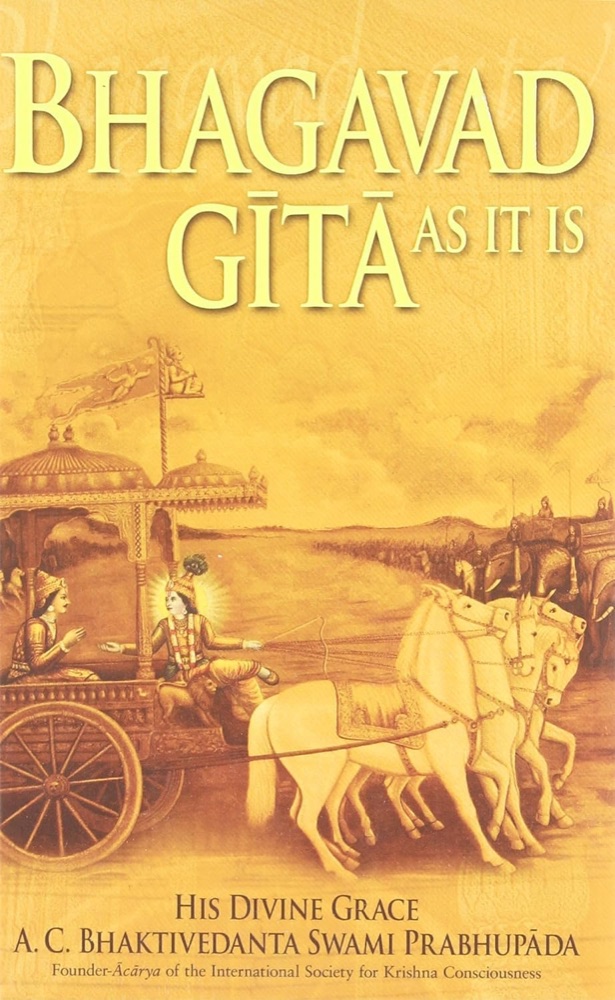
The Bhagavad-gita (“Song of God”), which forms eighteen chapters in the epic Mahabharata, presents the core of the Vedic philosophy in a relatively brief seven hundred verses. Celebrated and revered for its profound message, it is the one book turned to by philosophers, yogis, and transcendentalists of nearly all paths of Vedic spirituality. In the West it early inspired, among others, the American Transcendentalists Emerson and Thoreau and has been looked to ever since for its perennial wisdom. It is the essential Vedic text for spiritual realization.
Just on the verge of the historic Battle of Kurukshetra, the warrior Arjuna loses his nerve. Totally distraught and ready to give up on life, he turns to his friend and charioteer, Krishna, for advice, "What should I do?” The conversation that follows effectively deals with humanity's crucial questions: what is the purpose of life? What
Book details
- First published
- 500
- Author
- A.C. Bhaktivedanta
- Genre
- Nonfiction
- Goodreads rating
- 4.28 (9k ratings)
Keep reading
The Yoga Sutras of Patanjali
 The Upanishads
 Autobiography of a Yogi
 Complete Works of Swami Vivekananda, 9 Vols.
 The Bhagavad Gita
 The World's Religions
 Mahabharata
 The Journey Home
 My Gita
 Raja-Yoga
 The Perennial Philosophy
 What the Buddha Taught
 The Way of the Bodhisattva
 Tibetan Book of the Dead
 Sita: An Illustrated Retelling of the Ramayana
 The Immortals of Meluha
 The Varieties of Religious Experience
 How to Know Higher Worlds: A Modern Path of Initiation
 The Dhammapada
 The Yoga Sutras of Pantanjali
 Purification of the Heart: Signs, Symptoms and Cures of the Spiritual Diseases of the Heart
 The Holy Science
 New Seeds of Contemplation
 Myths to Live By
 The Difficulty of Being Good: On the Subtle Art of Dharma
 The Book of Wisdom
 Thoughts in Solitude
 Phaedrus
 The Intellectual Life: Its Spirit, Conditions, Methods
 The Book of Secrets
 The Secret Magdalene
 The Gay Science
 Yayati: A Classic Tale of Lust
 The God Who Weeps: How Mormonism Makes Sense of Life
 The Wise Heart: A Guide to the Universal Teachings of Buddhist Psychology
 The Story of My Experiments With Truth
 The I Ching or Book of Changes
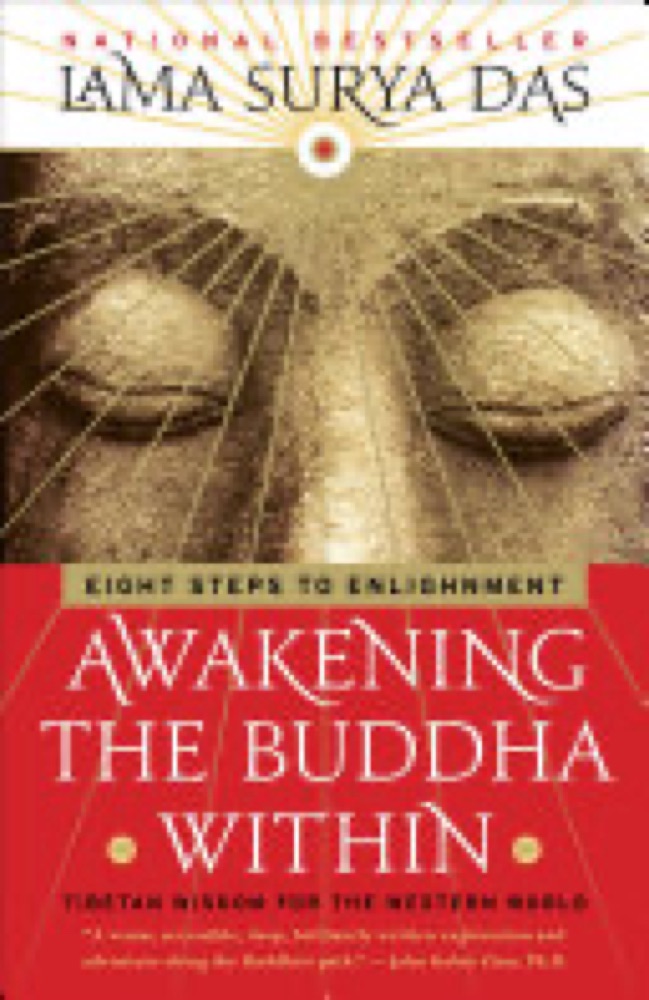 Awakening the Buddha Within
 No Man Is an Island
 Man and His Symbols
 The Glass Bead Game
 The Portable Nietzsche
 God in Search of Man: A Philosophy of Judaism
 Everything Belongs: The Gift of Contemplative Prayer
 Interior Castle
 The Book of Mirdad: The Strange Story of a Monastery Which Was Once Called the Ark
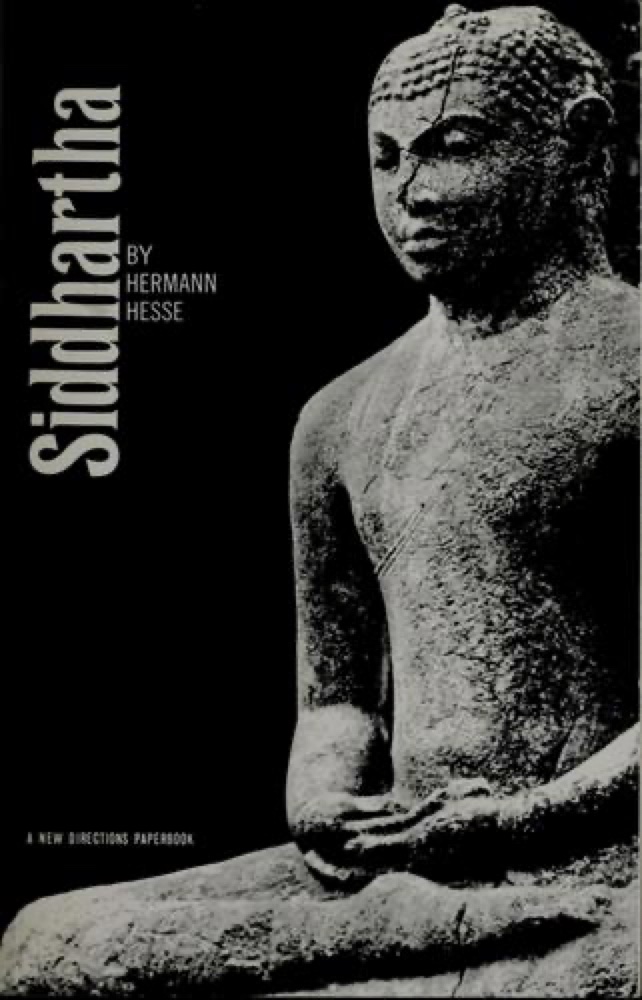 Siddhartha
 Rise of Kali: Duryodhana's Mahabharata
 The Will to Power
 The Book of Chuang Tzu
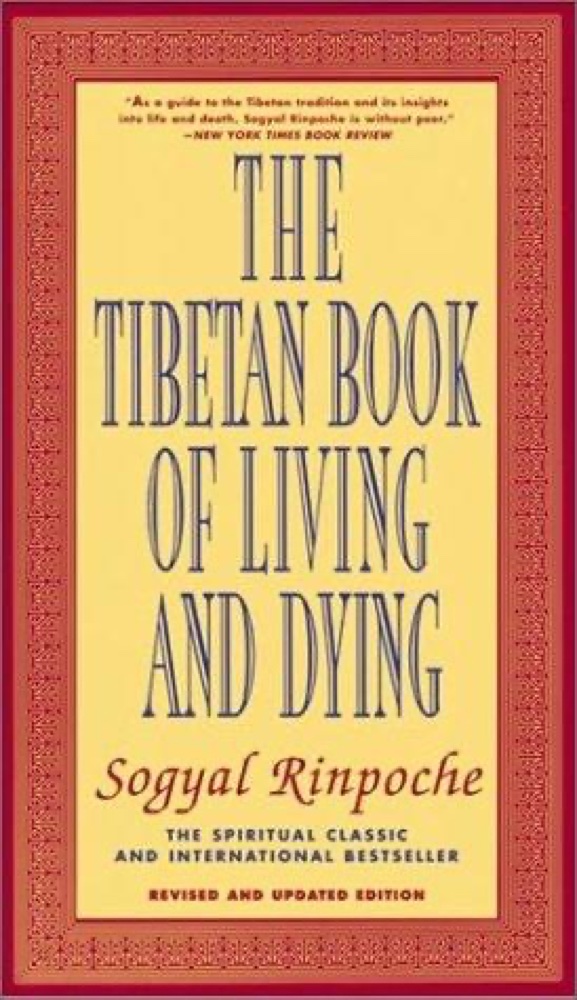 The Tibetan Book of Living and Dying
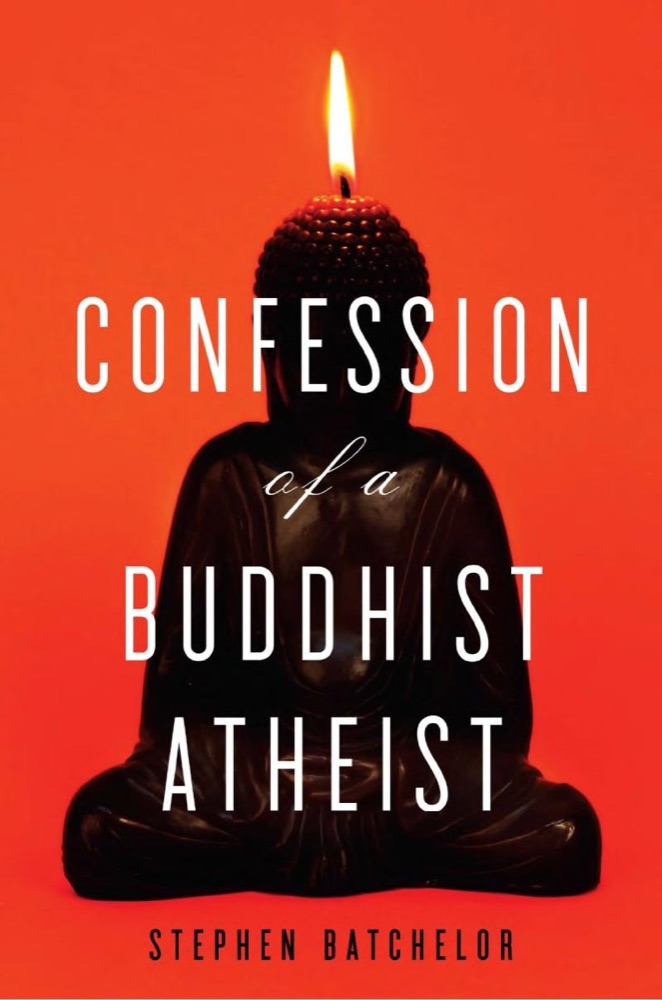 Confession of a Buddhist Atheist
 Total Freedom: The Essential Krishnamurti
 Lord of Light
 Works of Love
 In the Buddha's Words: An Anthology of Discourses from the Pali Canon
 The Consolation of Philosophy
 The Mustard Seed: The Gnostic Teachings of Jesus The Mystic
 The Sermon on the Mount: The Key to Success in Life