
 A Room of One's Own
Quotes from the Book
I have a deeply hidden and inarticulate desire for something beyond the daily life.
727
Perhaps this is the strongest pleasure known to me. It is the rapture I get when in writing I seem to be discovering what belongs to what; making a scene come right; making a character come together. From this I reach what I might call a philosophy; at any rate it is a constant idea of mine; that behind the cotton wool is hidden a pattern; that we—I mean all human beings—are connected with this; that the whole world is a work of art; that we are parts of the work of art. Hamlet or a Beethoven quartet is the truth about this vast mass that we call the world. But there is no Shakespeare, there is no Beethoven; certainly and emphatically there is no God; we are the words; we are the music; we are the thing itself.
143
I feel that I have had a blow; but it is not, as I thought as a child, simply a blow from an enemy hidden behind the cotton wool of daily life; it is or will become a revelation of some order; it is a token of some real thing behind appearances; and I make it real by putting it into words. It is only by putting it into words that I make it whole; this wholeness means that it has lost its power to hurt me; it gives me, perhaps because by doing so I take away the pain, a great delight to put the severed parts together.
25
I am someone who thinks and feels much more than is reasonable. And that is all.
24
Yet he too obsessed me for years. Until I wrote it out, I would find my lips moving; I would be arguing with him; raging against him; saying to myself all that I never said to him. How deep they drove themselves into me, the things it was impossible to say aloud.
16
But I was thinking; feeling; living; those two lives that the two halves symbolized with the intensity, the muffled intensity, which a butterfly or moth feels when with its sticky tremulous legs and antennae it pushes out of the chrysalis and emerges and sits quivering beside the broken case for a moment; its wings still creased; its eyes dazzled, incapable of flight.
12
The tragedy of her death was not that it made one, now and then and very intensely, unhappy. It was that it made her unreal; and us solemn, and self-conscious. We were made to act parts that we did not feel; to fumble for words that we did not know. It obscured, it dulled.
12
It proves that one's life is not confined to one's body and what one says or does; one is living all the time in relation to certain background rods or conceptions. Mine is that there is a pattern hid behind the cotton wool. And this conception affects me every day. I prove this, now, by spending the morning writing, when I might be walking, running a shop, or learning to do something that will be useful if war comes. I feel that by writing I am doing what is far more necessary than anything else.
12
It is one of those invaluable seeds, from which, since it is impossible to have every experience fully, one can grow something that represents other people's experiences. Often one has to make do with seeds; the germs of what might have been, had one's life been different.
12
The past only comes back when the present runs so smoothly that it is like the sliding surface of a deep river. Then one sees through the surface to the depths. In those moments I find one of my greatest satisfactions, not that I am thinking of the past; but that it is then that I am living most fully in the present. For the present when backed by the past is a thousand times deeper...
11
If life has a base that it stands upon, if it is a bowl that one fills and fills and fills---then my bowl without a doubt stands upon this memory. It is of hearing the waves breaking, one, two, one, two, and sending a splash of water over the beach; and then breaking, one, two, one, two, behind a yellow blind. It is of hearing the blind draw its little acorn across the floor as the wind blew the blind out. It is of lying and hearing this splash and seeing this light, and feeling, it is almost impossible that I should be here; of feeling the purest ecstasy I can conceive.
11
These then are some of my first memories. But of course as an account of my life they are misleading, because the things one does not remember are as important; perhaps they are more important.
10
Is it not possible — I often wonder — that things we have felt with great intensity have an experience independent of our minds; are in fact still in existence? And if so, will it not be possible,in time, that some device will be invented by which we can tap them? …Instead of remembering here a scene and there a sound, I shall fit a plug into the wall; and listen in to the past
9
Human relations, at least between the sexes, were carried on as relations between countries are now - with ambassadors, and treaties. The parties concerned met on the great occasion of the proposal. If this were refused, a state of war was declared.
8
I put my bare hand on her bare hand and felt, “This is genuine. There can be no mistake about this.
7
I was fighting with Thoby on the lawn. We were pommelling each other with our fists. Just as I raised my fist to hit him, I felt: why hurt another person? I dropped my hand instantly, and stood there, and let him beat me. I remember the feeling. It was a feeling of hopeless sadness. It was as if I became aware of something terrible; and of my own powerlessness. I slunk off alone, feeling horribly depressed.
7
But for us the tragedy was but just beginning; as in the case of other wounds the pain was drugged at the moment, and made itself felt afterwards when we began to move. There was pain in all our circumstances, or a dull discomfort, a kind of restlessness and aimlessness which was even worse. Misery of this kind tends to concentrate itself upon an object, if it can find one, and there was a figure, unfortunately, who would serve our purpose very well.
6
We were quite naturally unhappy; feeling a definite need, unbearably keen at moments, which was never to be satisfied. But that was recognizable pain, and the sharp pang grew to be almost welcome in the midst of the sultry and opaque life which was not felt, had nothing real in it, and yet swam about us, and choked us and blinded us. All these tears and groans, reproaches and protestations of affection, high talk of duty and work and living for others, were doubtless what we should feel if we felt properly, and yet we had but a dull sense of gloom which could not honestly be referred to the dead; unfortunately it did not quicken our feeling for the living; but hideous as it was, obscured both living and dead; and for long did unpardonable mischief by substituting for the shape of a true and most vivid mother, nothing better than an unlovable phantom.
6
So that was the end of that marriage.
6
There was a spectator in me who, even while I squirmed and obeyed, remained observant, note taking for some future revision.
5
The division in our lives was curious. Downstairs there was pure convention; upstairs pure intellect. But there was no connection between them.
5
We dressed ourselves up as Gauguin pictures and careered round Crosby Hall. Mrs. Whitehead was scandalized. She said that Vanessa and I were practically naked. My mother's ghost was invoked once more...to deplore the fact that I had taken a house in Brunswick Square and had asked young men to share it...Stories began to circulate about parties at which we all undressed in public. Logan Pearsall Smith told Ethel Sands that he knew for a fact that Maynard had copulated with Vanessa on a sofa in the middle of the drawing room. It was a heartless, immoral, cynical society it was said; we were abandoned women and our friends were the most worthless of young men.
4
It was chivalrous because she was too remote for real companionship, so that there was always a kind of chance in one's offering; perhaps she would not perceive it; perhaps she would kindle rapture by a sudden recognition; her distance made such close moments exquisitely sweet. But alas, no humble friendship however romantic, could give her the sense that we completely shared her thoughts; the nature of them made it hard for anyone to understand; and her sorrow was very lonely. Perhaps one would come into a room unexpectedly and surprise her in tears, and, to one's miserable confusion, she would hide them instantly, and speak ordinary words, as though she did not imagine that one could understand her suffering.
3
These scenes, by the way, are not altogether a literary device - a means of summing up and making a knot of innumerable little threads. Innumerable threads were there; still, if I stopped to disentangle, I could collect a number. But whatever the reason may be, I find that scene making is my natural way of marking the past.
2
Watch on YouTube
About Virginia Woolf
We have collected 485 quotes from 20 books by Virginia Woolf on BookQuoters.
More about the author →More by Virginia Woolf
All books by Virginia Woolf →
About the book
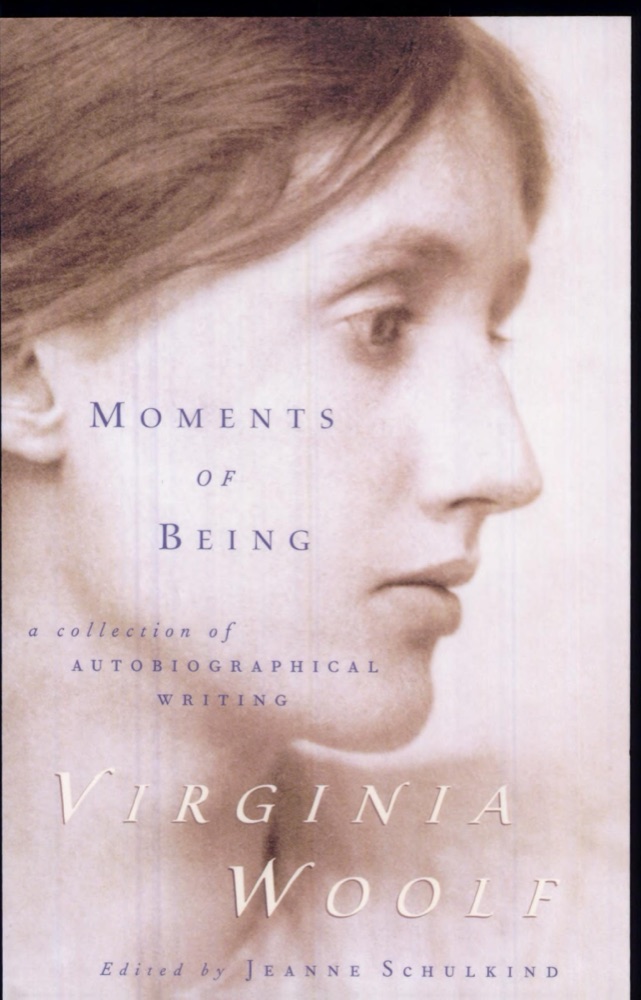
Moments of Being contains Virginia Woolf's only autobiographical writing. In "Reminiscences," the first of five pieces, she focuses on the death of her mother, "the greatest disaster that could happen," and its effect on her father, the demanding Victorian patriarch. Three of the papers were composed to be read to the Memoir Club, a postwar regrouping of Bloomsbury, which exacted absolute candor of its members. "A Sketch of the Past" is the longest and most significant of the pieces, giving an account of Virginia Woolf's early years in the family household at 22 Hyde Park Gate. A recently discovered manuscript belonging to this memoir has provided material that further illuminates her relationship to her father, Leslie Stephen, who played a crucial role in her development as an individual and as a writer.
Book details
- First published
- 1976
- Author
- Virginia Woolf
- Genre
- Nonfiction
- Goodreads rating
- 4.20 (3k ratings)
Keep reading
 What I Loved
 Cold Enough for Snow
 Outline
 Prime of Life
 The Reader
 The Secret History
 Testament of Youth
 The Year of Magical Thinking
 Swann's Way
 Anthropology of an American Girl
 Devotion
 In Search of Lost Time
 Great House
 A Widow's Story
 The Lifted Veil
 A Small Indiscretion
 In the Heart of the Heart of the Country and Other Stories
 Parade
 Middlesex
 Childhood, Boyhood, Youth
 The Notebooks of Malte Laurids Brigge
 Journal of a Solitude
 The Swan Thieves
 Just Above My Head
 The Story of the Lost Child
 Imagine Me Gone
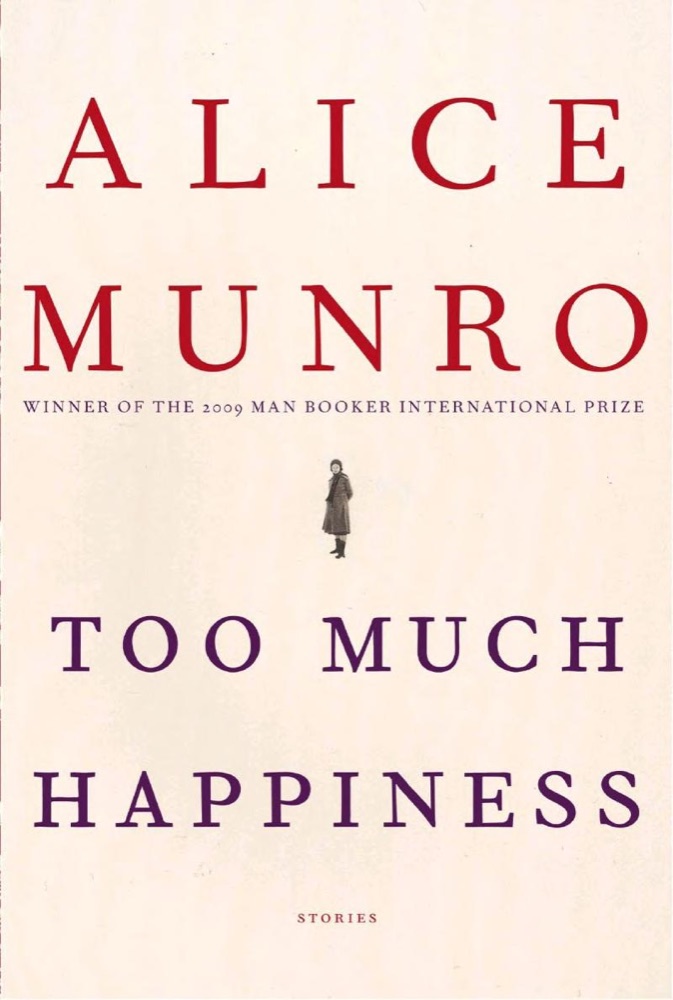 Too Much Happiness: Stories
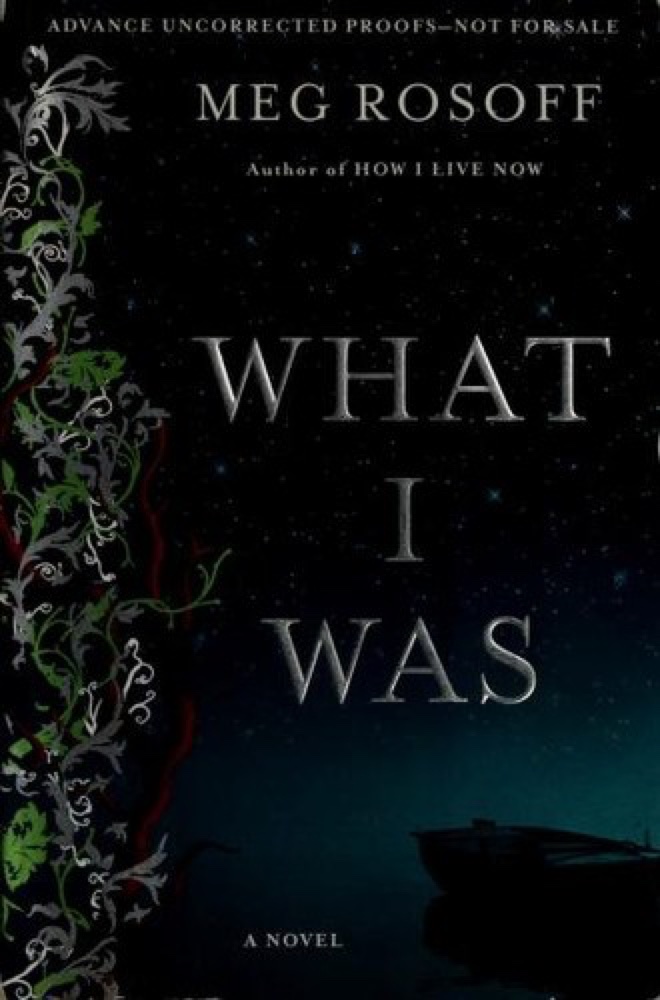 What I Was
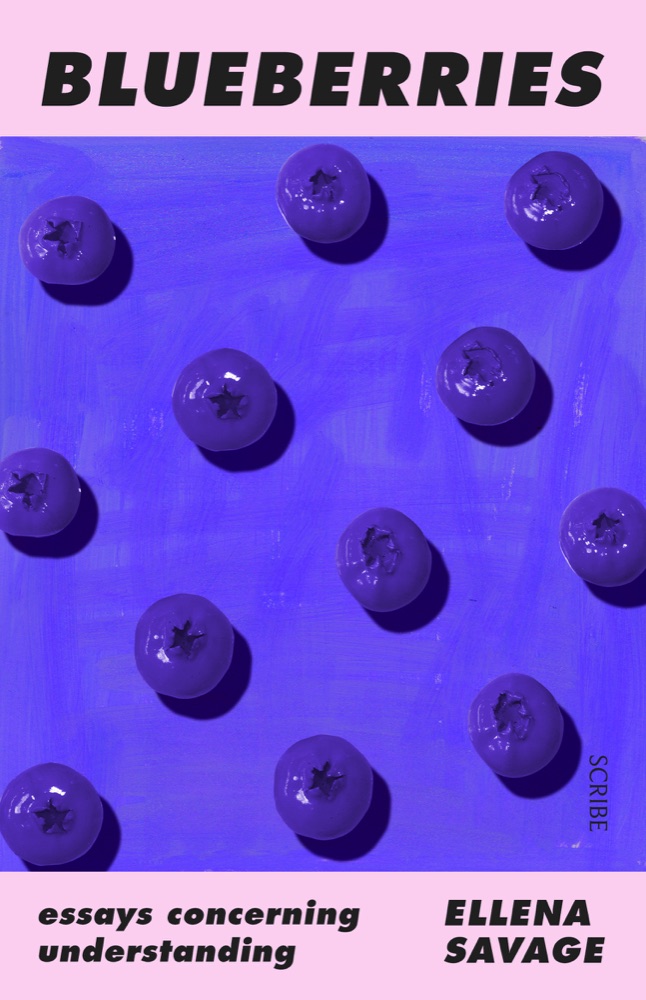 Blueberries: Essays Concerning Understanding
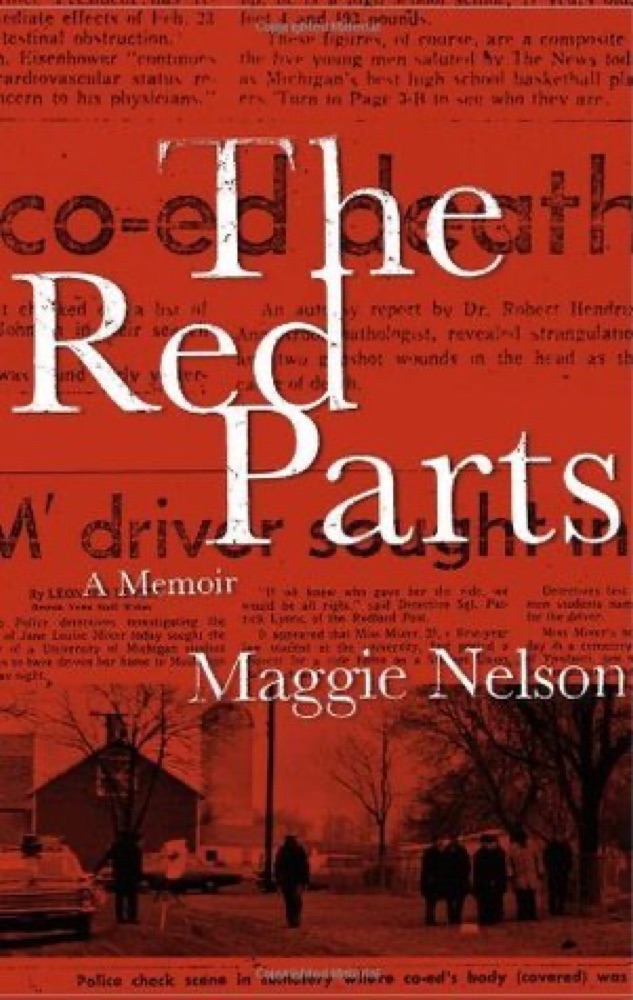 The Red Parts
 The Good Soldier
 Brideshead Revisited: The Sacred and Profane Memories of Captain Charles Ryder
 Biography of X
 Mother Mary Comes to Me
 Truth & Beauty
 Ghost Music
 Now Is the Time to Open Your Heart
 Burnt Sugar
 Warlight
 All That I Am
 My Ántonia
 Lincoln in the Bardo
 Devotion
 Agatha Christie: An Autobiography
 Johnny Panic and the Bible of Dreams: Short Stories, Prose and Diary Excerpts
 The Likeness
 The Tunnel
 In Memory of Memory
 Make It Scream, Make It Burn
 Dream Count
 Speak, Memory
 Em and The Big Hoom
 Rebecca
 The Wind-Up Bird Chronicle
 The White Book
 The Story of a New Name
 The Blazing World
 Identity
 First Love and Other Novellas
 The Collected Stories of Lydia Davis