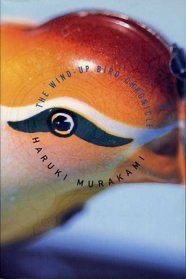

 1Q84
1Q84
Quotes from the Book
But even so, every now and then I would feel a violent stab of loneliness. The very water I drink, the very air I breathe, would feel like long, sharp needles. The pages of a book in my hands would take on the threatening metallic gleam of razor blades. I could hear the roots of loneliness creeping through me when the world was hushed at four o'clock in the morning.
Is it possible, in the final analysis, for one human being to achieve perfect understanding of another? We can invest enormous time and energy in serious efforts to know another person, but in the end, how close can we come to that person's essence? We convince ourselves that we know the other person well, but do we really know anything important about anyone?
Spend your money on the things money can buy. Spend your time on the things money can’t buy.
Memories and thoughts age, just as people do. But certain thoughts can never age, and certain memories can never fade.
Here's what I think, Mr. Wind-Up Bird," said May Kasahara. "Everybody's born with some different thing at the core of their existence. And that thing, whatever it is, becomes like a heat source that runs each person from the inside. I have one too, of course. Like everybody else. But sometimes it gets out of hand. It swells or shrinks inside me, and it shakes me up. What I'd really like to do is find a way to communicate that feeling to another person. But I can't seem to do it. They just don't get it. Of course, the problem could be that I'm not explaining it very well, but I think it's because they're not listening very well. They pretend to be listening, but they're not, really. So I get worked up sometimes, and I do some crazy things.
I realize full well how hard it must be to go on living alone in a place from which someone has left you, but there is nothing so cruel in this world as the desolation of having nothing to hope for.
In a place far away from anyone or anywhere, I drifted off for a moment.
I'm not so weird to me.
For both of us, it had simply been too enormous an experience. We shared it by not talking about it. Does this make any sense?
Have you ever had that feeling—that you’d like to go to a whole different place and become a whole different self?
To know one’s own state is not a simple matter. One cannot look directly at one’s own face with one’s own eyes, for example. One has no choice but to look at one’s reflection in the mirror. Through experience, we come to believe that the image is correct, but that is all.
Hatred is like a long, dark shadow. Not even the person it falls upon knows where it comes from, in most cases. It is like a two-edged sword. When you cut the other person, you cut yourself. The more violently you hack at the other person, the more violently you hack at yourself. It can often be fatal. But it is not easy to dispose of. Please be careful, Mr.Okada. It is very dangerous. Once it has taken root in your heart, hatred is the most difficult think in the world to shake off.
The point is, not to resist the flow. You go up when you're supposed to go up and down when you're supposed to go down. When you're supposed to go up, find the highest tower and climb to the top. When you're supposed to go down, find the deepest well and go down to the bottom. When there's no flow, stay still. If you resist the flow, everything dries up. If everything dries up, the world is darkness.
I'd be smiling and chatting away, and my mind would be floating around somewhere else, like a balloon with a broken string.
When you are used to the kind of life -of never getting anything you want- you stop knowing what it is you want.
Kumiko and I felt something for each other from the beginning. It was not one of those strong, impulsive feelings that can hit two people like an electric shock when they first meet, but something quieter and gentler, like two tiny lights traveling in tandem through a vast darkness and drawing imperceptibly closer to each other as they go. As our meetings grew more frequent, I felt not so much that I had met someone new as that I had chanced upon a dear old friend.
Holding this soft, small living creature in my lap this way, though, and seeing how it slept with complete trust in me, I felt a warm rush in my chest. I put my hand on the cat's chest and felt his heart beating. The pulse was faint and fast, but his heart, like mine, was ticking off the time allotted to his small body with all the restless earnestness of my own.
It’s like when you put instant rice pudding mix in a bowl in the microwave and push the button, and you take the cover off when it rings, and there you’ve got ricing pudding. I mean, what happens in between the time when you push the switch and when the microwave rings? You can’t tell what’s going on under the cover. Maybe the instant rice pudding first turns into macaroni gratin in the darkness when nobody’s looking and only then turns back into rice pudding. We think it’s only natural to get rice pudding after we put rice pudding mix in the microwave and the bell rings, but to me, that is just a presumption. I would be kind of relieved if, every once in a while, after you put rice pudding mix in the microwave and it rang and you opened the top, you got macaroni gratin. I suppose I’d be shocked, of course, but I don’t know, I think I’d be kind of relieved too. Or at least I think I wouldn’t be so upset, because that would feel, in some ways, a whole lot more real.
What we see before us is just one tiny part of the world. We get in the habit of thinking, this is the world, but that's not true at all. The real world is a much darker and deeper place than this, and much of it is occupied by jellyfish and things.
Everybody's born with some different thing at the core of their existence. And that thing, whatever it is, becomes like a heat source that runs each person from the inside. I have one too, of course. Like everybody else. But sometimes it gets out of hand. It swells or shrinks inside me, and it shakes me up. What I'd really like to do is find a way to communicate that feeling to another person.
Results aside, the ability to have complete faith in another human being is one of the finest qualities a person can possess.
Somewhere, far, far away, there's a shitty island. An island without a name. An island not worth giving a name. A shitty island with a shitty shape. On this shitty island grow palm trees that also have shitty shapes. And the palm trees produce coconuts that give off a shitty smell. Shitty monkeys live in the trees, and they love to eat these shitty-smelling coconuts, after which they shit the world's foulest shit. The shit falls on the ground and builds up shitty mounds, making the shitty palm trees that grown on them even shittier. It's an endless cycle.
I laughed. “You’re too young to be so … pessimistic,” I said, using the English word. “Pessi-what?” “Pessimistic. It means looking only at the dark side of things.” “Pessimistic … pessimistic …” She repeated the English to herself over and over, and then she looked up at me with a fierce glare. “I’m only sixteen,” she said, “and I don’t know much about the world, but I do know one thing for sure. If I’m pessimistic, then the adults in this world who are not pessimistic are a bunch of idiots.
You might think you made a new world or a new self, but your old self is always gonna be there, just below the surface, and if something happens, it'll stick its head out and say 'Hi.' You don't seem to realize that. You were made somewhere else.
Nothing so consumes a person as meaningless exertion
Between the end of that strange summer and the approach of winter, my life went on without change. Each day would dawn without incident and end as it had begun. It rained a lot in September. October had several warm, sweaty days. Aside from the weather, there was hardly anything to distinguish one day from the next. I worked at concentrating my attention on the real and useful. I would go to the pool almost every day for a long swim, take walks, make myself three meals. But even so, every now and then I would feel a violent stab of loneliness. The very water I drank, the very air I breathed, would feel like long, sharp needles. The pages of a book in my hands would take on the threatening metallic gleam of razor blades. I could hear the roots of loneliness creeping through me when the world was hushed at four o'clock in the morning.
I don't know -- maybe the world has two different kinds of people, and for one kind the world is this completely logical, rice pudding place, and for the other it's all hit-or-miss macaroni gratin.
This person, this self, this me, finally, was made somewhere else. Everything had come from somewhere else, and it would all go somewhere else. I was nothing but a pathway for the person known as me.
I could disappear from the face of the earth, and the world would go on moving without the slightest twinge. Things were tremendously complicated, to be sure, but one thing was clear: no one needed me.
Did you know?
- The novel was originally published in Japan in three parts between 1994 and 1995 under the title Nejimaki-dori Kuronikuru.
- It was translated into English by Jay Rubin and first published in translation in 1997.
- The book won the Yomiuri Literary Prize, one of Japan's major literary awards.
- Much of the novel confronts Japan's wartime campaign in Manchuria during World War II.
- A recurring setting is a dry well in an abandoned house, where the protagonist descends to reflect.
About Haruki Murakami
Haruki Murakami is a Japanese writer whose novels and stories blend the mundane with surreal and dreamlike elements. His internationally acclaimed works include Norwegian Wood, Kafka on the Shore, and 1Q84.
More about the author →More by Haruki Murakami
All books by Haruki Murakami →

About the book
The Wind-Up Bird Chronicle is a novel by the Japanese author Haruki Murakami, first serialized and published in Japan in 1994-1995 and released in Jay Rubin's English translation in 1997. It follows Toru Okada, an unemployed young man living in a quiet Tokyo suburb, whose ordinary life unravels when his cat goes missing and then his wife, Kumiko, disappears. His search draws him into a netherworld beneath the city's placid surface, populated by strange women such as the clairvoyant Malta Kano, a war veteran named Lieutenant Mamiya, and a teenage neighbor, May Kasahara, and centered on a dry well in an abandoned house where Toru descends to think.
The book blends the conventions of a detective story with dreamlike surrealism, moving between Toru's domestic mystery and harrowing accounts of Japan's forgotten military campaign in Manchuria during World War II. Across its three parts, Murakami explores alienation, desire, hidden violence, and the porous boundary between the everyday and the uncanny, as his passive narrator is slowly forced into action against forces embodied by his sinister brother-in-law, the rising politician Noboru Wataya.
Widely regarded as one of Murakami's most ambitious works, the novel was awarded the Yomiuri Literary Prize and helped cement his international reputation. Its combination of realist detail and metaphysical strangeness, along with its confrontation of Japanese wartime history, has made it a frequent point of entry for readers discovering Murakami and a touchstone in discussions of contemporary literary fiction.
Key characters
- Toru OkadaPassive, unemployed protagonist and narrator
- Kumiko OkadaToru's wife, who disappears
- Noboru WatayaKumiko's antagonistic brother, a rising politician
- May KasaharaTeenage neighbor who befriends Toru
- Lieutenant MamiyaWar veteran haunted by traumatic memories of Manchuria
- Malta KanoClairvoyant who helps Toru search
Book details
- First published
- 1994
- Length
- 607 pages
- Reading time
- 37 hours
- Author
- Haruki Murakami
- Genre
- Fiction
- Goodreads rating
- 4.14 (322k ratings) →
- First line
- “When the phone rang I was in the kitchen, boiling a potful of spaghetti and whistling along to an FM broadcast of the overture of Rossini's 'The Thieving Magpie,' which has to be the perfect music for cooking pasta.”
If you liked this, read…
- 1Kafka on the ShoreAnother surreal Murakami novel weaving parallel narratives and the uncanny.
- 21Q84Murakami's later epic blending realism with an alternate, dreamlike reality.
- 3The Master and MargaritaA blend of the mundane and the fantastical rich in surreal symbolism.
Keep reading
 After the Quake
 Killing Commendatore
 Sputnik Sweetheart
 Life After Death
 No One Writes Back
 Moon Palace
 The Raw Shark Texts
 Mosquitoland
 The Beginning of Everything
 Night Train to Lisbon
 The Goldfinch
 The Dream of Perpetual Motion
 Leviathan
 Anthropology of an American Girl
 Tropic of Capricorn
 What I Loved
 The Saturday Night Ghost Club
 Engleby
 Schoolgirl
 The Likeness
 Smilla's Sense of Snow
 The Lake
 Sexing the Cherry
 The Complete Stories
 A Tale for the Time Being
 Dream Count
 The Shock of the Fall
 Any Human Heart
 Goodbye Days
 Wolf in White Van
 The Emperor of Gladness
 Animal Dreams
 The Complete Short Stories
 Turtle Diary
 The House of Hidden Meanings
 Every Exquisite Thing
 The Hundred Secret Senses
 The Year I Met You
 Flights
 The Book of Dreams
 Children of the Mind
 The Book of Illusions
 M Train
 Nausea
 How High We Go in the Dark
 Oranges Are Not the Only Fruit
 All the Lovers in the Night
 Memoirs of a Geisha
 At the Edge of the Universe
 Love from A to Z
 The Dog Stars
 The Sea, the Sea
 Belong to Me
 The Year of Magical Thinking
 Drive Your Plow Over the Bones of the Dead
 Shampoo Planet
 The Gum Thief
 The Reader
 Pew
Pew
 In the Miso Soup