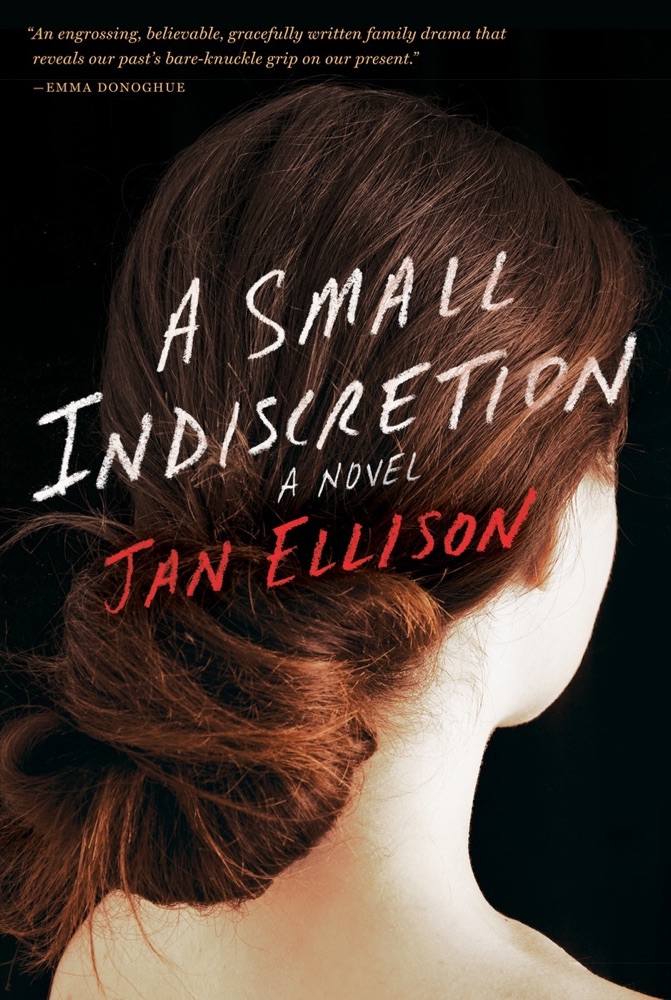

 What I Loved
Quotes from the Book
Denial, as any addict in recovery will tell you, is not defined as knowing something and pretending you don’t; it is failing to see it at all.
16
I suppose unrequited love is the hardest kind to shed because it is not really love at all. It is a half-love, and we are forever stomping around trying to get hold of the other half.
11
It was so undignified and unnecessary, the way married people behaved. The indiscriminate airing of grievances, the incessant flinging of blame and complaint. Of course, I had no idea back then what a marriage required. How the resentments and oversights and misunderstandings could pile up, sometimes moving ordinary kindness beyond reach. Love piled up, too, if you were lucky, but it seemed to be locked away in a separate compartment, sometimes unreachable when it was needed most.
8
Perhaps blame is the way the universe organizes itself around tragedy and loss. Without blame, suffering is random, and that kind of randomness leads to madness.
6
Stories don't like to end when you want them to, do they? Loose ends aren't easy to snip with scissors or tuck inside a hem. They tempt you. They want you to keep pulling until there is nothing left to keep you warm.
3
I told him because I wanted what everybody wants—to be known. To know oneself, and to tell the whole story of that self, and to be loved anyway.
3
Not a day or an hour and sometimes not even a moment in advance did I have any idea what Patrick had in mind for me, or whether he had me in mind at all. This uncertainty lay like a sore under the surface of my skin, erupting again and again, then subsiding, but never healing.
2
If, when I looked, I was not perfect, how could I be beautiful? And if I was not beautiful, how could I be loved? I was not the only woman who ran that script.
2
All of it was rushing together, making a psychedelic mess of my heart.
2
He had a strange way of talking, his head tucked into his neck and his eyes fixed in the empty space beyond, as if something were suspended there, ripe fruit or a glimmer of light, as if he were not quite brave enough, or perhaps too polite, to look a person in the eye.
1
It seems to me now that what I wanted when I set off for Europe was not so much adventure as deliverance.
1
It was possible to rush forward, looking back, and break your neck.
1
We are only flesh and blood. We are only chemicals mixing and circuits firing, sometimes in disarray. We are, every last one of us, plagued by useless want.
1
The heart is large, and there is more than one material in the bucket we call love.
1
After all, experiencing something is not the same as remembering it. A memory is by its nature a revision.
1
They say people who are bipolar see colors differently when in a manic state. What did Emme see when I showed her the photo a few days later?
1
unrequited love is the best kind. But I can tell you with certainty, Robbie, that the other kind of love, the kind I received from your father for more than two decades, is far more necessary.
1
we can achieve happiness not by remaking ourselves, but by subverting unhappiness.
1
Unrequited love is the best kind of all. But I can tell you with certainty, Robbie, that the other kind of love, the kind I received from your father for more than two decades, is far more necessary.
1
I suppose that unrequited love is the hardest kind to shed because it is not really love at all. It is a half-love, and we are forever stomping around trying to get ahold of the other half.
1
What happens to a marriage? A persistent failure of kindness, triggered at first, at least in my case, by the inequities of raising children, the sacrifices that take a woman by surprise and that she expects to be matched by her mate but that biology ensures cannot be. Anything could set me off. Any innocuous habit or slight or oversight. The way your father left the lights of the house blazing, day and night. The way he could become so distracted at work that sometimes when I called, he’d put me on hold and forget me, only remembering again when I’d hung up and called back. The way he wore his pain so privately, whistling around the house after we’d had a spat, pretending nonchalance, protecting you and your sisters from discord, hiding behind his good nature, inadvertently
1
You can’t rely on memory. You can’t rely on ancient artifacts, either, to tell you a story you can live with. You can rely only on the sculpture of your life you carve out of the available material, the one that stands by while you muddle your way into your future.
Confessions. For whose benefit besides one’s own?
knew it wasn’t the right kind of love, because it required nothing of me. I did not need to worry about keeping it alive or putting it out since it was kept alive quite independently of anything I might or might not do. He would not be someone who demanded anything of me. He would hold on to whatever pieces I offered him, however flawed they might be. It did not bind me to him—somehow, it freed me.
fucking parking spot.” The woman hauled herself out of the front seat. Her face wrinkled with the effort and her small, old eyes leaked and blinked in the sun. Your father took a step back. He stood for a moment, shoved his hands in his pockets, and crossed the parking lot toward me, the rage fading and his face becoming again the mask it had been since I’d returned from London and, four days before, made my foolish confession—a mask I no longer had a right to question or remove. We exited the structure and pulled into a handicapped spot in front of the emergency room entrance and ran. I held my sunglasses in my left hand and clutched my purse with my right. I had forgotten my sweater. Your father flung his windbreaker over his shoulder and the zipper stung my cheek, the beginnings of retribution, perhaps, for a past that had long ago laid down the invisible blueprint of our future.
[we] made love, though it was a stretch to call it that. I was making love, I think; he was taking what I made.
Standing there, I came face-to-face with the unwelcome finality of death. What can you do with it? It stops you cold when you think of it; it leaves you no out.
I hoped with every mothering cell in my body. I hoped with every scrap of power and will, every particle of knowing you, the years and years of you, the joy and hurt, the work and pride, the worry and love. I hoped until it hurt. I hoped so hard I felt it finally turn to prayer.
The photo is there in the hatbox, evidence that all the people I love best in the world were once in the same house, at the same time, healthy and whole, celebrating the season together.
Watch on YouTube
About Jan Ellison
We have collected 29 quotes from 1 book by Jan Ellison on BookQuoters.
More about the author →About the book
With the emotional complexity of Everything I Never Told You and the psychological suspense of The Girl on the Train, O. Henry Prize winner Jan Ellison delivers a brilliantly paced, beautifully written debut novel about one woman's reckoning with a youthful mistake.
Named one of the best books of the year by San Francisco Chronicle
At nineteen, Annie Black trades a bleak future in a washed-out California town for a London winter of drinking and abandon. Twenty years later, she is a San Francisco lighting designer and happily married mother of three who has put her reckless youth behind her. Then a photo from that distant winter in Europe arrives inexplicably in her mailbox, and an old obsession is awakened.
Past and present collide, Annie's marriage falters, and her son takes a car ride that ends with his life hanging in the balance. Now Annie must confront her own transgressi
Book details
- First published
- 2015
- Author
- Jan Ellison
- Genre
- Fiction
- Goodreads rating
- 3.56 (9k ratings)
Keep reading
What I Loved
 Swimming in the Dark
 The Reader
 The Crane Wife: A Memoir in Essays
 The Valley of Amazement
 The First Bad Man
 First Love
 Disgrace
 Em and The Big Hoom
 Enduring Love
 Requiem
 The Book of Love
 Make It Scream, Make It Burn
 Just Above My Head
 All Fours
 Summer Days and Summer Nights: Twelve Love Stories
 Honey, Baby, Sweetheart
 Panenka
 The Silent Patient
 Tempted
 Trust: Betrayed
 What Is the What
 Crossed
 Here I Am
 Dearest Josephine
 Middlesex
 You Could Make This Place Beautiful
 The Girl Before
 Under the Udala Trees
 Dreams of Falling
 Good Morning, Destroyer of Men's Souls: A Memoir of Women, Addiction, and Love
 Thirst for Salt
 The Love Song of Miss Queenie Hennessy
 Extraordinary Means
 The Impossible Lives of Greta Wells
 The Nice and the Good
 Stay
Stay
 Imagine Me Gone
 The Passion
 Belong to Me
 The Last Summer (of You and Me)
 The Rachel Incident
 Handle with Care
 Atonement
 Anthropology of an American Girl
 The Hundred Secret Senses
 Broken Country
 Stay with Me
 The Lies About Truth
 Men Without Women
 The Night We Lost Him
 The Color Master: Stories
 The Bookshop at Water's End
 They're Going to Love You
 Our Chemical Hearts
 My Darling Dreadful Thing
 The Space Between
 Memorizing You
 The Inexplicable Logic of My Life