
 Tenth of December
Quotes from the Book
His mind was freshly inclined toward sorrow; toward the fact that the world was full of sorrow; that everyone labored under some burden of sorrow; that all were suffering; that whatever way one took in this world, one must try to remember that all were suffering (none content; all wronged, neglected, overlooked, misunderstood), and therefore one must do what one could to lighten the load of those with whom one came into contact; that his current state of sorrow was not uniquely his, not at all, but, rather, its like had been felt, would be felt, by scores of others, in all times, in every time, and must not be prolonged or exaggerated, because, in this state, he could be of no help to anyone and, given that his position in the world situated him to be either of great help, or great harm, it would not do to stay low, if he could help it.
147
Everything was real; inconceivably real, infinitely dear. These and all things started as nothing, latent within a vast energy-broth, but then we named them, and loved them, and, in this way, brought them forth. And now we must lose them.
132
Strange, isn't it? To have dedicated one's life to a certain venture, neglecting other aspects of one's life, only to have that venture, in the end, amount to nothing at all, the products of one's labors ultimately forgotten?
100
Only then (nearly out the door, so to speak) did I realize how unspeakably beautiful all of this was, how precisely engineered for our pleasure, and saw that I was on the brink of squandering a wondrous gift, the gift of being allowed, every day, to wander this vast sensual paradise, this grand marketplace lovingly stocked with every sublime thing.
96
What I mean to say is, we had been considerable. Had been loved. Not lonely, not lost, not freakish, but wise, each in his or her own way. Our departures caused pain. Those who had loved us sat upon their beds, heads in hand; lowered their faces to tabletops, making animal noises. We had been loved, I say, and remembering us, even many years later, people would smile, briefly gladdened at the memory.
78
There was nothing left for me to do, but go. Though the things of the world were strong with me still. Such as, for example: a gaggle of children trudging through a side-blown December flurry; a friendly match-share beneath some collision-titled streetlight; a frozen clock, a bird visited within its high tower; cold water from a tin jug; towering off one’s clinging shirt post-June rain. Pearls, rags, buttons, rug-tuft, beer-froth. Someone’s kind wishes for you; someone remembering to write; someone noticing that you are not at all at ease. A bloody ross death-red on a platter; a headgetop under-hand as you flee late to some chalk-and-woodfire-smelling schoolhouse. Geese above, clover below, the sound of one’s own breath when winded. The way a moistness in the eye will blur a field of stars; the sore place on the shoulder a resting toboggan makes; writing one’s beloved’s name upon a frosted window with a gloved finger. Tying a shoe; tying a knot on a package; a mouth on yours; a hand on yours; the ending of the day; the beginning of the day; the feeling that there will always be a day ahead. Goodbye, I must now say goodbye to all of it. Loon-call in the dark; calf-cramp in the spring; neck-rub in the parlour; milk-sip at end of day. Some brandy-legged dog proudly back-ploughs the grass to cover its modest shit; a cloud-mass down-valley breaks apart over the course of a brandy-deepened hour; louvered blinds yield dusty beneath your dragging finger, and it is nearly noon and you must decide; you have seen what you have seen, and it has wounded you, and it seems you have only one choice left. Blood-stained porcelain bowl wobbles face down on wood floor; orange peel not at all stirred by disbelieving last breath there among that fine summer dust-layer, fatal knife set down in pass-panic on familiar wobbly banister, later dropped (thrown) by Mother (dear Mother) (heartsick) into the slow-flowing, chocolate-brown Potomac. None of it was real; nothing was real. Everything was real; inconceivably real, infinitely dear. These and all things started as nothing, latent within a vast energy-broth, but then we named them, and loved them, and in this way, brought them forth. And now we must lose them. I send this out to you, dear friends, before I go, in this instantaneous thought-burst, from a place where time slows and then stops and we may live forever in a single instant. Goodbye goodbye good-
64
He came out of nothingness, took form, was loved, was always bound to return to nothingness. Only I did not think it would be so soon. Or that he would precede us. Two passing temporarinesses developed feelings for one another. Two puffs of smoke became mutually fond. I mistook him for a solidity, and now must pay. I am not stable and Mary not stable and the very buildings and monuments here not stable and the greater city not stable and the wide world not stable. All alter, are altering, in every instant. (Are you comforted?) No. (It
58
All over now. He is either in joy or nothingness. (So why grieve? The worst of it, for him, is over.) Because I loved him so and am in the habit of loving him and that love must take the form of fussing and worry and doing.
40
When a child is lost there is no end to the self-torment a parent may inflict. When we love, and the object of our love is small, weak, and vulnerable, and has looked to us and us alone for protection; and when such protection, for whatever reason, has failed, what consolation (what justification, what defense) may there possibly be?
39
His mind was freshly inclined to sorrow; toward the fact that the world was full of sorrow; that all were suffering; that whatever way one took in the world one must try to remember that all were suffering (non content all wronged, neglected, overlooked, misunderstood), and therefore one must do what one could to lighten the load of those with whom one came into contact; that his current state of sorrow was not uniquely his, not at all, but rather, its like had been felt, would yet be felt, by scores of others in all times, in every time, and must not be prolonged or exaggerated, because, in this state, he could be of no help to anyone, and given that his position in the world situated him to be either of great help or great harm, it would not do to stay low, if he could help it. All were in sorrow, or had been, or soon would be. It was the nature of things. Though on the surface is seemed every person was different, this was not true. At the core of each lay suffering; our eventual end; the many loses we must experience on the way to that end. We must try to see one another in this way. As suffering limited beings- Perennially outmatched by circumstance, inadequately endowed with compensatory graces. His sympathy extended to all in this instant, blundering in its strict logic, across all divides.
32
I was in error when I saw him as fixed and stable and thought I would have him forever. He was never fixed, nor stable, but always just a passing, temporary energy-burst.
25
No one who has ever done anything worth doing has gone uncriticized.
24
One feels such love for the little ones, such anticipation that all that is lovely in life will be known by them, such fondness for that set of attributes manifested uniquely in each: mannerisms of bravado, of vulnerability, habits of speech and mispronouncement and so forth; the smell of the hair and head, the feel of the tiny hand in yours—and then the little one is gone! Taken! One is thunderstruck that such a brutal violation has occurred in what had previously seemed a benevolent world. From nothingness, there arose great love; now, its source nullified, that love, searching and sick, converts to the most abysmal suffering imaginable.
23
We were perhaps not so unlovable as we had come to believe.
22
And there was nothing left for me to do, but go. Though the things of the world were strong with me still. Such as, for example: a gaggle of children trudging through a side-blown December flurry; a friendly match-share beneath some collision-tilted streetlight; a frozen clock, bird-visited within its high tower; cold water from a tin jug; toweling off one’s clinging shirt post–June rain. Pearls, rags, buttons, rug-tuft, beer-froth. Someone’s kind wishes for you; someone remembering to write; someone noticing that you are not at all at ease.
20
And that, against this: the king-types who would snatch the apple from your hand and claim to have grown it, even though what they had, had come to them intact, or been gained unfairly (the nature of that unfairness perhaps being just that they had been born stronger, more clever, more energetic than others), and who, having seized the apple, would eat it so proudly, they seemed to think that not only had they grown it, but had invented the very idea of fruit, too,
17
Oh, the pathos of it! - haggard, drawn into fixed lines of unutterable sadness, with a look of loneliness, as of a soul whose depth of sorrow and bitterness no human sympathy could ever reach. The impression I carried away was that I had seen, not so much the President of the United States, as the saddest man in the world.
13
We must see God not as a Him (some linear rewarding fellow) but an IT, a great beast beyond our understanding, who wants something from us, and we must give it, and all we may control is the spirit in which we give it and the ultimate end which the giving serves.
13
Trap. Horrible trap. At one’s birth it is sprung. Some last day must arrive. When you will need to get out of this body. Bad enough. Then we bring a baby here. The terms of the trap are compounded. That baby also must depart. All pleasures should be tainted by that knowledge. But hopeful dear us, we forget. Lord, what is this?
13
The thousand dresses, laid out so reverently that afternoon, flecks of dust brushed off carefully in doorways, hems gathered up for the carriage trip: where are they now? Is a single one museum-displayed? Are some few yet saved in attics? Most are dust. As are the women who wore them so proudly in that transient moment of radiance.
11
Across the sea fat kings watched and were gleeful, that something begun so well had now gone off the rails (as down South similar kings watched), and if it went off the rails, so went the whole kit, forever, and if someone ever thought to start it up again, well, it would be said (and said truly): The rabble cannot manage itself. Well, the rabble could. The rabble would. He would lead the rabble in managing. The thing would be won.
10
Strange, isn’t it? To have dedicated one’s life to a certain venture, neglecting other aspects of one’s life, only to have that venture, in the end, amount to nothing at all, the products of one’s labors utterly forgotten?
10
Because I loved him so and am in the habit of loving him and that love must take the form of fussing and worry and doing. Only
9
There was a touch of prairie about the fellow. --hans vollman Yes. --roger bevins iii Like stepping into a summer barn late at night. --hans vollman Or a musty plains office, where some bright candle still burns. --roger bevins iii Vast. Windswept. New. Sad. --hans vollman Spacious. Curious. Doom-minded. Ambitious. --roger bevins iii Back slightly out. --hans vollman Right boot chafing. --roger bevins iii
8
And there was nothing left for me to do, but go. Though the things of the world were strong with me still. Such as, for example: a gaggle of children trudging through a side-blown December flurry; a friendly match-share beneath some collision-tilted streetlight; a frozen clock, bird-visited within its high tower; cold water from a tin jug; toweling off one’s clinging shirt post–June rain. Pearls, rags, buttons, rug-tuft, beer-froth. Someone’s kind wishes for you; someone remembering to write; someone noticing that you are not at all at ease. A bloody roast death-red on a platter; a hedgetop under-hand as you flee late to some chalk-and-woodfire-smelling schoolhouse. Geese above, clover below, the sound of one’s own breath when winded. The way a moistness in the eye will blur a field of stars; the sore place on the shoulder a resting toboggan makes; writing one’s beloved’s name upon a frosted window with a gloved finger. Tying a shoe; tying a knot on a package; a mouth on yours; a hand on yours; the ending of the day; the beginning of the day; the feeling that there will always be a day ahead.
7
I felt myself a new species of child. Not a boy (most assuredly) but neither a (mere) girl. That skirt-bound race perpetually moving about serving tea had nothing to do with me. I had such high hopes, you see. The boundaries of the world seemed vast. I would visit Rome, Paris, Constantinople. Underground cafés presented in my mind where, crushed against wet walls, a (handsome, generous) friend and I sat discussing—many things. Deep things, new ideas. Strange green lights shone in the streets, the sea lapped nearby against greasy tilted moorings; there was trouble afoot, a revolution, into which my friend and I must— Well, as is often the case, my hopes were…not realized.
7
Did you know?
- The novel won the 2017 Booker Prize and was George Saunders's debut novel.
- It is set over a single night in 1862 following the death of Lincoln's son Willie.
- The title refers to the bardo, a Tibetan Buddhist intermediate state between death and rebirth.
- The story is told through a collage of ghostly voices and quoted historical and fabricated source passages.
- The full-cast audiobook features 166 voices, including actors such as Nick Offerman, Megan Mullally, and Don Cheadle.
- The New York Times later named it among the best books of the 21st century.
About George Saunders
George Saunders is an American writer best known for his short fiction, including the collections "Tenth of December" and "Pastoralia." A longtime professor in the creative writing program at Syracuse University, he won the 2017 Booker Prize for "Lincoln in the Bardo," his first novel.
More about the author →More by George Saunders
All books by George Saunders →
About the book
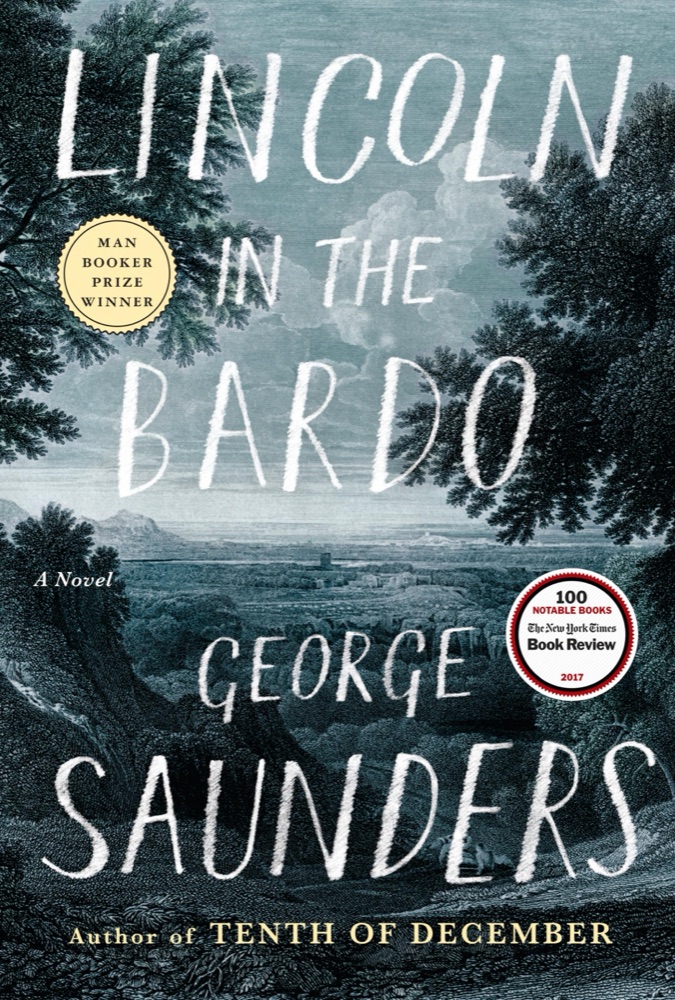
"Lincoln in the Bardo" is George Saunders's first full-length novel, set over a single February night in 1862 at a Georgetown cemetery where President Abraham Lincoln's eleven-year-old son Willie has just been buried. Grief-stricken, Lincoln visits the crypt to hold his dead son's body, while around him a chorus of ghosts who linger in a transitional state observe the scene and recount their own unfinished lives. The novel takes its title from the bardo, the Tibetan Buddhist concept of an intermediate realm between death and rebirth, where the dead remain because they cannot accept that they have died.
The book is built almost entirely from fragmentary voices: ghostly first-person testimony interleaved with quoted passages from historical (and invented) sources, so that the narrative emerges collage-like from competing accounts. Its central concerns are grief, mortality, empathy, and the difficulty of letting go, as the spirits' refusal to move on mirrors Lincoln's anguish and the larger sorrow of a nation entering the Civil War. Through this polyphonic form Saunders explores how compassion can be extended across the boundaries of class, race, and even death itself.
"Lincoln in the Bardo" won the 2017 Booker Prize and became a New York Times bestseller, earning wide acclaim for its formal inventiveness and emotional generosity. Critics praised its humane vision, and the work was later included by The New York Times among the best books of the 21st century. An ambitious full-cast audiobook featuring 166 voices brought further attention to its chorus-of-voices structure.
Key characters
- Abraham LincolnThe grieving U.S. president who visits his dead son's crypt
- Willie LincolnLincoln's eleven-year-old son, newly arrived in the bardo
- Hans VollmanA printer who died before consummating his marriage, one of three main narrators
- Roger Bevins IIIA young man who took his own life, a primary narrating spirit
- The Reverend Everly ThomasA spirit who, unlike the others, knows he is dead
Book details
- First published
- 2017
- Length
- 368 pages
- Reading time
- 5 hours
- Author
- George Saunders
- Genre
- Fiction
- Goodreads rating
- 3.75 (183k ratings)
Critical reception
- Won the 2017 Booker Prize.
- Became a New York Times bestseller.
- Novelist Colson Whitehead called it "a luminous feat of generosity and humanism."
- Later named by The New York Times among the best books of the 21st century.
Keep reading
 Brideshead Revisited: The Sacred and Profane Memories of Captain Charles Ryder
 The Tunnel
 Jayber Crow
 The Dean's Watch
 Absalom, Absalom!
 Phantastes
 You Can't Go Home Again
 In Search of Lost Time
 The Narrow Road to the Deep North
 March
March
 Testament of Youth
 One of Ours
 Just Above My Head
 The Untouchable
 Tinkers
 The Etched City
 Oblomov
 The Great Mistake
 Bleak House
 The Pox Party
 The Inheritance of Loss
 Christmas Holiday
 Spring Snow
 The Quick and the Dead
 Swann's Way
 Light Years
 A Soldier of the Great War
 In the Heart of the Heart of the Country and Other Stories
 This Is Happiness
 To Paradise
 Look Homeward, Angel
 The Round House
 The Story of the Lost Child
 The Good Soldier
 Chances Are...
 Hell
Hell
 Sword & Citadel
 The Children's Book
 Weaveworld
 Dubliners
 Independent People
 Childhood, Boyhood, Youth
 A Small Indiscretion
 My Friends
 Oliver Twist
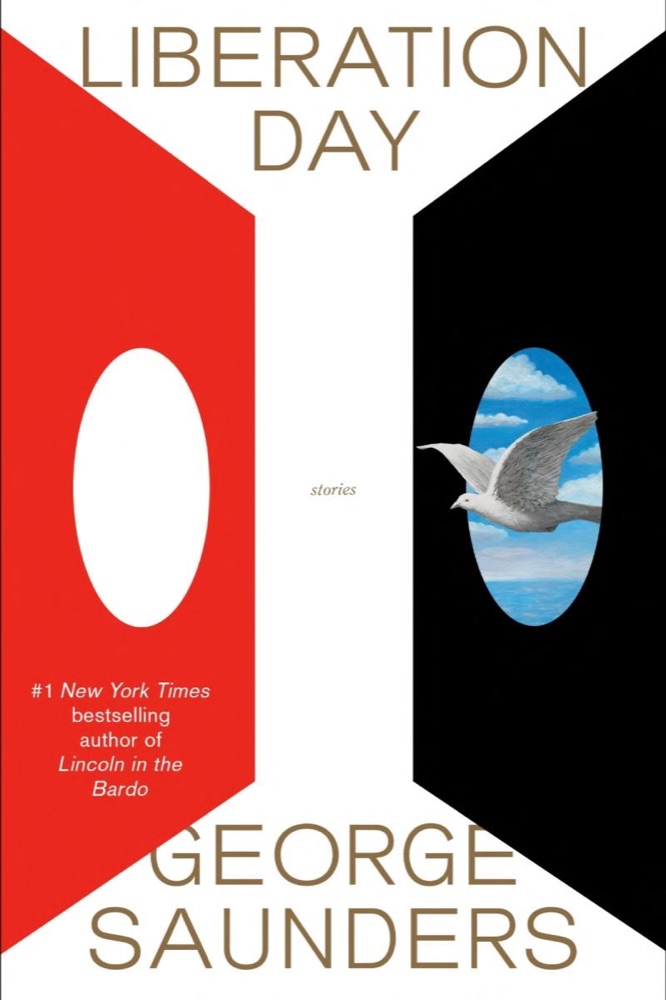 Liberation Day
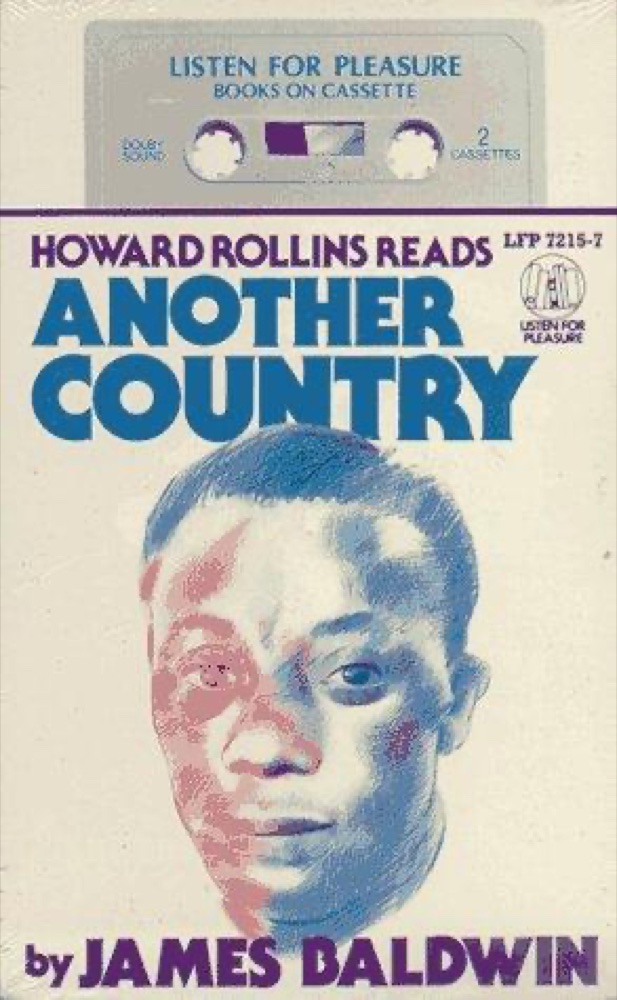 Another Country
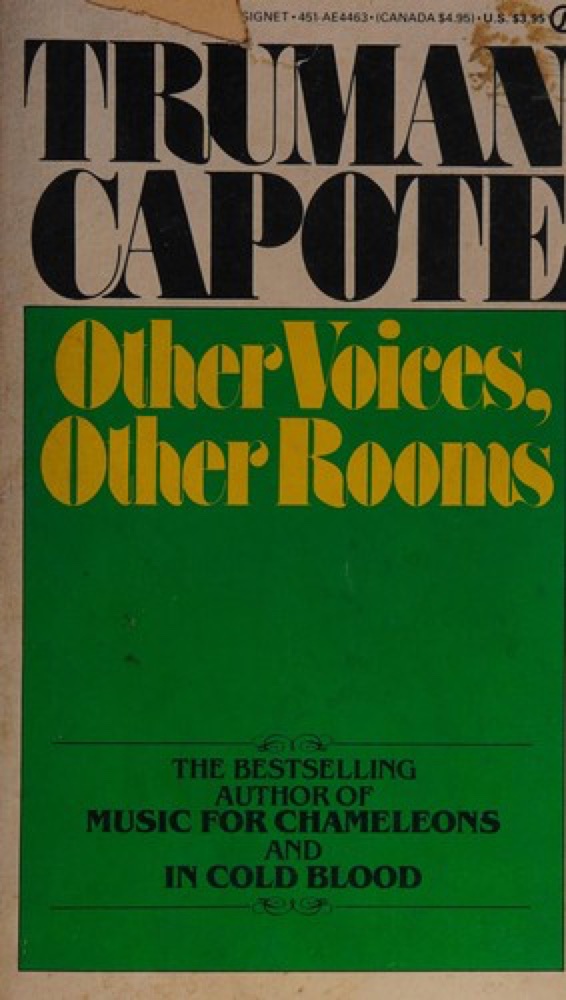 Other Voices, Other Rooms
 Winesburg, Ohio
 All the King's Men
 The Old Curiosity Shop
 Washington Black
 Miss Lonelyhearts
 Klingsor's Last Summer
 The Clockmaker's Daughter
 Moments of Being: A Collection of Autobiographical Writing
 The Sweetness of Water
 All Passion Spent
Tenth of December
All Passion Spent
Tenth of December
 The Well of Loneliness