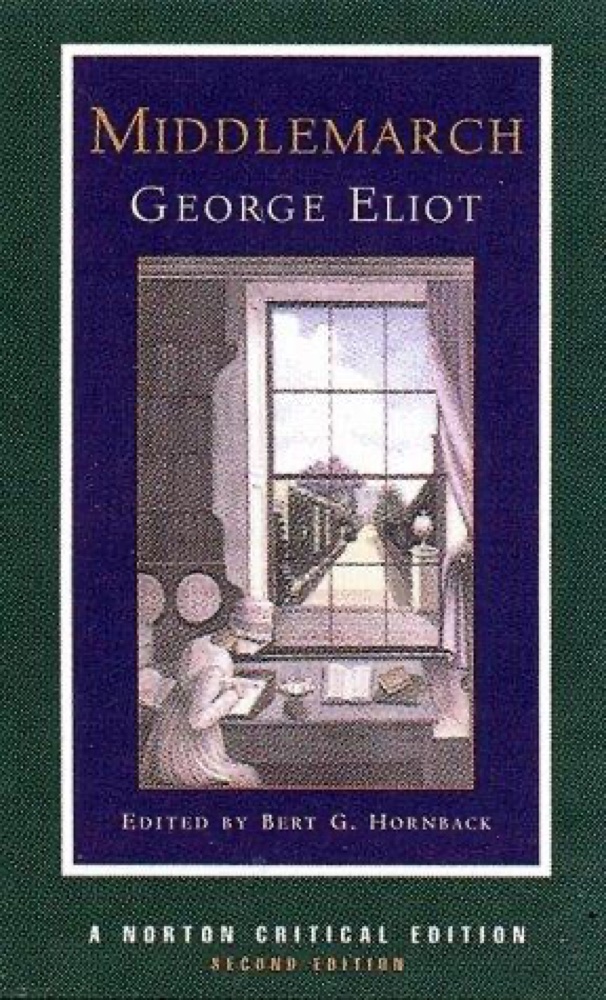
 Middlemarch
Quotes from the Book
We learn words by rote, but not their meaning; that must be paid for with our life-blood, and printed in the subtle fibres of our nerves.
45
While the heart beats, bruise it--it is your only opportunity
22
I have never fully unbosomed myself to any human being; I have never been encouraged to trust much in the sympathy of my fellow men. But we have all a chance of meeting with some pity, some tenderness, some charity, when we are dead: it is the living only who cannot be forgiven - the living only from whom men's indulgence and reverence are held off, like the rain by the hard east wind. While the heart beats, bruise it - it is your only opportunity; while the eye can still turn towards you with moist, timid entreaty, freeze it with an icy unanswering gaze; while the ear, that delicate messenger to the inmost sanctuary of the soul, can still take in the tones of kindness, put it off with hard civility, or sneering compliment, or envious affectation of indifference; while the creative brain can still throb with the sense of injustice, with the yearning for brotherly recognition - make haste - oppress it with your ill-considered judgements, your trivial comparisons, your careless misrepresentations. The heart will by and by be still - ubi saeoa indignatio ulterius cor lacerate nequit; the eye will cease to entreat; the ear will be deaf; the brain will have ceased from all wants as well as from all work. Then your charitable speeches may find vent; then you may remember and pity the toil and the struggle and the failure; then you may give due honour to the work achieved; then you may find extenuation for errors, and may consent to bury them.
20
Our sweet illusions are half of them conscious illusions, like effects of colour that we know to be made up of tinsel, broken glass and rags.
12
I magnified, as usual, the impression any word or deed of mine could produce on others.
10
I thirsted for the unknown: the thirst is gone. O God, let me stay with the known, and be weary of it: I am content.
10
It is an old story, that men sell themselves to the tempter, and sign a bond with their blood, because it is only to take effect at a distant day; then rush on to snatch the cup their souls thirst after with an impulse not the less savage because there is a dark shadow beside them forevermore. There is no short cut, no patent tram-road to wisdom: after all the centuries of invention, the soul's path lies through the thorny wilderness which must be still trodden in solitude, with bleeding feet, with sobs for help, as it was trodden by them of old time.
8
What! your wisdom thinks I must love the man I'm going to marry? The most unpleasant thing in the world. I should quarrel with him; I should be jealous of him; our menage would be conducted in a very ill-bred manner. A little quiet contempt contributes greatly to the elegance of life. ("The Lifted Veil")
8
My father was called away before he had finished his sentence, and he left my mind resting on the word Prague with a strange sense that a new and wondrous scene was breaking upon me: a city under the broad sunshine, that seemed to me as if it were summer sunshine of a long-past century arrested in its course-unrefreshed for ages by dews of night, or the rushing rain-cloud; scorching the dusty, weary, time-eaten grandeur of a people doomed to live on in the stale repetition of memories, like deposed and superannuated kings in their regal gold inwoven tatters. The city looked so thirsty that the broad river seemed to me a sheet of metal; and the blackened statues, as I passed under their blank gaze, along the unending bridge, with their ancient garments and their saintly crowns, seemed to me the real inhabitants and owners of this place, while the busy, trivial men and women, hurrying to and fro, were a swarm of ephemeral visitants infesting it for a day. It is such grim, stony beings as these, I thought, who are the fathers of ancient faded children, in those tanned time-fretted dwellings that crowd the steep before me; who pay their court in the worn and crumbling pomp of the palace which stretches its monotonous length on the height; who worship wearily in the stifling air of the churches, urged by no fear or hope, but compelled by their doom to be ever old and undying, to live on in the rigidity of habit, as they live on in perpetual midday, without the repose of night or the new birth of morning.
8
A better-constituted boy would certainly have profited under my intelligent tutors, with their scientific apparatus; and would, doubtless, have found the phenomena of electricity and magnetism as fascinating as I was, every Thursday, assured they were. As it was, I could have paired off, for ignorance of whatever was taught me, with the worst Latin scholar that was ever turned out of a classical academy. I read Plutarch, and Shakespeare, and Don Quixote by the sly, and supplied myself in that way with wandering thoughts, while my tutor was assuring me that "an improved man, as distinguished from an ignorant one, was a man who knew the reason why water ran downhill." I had no desire to be this improved man; I was glad of the running water; I could watch it and listen to it gurgling among the pebbles and bathing the bright green water-plants, by the hour together. I did not want to know why it ran; I had perfect confidence that there were good reasons for what was so very beautiful. ("The Lifted Veil")
8
Before marriage she had completely mastered my imagination, for she was a secret to me; and I created the unknown thought before which I trembled as if it were hers.
8
Just as I am watching a tongue of blue flame rising in the fire, and my lamp is burning low, the horrible contraction will begin in my chest. I shall only have time to reach the bell, and pull it violently, before the sense of suffocation will come. No one will answer my bell. I know why. My two servants are lovers, and will have quarrelled. My housekeeper will have rushed out of the house in a fury, two hours before, hoping that Perry will believe she has gone to drown herself. Perry is alarmed at last, and is gone out after her. The little scullery-maid is asleep on a bench: she never answers the bell; it does not wake her. The sense of suffocation increases: my lamp goes out with a horrible stench: I make a great effort, and snatch at the bell again. I long for life, and there is no help. I thirsted for the unknown: the thirst is gone. 0 God, let me stay with the known, and be weary of it. I am content. Agony of pain and suffocation - and all the while the earth, the fields, the pebbly brook at the bottom of the rookery, the fresh scent after the rain, the light of the morning through my chamber window, the warmth of the hearth after the frosty air - will darkness close over them for ever?
7
Conceive the condition of the human mind if all propositions whatsoever were self-evident except one, which was to become self-evident at the close of a summer’s day, but in the meantime might be the subject of question, of hypothesis, of debate. Art and philosophy, literature and science, would fasten like bees on that one proposition which had the honey of probability in it, and be the more eager because their enjoyment would end with sunset. Our impulses, our spiritual activities, no more adjust themselves to the idea of their future nullity, than the beating of our heart, or the irritability of our muscles.
7
A bride and bridegroom, surrounded by all the appliances of wealth, hurried through the day by the whirl of society, filling their solitary moments with hastily-snatched caresses, are prepared for their future life together as the novice is prepared for the cloister—by experiencing its utmost contrast.
7
I fancy my father thought me an odd child, and had little fondness for me; though he was very careful in fulfilling what he regarded as a parent's duties. But he was already past the middle of life, and I was not his only son. My mother had been his second wife, and he was five-and-forty when he married her. He was a firm, unbending, intensely orderly man, in root and stem a banker, but with a flourishing graft of the active landholder, aspiring to county influence: one of those people who are always like themselves from day to day, who are uninfluenced by the weather, and neither know melancholy nor high spirits. I held him in great awe, and appeared more timid and sensitive in his presence than at other times; a circumstance which, perhaps, helped to confirm him in the intention to educate me on a different plan from the prescriptive one with which he had complied in the case of my elder brother, already a tall youth at Eton. My brother was to be his representative and successor; he must go to Eton and Oxford, for the sake of making connexions, of course: my father was not a man to underrate the bearing of Latin satirists or Greek dramatists on the attainment of an aristocratic position. But intrinsically, he had slight esteem for "those dead but sceptred spirits"; having qualified himself for forming an independent opinion by reading Potter's Aeschylus, and dipping into Francis's Horace. To this negative view he added a positive one, derived from a recent connexion with mining speculations; namely, that scientific education was the really useful training for a younger son.
6
There is no short cut, no patent tram-road, to wisdom: after all the centuries of invention, the soul’s path lies through the thorny wilderness which must be still trodden in solitude, with bleeding feet, with sobs for help, as it was trodden by them of old time.
5
But now, at last, a sorrow had come—the sorrow of old age, which suffers the more from the crushing of its pride and its hopes, in proportion as the pride and hope are narrow and prosaic.
3
For continual suffering had annihilated religious faith within me: to the utterly miserable –the unloving and the unloved –there is no religion possible, no worship but a worship of devils.
3
For a long while she lived in the hope that my evident wretchedness would drive me to the commission of suicide; but suicide was not in my nature. I was too completely swayed by the sense that I was in the grasp of unknown forces, to believe in my power of self-release.
3
I was dead to worldly ambitions, to social vanities, to all the incentives within the compass of her narrow imagination, and I lived under influences utterly invisible to her.
3
It was as if the relation between me and my fellow-men was more and more deadened, and my relation to what we call the inanimate was quickened into new life.
2
But this superadded consciousness, wearying and annoying enough when it urged on me the trivial experience of indifferent people, became an intense pain and grief when it seemed to be opening to me the souls of those who were in a close relation to me — when the rational talk, the graceful attentions, the wittily-turned phrases, and the kindly deeds, which used to make the web of their characters, were seen as if thrust asunder by a microscopic vision, that showed all the intermediate frivolities, all the suppressed egoism, all the struggling chaos of puerilities, meanness, vague capricious memories, and indolent make-shift thoughts, from which human words and deeds emerge like leaflets covering a fermenting heap.
2
Brevity is justified at once to those who readily understand, and to those who will never understand.
2
That course of our life which I have indicated in a few sentences filled the space of years. So much misery—so slow and hideous a growth of hatred and sin, may be compressed into a sentence! And men judge of each other’s lives through this summary medium. They epitomize the experience of their fellow-mortal, and pronounce judgment on him in neat syntax, and feel themselves wise and virtuous—conquerors over the temptations they define in well-selected predicates. Seven years of wretchedness glide glibly over the lips of the man who has never counted them out in moments of chill disappointment, of head and heart throbbings, of dread and vain wrestling, of remorse and despair. We learn words by rote, but not their meaning; that must be paid for with our life-blood, and printed in the subtle fibres of our nerves.
2
We try to believe that the egoism within us would have easily been melted, and that it was only the narrowness of our knowledge which hemmed in our generosity, our awe, our human piety, and hindered them from submerging our hard indifference to the sensations and emotions of our fellows. Our tenderness and self-renunciation seem strong when our egoism has had its day—when, after our mean striving for a triumph that is to be another’s loss, the triumph comes suddenly, and we shudder at it, because it is held out by the chill hand of death.
2
A little quiet contempt contributes greatly to the elegance of life".
2
Mine, naturally, was the least expensive; it was an opal ring - the opal was my favourite stone, because it seems to blush and turn pale as if it had a soul.
1
Moreover, it was clear that a shy, sensitive boy like me was not fit to encounter the rough experience of a public school. Mr. Letherall had said so very decidedly.
1
Watch on YouTube
About George Eliot
We have collected 256 quotes from 9 books by George Eliot on BookQuoters.
More about the author →More by George Eliot
All books by George Eliot →
About the book
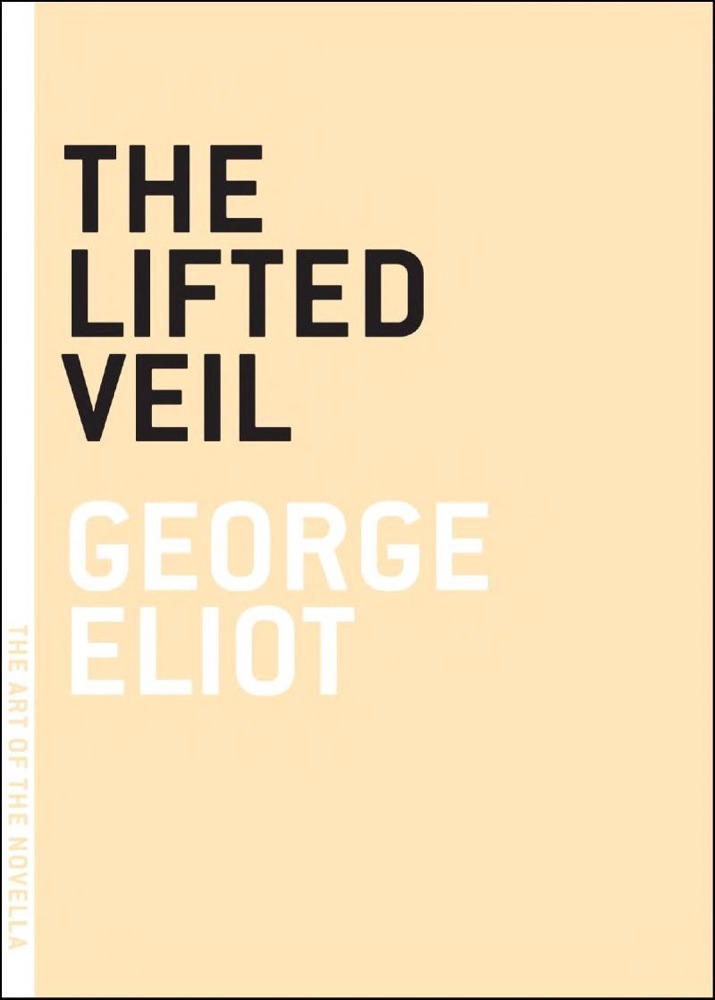
Horror was my familiar. Published the same year as her first novel, Adam Bede, this overlooked work displays the gifts for which George Eliot would become famous—gritty realism, psychological insight, and idealistic moralizing. It is unique from all her other writing, however, in that it represents the only time she ever used a first-person narrator, and it is the only time she wrote about the supernatural. The tale of a man who is incapacitated by visions of the future and the cacophony of overheard thoughts, and yet who can’t help trying to subvert his vividly glimpsed destiny, it is easy to read The Lifted Veil as being autobiographically revealing—of Eliot’s sensitivity to public opinion and her awareness that her days concealed behind a pseudonym were doomed to a tragic unveiling (as indeed came to pass soon after this novella’s publication). But it is easier still to read the story
Book details
- First published
- 1859
- Author
- George Eliot
- Genre
- Classics
- Goodreads rating
- 3.40 (6k ratings)
Keep reading
 The Guermantes Way
 Brideshead Revisited: The Sacred and Profane Memories of Captain Charles Ryder
 The Untouchable
 Swann's Way
 In Search of Lost Time
 Daniel Deronda
 Testament of Youth
 Agnes Grey
 Phantastes
 The Mill on the Floss
 The Tunnel
 The Last Man
 Uncle Silas
 Desperate Remedies
 Confessions of an English Opium Eater
 Melmoth the Wanderer
 The Life of Charlotte Brontë
 The Scarlet Letter
 Dubliners
 The Story of the Lost Child
 Lord Jim
 The Pox Party
 The Blithedale Romance
 Ada, or Ardor: A Family Chronicle
 Shadow & Claw
 Confessions
 Humboldt's Gift
 The Story of a New Name
 Dr. Jekyll and Mr. Hyde
 A Hero of Our Time
 Wieland and Memoirs of Carwin the Biloquist
 The Stories of Vladimir Nabokov
 Moments of Being: A Collection of Autobiographical Writing
 Shirley
 Oliver Twist
 March
March
 The Secret History
 My Friends
 The Well of Loneliness
 Outline
 Memoirs of Hadrian
 In the Heart of the Heart of the Country and Other Stories
 Selected Stories
 Selected Stories of Anton Chekhov
 Johnny Panic and the Bible of Dreams: Short Stories, Prose and Diary Excerpts
 Prime of Life
 The Complete Stories and Poems
 Taltos
 The Voyage Out
 The Scapegoat
 She
She
 Embers
 A Dance to the Music of Time: 1st Movement
 Confessions of a Mask
 Diary of a Drug Fiend
 Uncle Tom's Cabin
 The French Lieutenant's Woman
 Trust
Trust
 Absalom, Absalom!
 Burning Your Boats: The Collected Short Stories