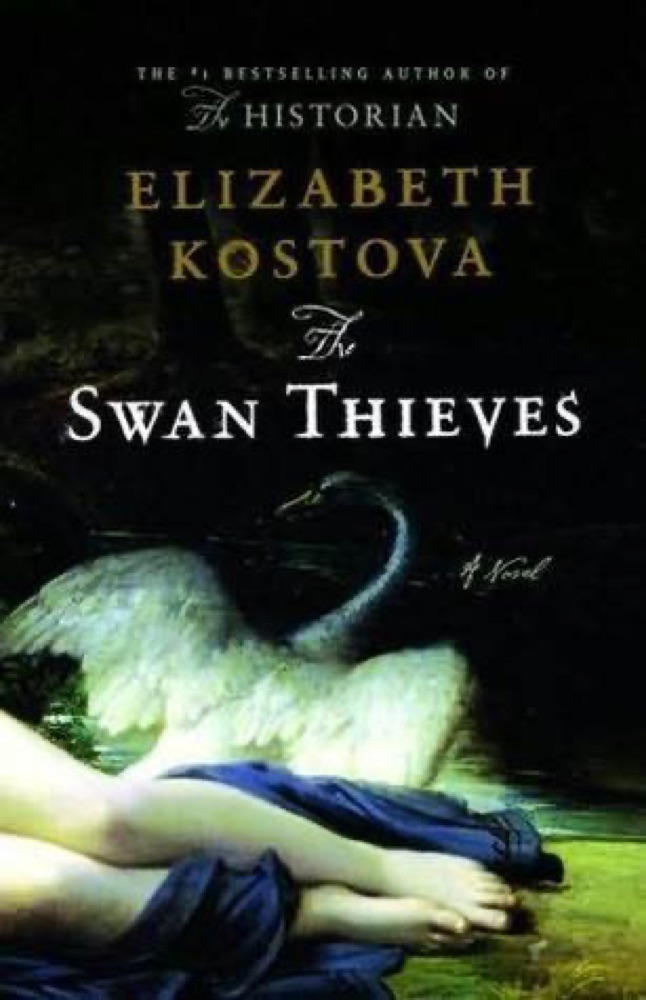

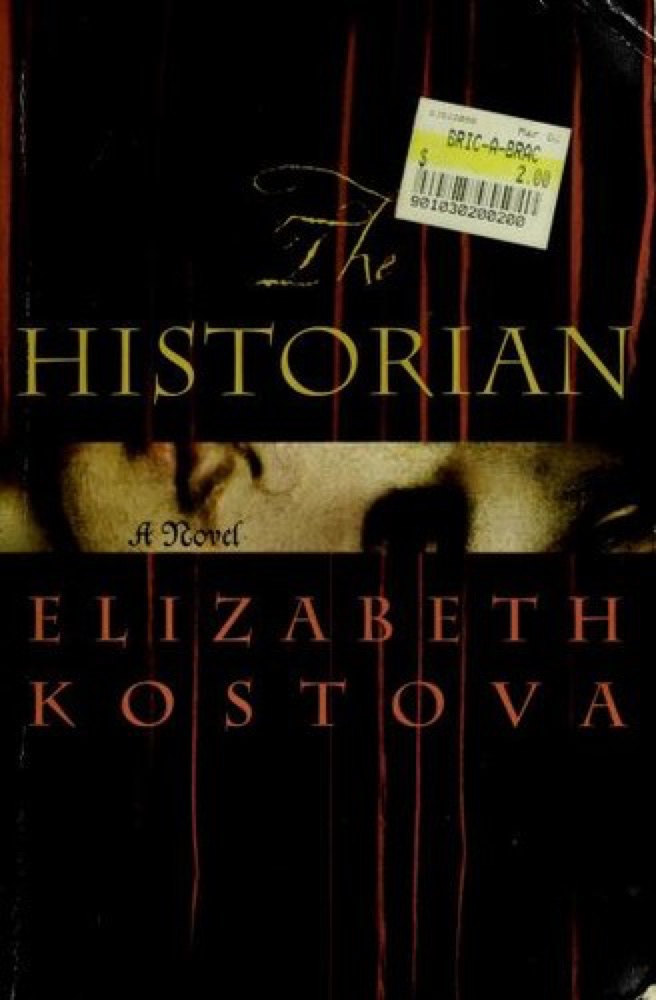
 The Historian
Quotes from the Book
It's funny; in this era of e-mail and voice mail and all those things that even I did not grow up with, a plain old paper letter takes on amazing intimacy.
89
And how could anyone consent to give up the smell of open books, old or new?
85
The problem is simply finding the right person. Ask Plato. Just make sure she finishes your thoughts and you finish hers. That's all you need.
63
...what will we someday do, I always wonder, without the pleasures of turning through books and stumbling on things we never meant to find?
48
In the end, I always act from the heart, even if I also value reason and tradition. I wish I could explain why, but I don't know.
41
The heart does not go backward. Only the mind.
31
..then you must say to her, ‘Madame, I observe that your heart is broken. Allow me to repair it for you...
30
He can't really love anyone, you know, and in the end such people are always alone, no matter how much other people once loved them.
29
I believe in walking out of a museum before the paintings you've seen begin to run together. How else can you carry anything away with you in your mind's eye?
24
Faith is simply whatever is real to us.
23
In those days, I still thoroughly enjoyed the romance I called "by myself"; I didn't know yet how it gets lonely, picks up a sharp edge later on that ruins a day now and then-- ruins more than that, if you're not careful.
19
It's a shame for women's history to be all about men--first boys, then other boys, then men men men. It reminds me of the way our school history textbooks were all about wars and elections, one war after another, with the dull periods of peace skimmed over whenever they occurred. (Our teachers deplored this and added extra units about social history and protest movements, but that was still the message of the books.)
17
My guess is that he remembers some of me, some of us together, and the rest rolled off him like topsoil in a flash flood.
16
He was my husband, my apartment mate, my soul mate, the father of the little plant in my confused soil, the lover who had made me adore his body without inhibition after my years of relative solitude, the person for whom I'd given up my old self.
12
I was filled with angst in college, that I struggled with the question of my future, the meaning of my life - spoiled sheltered rich girl collides with great books and is devastated by her own banality.
11
And why should I do such a thing- tell you something that can only dismay you? Well, that is the nature of love: it is brutal in its demands.
11
It's a shame for a woman's history to be all about men-first boys, then other boys, then men, men, men. It reminds me of the way our school history textbooks were all about wars and elections, one war after another, with the dull periods of peace skimmed over when they happened.
11
I lay awake for hours in my twin bed next to the other, empty bed, feeling and hearing the spruces, the hemlocks, the rhododendron scraping at the partly open window, the verdant mountain out there in the night, the burgeoning of nature that did not seem to include me. And when, my restless body asked my teeming brain, had I agreed to be excluded?
11
I don't think painters have the answers about a painting except the painting itself. Anyway, a painting has to have some kind of mystery to it to make it work.
10
-Do you think artists are supposed to be happy? -Everyone is supposed to be. -I said staunchly,and I knew that I was indeed an idiot and that was my destiny and I didn't mind it
9
Marriages are like certain books, a story where you turn the last page and you think it's over and then there's an epilogue, and after that you're inclined to go on wondering about the characters or imagining that their lives continue without you, dear reader. Until you forget most of that book, you're stuck puzzling over what happened to them after you closed it.
9
Doesn't every love express itself this way, with the seeds of both its flowering and its ruin in the very first words, the first breath, the first though?
9
Life and I became friends some years ago - not the sort of exciting friendship I longed for as a child, but a kindly truce, a pleasure in coming home every day to my apartment. I have a moment now and then - as I peel an orange and take it from kitchen counter to table - when I feel almost a pang of contentment, perhaps at that raw colour.
8
Ich verstehe mit achtzig was ich mit siebzig noch nicht verstehen konnte, naemlich dass man am Ende so gut wie allen vergibt, nur sich selbst nicht.
8
Then he said a strange thing, but to himself. `They lived, didn't they?' And I said yes, that when one reads old letters one understands that people in the past really did live, and it is very touching.
7
A shame that these images had become iconic, a tune we were all tired of humming.
7
Then draw everything. Do a hundred drawings a day,' he said fiercely. 'And remember that it's a hellish life.
7
I remembered some of what I'd read in the past: the small group of the original Impressionists, including one woman-Berthe Morisot- who'd first banded together in 1874 to exhibit works in a style that the Paris Salon found too experimental for inclusion. We postmoderns take them for granted, or disdain them, or love them too easily.
6
Watch on YouTube
About Elizabeth Kostova
We have collected 80 quotes from 3 books by Elizabeth Kostova on BookQuoters.
More about the author →More by Elizabeth Kostova
The Historian
 The Shadow Land
About the book
Psychiatrist Andrew Marlowe, devoted to his profession and the painting hobby he loves, has a solitary but ordered life. When renowned painter Robert Oliver attacks a canvas in the National Gallery of Art and becomes his patient, Marlow finds that order destroyed. Desperate to understand the secret that torments the genius, he embarks on a journey that leads him into the lives of the women closest to Oliver and a tragedy at the heart of French Impressionism.
Kostova's masterful new novel travels from American cities to the coast of Normandy, from the late 19th century to the late 20th, from young love to last love. The Swan Thieves is a story of obsession, history's losses, and the power of art to preserve human hope.
Book details
- First published
- 2010
- Author
- Elizabeth Kostova
- Genre
- Fiction
- Goodreads rating
- 3.58 (36k ratings)
Keep reading
 What I Loved
 Belong to Me
 Brideshead Revisited: The Sacred and Profane Memories of Captain Charles Ryder
 The Reader
 The Secret History
 The Good Soldier
 What Is Not Yours Is Not Yours
 A Small Indiscretion
 Dream Count
 The Golden Notebook
 The Muse
 The Story of the Lost Child
 Kokoro
 Middlesex
 Super Sad True Love Story
 In the Heart of the Heart of the Country and Other Stories
 Too Much Happiness: Stories
 Inferno
 Men Without Women
 The Girl Before
 Chances Are...
 An Unnecessary Woman
 They're Going to Love You
 Enduring Love
 The English Patient
 Divisadero
 Biography of X
 The Giant's House
 The Book of Love
 The Manticore
 Ilustrado
 The Goldfinch
 Agnes Grey
 Narcissus and Goldmund
![What Was She Thinking? [Notes on a Scandal]](/i/book/g/08/what-was-she-thinking-notes-on-a-scandal.jpg) What Was She Thinking? [Notes on a Scandal]
What Was She Thinking? [Notes on a Scandal]
 Outline
 The Summer Without Men
 Library of Souls
 My Friends
 The Likeness
 Sixty Stories
 Our Chemical Hearts
 A Fraction of the Whole
 Warlight
 Self-Help
 Those Who Leave and Those Who Stay
 Girl with Curious Hair
 The Book of the Most Precious Substance
 The Great Believers
 Summertime
 Old Babes in the Wood: Stories
 Mr. Fox
 The Story of a New Name
 White Oleander
 Testament of Youth
 Inkdeath
 The Tsar of Love and Techno
 The Notebooks of Malte Laurids Brigge
 Summer Days and Summer Nights: Twelve Love Stories
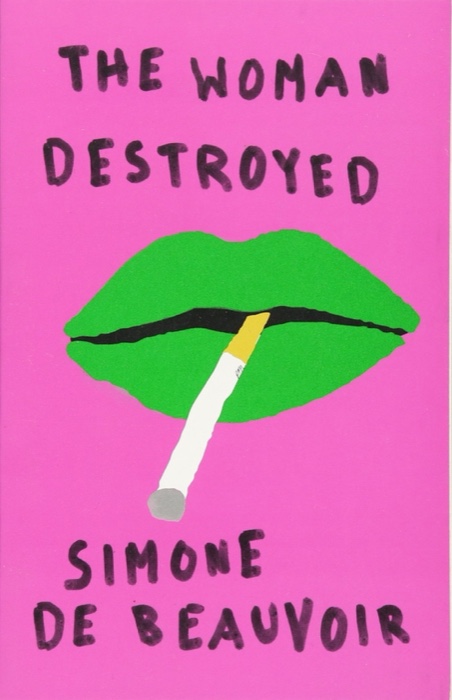 The Woman Destroyed