 The Blindfold
Quotes from the Book
We project our feelings onto other people, but there is always a dynamic that creates those inventions. The fantasies are made between people, and the ideas about those people live inside us ... And, even after they die, they are still there. I am made of the dead.
10
No one rejoices more in revenge than women, wrote Juvenal. Women do most delight in revenge, wrote Sir Thomas Browne. Sweet is revenge, especially to women, wrote Lord Byron. And I say, I wonder why, boys. I wonder why.
5
My mother said the bizarre name Raccoona had surely been inspired, at least on a subliminal level, by the masks raccoons don't wear but simply have - the ones given them by nature..... [S]he pointed out that Le Guin had suspected all along that Raccoona and Tiptree were two authors that came from the same source, but in a letter to Alice she wrote that she preferred Tiptree to Raccoona: 'Raccoona, I think, has less control, thus less wit and power.' Le Guin, Mother said, had understood something deep. 'When you take on a male persona, something happens.' When I asked her what that was, she sat back in her chair, waved her arm, and smiled. 'You get to be the father.
5
All thoughts of revenge are born of the pain of helplessness. 'I suffer' becomes 'You will suffer'. And let us not lie: Vengeance is invigorating. It focuses and enlivens us, and it quashes grief because it turns the emotion outward. In grief we go to pieces. In revenge we come together as a single pointed weapon aimed at a target. However destructive in the long run, it serves a useful purpose for a time
4
It was babies I loved looking at, the little Lords, sensuous delights of pudgy flesh and fluids. For at least three years I was awash in milk and poop and piss and spit-up and sweat and tears. It was paradise. It was exhausting. It was boring. It was sweet, exciting, and sometimes, curiously, very lonely.
4
The Singularity is at once an escape and a birth fantasy. I said to him: A Zeus dream that avoids the organic body altogether. Brand-new creatures burst forth from men's heads. Presto! The mother and her evil vagina disappears.
2
My mother believed and I believe in really looking hard at things because, after a while, what you see isn’t at all what you thought you were seeing just a short time before. Looking at any person or object carefully means that it will become increasingly strange, and you will see more and more. I wanted my film about this lonely woman to break down visual and cultural clichés, to be an intimate portrait, not a piece of leering voyeurism about a woman’s horrible accumulations.
1
This was not some regular dame. No, this was a doll with high tastes, with ideas dancing in her head like fireflies.
1
Who had read my poems, who held my hand, who was dead before he could visit me in the hospital where he had been, too, landed, too, on his flights to heaven and drops into hell.
1
Reviewers of every ilk like to feel they are above a work of art. If it puzzles them or if they are intimidated, they are more than likely to trash it. Many artists are not intellectuals, but Burden was, and her work reflected her wide learning. Her references spanned many fields and were often impossible to track. There was also a literary, narrative quality to her art that many resisted. I am convinced that her knowledge alone acted as an irritant to some reviewers. I once had a conversation with a man who had excoriated her first one-woman show. When I brought up his review and offered a defense of her work, he was hostile. He was not a stupid man and had written well on some artists I admired. He had attacked Burden’s work as confused and naïve, the very opposite, in fact, of what it was. I realized that he had been incapable of a fair-minded appraisal because, although he prided himself on his sophistication, the multiple meanings of her carefully orchestrated texts had eluded him, and he had projected his own disorientation onto the work. His last words to me were “I hated it, okay? I just hated it. I don’t give a damn about what she was referring to.” That conversation has stayed with me, not as a story about Harriet Burden so much as a lesson for myself: Beware of the violent response and the sophisms you may use to explain it.
1
Drowning, she clung fiercely to that small, splintered piece of mast bobbing in the ocean we call justice. There is no justice, of course, or very little of it, and counting on it as a life raft is a big mistake.
1
Editing is the most obvious way of manipulating vision. And yet, the camera sometimes sees what you don’t - a person in the background, for example, or an object moving in the wind. I like these accidents. My first full-length film, Esperanza, was about a woman I befriended on the Lower East Side when I was a film student at NYU. Esperanza had hoarded nearly all the portable objects she had touched every day for thirty years: the Chock Full O’Nuts paper coffee cups, copies of the Daily News, magazines, gum wrappers, price tags, receipts, rubber bands, plastic bags from the 99-cent store where she did most of her shopping, piles of clothes, torn towels, and bric-a-brac she had found in the street. Esperanza’s apartment consisted of floor-to-ceiling stacks of stuff. At first sight, the crowded apartment appeared to be pure chaos, but Esperanza explained to me that her piles were not random. Her paper cups had their own corner. These crenellated towers of yellowing, disintegrating waxed cardboard stood next to piles of newspapers … One evening, however, while I was watching the footage from a day’s filming, I found myself scrutinizing a pile of rags beside Esperanza’s mattress. I noticed that there were objects carefully tucked in among the fraying bits of coloured cloth: rows of pencils, stones, matchbooks, business cards. It was this sighting that led to the “explanation.” She was keenly aware that the world at large disapproved of her “lifestyle,” and that there was little room left for her in the apartment, but when I asked her about the objects among the rags, she said that she wanted to “keep them safe and sound.” The rags were beds for the things. “Both the beds and the ones that lay down on them,” she told me, “are nice and comfy.” It turned out that Esperanza felt for each and every thing she saved, as if the tags and town sweaters and dishes and postcards and newspapers and toys and rags were imbued with thoughts and feelings. After she saw the film, my mother said that Esperanza appeared to believe in a form of “panpsychism.” Mother said that this meant that mind is a fundamental feature of the universe and exists in everything, from stones to people. She said Spinoza subscribed to this view, and “it was a perfectly legitimate philosophical position.” Esperanza didn’t know anything about Spinoza … My mother believed and I believe in really looking hard at things because, after a while, what you see isn’t at all what you thought you were seeing just a short time before. looking at any person or object carefully means that it will become increasingly strange, and you will see more and more. I wanted my film about this lonely woman to break down visual and cultural cliches, to be an intimate portrait, not a piece of leering voyeurism about woman’s horrible accumulations.
1
I, Harriett Burden, hereby confess that my diverse fantasies were driven: 1. by a general desire for revenge against twits, dunderheads, and fools, 2. by an ongoing, wrenching intellectual isolation that resulted in loneliness because I roamed in too many books that no one could talk to me about, 3. by a growing sense that I had always been misunderstood and was madly begging to be seen, truly seen, but nothing I did made any difference.
Las creencias constituyen una rara mezcla de sugestión, imitación, deseo y proyección. A todos nos gusta pensar que somos resistentes a las palabras y acciones de los demás. Creemos que no hacemos nuestras las fantasías de los otros, pero estamos equivocados. En algunas creencias es tan obvio que lo que defienden es un disparate (las proclamas de la sociedad de la Tierra Plana, por ejemplo) que a la mayoría de nosotros nos resulta muy fácil rechazarlas. Pero hay otras que residen en territorios ambiguos, donde lo personal y lo interpersonal no pueden distinguirse con tanta facilidad.
They are the neutral universal entity, the unhyphenated humans. I was pretty much all hyphen.
My act at the Pink Lagoon had been featured in the Neo-Situationist Bugle, probably the most obscure publication in all of New York City, but Ethan and his friend Lenny cultivated performances like mine for reasons that only a few people in university graduate departments understand.
Misery sucks up energy in the person who feels it and in all those who are forced to look at it, and then we’re all stuck in the mud.
His majesty, the baby, that infant who believes he is the center of the world, still lives somewhere in all of us.
I watched the gulls and looked over at Lady Liberty. I thought about what Harry must be feeling because she wouldn't see her again, not like this, anyway. I wanted her to know it would be better, more beautiful on the other side, but it was sad because we can't help loving what's around us even if it is grasping and attachment to the things that don't really matter when you take a higher spiritual perspective.
We are always concocting theories about how the world works and why people act in the ways they do. We invent motives for them, as if it's possible for us to know, but more often than not these explanations are like flimsy cardboard state sets we put up in front of reality because they are simpler and less distracting than what's actually there. I think I became a documentary filmmaker to try to get a truer view. It's not that film can't lie or distort or be used for dastardly purposes, it's that sometimes the camera extracts from the faces and bodies of its subjects what they do not say aloud. I was sixteen when I first saw Marcel Ophuls's The Sorrow and the Pity, and after that, I couldn't stop thinking about he expressiveness of people's hands when they are controlling their faces.
Perhaps I wished for something rather than nothing--a smack of passion to make me believe I was really there for him, not missing. And then the blow rises up from imaginary depths. When there is nothing, the phantoms come up to fill the emptiness. It is not true that nothing comes of nothing. There is always something.
A young person always extrapolates human reality from her own life.
Watch on YouTube
About Siri Hustvedt
We have collected 135 quotes from 6 books by Siri Hustvedt on BookQuoters.
More about the author →More by Siri Hustvedt
All books by Siri Hustvedt →
About the book
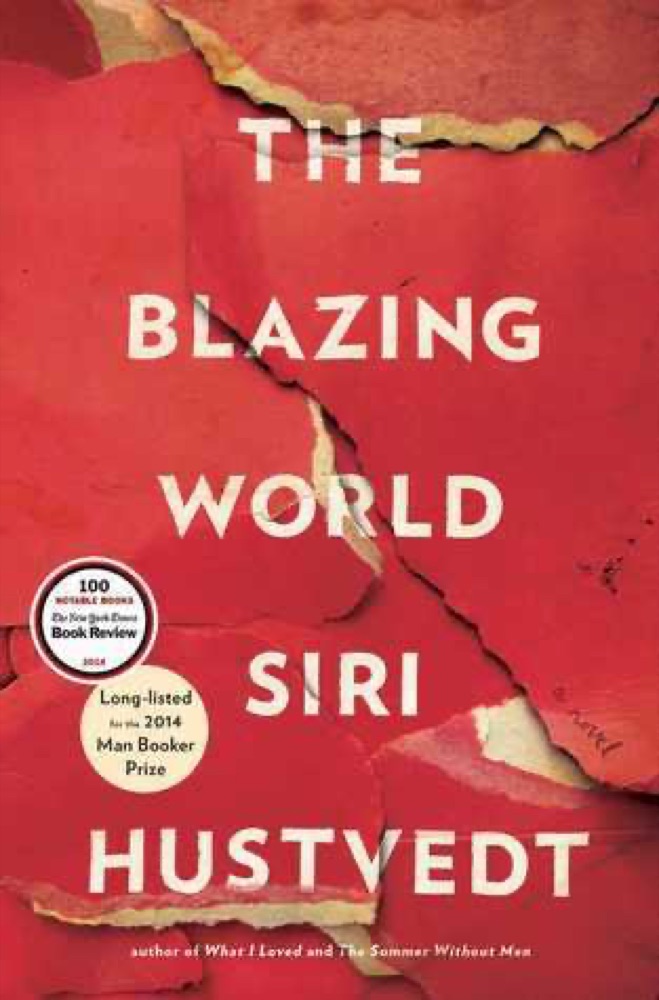
A brilliant, provocative novel about an artist who, after years of being ignored by the art world, conducts an experiment: she conceals her female identity behind three male fronts.
Presented as a collection of texts, edited and introduced by a scholar years after the artist's death, the book unfolds through extracts from Burden's notebooks and conflicting accounts from others about her life and work. Even after she steps forward to reveal herself as the force behind three solo shows, there are those who doubt she is responsible for the last exhibition, initially credited to the acclaimed artist Rune. No one doubts the two artists were involved with each other. According to Burden's journals, she and Rune found themselves locked in a charged and dangerous psychological game that ended with the man's bizarre death.
From one of the most ambitious and internationally celebrated write
Book details
- First published
- 2014
- Author
- Siri Hustvedt
- Genre
- Fiction
- Goodreads rating
- 3.71 (9k ratings)
Keep reading
 Parade
 The Story of the Lost Child
 Make It Scream, Make It Burn
 Stories of Your Life and Others
 Old Babes in the Wood: Stories
 In the Heart of the Heart of the Country and Other Stories
 I Love Dick
 Girl with Curious Hair
 Sixty Stories
 The Notebooks of Malte Laurids Brigge
 Inferno
 Burning Your Boats: The Collected Short Stories
 Breasts and Eggs
 The Muse
 Good Bones and Simple Murders
 Thrust
 Dream Count
 Too Much Happiness: Stories
 The Tsar of Love and Techno
 Sexus
Sexus
 The Hidden Girl and Other Stories
 Art and Lies
 An Unnecessary Woman
 Mao II
 The Likeness
 Flights
 Gnomon
 In the Dream House
 The Ground Beneath Her Feet
 The Blind Assassin
 Sexing the Cherry
 Reckoning: A Memoir
 Monsters: A Fan's Dilemma
 The Manticore
 Drive Your Plow Over the Bones of the Dead
 Moments of Being: A Collection of Autobiographical Writing
 Songs of a Dead Dreamer
 In Search of Lost Time
 Devotion
 Monday or Tuesday
 The Secret History
 Under the Net
 The Goldfinch
 What I Loved
 Divisadero
 Underground: The Tokyo Gas Attack and the Japanese Psyche
 NW
NW
 A Fisherman of the Inland Sea
 The Unicorn
 Purity
 Blueberries: Essays Concerning Understanding
 Anthropology of an American Girl
 The Book of Joan
 London Fields
 When Women Were Dragons
 The Empusium
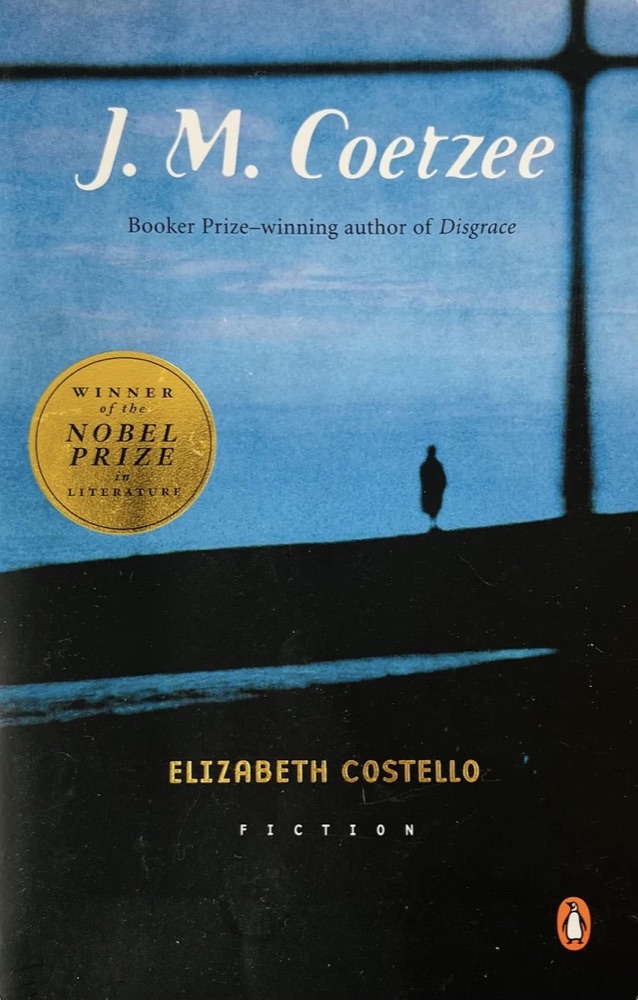 Elizabeth Costello
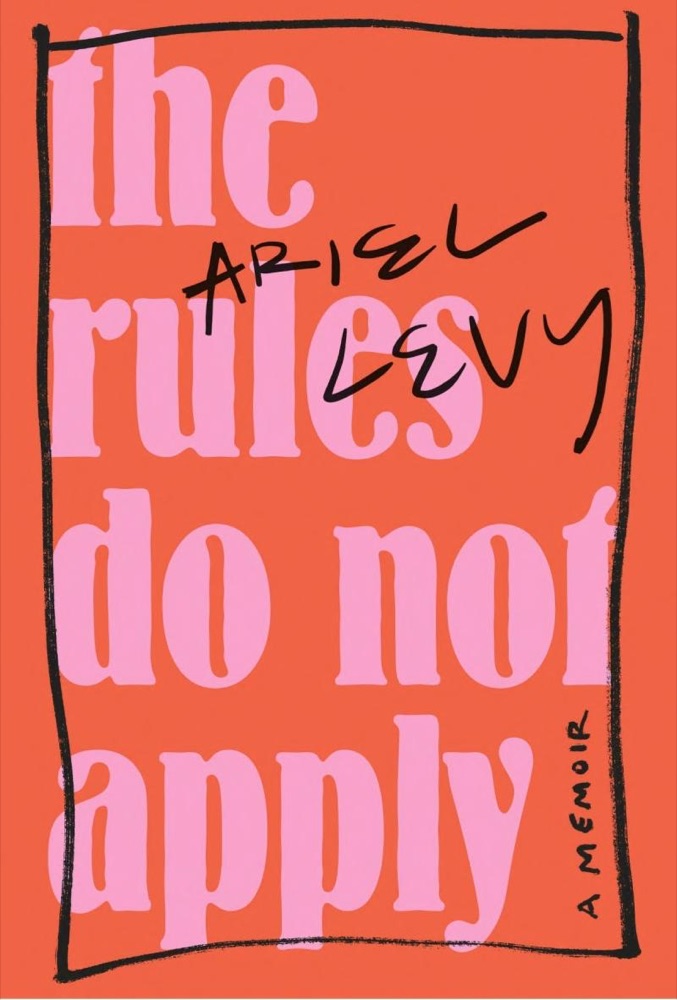 The Rules Do Not Apply
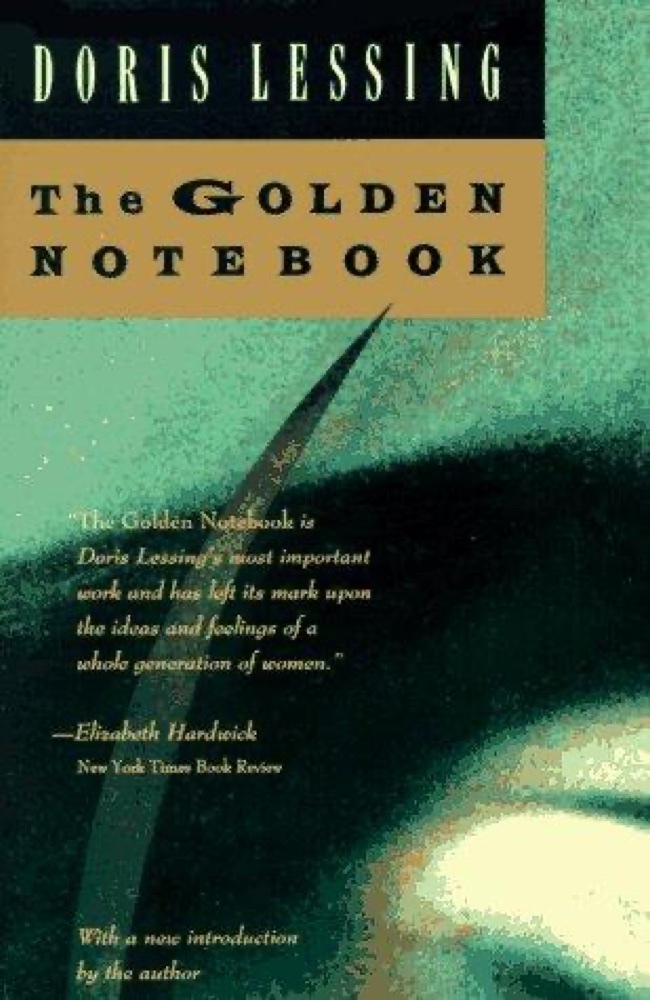 The Golden Notebook
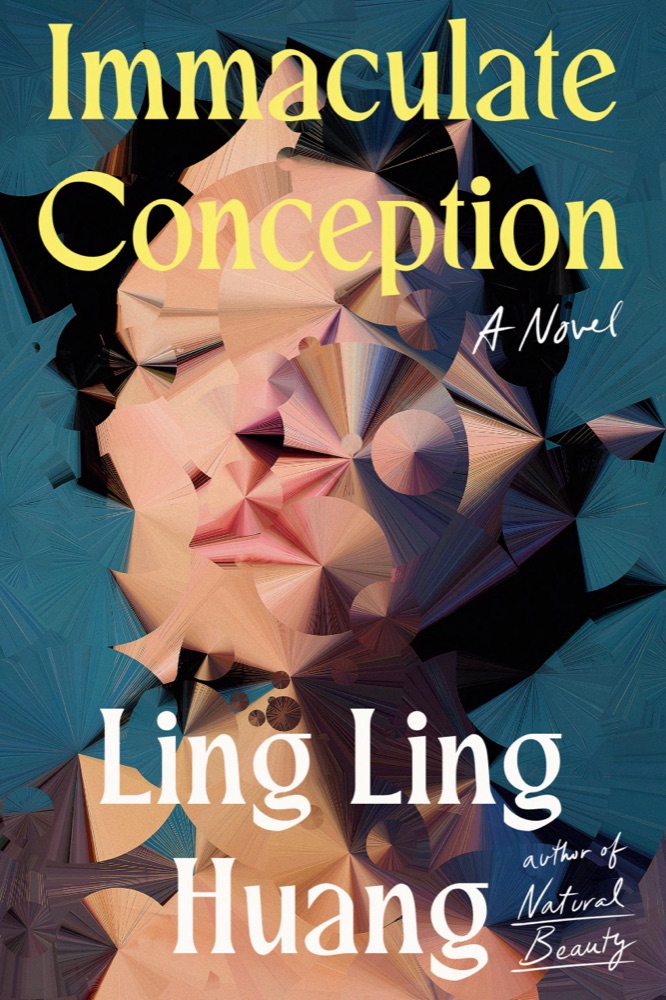 Immaculate Conception