
 Hocus Pocus
Quotes from the Book
If somebody says 'I love you' to me, I feel as though I had a pistol pointed at my head. What can anybody reply under such conditions but that which the pistol holder requires? 'I love you, too'.
650
Plato says that the unexamined life is not worth living. But what if the examined life turns out to be a clunker as well?
259
Artists use frauds to make human beings seem more wonderful than they really are. Dancers show us human beings who move much more gracefully than human beings really move. Films and books and plays show us people talking much more entertainingly than people really talk, make paltry human enterprises seem important. Singers and musicians show us human beings making sounds far more lovely than human beings really make. Architects give us temples in which something marvelous is obviously going on. Actually, practically nothing is going on.
187
It goes against the American storytelling grain to have someone in a situation he can't get out of, but I think this is very usual in life. [...] And it strikes me as gruesome and comical that in our culture we have an expectation that a man can always solve his problems. There is an implication that if you just have a little more energy, a little more fight, the problem can always be solved. That is so untrue that it makes me want to cry--or laugh.
33
I have been a soreheaded occupant of a file drawer labeled "science fiction" ... and I would like out, particularly since so many serious critics regularly mistake the drawer for a urinal.
29
I just know that there are plenty of people who are in terrible trouble and can't get out. And so I'm impatient with those who think that it's easy for people to get out of trouble.
14
Unfortunately, that still leaves plenty of Americans who don't read much or think much -- who will still be extremely useful in unjust wars. We are sick about that. We did the best we could.
11
I am simply impressed by the unexpected insights which shower down on me when my job is to imagine, as contrasted with the woodenly familiar ideas which clutter my desk when my job is to tell the truth.
9
You understand, of course, that everything I say is horseshit.
7
Thinking the guy up ahead knows what he's doing is the most dangerous religion there is.
6
Too many of us treat guns with genial familiarity. Guns should give us the heebie-jeebies. They are killing machines. That is all they are. We should dread them the way we dread cancer and cyanide and electric chairs.
5
I believe all this, and much, much more, because I guess it is my duty to. But I pay a price for my gaga credulity, which I want to describe as a sort of intellectual seasickness.
4
I was perplexed as to what the usefulness of any of the arts might be, with the possible exception of interior decoration. The most positive notion I could come up with was what I call the canary-in-the-coal-mine theory of the arts. This theory argues that artists are useful to society because they are so sensitive. They are supersensitive. They keel over like canaries in coal mines filled with poison gas, long before more robust types realize that any danger is there.
3
There is a basic rule about tanks, and you should know it: The only man who ever beat a tank was John Wayne. And he was in another tank.
3
It is a sobering thought that Gomer Pyle and the Beverly Hillbillies may be among our chief interstellar emissaries.
3
People are too good for this world.
2
Here is my understanding of the Universe and mankind’s place in it at the present time: The seeming curvature of the Universe is an illusion. The Universe is really as straight as a string, except for a loop at either end. The loops are microscopic. One tip of the string is forever vanishing. Its neighboring loop is forever retreating from extinction. The other end is forever growing. Its neighboring loop is forever pursuing Genesis. In the beginning and in the end was Nothingness. Nothingness implied the possibility for Somethingness. It is impossible to make something from nothing. Therefore, Nothingness could only imply Somethingness. That implication is the Universe—as straight as a string, as I’ve already said, except for a loop at either end. We are wisps of that implication.
2
Among the many queer things about the American economy is this: A writer can get more money for a bungling speech at a bankrupt college than he can get for a short-story masterpiece. What’s more, he can sell the speech over and over again, and no one complains.
2
Foma" are harmless untruths, intended to comfort simple souls.
1
Its basic axiom is to be followed by individuals as well as great nations, by Losers and Winners alike. We have demonstrated the workability of the axiom in Vietnam, in Bangladesh, in Biafra, in Palestinian refugee camps, in our own ghettos, in our migrant labor camps, on our Indian reservations, in our institutions for the defective and the deformed and the aged. This is it: Ignore agony.
1
This is not the case. I find scant evidence in my nonfiction that I have matured at all. I cannot find a single idea I hadn’t swiped from somebody else and enunciated plonkingly by the time I reached the seventh grade.
1
And I say to you that we are full of chemicals which require us to belong to folk societies, or failing that, to feel lousy all the time. We are chemically engineered to live in folk societies, just as fish are chemically engineered to live in clean water—and there aren’t any folk societies for us anymore.
The devilish tin trumpet spat out, without more ado, a mixture of bronchial slime and chewed rubber; that noise that owners of gramophones and radios have agreed to call music.
sometimes wonder whether humanity has missed the real point in raising the issue of mortality and immortality—in other words, whether mortality itself may be a finite illusion, being actually immortality and, even though constructed of just a few “years,” that those few years are all the time there really is, so that, in fact, they can never cease.
CAMERA BACKS AWAY to reveal the tidy, clinical abomination of the head and wires and pipes. The head is on a tripod. There is a black box with winking colored lights hanging under the head, where the chest would normally be. Mechanical arms come out of the box where arms would normally be. There is a table within easy reach of the arms. On it are a pen and paper, a partially solved jigsaw puzzle and a bulky knitting bag. Sticking out of the bag are needles and a sweater in progress. Hanging over SYLVIA’s head is a microphone on a boom.
Who comes to writers’ conferences?” you ask. A random sample of twenty students will contain six recent divorcées, three wives in middle life, five schoolteachers of no particular age or sex, two foxy grandmas, one sweet old widower with true tales to tell about railroading in Idaho, one real writer, one not merely angry but absolutely furious young man, and one physician with forty years’ worth of privileged information that he wants to sell to the movies for a blue million.
All the twinkles and glints in the night sky might as well be sparks from a cowboy’s campfire, for all the life or wisdom they contain.
have traveled extensively in Concord. —HENRY DAVID THOREAU
We trust ourselves so much with weapons that many American households keep firearms as pets.
I want to be with people who don’t think at all, so I won’t have to think, either. I’m very tired of thinking. It doesn’t seem to help very much.
About Kurt Vonnegut Jr.
We have collected 239 quotes from 9 books by Kurt Vonnegut Jr. on BookQuoters.
More about the author →More by Kurt Vonnegut Jr.
All books by Kurt Vonnegut Jr. →
About the book
Wampeters, Foma & Granfalloons is a rare opportunity to experience Kurt Vonnegut speaking in his own voice about his own life, his views of the world, his writing, and the writing of others. An indignant, outrageous, witty, deeply felt collection of reviews, essays, and speeches, this is a window not only into Vonnegut’s mind but also into his heart.
“A book filled with madness and truth and absurdity and self-revelation . . . [Vonnegut is] a great cosmic comedian and rattler of human skeletons, an idealist disguised as a pessimist.”— St. Louis Post-Dispatch
Includes the following essays, speeches, and works:
“Science Fiction” “Brief Encounters on the Inland Waterway” “Hello, Star Vega” “Teaching the Unteachable” “Yes, We Have No Nirvanas” “Fortitude” “‘There’s a Maniac Loose Out There’” “Excelsior! We’re Going to the Moon! Excelsior!” “Address to the American Physical Society” “Good
Book details
- First published
- 1974
- Author
- Kurt Vonnegut Jr.
- Genre
- Fiction
- Goodreads rating
- 3.82 (9k ratings)
Keep reading
Hocus Pocus
 Timequake
 The Gone-Away World
 If This Isn't Nice, What Is?: Advice for the Young
 Even Cowgirls Get the Blues
 Cat's Cradle
 Infinite Jest
 The Braindead Megaphone
 Jailbird
 Stranger in a Strange Land
 No Time To Spare: Thinking About What Matters
 Bluebeard
 That Hideous Strength
 The State of the Art
 Eating the Dinosaur
 The Fall of Babel
 Villa Incognito
 Gravity's Rainbow
 Drive Your Plow Over the Bones of the Dead
 The Golden Notebook
 Sometimes a Great Notion
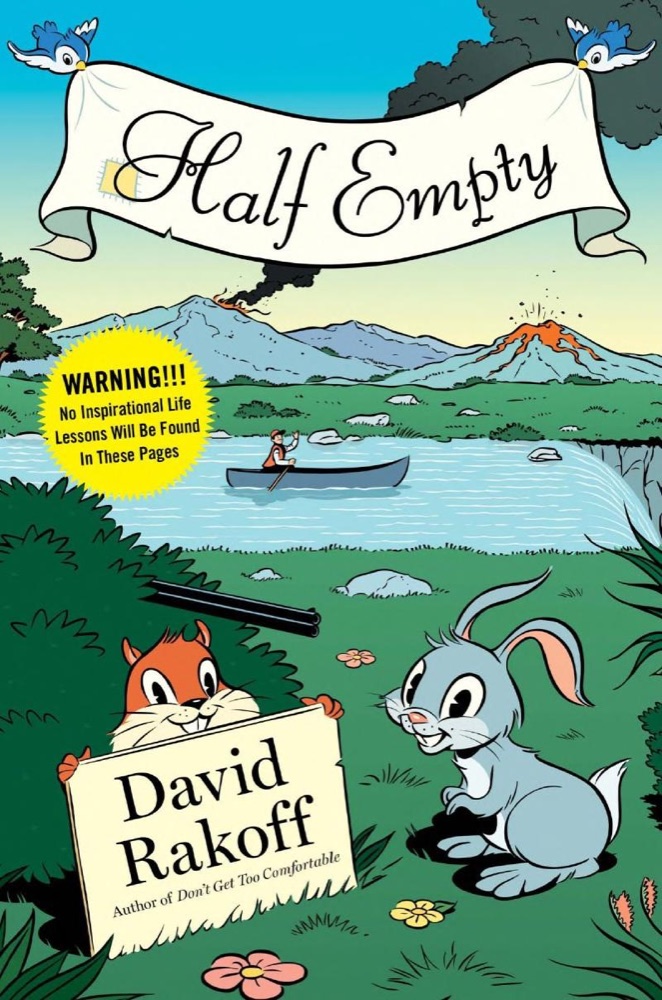 Half Empty
 Flaubert's Parrot
 Fahrenheit 451
 The Universe Versus Alex Woods
 The Dreadful Lemon Sky
 The Adventures of Augie March
 Foucault's Pendulum
 Half Asleep in Frog Pajamas
 Speedboat
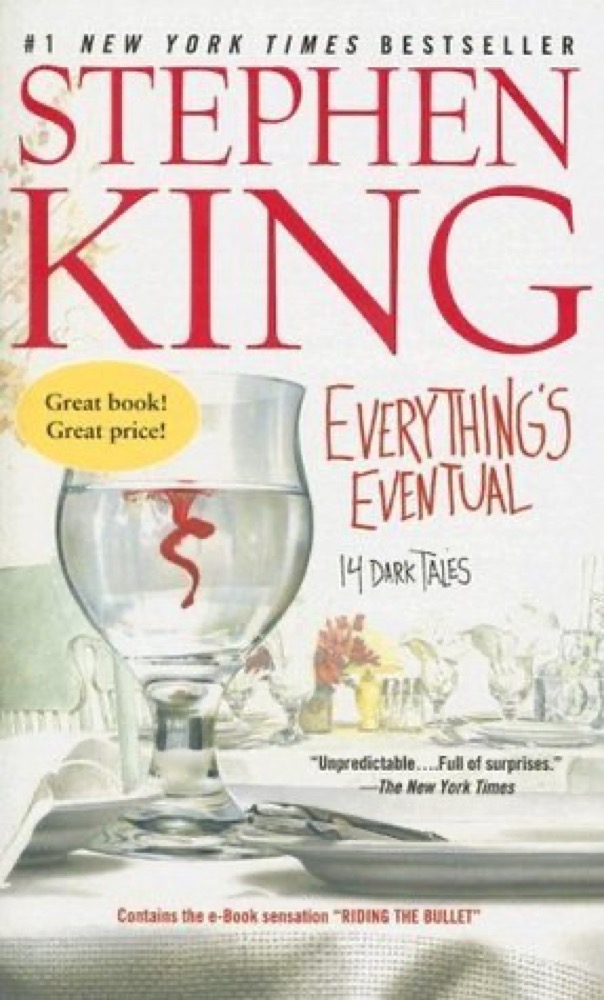 Everything's Eventual
 The Kraken Wakes
 The Magic Mountain
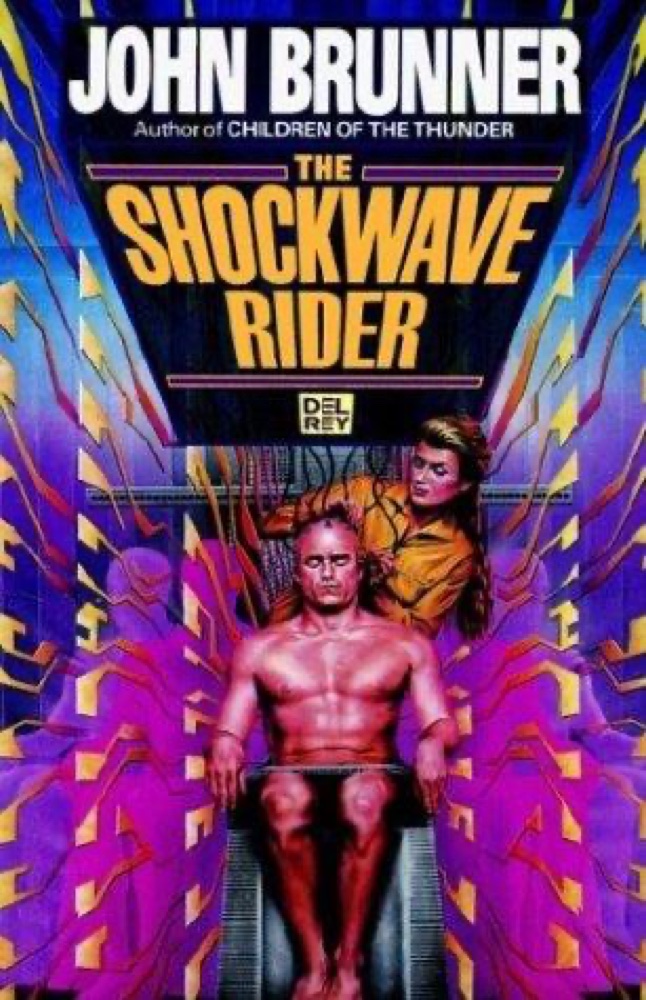 The Shockwave Rider
 Dust Tracks on a Road
 Antkind
 The Fifth Science
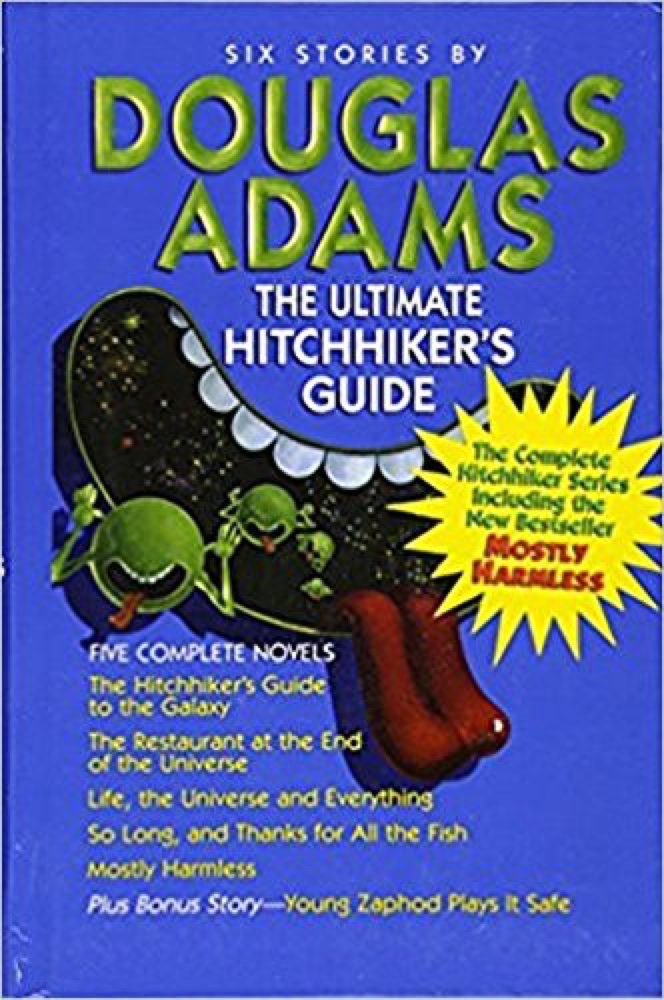 The Ultimate Hitchhiker's Guide
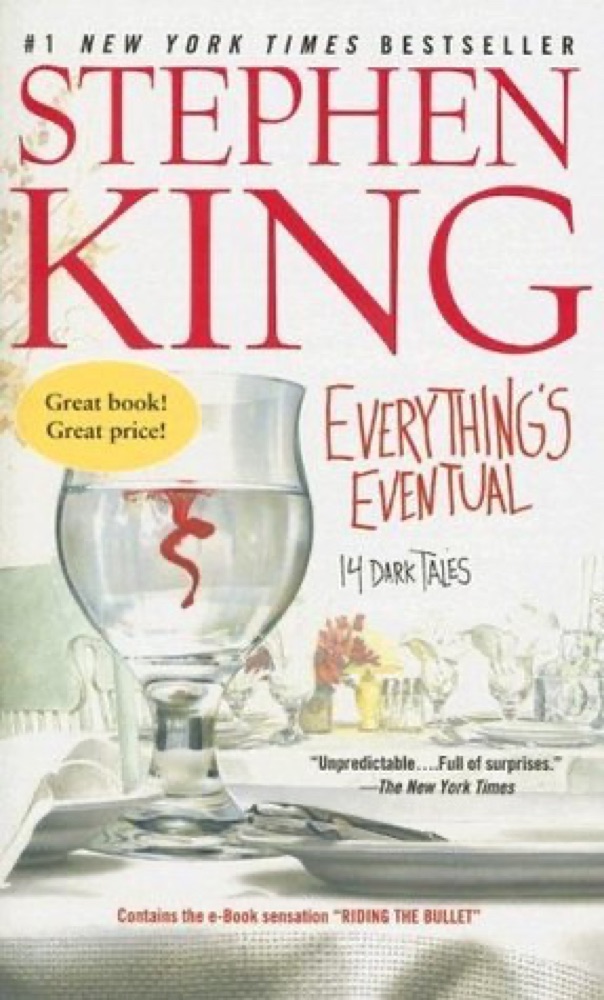 Everything's Eventual
 The Fry Chronicles
 American Gods
 The Man in the High Castle
 Old Babes in the Wood: Stories
 Pocket Apocalypse
 If It Bleeds
 Too Like the Lightning
 By Nightfall
 The Salmon of Doubt
 Gnomon
 The Ghost
 Hogfather
 The Midwich Cuckoos
 American Pastoral
 One Man's Meat
 The Imperfectionists
 Hyperion
 When I Was a Child I Read Books
 Consider the Lobster and Other Essays
 Girl with Curious Hair
 The Complete Essays