
 Hello? Is Anybody There?
Quotes from the Book
Wisest is she who knows she does not know.
It's not a silly question if you can't answer it.
A state that does not educate and train women is like a man who only trains his right arm.
You can never know if a person forgives you when you wrong them. Therefore it is existentially important to you. It is a question you are intensely concerned with. Neither can you know whether a person loves you. It’s something you just have to believe or hope. But these things are more important to you than the fact that the sum of the angles in a triangle is 180 degrees. You don't think about the law of cause and effect or about modes of perception when you are in the middle of your first kiss.
Superstitious." What a strange word. If you believed in Christianity or Islam, it was called "faith". But if you believed in astrology or Friday the thirteenth it was superstition! Who had the right to call other people's belief superstition?
A philosopher knows that in reality he knows very little. That is why he constantly strives to achieve true insight. Socrates was one of these rare people. He knew that he knew nothing about life and about the world. And now comes the important part: it troubled him that he knew so little.
So now you must choose... Are you a child who has not yet become world-weary? Or are you a philosopher who will vow never to become so? To children, the world and everything in it is new, something that gives rise to astonishment. It is not like that for adults. Most adults accept the world as a matter of course. This is precisely where philosophers are a notable exception. A philosopher never gets quite used to the world. To him or her, the world continues to seem a bit unreasonable - bewildering, even enigmatic. Philosophers and small children thus have an important faculty in common. The only thing we require to be good philosophers is the faculty of wonder…
The most subversive people are those who ask questions.
Wasn’t it extraordinary to be in the world right now, wandering around in a wonderful adventure!
I believe there is something of the divine mystery in everything that exists. We can see it sparkle in a sunflower or a poppy. We sense more of the unfathomable mystery in a butterfly that flutters from a twig--or in a goldfish swimming in a bowl. But we are closest to God in our own soul. Only there can we become one with the greatest mystery of life. In truth, at very rare moments we can experience that we ourselves are that divine mystery.
The question of whether a thing is right or wrong, good or bad, must always be considered in relation to a persons needs.
... the only thing we require to be good philosophers is the faculty of wonder...
The stupidest thing she knew was for people to act like they knew all about the things they knew absolutely nothing about.
Acting responsibly is not a matter of strengthening our reason but of deepening our feelings for the welfare of others.
Where both reason and experience fall short, there occurs a vacuum that can be filled by faith.
Dear Hilde, if the human brain was simple enough for us to understand, we would still be so stupid that we couldn't understand it. Love, Dad.
Maybe we can comprehend a flower or an insect, but we can never comprehend ourselves. Even less can we expect to comprehend the universe.
A Russian astronaut and a Russian brain surgeon were once discussing religion. The brain surgeon was a Christian but the astronaut was not. The astronaut said, 'I've been out in space many times but I've never seen God or angels.' And the brain surgeon said, 'And I've operated on many clever brains but I've never seen a single thought.
Imagine that one day you are out for a walk in the woods. Suddenly you see a small spaceship on the path in front of you. A tiny Martian climbs out the spaceship and stands on the ground looking up at you… What would you think? Never mind, it’s not important. But have you ever given any thought to the fact that you are a Martian yourself? It is obviously unlikely that you will ever stumble upon a creature from another planet. We do not even know that there is life on other planets. But you might stumble upon yourself one day. You might suddenly stop short and see yourself in a completely new light. On just such a walk in the woods. I am an extraordinary being, you think. I am a mysterious creature. You feel as if you are waking from an enchanted slumber. Who am I? you ask. You know that you are stumbling around on a planet in the universe. But what is the universe? If you discover yourself in this manner you will have discovered something as mysterious as the Martian we just mentioned. You will not only have seen a being from outer space. You will feel deep down that you are yourself an extraordinary being.
People are, generally speaking, either dead certain or totally indifferent.
And although I have seen nothing but black crows in my life, it doesn't mean that there's no such thing as a white crow. Both for a philosopher and for a scientist it can be important not to reject the possibility of finding a white crow. You might almost say that hunting for 'the white crow' is science's principal task.
Socrates, whose mother was a midwife, used to say that his art was like the art of the midwife. She does not herself give birth to the child, but she is there to help during its delivery. Similarly, Socrates saw his task as helping people to 'give birth' to correct insight, since real understanding must come from within. . . . Everybody can grasp philosophical truths if they just use their innate reason.
Did you know?
- The novel was originally written in Norwegian and published in 1991 before its 1995 English translation by Paulette Møller.
- It was reported to be the best-selling book in the world in 1995.
- By 2011 it had been translated into about fifty-nine languages with over forty million print copies sold.
- The story doubles as a guided history of Western philosophy from the pre-Socratics to Sartre.
- It won the German Youth Literature Prize (Deutscher Jugendliteraturpreis) in 1994.
About Jostein Gaarder
Jostein Gaarder, born in 1952, is a Norwegian author and former philosophy teacher best known for Sophie's World (1991). His work often writes from a child's sense of wonder and makes frequent use of metafiction and stories within stories.
More about the author →More by Jostein Gaarder
All books by Jostein Gaarder →
About the book
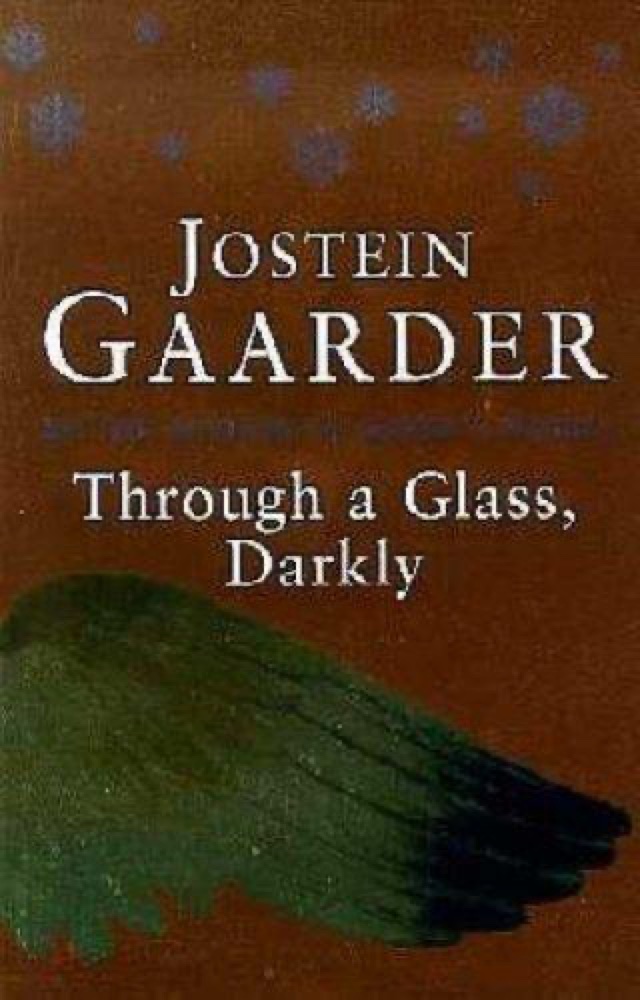
Sophie's World, first published in Norway in 1991 by Jostein Gaarder, follows Sophie Amundsen, a fourteen-year-old girl who begins receiving mysterious anonymous letters asking questions like "Who are you?" and "Where does the world come from?" These notes enroll her in an unusual correspondence course in philosophy conducted by a hidden teacher named Alberto Knox, who leads her through the history of Western thought from the pre-Socratics through Sartre. Alongside the lessons, Sophie keeps intercepting mail addressed to another girl named Hilde, a riddle whose solution turns out to be far stranger than she expects.
At its heart the book blends a genuine primer on the history of philosophy with a metafictional mystery. As Sophie and Alberto probe the nature of reality, they gradually realize that they themselves may be characters written into existence, and the story folds back on its own premises with playful self-awareness. Gaarder, who often writes from a child's sense of wonder and favors stories within stories, uses this structure to dramatize the very questions of existence, free will, and appearance versus reality that the philosophy lessons introduce.
The novel became a phenomenon well beyond Norway, winning the Deutscher Jugendliteraturpreis in 1994 and, after its 1995 English translation, reportedly becoming the best-selling book in the world that year. By 2011 it had been translated into roughly fifty-nine languages with more than forty million print copies sold, and it remains one of the most widely read popular introductions to philosophy, valued for making three millennia of ideas accessible to general and younger readers alike.
Key characters
- Sophie AmundsenFourteen-year-old Norwegian girl who receives the philosophy lessons
- Alberto KnoxMysterious philosopher who tutors Sophie through the history of thought
- Hilde Møller KnagGirl whose intercepted mail forms the central riddle
- Albert KnagHilde's father, a UN officer connected to the letters
- HermesAlberto's dog, who delivers messages
Book details
- First published
- 1991
- Length
- 403 pages
- Reading time
- 7 hours
- Author
- Jostein Gaarder
- Genre
- Fiction
- Goodreads rating
- 3.97 (288k ratings) →
- First line
- “Sophie Amundsen was on her way home from school.”
Movie & TV adaptations
- IMDb
- IMDb
If you liked this, read…
- 1The Consolations of PhilosophyAccessible, story-driven introduction to philosophical thinkers
- 2The AlchemistA short, allegorical novel exploring life's big questions for a wide audience
- 3The Little PrinceA deceptively simple tale posing existential questions for young and adult readers
Keep reading
 What Do You Care What Other People Think?
 The Idiot
 The Meaning of It All: Thoughts of a Citizen-Scientist
 Living with a Wild God: A Nonbeliever's Search for the Truth about Everything
 When Women Were Dragons
 A Circle of Quiet
 Contact
 Stories of Your Life and Others
 Xenocide
 Drive Your Plow Over the Bones of the Dead
 The Magic Mountain
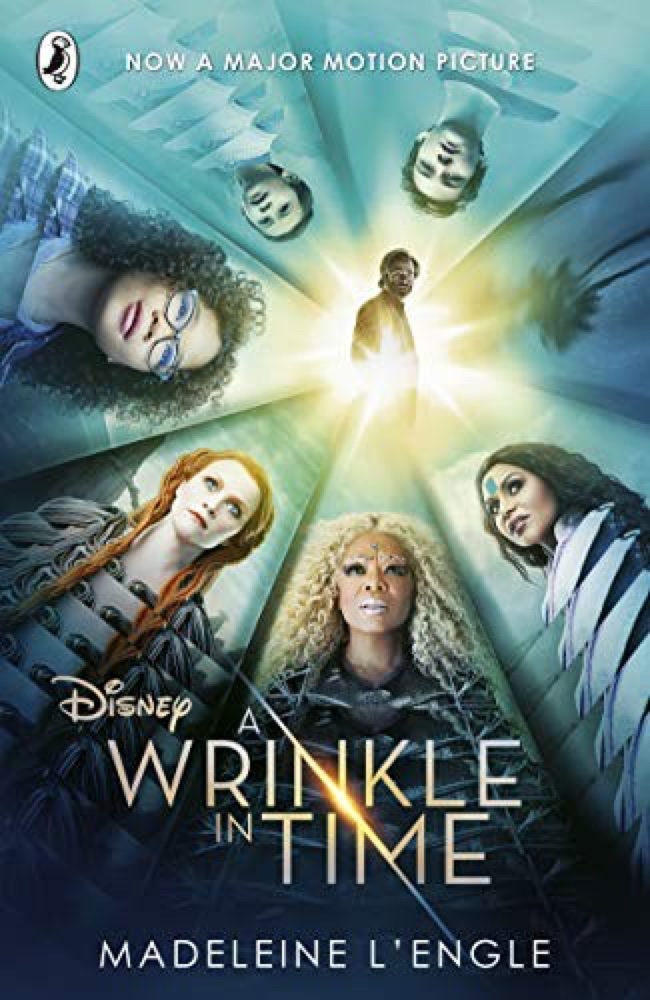 A Wrinkle in Time
 The Republic
 21 Lessons for the 21st Century
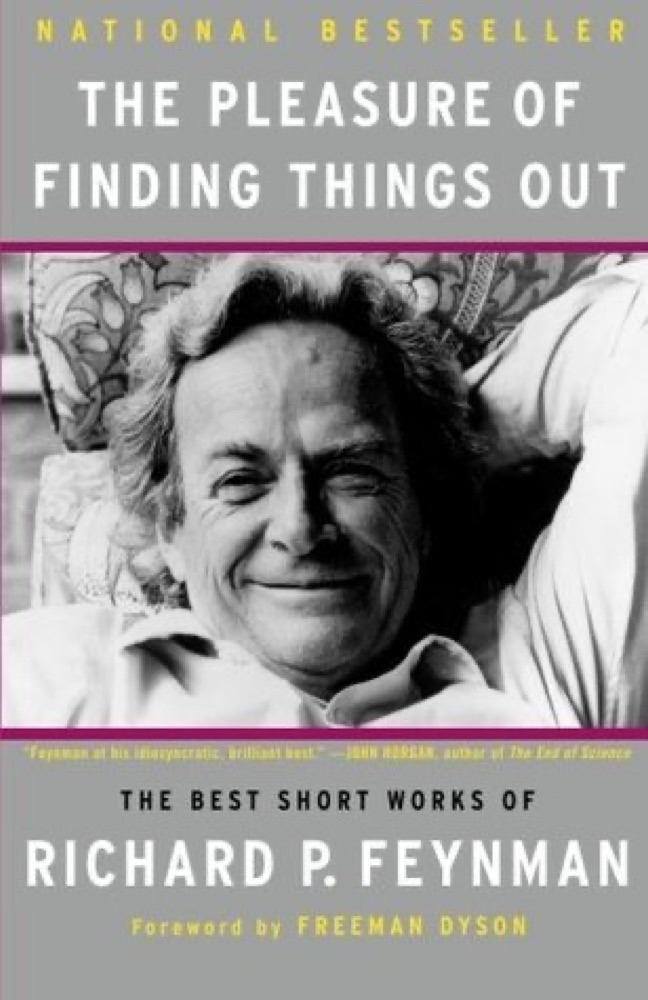 The Pleasure of Finding Things Out: The Best Short Works of Richard P. Feynman
 Jeremy Fink and the Meaning of Life
 The Toll
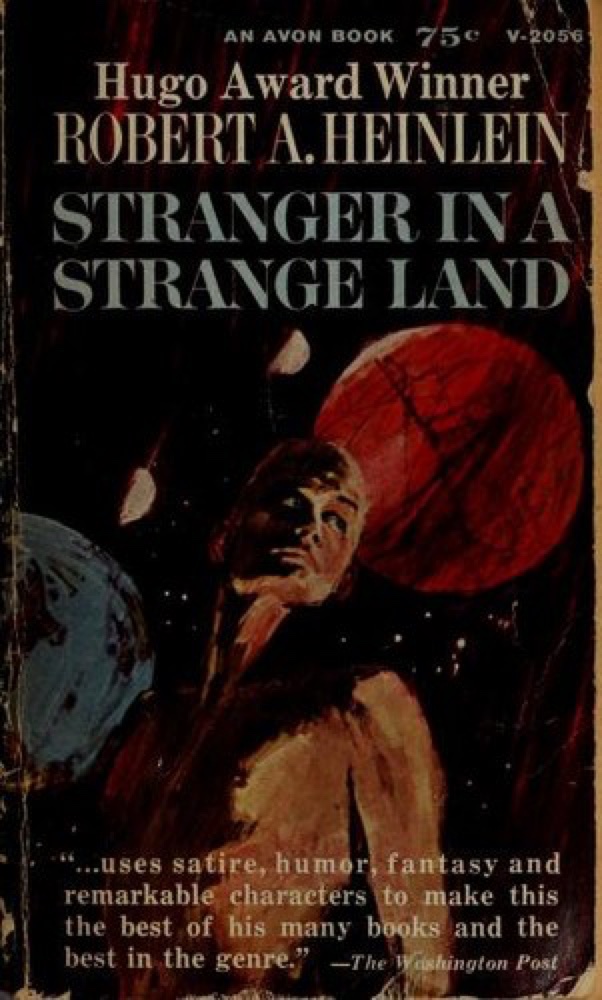 Stranger in a Strange Land
 Foucault's Pendulum
 Infinite Jest
 Mysteries
 The Rebel Angels
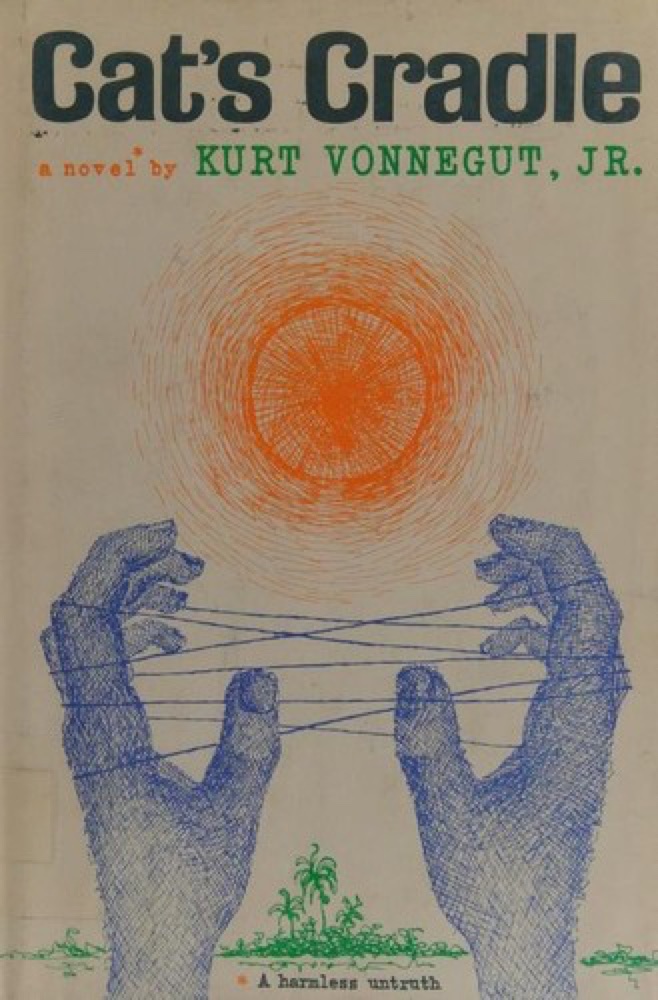 Cat's Cradle
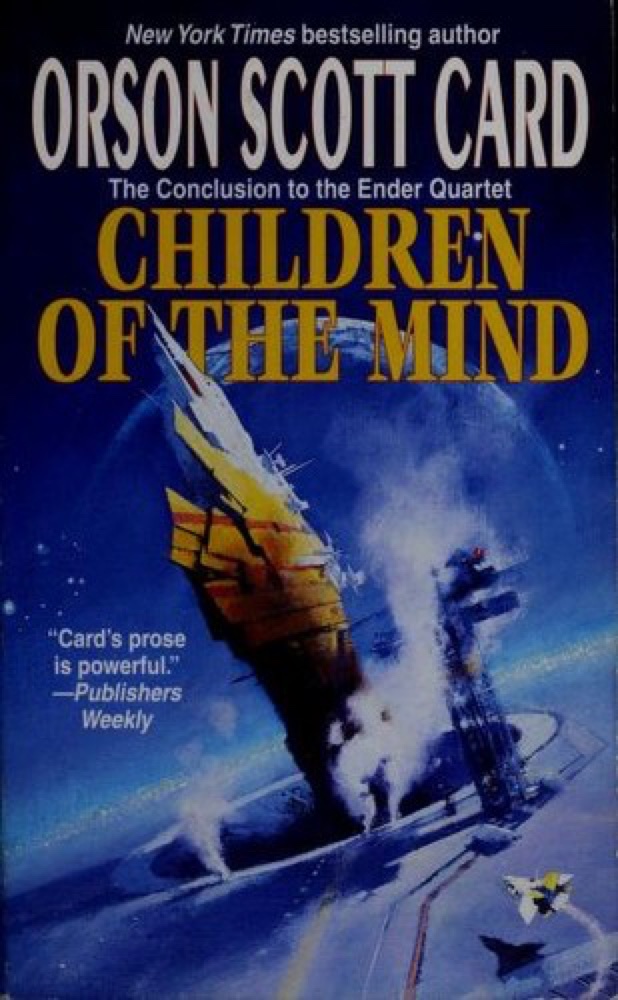 Children of the Mind
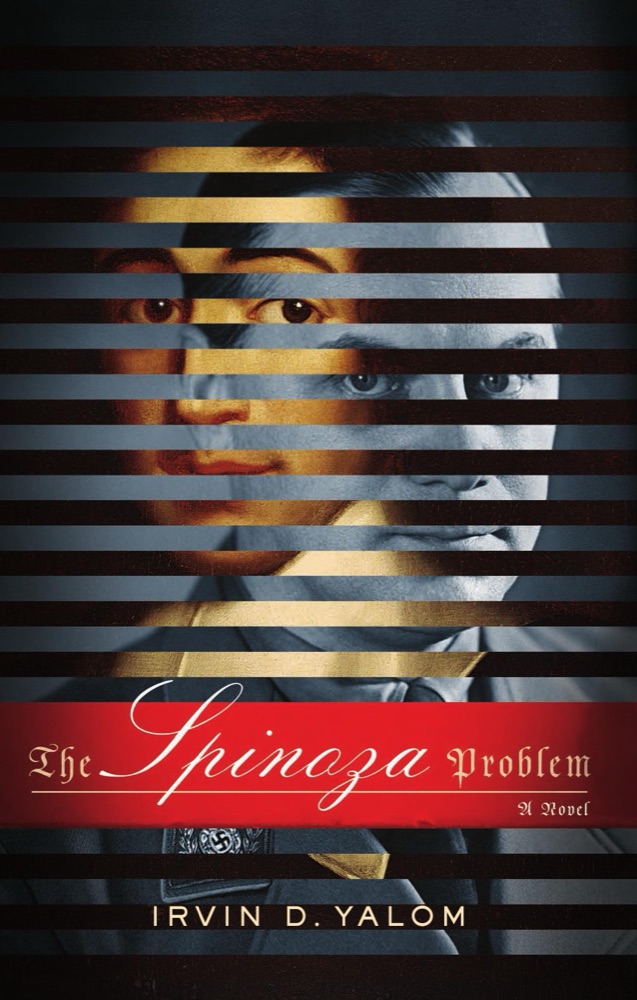 The Spinoza Problem
 East of Eden
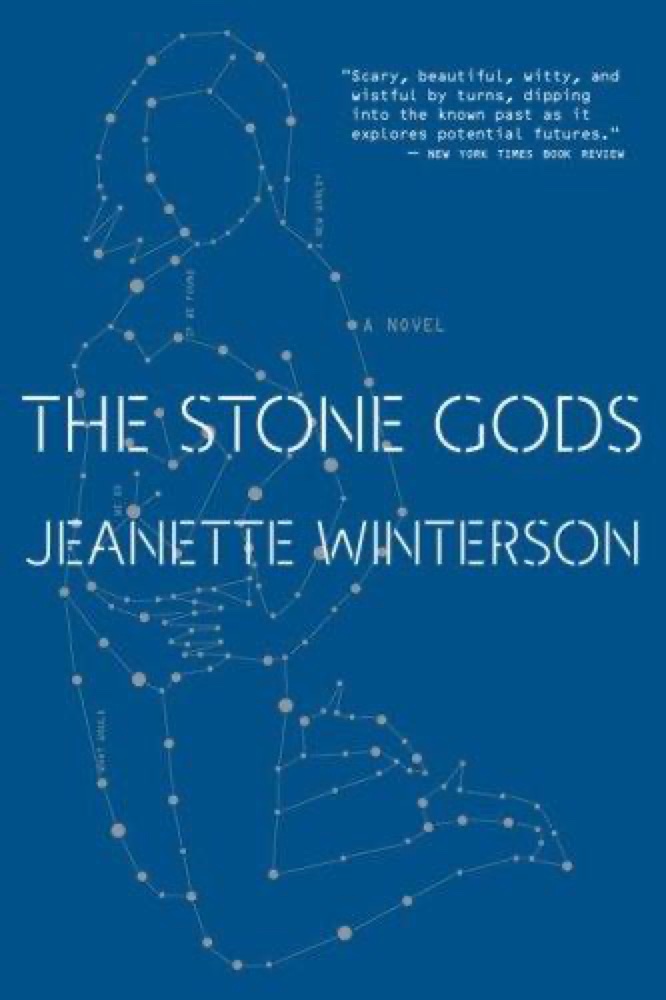 The Stone Gods
 The Gone-Away World
 Island
 God's Debris: A Thought Experiment
 The Gay Science
 Pensées
 Breaking the Spell: Religion as a Natural Phenomenon
 Genesis
 The Empusium
 The Rose Field
 Rationality: From AI to Zombies
 Gnomon
 A Wind in the Door
 Acceptance
 Three Daughters of Eve
 Critique of Pure Reason
 In the Light of What We Know
 House Harkonnen
 State of Wonder
 The Myth of Sisyphus
 The Schopenhauer Cure
 The Three-Body Problem
 Mostly Harmless
 An Enquiry Concerning Human Understanding
 Impossible Creatures
 Thief of Time
 Flowers for Algernon
 Bewilderment
 The Socrates Express: In Search of Life Lessons from Dead Philosophers
 The Golden Compass
 The Fifth Science
 Demian
 We the Living
 The Complete Essays