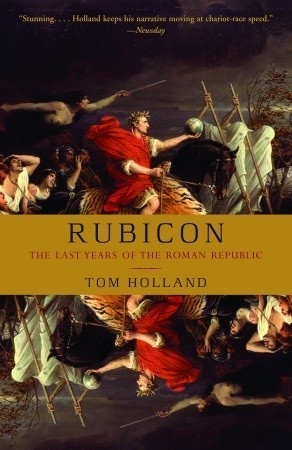

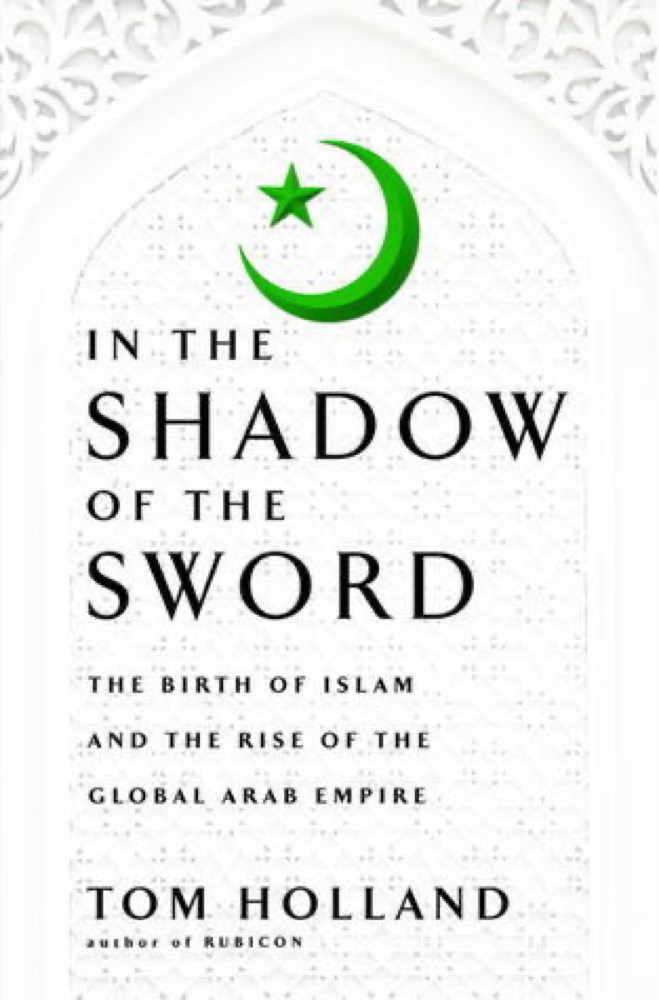
 In the Shadow of the Sword: The Birth of Islam and the Rise of the Global Arab Empire
Quotes from the Book
It was an article of faith to the Romans that they were the most morally upright people in the world. How else was the size of their empire to be explained? Yet they also knew that the Republic's greatness carried its own risks. To abuse it would be to court divine anger. Hence the Roman's concern to refute all charges of bullying, and to insist they had won their empire purely in self-defense.
Gain cannot be made without loss to someone else.
Honour, in the Republic, had never been a goal in itself, only a means to an infinite end. And what was true of her citizens, naturally, was also true of Rome herself. For the generation that had lived through the civil wars, this was the consolation history gave them. Out of calamity could come greatness. Out of dispossession could come the renewal of a civilised order.
Just like any electorate, they delighted in making candidates for their favors sweat.
This [for opposition leaders to claim royal lineage], in a world ruled by a republic, was what revolution had come to mean.
Enthusiasts for empire argued that Rome had a civilizing mission; that because her values and institutions were self-evidently superior to those of barbarians, she had a duty to propagate them; that only once the whole globe had been subjected to her rule could there be a universal peace.
The Roman character had a strong streak of snobbery: effectively, citizens preferred to vote for families with strong brand recognition, electing son after father after grandfather to the great magistracies of state, indulging the nobility’s dynastic pretensions with a numbing regularity.
The fish fanciers, sitting by their ponds and gazing into their depths, were tracing shadows darker than they understood.
Achievement was worthy of praise and honor, but excessive achievement was pernicious and a threat to the state.
The news, when it leaked out, caused outrage and horror in Rome. The Republic was never so dangerous as when it believed that its security was at stake. The Romans rarely went to war, not even against the most negligible foe, without somehow first convincing themselves that their preemptive strikes were defensive in nature.
Of all Rome’s seven hills, however, the Palatine was the most exclusive by far.
always been, and the safety of the Republic would be assured. This was a presumption buried deep in the soul of every Roman.
More people worship the rising than the setting sun,
Even when they have been felled, let alone when they are still standing and fighting, they never disgrace themselves,
Achievement was worthy of praise and honor, but excessive achievement was pernicious and a threat to the state. However great a citizen might become, however great he might wish to become, the truest greatness of all still belonged to the Roman Republic itself
Watch on YouTube
About Tom Holland
We have collected 45 quotes from 2 books by Tom Holland on BookQuoters.
More about the author →More by Tom Holland
In the Shadow of the Sword: The Birth of Islam and the Rise of the Global Arab Empire
Book details
- Author
- Tom Holland
- Genre
- History
- Goodreads rating
- 4.23 (29k ratings) →
Keep reading
 The Decline and Fall of the Roman Empire
 The History of the Decline and Fall of the Roman Empire Volume I
 SPQR: A History of Ancient Rome
 Caesar and Christ
 The Fall of the Roman Empire: A New History of Rome and the Barbarians
 The Discourses
 Imperium: A Novel of Ancient Rome
 The Histories
 Claudius the God and His Wife Messalina
 Plutarch's Lives
 Dictator
 History of the Peloponnesian War
 Reflections on the Revolution in France
 The Proud Tower: A Portrait of the World Before the War, 1890-1914
 A Distant Mirror: The Calamitous 14th Century
 Emperor of Rome: Ruling the Ancient Roman World
 How the Irish Saved Civilization
 Empire
 The Will to Battle
 I, Claudius
 The Mask of Fear
 Utopia
 First Lord's Fury
 The March of Folly: From Troy to Vietnam
 The Ides of March
 Julian
 The Lily and The Lion
 The Federalist Papers
 Red Mars
 The Grace of Kings
 Soul of the Fire
 American Colossus: The Triumph of Capitalism, 1865-1900
 The Twelve Caesars
 The Annals of Imperial Rome
 The Republic
 The Path to Power
In the Shadow of the Sword: The Birth of Islam and the Rise of the Global Arab Empire
The Path to Power
In the Shadow of the Sword: The Birth of Islam and the Rise of the Global Arab Empire
 The Machiavellians: Defenders of Freedom
 The Spirit of the Laws
 Conspirata
 The Wall of Storms
 A History of the World in 100 Objects
 Founding Brothers: The Revolutionary Generation
 Closing the Ring
 Nostromo
 The Old Regime and the French Revolution
 Gardens of the Moon
 The Volcano Lover: A Romance
 Stone's Fall
 Ninety-Three
 Romola
 The Black Jacobins: Toussaint L'Ouverture and the San Domingo Revolution
 Parallel Lives
 On the Republic / On the Laws
 Consider Phlebas
 The Secret Agent
 Burr
Burr
 Persian Letters
 Democracy in America
 The Honor of the Queen