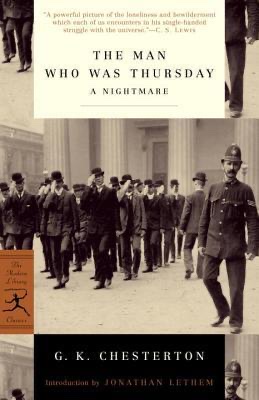
 The Man Who Was Thursday
Quotes from the Book
There is a law written in the darkest of the Books of Life, and it is this: If you look at a thing nine hundred and ninety-nine times, you are perfectly safe; if you look at it the thousandth time, you are in frightful danger of seeing it for the first time.
111
The human race, to which so many of my readers belong, has been playing at children's games from the beginning, and will probably do it till the end, which is a nuisance for the few people who grow up. And one of the games to which it is most attached is called "Keep to-morrow dark," and which is also named (by the rustics in Shropshire, I have no doubt) "Cheat the Prophet." The players listen very carefully and respectfully to all that the clever men have to say about what is to happen in the next generation. The players then wait until all the clever men are dead, and bury them nicely. They then go and do something else. That is all. For a race of simple tastes, however, it is great fun.
44
Individually, men may present a more or less rational appearance, eating, sleeping, and scheming. But humanity as a whole is changeful, mystical, fickle, delightful. Men are men, but Man is a woman.
30
Adventures happen on dull days, and not on sunny ones. When the chord of monotony is stretched most tight, then it breaks with a sound like song.
26
Be careful how you suggest things to me. For there is in me a madness which goes beyond martyrdom, the madness of an utterly idle man.
17
To each man one soul only is given; to each soul only is given a little power - the power at some moments to outgrow and swallow up the stars.
15
He is a man, I think," he said, "who cares for nothing but a joke. He is a dangerous man." Lambert laughed in the act of lifting some macaroni to his mouth. "Dangerous!" he said. "You don't know little Quin, sir!" "Every man is dangerous," said the old man, without moving, "Who cares only for one thing. I was once dangerous myself.
13
Many clever men like you have trusted to civilization. Many clever Babylonians, many clever Egyptians, many clever men at the end of Rome. Can you tell me, in a world that is flagrant with the failures of civilisation, what there is particularly immortal about yours?
10
Adam Wayne, the conqueror, with his face flung back and his mane like a lion's, stood with his great sword point upwards, the red raiment of his office flapping around him like the red wings of an archangel. And the King saw, he knew not how, something new and overwhelming. The great green trees and the great red robes swung together in the wind. The preposterous masquerade, born of his own mockery, towered over him and embraced the world. This was the normal, this was sanity, this was nature, and he himself, with his rationality, and his detachment and his black frock-coat, he was the exception and the accident - a blot of black upon a world of crimson and gold.
7
When you say you want all peoples to unite, you really mean that you want all peoples to unite to learn the tricks of your people. If the Bedouin Arab does not know how to read, some English missionary or schoolmaster must be sent to teach him to read, but no one ever says, 'This schoolmaster does not know how to ride on a camel; let us pay a Bedouin to teach him.' You say your civilisation will include all talents. Will it? Do you really mean to say that at the moment when the Esquimaux has learnt to vote for a County Council, you will have learnt to spear a walrus? I recur to the example I gave. In Nicaragua we had a way of catching wild horses—by lassooing the fore feet—which was supposed to be the best in South America. If you are going to include all the talents, go and do it. If not, permit me to say what I have always said, that something went from the world when Nicaragua was civilised.
6
just as when we see a pig in a litter larger than the other pigs, we know that by an unalterable law of the Inscrutable it will some day be larger than an elephant,—just as we know, when we see weeds and dandelions growing more and more thickly in a garden, that they must, in spite of all our efforts, grow taller than the chimney-pots and swallow the house from sight, so we know and reverently acknowledge, that when any power in human politics has shown for any period of time any considerable activity, it will go on until it reaches to the sky.
6
But humanity as a whole is changeful, mystical, fickle, delightful. Men are men, but Man is a woman.
5
He discovered the fact that all romantics know—that adventures happen on dull days, and not on sunny ones. When the chord of monotony is stretched most tight, then it breaks with a sound like song.
4
In the beginning of the twentieth century you could not see the ground for clever men. They were so common that a stupid man was quite exceptional, and when they found him, they followed him in crowds down the street and treasured him up and gave him some high post in the State.
4
I have never been to St. John's Wood. I dare not. I should be afraid of the innumerable night of fir trees, afraid to come upon a blood red cup and the beating of the wings of the Eagle.
3
They stoned the false prophets, it is said; but they could have stoned true prophets with a greater and juster enjoyment.
3
And it did certainly appear that the prophets had put the people (engaged in the old game of Cheat the Prophet) in a quite unprecedented difficulty. It seemed really hard to do anything without fulfilling some of their prophecies. But there was, nevertheless, in the eyes of labourers in the streets, of peasants in the fields, of sailors and children, and especially women, a strange look that kept the wise men in a perfect fever of doubt. They could not fathom the motionless mirth in their eyes. They still had something up their sleeve; they were still playing the game of Cheat the Prophet. Then the wise men grew like wild things, and swayed hither and thither, crying, "What can it be? What can it be? What will London be like a century hence? Is there anything we have not thought of? Houses upside down--more hygienic, perhaps? Men walking on hands--make feet flexible, don't you know? Moon ... motor-cars ... no heads...." And so they swayed and wondered until they died and were buried nicely.
3
Every man is dangerous," said the old man without moving, "who cares only for one thing.
2
Then the small man suddenly ran after them and said: "I want to get my haircut. I say, do you know a little shop anywhere where they cut hair properly? I keep on having my hair cut, but it keeps on growing again." One of the tall men looked at him with the air of a pained naturalist.
2
Suppose I am God," said the voice, "and suppose I made the world in idleness. Suppose the stars, that you think eternal, are only the idiot fireworks of an everlasting schoolboy. Suppose the sun and the moon, to which you sing alternately, are only the two eyes of one vast and sneering giant, opened alternately in a never-ending wink. Suppose the trees, in my eyes, are as foolish as enormous toad-stools. Suppose Socrates and Charlemagne are only to me beasts, made funnier by walking on their hind legs. Suppose I am God, and having made things, laugh at them." "And suppose I am man," answered the other, " And suppose that I give the answer that shatters even a laugh. Suppose I do not laugh back at you, do not blaspheme you, do not curse you. But suppose, standing up straight under the sky, with every power of my being, thank you for the fools' paradise you have made. Suppose I praise you, with a literal pain of ecstasy, for the jest that has brought me so terrible a joy. If we have taken the child's games, and given them the seriousness of a crusade, if we have drenched your grotesque Dutch garden with the blood of martyrs, we have turned a nursery into a temple. I ask you, in the name of heaven, who wins?
1
You irritate me sublimely. What can it be in me? Is it the relic of a moral sense?
1
The human race, to which so many of my readers belong...
1
Freedom of speech means practically, in our modern civilisation, that we must only talk about unimportant things. We must not talk about religion, for that is illiberal; we must not talk about bread and cheese, for that is talking shop; we must not talk about death, for that is depressing; we must not talk about birth, for that is indelicate. It
1
Don't you believe people when they tell you that people sought for a sign, and believed in miracles because they were ignorant. They did it because they were wise, filthily, vilely wise—too wise to eat or sleep or put on their boots with patience.
1
you look at a thing nine hundred and ninety-nine times, you are perfectly safe; if you look at it the thousandth time, you are in frightful danger of seeing it for the first time.
1
All revolutions are doctrinal—such as the French one, or the one that introduced Christianity. For it stands to common sense that you cannot upset all existing things, customs, and compromises, unless you believe in something outside them, something positive and divine.
1
he was inquisitive with the inquisitiveness of a despot and worried as with the responsibilities of a god.
Watch on YouTube
About G.K. Chesterton
We have collected 364 quotes from 14 books by G.K. Chesterton on BookQuoters.
More about the author →More by G.K. Chesterton
All books by G.K. Chesterton →
About the book
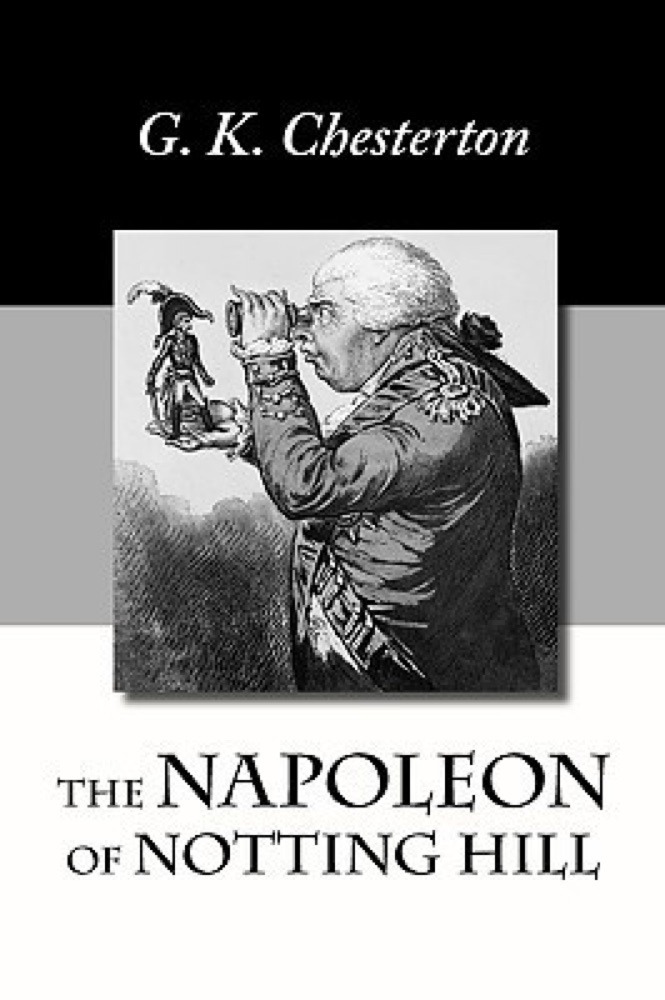
In a London of the future, the drudgery of capitalism and bureaucracy have worn the human spirit down to the point where it can barely stand. When a pint-sized clerk named Auberon Quinn is randomly selected as head of state, he decides to turn London into a medieval carnival for his own amusement. One man, Adam Wayne, takes the new order of things seriously, organizing a Notting Hill army to fight invaders from other neighborhoods. At first his project baffles everyone, but eventually his dedication proves infectious, with delightful results. First published in 1904, The Napoleon of Notting Hill was Chesterton's first novel. It has been called the best first novel by any author in the twentieth century. Newly designed and typeset by Waking Lion Press.
Book details
- First published
- 1904
- Author
- G.K. Chesterton
- Genre
- Fiction
- Goodreads rating
- 3.83 (4k ratings)
Keep reading
The Man Who Was Thursday
 Man and Superman
 Too Like the Lightning
 The Once and Future King
 Persian Letters
 Heretics
 That Hideous Strength
 Arm of the Sphinx
 Manalive
 Maldoror and the Complete Works
 The Book of Merlyn
 Pyramids
 The Fall of Babel
 Human, All Too Human
 A Connecticut Yankee in King Arthur's Court
 The Mysterious Stranger
 The Man in the High Castle
 The Secret Agent
 The Enchantress of Florence
 The Truth: Stage Adaptation
 The Eyes of the Dragon
 Gaudy Night
 The Claw of the Conciliator
 A Canticle for Leibowitz
 Selected Poems
 The Ides of March
 Barnaby Rudge
 Ninety-Three
 All the King's Men
 The Magician's Nephew
 The White Luck Warrior
 Don Juan
 The Mirror & the Light
 Armadale
 In the Garden of Iden
 The Man Without Qualities
 Seven Surrenders
 Interesting Times
 Antic Hay
 Toll the Hounds
 Skinny Legs and All
 The First Circle
 Dead Souls
 Empire of Silence
 Henderson the Rain King
 Shōgun
 The Screwtape Letters
 Foundation and Empire
 The Idiot
 The Magic Mountain
 Wolf Hall
 Utopia
 The Mime Order
 The Accursed
 Good Omens
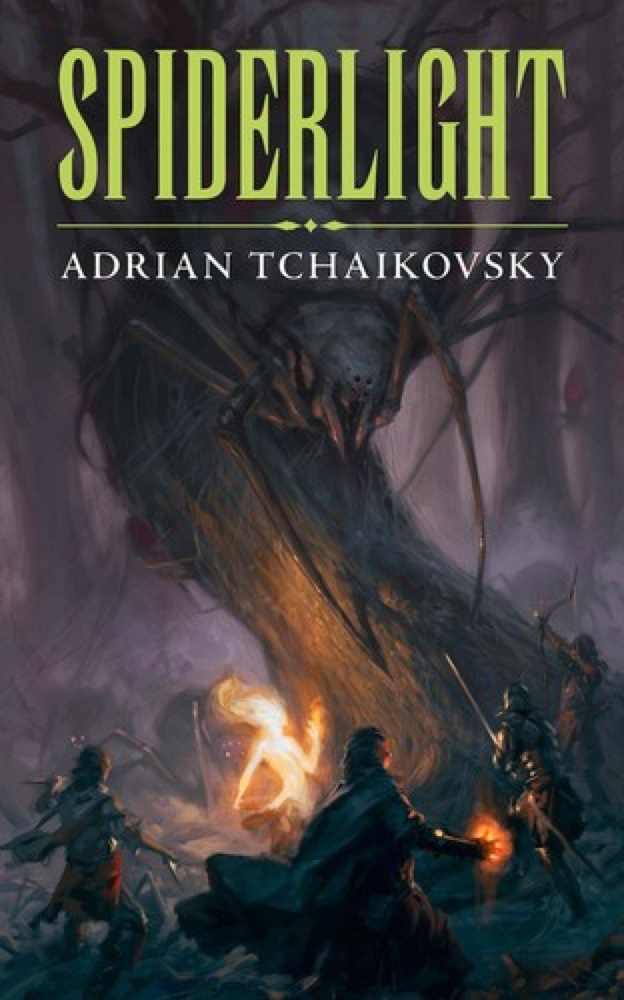 Spiderlight
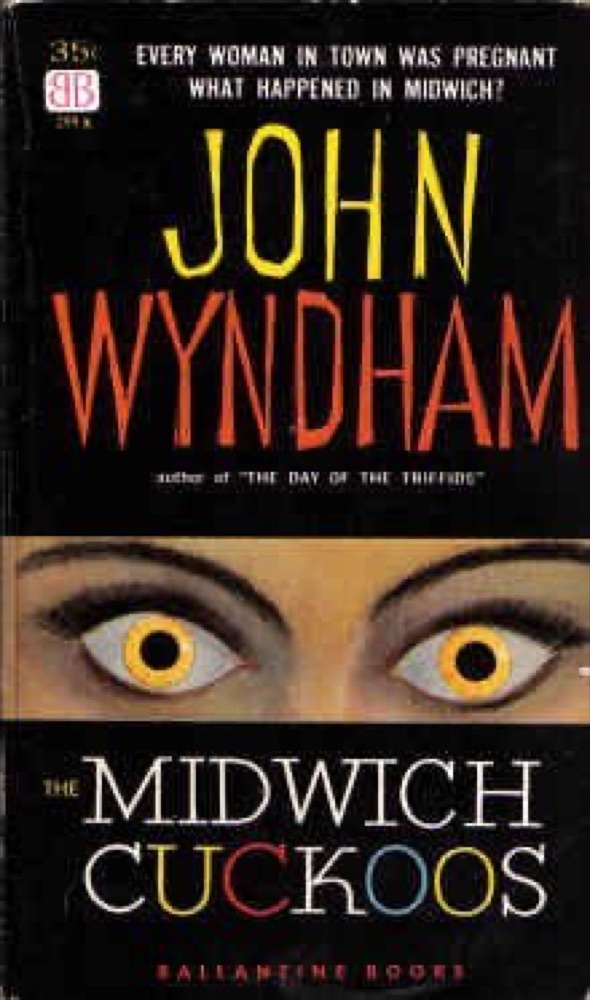 The Midwich Cuckoos
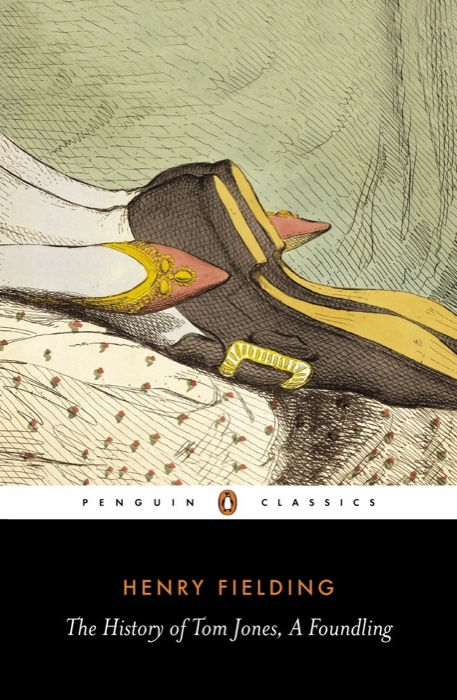 The History of Tom Jones, a Foundling
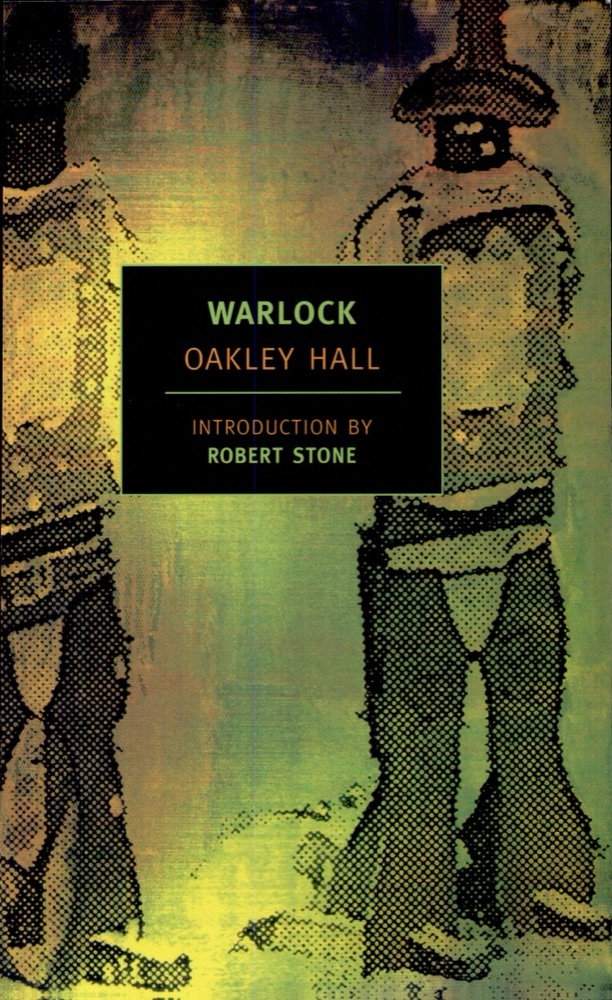 Warlock