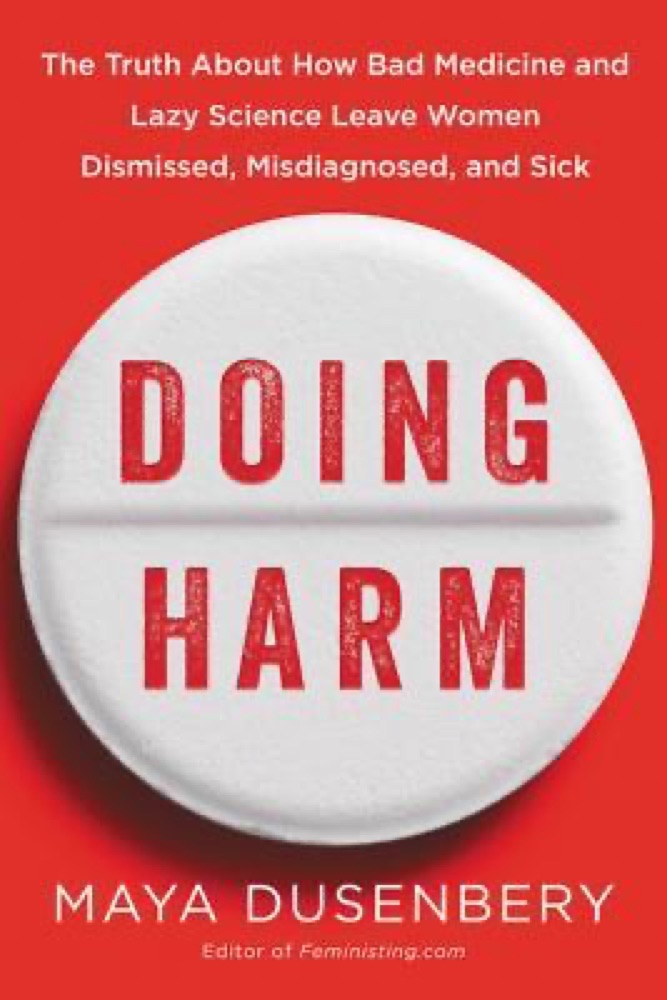

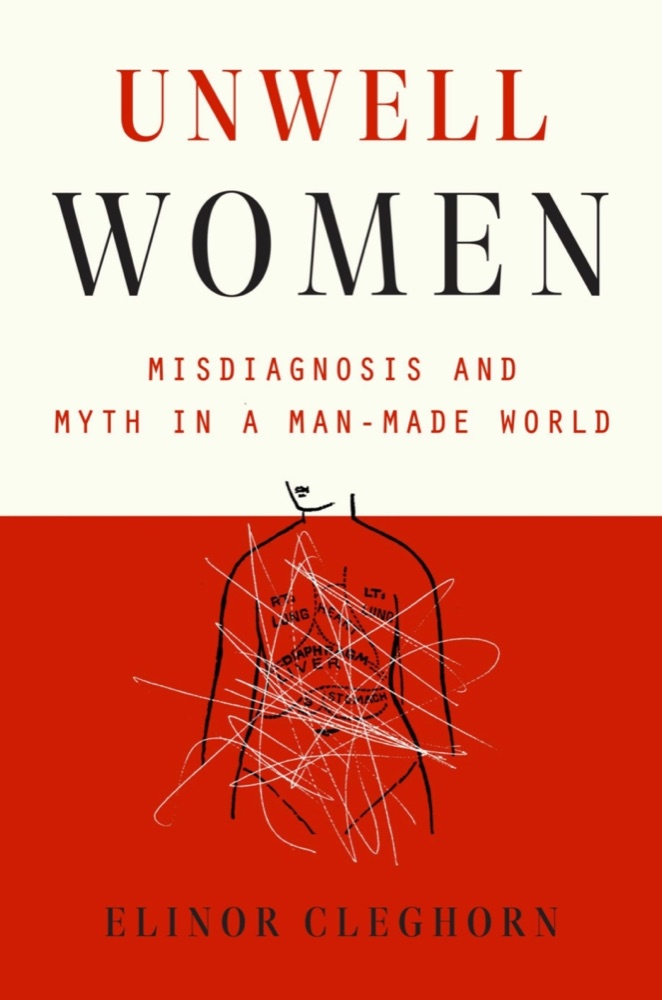
 Unwell Women: Misdiagnosis and Myth in a Man-Made World
Quotes from the Book
Often, women's symptoms are brushed off as the result of depression, anxiety, or the all-purpose favorite: stress. Sometimes, they are attributed to women's normal physiological states and cycles: to menstrual cramps, menopause, or even being a new mom. Sometimes, other aspects of their identity seem to take center stage: fat women report that any ailment is blamed on their weight; trans women find that all their symptoms are attributed to hormone therapy; black women are stereotyped as addicts looking for prescription drugs, their reports of pain doubted entirely. Whatever the particular attribution, there is often the same current of distrust: the sense that women are not very accurate judges of when something is really, truly wrong in their bodies.
4
The default to studying men at times veered into absurdity: in the early sixties, observing that women tended to have lower rates of heart disease until their estrogen levels dropped after menopause, researchers conducted the first trial to look at whether supplementation with the hormone was an effective preventive treatment. The study enrolled 8,341 men and no women. (Although doctors began prescribing estrogens to postmenopausal women in droves - by the midseventies, a third would be taking them - it wasn't until 1991 that the first clinical study of hormone therapy was conducted in women.) An NIH-supported pilot study from Rockefeller University looked at how obesity affected breast and uterine cancer didn't enroll a single woman. While men can develop breast cancer - and a small number of them do each year - as Rep. Snowe noted drily at the congressional hearings, 'Somehow I find it hard to believe that the male-dominated medical community would tolerate a study of prostate cancer that used only women as research subjects.
4
There is always a gap between when a symptom begins and when it is 'medically explained.' It is unreasonable to expect that doctors, who are fallible human beings doing a difficult job, can close this gap instantaneously - and, given that medical knowledge is, and probably always will be, incomplete, they may at times not be able to close it at all. But it shouldn't unreasonable to expect that, during this period of uncertainty, the benefit of the doubt be given to the patient, the default assumption be that their symptoms are real, their description of what they are feeling in their own bodies be believed, and, if it is 'medically unexplained,' the burden be on medicine to explain it. Such basic trust has been denied to women for far too long.
4
Chronic illness, with its invisible symptoms of fatigue and pain, is largely the burden of women. And it's worth considering to what extent its relative neglect by the medical system is because it mostly affects women, whose complaints are so often heard not as a roar but as a whine.
4
When I started researching this book, I expected that women's stories would be similar and rooted in the same systemic problems, but I didn't anticipate finding that our fates are so intimately intertwined. In a medical system with a tendency to assume that anything it can't explain is psychogenic, as long as women have more "medically unexplained symptoms" thanks to the knowledge gap, women will continue to find that they are stereotyped as stressed-out somaticizers and their symptoms are not taken as seriously as men's.
4
One 1993 study suggested that up to 40 percent of black women with endometriosis were misdiagnosed as having sexually transmitted PID. "It was so blatantly racist it just blows my mind," Ballweg says.
4
Only 15 percent of the doctors diagnosed heart disease in the woman, compared to 56 percent for the man, and only 30 percent referred the woman to a cardiologist, compared to 62 percent for the man. Finally, only 13 percent suggested cardiac medication for the woman, versus 47 percent for the man.
4
To be sure, depression, anxiety, and prolonged stress can cause specific physical symptoms, but these symptoms are not limitless, nor are they actually unexplained. When doctors invoke these labels for symptoms as diverse as vomiting, paralysis, and sever, unending pain, it is the concept of the somatoform disorders--hysteria dressed up in modern garb-- that allows them to do so.
4
Experts in diagnostic errors provided an answer to the puzzle that had been nagging me: How was it possible for missed diagnoses to be so common and yet not perceived by doctors as a major problem? The problem is that physicians, while generally aware that mistakes happen, greatly underestimate how often they make them. In his talks to doctors on the topic, Graber often asks how many have made a diagnostic error in the past year; typically, only about 1 percent of the hands go up. 'The concept that they, personally, could err at a significant rate is inconceivable to most physicians,' he writes. In short, they think it's the other guy. This overconfidence is not necessarily their fault: doctors simply do not get the feedback needed to gain an accurate sense of their batting average. They assume their diagnoses are correct until they hear otherwise. Since there are few, if any, health care organizations that systematically measure diagnostic error rates, they typically learn of their mistakes only from the patients themselves.
3
And whenever you hear a condition described as a "contested disease," the odds are good that the "contest" is between, on the one hand, mostly women patients who believe their condition to be an organic one and, on the other hand, a medical establishment that assumes their "medically unexplained symptoms" are all in their heads.
3
PinkNews coined the term "trans broken arm syndrome" to describe it: "Healthcare providers assume that all medical issues are a result of a person being trans. Everything—from mental health problems to, yes, broken arms.
3
An NIH-supported pilot study from Rockefeller University that looked at how obesity affected breast and uterine cancer didn’t enroll a single woman. While men can develop breast cancer—and a small number of them do each year—as Rep. Snowe noted drily at the congressional hearings, “Somehow, I find it hard to believe that the male-dominated medical community would tolerate a study of prostate cancer that used only women as research subjects.
2
The women's reports of pain are received seems to be at least as influenced by cultural stereotypes about men as about women. The stoicism expected of men is cited as one of the reasons that their pain is taken more seriously; their reports of pain are less likely to be doubted, because it's assumed they're more reluctant to make them in the first place. But there's no rational reason that men's assumed stoicism should result in women's pain not being taken seriously.
2
The evidence showing that patients of color, black patients especially, are undertreated for pain in the United States is particularly robust. A 2012 meta-analysis of twenty years of published research found that, across all the studies, black patients were 22 percent less likely than whites to get any pain medication and 29 percent less likely to be treated with opioids. Latino patients were also 22 percent less likely to receive opioids. As is the case with gender disparities, racial/ethnic disparities were most pronounced 'when a cause of pain could not be readily verified.' But black patients were less likely to get opioids after traumatic injuries or surgery too. and the authors warned that the gap 'does not appear to be closing with time or existing policy initiatives.
2
It’s high time that millennial feminism turned its attention to the gender bias remaining in medicine at large and tackled this unfinished revolution.
2
When they're pregnant, women may find their symptoms blamed on pregnancy, and then, after giving birth, on the normal postpartum healing process, and then simply on motherhood itself.
2
A commenter on one endometriosis Facebook group reported, "My doctor told me having a baby would help my pain. I'm only eleven.
2
As one patient with chronic fatigue syndrome put it, 'The difference between a crazed neurotic and a seriously ill person is simply a test.
2
A 2016 study published in Proceedings of the National Academy of Sciences of the United States of America suggested that health care providers may underestimate black patients' pain in part due to a belief that they simply don't actually feel as much pain - a myth that dates all the way back to the days of slavery. For centuries, the claim that black people were biologically different from whites was 'championed by scientists, physicians, and slave owners alike to justify slavery and the inhumane treatment of black men and women in medical research,' the authors wrote. Black people were thought to have 'thicker skulls, less sensitive nervous systems,' and a super-human ability to 'tolerate surgical operations with little, if any, pain at all.' In the first phase of the study, over two hundred white medical students and residents were asked whether a series of statements about differences between black and white patients were true or false. Some of the statements were true, while others - for example, 'blacks' skin is thicker than whites' and 'blacks' nerve endings are less sensitive than whites' - were false. They found that a full half of the respondents thought that one or more the false statements - many of which were 'fantastical in nature' - were possibly, probably, or definitely true. Also, notably, many of them didn't agree with the statements that were actually true; only half of the residents knew that white patients are less likely to have heart disease than black patients are. When asked to read case studies of two patients complaining of pain, one white and one black, the respondents who had endorsed more false beliefs were more likely to believe that the black patient felt less pain, and undertreated them accordingly.
1
But women bear the brunt of this bias. According to patient surveys, women are more likely than men to have been advised to lose weight by a health care provider.
1
Doctors—and even patients themselves— often view chronic pain conditions as an inevitable result of old age.
1
research has pointed to women's tendency to delay going to the ER when they're actually having a heart attack as one factor that may contribute to their worse outcomes compared to men.
1
The median time it took for men to get an EKG was 15 minutes, compared to 21 minutes for women; the gender gap was 28 compared to 36 minutes for fibrinolytic therapy to break up a clot and 93 compared to 106 minutes to implant a coronary stent.
1
Indeed, the unjustifiable error was not in failing to more quickly determine a very unlikely diagnosis but in not taking Maggie's report of extreme pain seriously—and eventually deciding it must not be real at all—until they did.
1
Nevertheless, a 2005 study found that nearly 80 percent of animal pain studies published in recent years had used only males.
1
Interestingly, however, it seems that the long-standing assumption that their hormonal cycle makes female animals inherently more variable than males is just that: an assumption.
1
First, there is a knowledge gap: the average doctor does not know as much about women’s bodies and the health problems that afflict them. It starts at the most basic level of biomedical research, where investigators overwhelmingly use male cells and animals in preclinical studies.
You fund what you fear.
Indeed, these two contradictory extremes that medicine has tended to vacillate between: either women's reproductive functions are pathologized as innately abnormal - in which case any symptoms they bring are "normal" - or else it is claimed that they are normal so if they cause symptoms, it's only because an individual woman's response to them is abnormal - she's just especially sensitive or overreacting. In short, either all women are sick or some women are crazy.
Of course, pregnant women are no less in need of safe, effective medical treatments than anyone else. Each year, over 400,000 women in the United States battle significant illnesses while pregnant. And many women have chronic conditions, from hypertension to autoimmune diseases to depression, that they must manage with medications. As bioethicist Francoise Baylis wrote in a 2010 Nature article, 'Pregnant women get sick, and sick women get pregnant.' Indeed, 90 percent of women take some medication during pregnancy, and about 70 percent take a prescription drug, according to the Centers for Disease Control and Prevention (CDC). The average woman receives 1.3 prescriptions per obstetric visit, and nearly two-thirds of women use four to five medications during pregnancy and labor. But with little actual research to go on, doctors are simply guessing at how drugs will affect a pregnant body, and their best predictions can be disastrously off.
Watch on YouTube
About Maya Dusenbery
We have collected 30 quotes from 1 book by Maya Dusenbery on BookQuoters.
More about the author →About the book
In this shocking, hard-hitting expose in the tradition of Naomi Klein and Barbara Ehrenreich, the editorial director of Feministing.com, reveals how gender bias infects every level of medicine and healthcare today—leading to inadequate, inappropriate, and even dangerous treatment that threatens women’s lives and well-being.
Maya Dusenbery brings together scientific and sociological research, interviews with experts within and outside the medical establishment, and personal stories from regular women to provide the first comprehensive, accessible look at how sexism in medicine harms women today. In addition to offering a clear-eyed explanation of the root causes of this insidious and entrenched bias and laying out its effects, she suggests concrete steps we can take to cure it.
Book details
- First published
- 2018
- Author
- Maya Dusenbery
- Genre
- Nonfiction
- Goodreads rating
- 4.17 (3k ratings)
The buzz
- The New York TimesReview in The New York Timesprofessional review (via Book Marks)
- Kirkus ReviewsReview in Kirkus Reviewsprofessional review (via Book Marks)
- Publishers WeeklyReview in Publishers Weeklyprofessional review (via Book Marks)
- BooklistReview in Booklistprofessional review (via Book Marks)
- TherumpusReview in Therumpusprofessional review (via Book Marks)
Keep reading
Unwell Women: Misdiagnosis and Myth in a Man-Made World
 All in Her Head: The Truth and Lies Early Medicine Taught Us About Women’s Bodies and Why It Matters Today
 Ask Me About My Uterus: A Quest to Make Doctors Believe in Women's Pain
 Ladyparts
 Delicate Condition
 The Invisible Kingdom: Reimagining Chronic Illness
 Invisible Women: Data Bias in a World Designed for Men
 This Is Your Brain on Birth Control: The Surprising Science of Women, Hormones, and the Law of Unintended Consequences
 Irreversible Damage: The Transgender Craze Seducing Our Daughters
 What Fresh Hell Is This?: Perimenopause, Menopause, Other Indignities, and You
 Why We Get Sick: The New Science of Darwinian Medicine
 Like a Mother: A Feminist Journey Through the Science and Culture of Pregnancy
 Natural Causes: An Epidemic of Wellness, the Certainty of Dying, and Killing Ourselves to Live Longer
 The Sleeping Beauties: And Other Stories of Mystery Illness
 Of Boys and Men: Why the Modern Male Is Struggling, Why It Matters, and What to Do About It
 Good Reasons for Bad Feelings: Insights from the Frontier of Evolutionary Psychiatry
 Animal: The Autobiography of a Female Body
 Healing Back Pain: The Mind-Body Connection
 How We Do Harm: A Doctor Breaks Ranks About Being Sick in America
 Men Explain Things to Me
 Why Zebras Don't Get Ulcers
 Ina May's Guide to Childbirth
 Elderhood: Redefining Aging, Transforming Medicine, Reimagining Life
 Women's Bodies, Women's Wisdom: Creating Physical and Emotional Health and Healing
 The Mother of All Questions
 The Feminine Mystique
 Do No Harm: Stories of Life, Death and Brain Surgery
 A Hunter-Gatherer's Guide to the 21st Century: Evolution and the Challenges of Modern Life
 Woman: An Intimate Geography
 Vagina Obscura: An Anatomical Voyage
 Come as You Are: The Surprising New Science that Will Transform Your Sex Life
 The Mad Women's Ball
 Clean: The New Science of Skin
 Brain Energy: A Revolutionary Breakthrough in Understanding Mental Health—and Improving Treatment for Anxiety, Depression, OCD, PTSD, and More
 The Exceptions: Nancy Hopkins, MIT, and the Fight for Women in Science
 Illness as Metaphor and AIDS and Its Metaphors
 Rage Becomes Her: The Power of Women's Anger
 The Gender Games: The Problem with Men and Women, from Someone Who Has Been Both
 The Emperor of All Maladies: A Biography of Cancer
 You Just Don't Understand: Women and Men in Conversation
 MILF: Motherhood, Identity, Love and F*ckery
 Bonk: The Curious Coupling of Science and Sex
 You'll Grow Out of It
 Doctors
 The Collected Schizophrenias: Essays
 Why We Can't Sleep: Women's New Midlife Crisis
 The Female Eunuch
 Good Morning, Monster: A Therapist Shares Five Heroic Stories of Emotional Recovery
 In Shock: My Journey from Death to Recovery and the Redemptive Power of Hope
 The Truth Will Set You Free, But First It Will Piss You Off!: Thoughts on Life, Love, and Rebellion
 Hashimoto's Protocol: A 90-Day Plan for Reversing Thyroid Symptoms and Getting Your Life Back
 The Devil Wears Scrubs
 What Doctors Feel: How Emotions Affect the Practice of Medicine
 Everyday Sexism
 Feminist Fight Club: An Office Survival Manual for a Sexist Workplace
 My Age of Anxiety: Fear, Hope, Dread, and the Search for Peace of Mind
 Bad Science
 Entitled: How Male Privilege Hurts Women
 Whole: Rethinking the Science of Nutrition
 Outrageous Acts and Everyday Rebellions