
 The Volcano Lover: A Romance
Quotes from the Book
A large part of the popularity and persuasiveness of psychology comes from its being a sublimated spiritualism: a secular, ostensibly scientific way of affirming the primacy of spirit over matter.
29
Nothing is more punitive than to give a disease a meaning - that meaning being invariably a moralistic one.
24
Abuse of the military metaphor may be inevitable in a capitalist society, a society that increasingly restricts the scope and credibility of appeals to ethical principle, in which it is thought foolish not to subject one's actions to the calculus of self-interest and profitability. War-making is one of the few activities that people are not supposed to view 'realistically'; that is, with an eye to expense and practical outcome. In all-out war, expenditure is all-out, unprudent--war being defined as as an emergency in which no sacrifice is excessive.
17
One feature of the usual script for plague: the disease invariably comes from somewhere else. The names for syphilis, when it began its epidemic sweep through Europe in the last decade of the fifteenth century are an exemplary illustration of the need to make a dreaded disease foreign. It was the "French pox" to the English, morbus Germanicus to the Parisians, the Naples sickness to the Florentines, the Chinese disease to the Japanese. But what may seem like a joke about the inevitability of chauvinism reveals a more important truth: that there is a link between imagining disease and imagining foreignness.
11
Any important disease whose causality is murky, and for which treatment is ineffectual, tends to be awash in significance. First, the subjects of deepest dread (corruption, decay, pollution, anomie, weakness) are identified with the disease. The disease itself becomes a metaphor. Then, in the name of the disease (that is, using it as a metaphor), that horror is imposed on other things. The disease becomes adjectival. Something is said to be disease-like, meaning that it is disgusting or ugly.
8
Apocalypse is now a long-running serial: not “Apocalypse Now” but “Apocalypse From Now On.” Apocalypse has become an event that is happening and not happening. It may be that some of the most feared events, like those involving the irreparable ruin of the environment, have already happened. But we don’t know it yet, because the standards have changed. Or because we do not have the right indices for measuring the catastrophe. Or simply because this is a catastrophe in slow motion. (Or feels as if it is in slow motion, because we know about it, can anticipate it; and now have to wait for it to happen, to catch up with what we think we know.) Modern
6
Consumption was understood as a manner of appearing, and that appearance became a staple of nineteenth-century manners. It became rude to eat heartily. It was glamorous to look sickly. “Chopin was tubercular at a time when good health was not chic,” Camille Saint-Saëns wrote in 1913. “It was fashionable to be pale and drained; Princess Belgiojoso strolled along the boulevards … pale as death in person.” Saint-Saëns was right to connect an artist, Chopin, with the most celebrated femme fatale of the period, who did a great deal to popularize the tubercular look. The TB-influenced idea of the body was a new model for aristocratic looks—at a moment when aristocracy stops being a matter of power, and starts being mainly a matter of image. (“One can never be too rich. One can never be too thin,” the Duchess of Windsor once said.) Indeed, the romanticizing of TB is the first widespread example of that distinctively modern activity, promoting the self as an image. The tubercular look had to be considered attractive once it came to be considered a mark of distinction, of breeding. “I cough continually!” Marie Bashkirtsev wrote in the once widely read Journal, which was published, after her death at twenty-four, in 1887. “But for a wonder, far from making me look ugly, this gives me an air of languor that is very becoming.” What was once the fashion for aristocratic femmes fatales and aspiring young artists became, eventually, the province of fashion as such. Twentieth-century women’s fashions (with their cult of thinness) are the last stronghold of the metaphors associated with the romanticizing of TB in the late eighteenth and early nineteenth centuries.
5
One set of messages of the society we live in is: Consume. Grow. Do what you want. Amuse yourselves. The very working of this economic system, which has bestowed these unprecedented liberties, most cherished in the form of physical mobility and material prosperity, depends on encouraging people to defy limits. Appetite is supposed to be immoderate. The ideology of capitalism makes us all into connoisseurs of liberty—of the indefinite expansion of possibility. Virtually every kind of advocacy claims to offer first of all or also some increment of freedom. Not every freedom, to be sure. In rich countries, freedom has come to be identified more and more with “personal fulfillment”—a freedom enjoyed or practiced alone (or as alone). Hence much of recent discourse about the body, reimagined as the instrument with which to enact, increasingly, various programs of self-improvement, of the heightening of powers.
5
Theories that diseases are caused by mental states and can be cured by will power are always an index of how much is not understood about the physical terrain of a disease.
5
Because it is a world event—that is, because it affects the West—it is regarded as not just a natural disaster. It is filled with historical meaning. (Part of the self-definition of Europe and the neo-European countries is that it, the First World, is where major calamities are history-making, transformative, while in poor, African or Asian countries they are part of a cycle, and therefore something like an aspect of nature.)
4
Twentieth century women's fashions (with their cult of thinness) are the last stronghold of the metaphors associated with the romanticizing of TB in the late eighteenth and early nineteenth centuries.
4
The age-old, seemingly inexorable process whereby diseases acquire meanings (by coming to stand for the deepest fears) and inflict stigma is always worth challenging, and it does seem to have more limited credibility in the modern world, among people willing to be modern - the process is under surveillance now. With this illness, one that elicits so much guilt and shame, the effort to detach it from these meanings, these metaphors, seems particularly liberating, even consoling. But the metaphors cannot be distanced just by abstaining from them. They have to be exposed, criticized, belabored, used up.
3
In the countdown to a millennium , a rise in apocalyptic thinking may be inevitable . Still , the amplitude of the fantasies of doom that AIDS has inspired can't be explained by the calendar alone , or even by the very real danger the illness represents. There is also the need for an apocalyptic scenario that is specific to “ Western ” society, and perhaps even more so to the United States. (America, as someone has said, is a nation with the soul of a church — an evangelical church prone to announcing radical endings and brand-new beginnings.) The taste for worst-case scenarios reflects the need to master fear of what is felt to be uncontrollable. It also expresses an imaginative complicity with disaster. The sense of cultural distress or failure gives rise to the desire for a clean sweep, a tabula rasa. No one wants a plague, of course. But, yes, it would be a chance to begin again. And beginning again — that is very modern, very American, too.
1
But the effect of the military imagery on thinking about sickness and health is far from inconsequential. It overmobilizes, it overdescribes, and it powerfully contributes to the excommunicating and stigmatizing of the ill. No, it is not desirable for medicine, any more than for war, to be “total.” Neither is the crisis created by AIDS a “total” anything. We are not being invaded. The body is not a battlefield. The ill are neither unavoidable casualties nor the enemy. We—medicine, society—are not authorized to fight back by any means whatever.… About that metaphor, the military one, I would say, if I may paraphrase Lucretius: Give it back to the war-makers.
1
But it is certainly true that were AIDS only an African disease , however many millions were dying, few outside of Africa would be concerned with it . It would be one of those “ natural ” events, like famines, which periodically ravage poor, overpopulated countries and about which people in rich countries feel quite helpless. Because it is a world event — that is, because it affects the West — it is regarded as not just a natural disaster. It is filled with historical meaning.
Any disease that is treated as a mystery and acutely enough feared will be felt to be morally, if not literally, contagious.
And about the staggering prediction made recently by the World Health Organization that, barring improbably rapid progress in the development of a vaccine, there will be ten to twenty times more AIDS cases in the next five years than there were in the last five, it is assumed that most of these millions will be Africans.
Reassurances are multiplying in the United States and Western Europe that “the general population” is safe. But “the general population” may be as much a code phrase for whites as it is for heterosexuals. Everyone knows that blacks are getting AIDS in disproportionate numbers, as there is a disproportionate number of blacks in the armed forces and a vastly disproportionate number in prisons. “The AIDS virus is an equal-opportunity destroyer” was the slogan of a recent fund-raising campaign by the American Foundation for AIDS Research. Punning on “equal-opportunity employer,” the phrase subliminally reaffirms what it means to deny: that AIDS is an illness that in this part of the world afflicts minorities, racial and sexual.
Kinglake’s influential book Eothen (1844)—suggestively subtitled “Traces of Travel Brought Home from the East”—illustrates many of the enduring Eurocentric presumptions about others, starting from the fantasy that peoples with little reason to expect exemption from misfortune have a lessened capacity to feel misfortune. Thus it is believed that Asians (or the poor, or blacks, or Africans, or Muslims) don’t suffer or don’t grieve as Europeans (or whites) do. The fact that illness is associated with the poor—who are, from the perspective of the privileged, aliens in one’s midst—reinforces the association of illness with the foreign: with an exotic, often primitive place.
Part of the centuries-old conception of Europe as a privileged cultural entity is that it is a place which is colonized by lethal diseases coming from elsewhere. Europe is assumed to be by rights free of disease. (And Europeans have been astoundingly callous about the far more devastating extent to which they—as invaders, as colonists—have introduced their lethal diseases to the exotic, “primitive” world: think of the ravages of smallpox, influenza, and cholera on the aboriginal populations of the Americas and Australia.)
(Part of the self-definition of Europe and the neo-European countries is that it, the First World, is where major calamities are history-making, transformative, while in poor, African or Asian countries they are part of a cycle, and therefore something like an aspect of nature.) Nor has AIDS become so publicized because, as some have suggested, in rich countries the illness first afflicted a group of people who were all men, almost all white, many of them educated, articulate, and knowledgeable about how to lobby and organize for public attention and resources devoted to the disease. AIDS occupies such a large part in our awareness because of what it has been taken to represent. It seems the very model of all the catastrophes privileged populations feel await them. What
Watch on YouTube
About Susan Sontag
We have collected 122 quotes from 5 books by Susan Sontag on BookQuoters.
More about the author →More by Susan Sontag
The Volcano Lover: A Romance
 Regarding the Pain of Others
 Against Interpretation and Other Essays
 Notes on ‘Camp’
About the book
In 1978 Susan Sontag wrote Illness as Metaphor, a classic work described by Newsweek as "one of the most liberating books of its time." A cancer patient herself when she was writing the book, Sontag shows how the metaphors and myths surrounding certain illnesses, especially cancer, add greatly to the suffering of patients and often inhibit them from seeking proper treatment. By demystifying the fantasies surrounding cancer, Sontag shows cancer for what it is--just a disease. Cancer, she argues, is not a curse, not a punishment, certainly not an embarrassment and, it is highly curable, if good treatment is followed.
Almost a decade later, with the outbreak of a new, stigmatized disease replete with mystifications and punitive metaphors, Sontag wrote a sequel to Illness as Metaphor, extending the argument of the earlier book to the AIDS pandemic.
These two essays now published togeth
Book details
- First published
- 1989
- Author
- Susan Sontag
- Genre
- Nonfiction
- Goodreads rating
- 4.00 (8k ratings)
Keep reading
 Everything Is Tuberculosis: The History and Persistence of Our Deadliest Infection
 Natural Causes: An Epidemic of Wellness, the Certainty of Dying, and Killing Ourselves to Live Longer
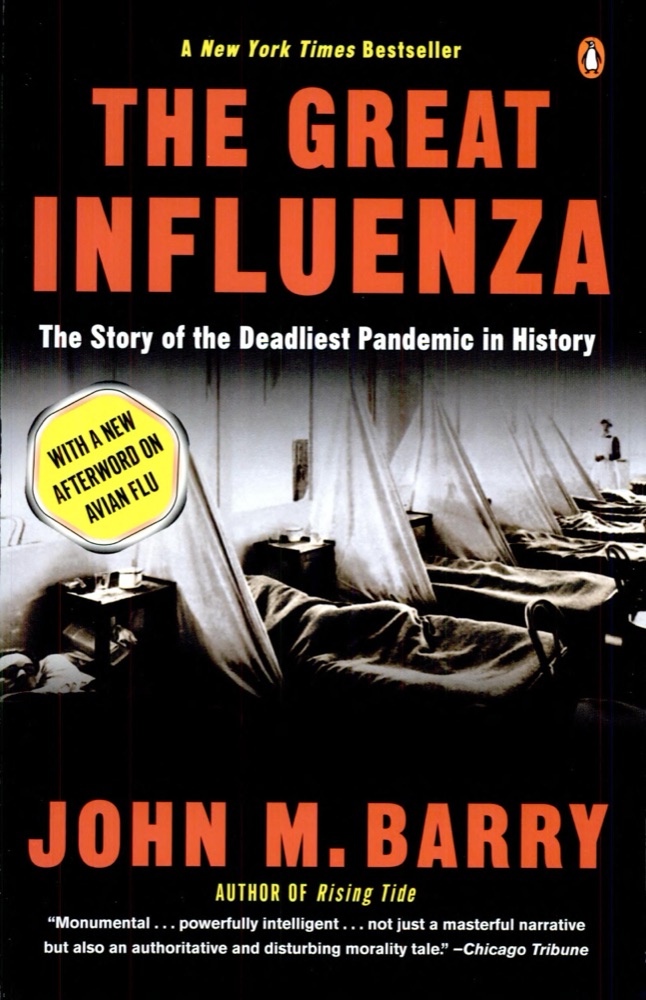 The Great Influenza: The Story of the Deadliest Pandemic in History
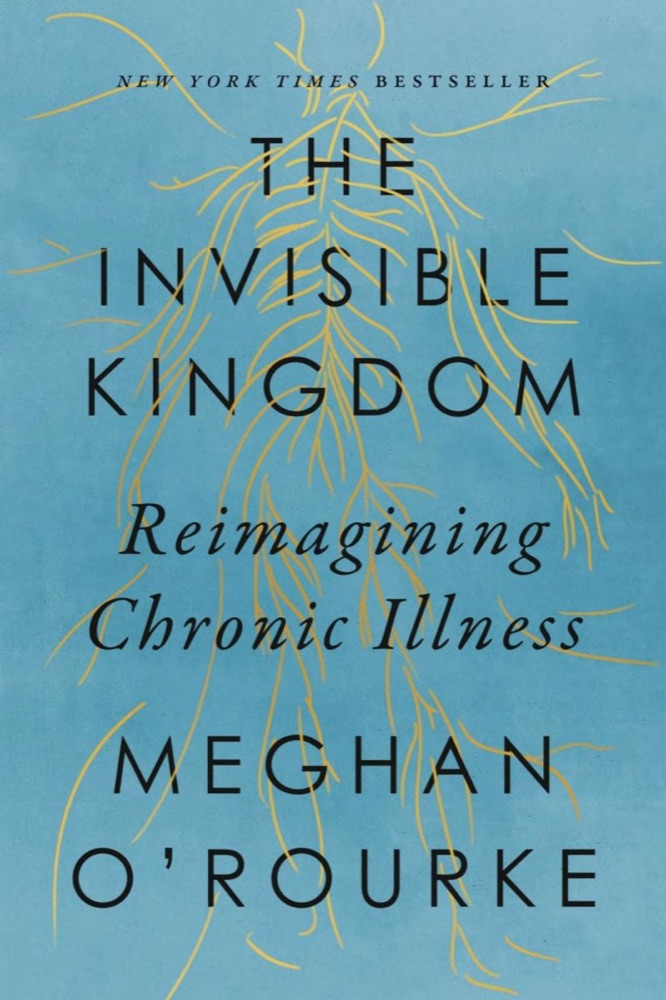 The Invisible Kingdom: Reimagining Chronic Illness
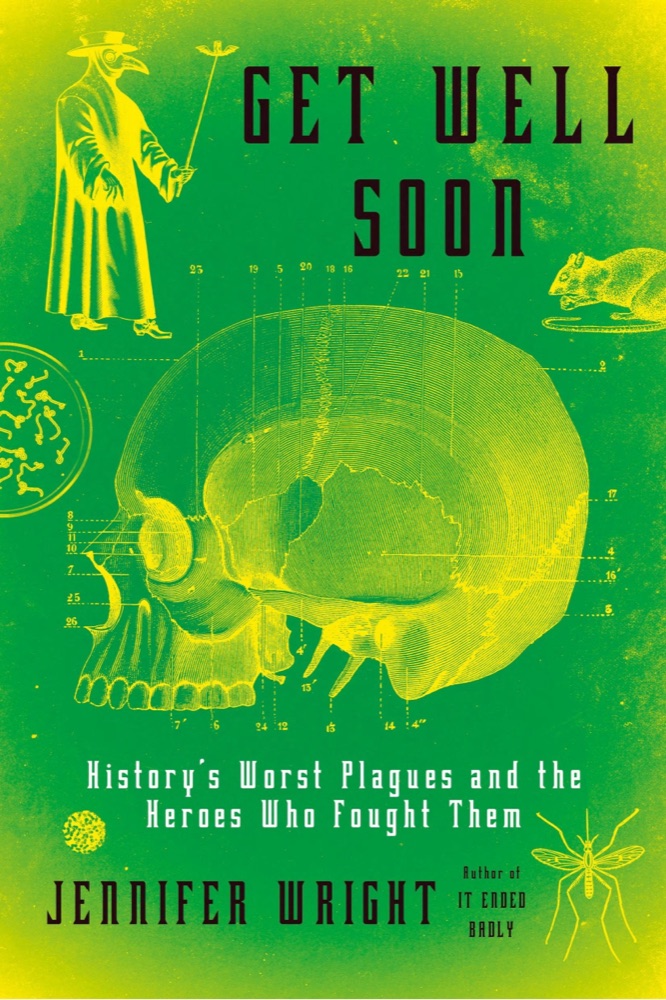 Get Well Soon: History's Worst Plagues and the Heroes Who Fought Them
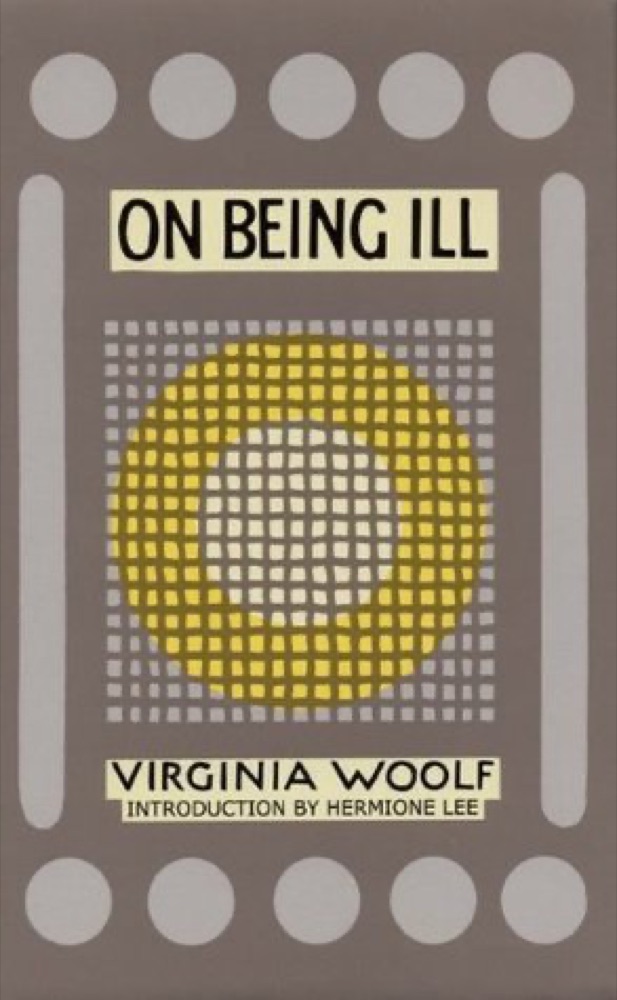 On Being Ill
 The Ghost Map: The Story of London's Most Terrifying Epidemic - and How It Changed Science, Cities, and the Modern World
 The Sleeping Beauties: And Other Stories of Mystery Illness
 Pathologies of Power: Health, Human Rights, and the New War on the Poor
 Brave New World Revisited
 The Nutmeg's Curse: Parables for a Planet in Crisis
 The Blank Slate: The Modern Denial of Human Nature
 The Lost City of the Monkey God
 Maps of Meaning: The Architecture of Belief
 Civilized to Death: What Was Lost on the Way to Modernity
 The Better Angels of Our Nature: Why Violence Has Declined
 Humankind: A Hopeful History
 The Ministry for the Future
 Life at the Bottom: The Worldview That Makes the Underclass
 A Language Older Than Words
 From Dawn to Decadence: 500 Years of Western Cultural Life, 1500 to the Present
 Genesis
 The Empusium
 Villa Incognito
 The Collected Schizophrenias: Essays
 The Atrocity Exhibition
 Enlightenment Now: The Case for Reason, Science, Humanism, and Progress
 Understanding Media: The Extensions of Man
 Homo Deus: A History of Tomorrow
 Why We Get Sick: The New Science of Darwinian Medicine
 The Occult
 The War on the West: An Instant NYT Bestselling History of the Modern World
 Moravagine
 The Sane Society
 The Emperor of All Maladies: A Biography of Cancer
 Endgame, Vol. 1: The Problem of Civilization
 The Futurological Congress: From the Memoirs of Ijon Tichy
 Food of the Gods: The Search for the Original Tree of Knowledge
 Billions & Billions: Thoughts on Life and Death at the Brink of the Millennium
 The Western Lands
 When I Was a Child I Read Books
 Daybreak: Thoughts on the Prejudices of Morality
 Anti-Oedipus: Capitalism and Schizophrenia
 No Name in the Street
 The Culture of Narcissism: American Life in An Age of Diminishing Expectations
 The State of the Art
 Mortality
 The Conspiracy Against the Human Race
 Anthills of the Savannah
 No One Cares About Crazy People: The Chaos and Heartbreak of Mental Health in America
 The Age of Magical Overthinking: Notes on Modern Irrationality
 The Log from the Sea of Cortez
 On the Genealogy of Morals/Ecce Homo
 The Will to Power
Regarding the Pain of Others
The Will to Power
Regarding the Pain of Others
 The Fall of Babel
 The Source of Self-Regard: Selected Essays, Speeches, and Meditations
 Burning Questions: Essays and Occasional Pieces, 2004 to 2021
 Awakenings
 The Strange Death of Europe: Immigration, Identity, Islam