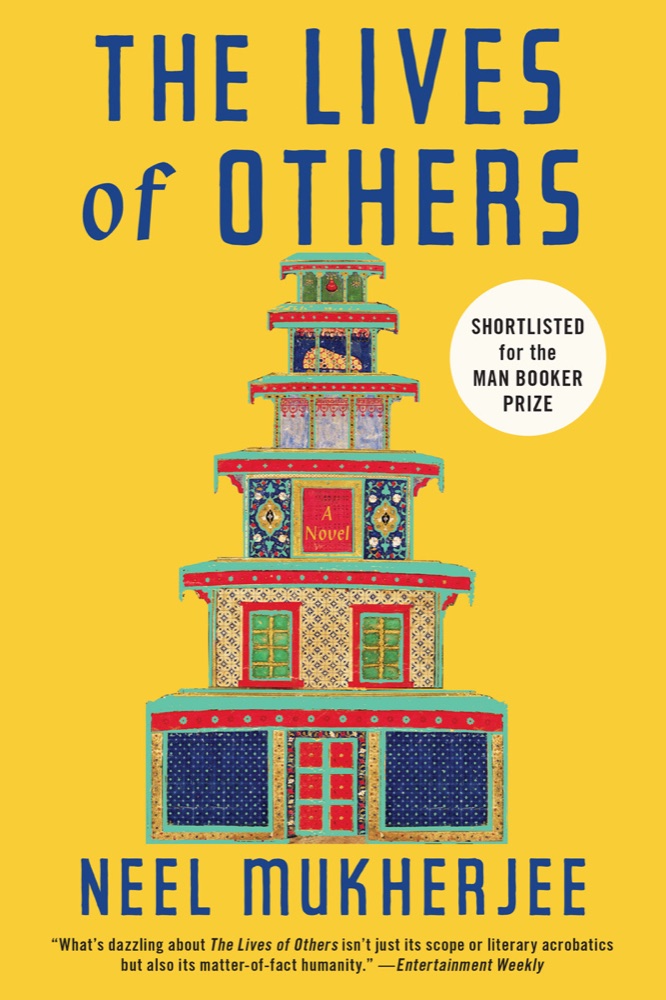

 Ghachar Ghochar
Quotes from the Book
You take away economic security and the whole pack of cards collapses. Everyone is at each other’s throats. All these vaunted bourgeois values that prop up society – love, duty, honour, respect – all rest on power-relations lubricated by economics. They are the gloss people put on the naked truth: self-interest.
16
Within minutes a small crowd had gathered: what could be more interesting than other people's lives?
12
Why did they all think alike? Typical bourgeois brainwashed homogeneity? How else could this unvarying calculus abouth the worth of one's own kind measured against the lives of others have come about?
6
Whoever said that time blunts all pain did not quite understand that bluntness can wound as grievously as sharp points and edges;
4
So Sona does what he has perfected: he becomes two persons, an outer one that goes through the motions required of him, and an inner one that is the true, pure he.
3
In time-honoured fashion, this is really the eldest daughter-in-law’s investiture as the earthly, domestic symbol of the goddess. It is she who channels Lakshmi’s blessings on the family. In her is vested, by an understanding of priestly transference, the household’s economic prosperity, well-being and harmonious daily life. Beside it, her other daily chores as eldest daughter-in-law –supervising the cook and cleaners and servants and household accounts, caring for her elderly parents-in-law, looking after their meals and medication, deciding which tasks can be ceded to the wives of her three brothers-in-law, keeping a family of twenty (including the servants) ticking over without hiccups or mishaps –all these appear as milk-and-rice, as uncomplicated, bland and digestible as infant fare.
2
It could be said of him that while others chased the mirage of happiness, he was happy with being content.
2
Events fall into a pattern that we can only discern retrospectively. We credit ourselves with far more agency than we actually possess. Things happen because they happen.
2
All superstructures, including the family, rest on the base of one thing, and one thing only – economics. The family is the first and the primary unit of oppression and exploitation.
2
Not all family bonds are equal. The lie so assiduously propagated by mothers – ‘How can you ask who is my favourite? They are all my children, I love all of them equally. Are you partial to one finger of your hand over another?’ – is disbelieved by everyone, yet it is quite astonishing what pervasive currency it has in the outward show of lives. Everyone
2
Numbers never lie; one can make them, of course, as one can make anything speak another story in another tongue, but they do not have the inherent falsehood that words carry.
2
all this immorality and opportunism, this was what characterised them, not altruism, as the stories they had spun would have you believe. But then, this is a world whose running fuel is anecdotes and stories, he reminds himself.
2
Being a Bengali, one is surprised when all the endless spume and froth of talk suddenly reveals itself to be the front of a gigantic wave of action.
2
A woman’s child died. She was very sad and crying, all the time. She went to the Buddha and said, “Buddha, Buddha, please bring my son back to life.” And she was crying, crying. So the Buddha said to her, “Go bring me some mustard seeds from a house in which there has been no death ever and I’ll bring your son alive.” So the woman went around from house to house, begging for mustard seeds, crying. But she couldn’t find a single house in which there hadn’t been a death. For days she went looking and crying but no one could give her those seeds. So she returned to the Buddha, fell at his feet and said, ‘I couldn’t find the mustard seeds. Every house I went to has had a death in it. What will happen now?’ The Buddha said, ‘I asked you to do the impossible. Every mortal is marked by death. No one can escape it. That is why you couldn’t find a death-free home. This was my lesson to you –death is universal, all of us have to die.
1
Dhiren broke the silence by starting to hum a tune under his breath,,,, 'The smile of the moon has spilled over its banks'......I was filled with - with what? An affectionate contempt? A sense of ridicule? Shock that Dhiren, the earthy, self-styled tough guy, had any truck with the kind of music he'd consider effeminate? Tagore seemed to be carried inside all Bengalis, regardless of class or social background, like some inheritable disease, silent, unknown, until it manifested itself at the unlikeliest of times. How irredeemably middle class all this was: The Little Red Book and On Practice on the one hand; on the other hand, the poetry of Jibanananda Das in his cloth sidebag and a coy, cloying Tagore song almost involuntary on his lips. There really was no hope of escape for us. ...... For god's sake, Mao by day and Tagore by moonlight? Dhiren didn't miss a beat - That's quintessential Bengali soul for you.
1
People talk of rage as something fluid; it boils, flows, spills over, scalds. For her, it is not any of these things. Instead it is a vast, frozen sea, solid as rock, unthawable. She has never seen the sea, but she knows it wraps around three-quarters of the world. All her anger is that and more.
1
Battles are won one by one and enemy battalions are destroyed one at a time. Factories are built one at a time. Farmers cultivate one plot after another. We serve ourselves the total amount of food we can consume, but we eat it spoonful by spoonful; to eat it in one go would be impossible.This is known as the piecemeal solution.
1
This is the hope the Maoists offered, the hope of dark clouds gathering over parched, fractured soil; it could rain or it could not, but they brought something new into their lives: possibility.
1
Where is this?’ he asks. ‘Go. Walk. Go home,’ comes the answer. What was it that his mother used to say about such situations? Don’t spurn the goddess of wealth, waiting and ready at your hand, by pushing her away towards your feet. The thought of his mother brings a sudden constriction in his throat – have they robbed him of any kind of self-control, of masculinity? How will he ever find the words to ask her for forgiveness? He hobbles, stops, limps a bit more; no, he really cannot move. The policemen are watching him in silence. Should he crawl on all fours? He would be much faster if he did that. He tries walking on the sides of his feet; it is impossible after two steps. An axis of pain has brought together, in one rod, the discrete epicentres of where he has been worked upon – the right big toe, the soles of both feet, his raw, bloody left thigh – and is driving that into his entire body, from toe to head. He takes another couple of steps. ‘Run,’ comes an order. How can he run? He can hardly breathe. A shot rings out, then another. The first bullet gets him in the back of his skull, the second in his back, under his left shoulder blade. He falls to the ground face-down.
1
The enemy inside is far more powerful than the enemy outside.
1
Boro-babu, the world does not change, you destroy yourself trying to change it, but it remains as it is. The world is very big, and we are very small. Why cause people who love you to go through such misery because of it?
1
This is how this world runs, a small group of people who know each other, a closed world of intense curiosity in other people’s lives because your own is just empty, dead time.
1
They say, “Eighteen sores when touched by a tiger, but fifty-eight if by the police.” Don’t forget that.
1
There seem to be fewer stars; it must be getting close to dawn. No sign of your face or your name in the sky tonight. What is going to happen to the two of us? Doesn’t that question haunt you, too, and keep you awake? It’s eating me slowly from the inside. It’s all impossible, everything between us, every possibility, imaginable or unimaginable, is impossible.
1
He said, Twenty years we've been independent of foreign rule, but things have remained the same for us. No, they've got much worse. At that time we used to be told that the sahebs are sucking our blood dry, the sahebs are taking our land away, our crops away, the sahebs have stolen all our possessions from us, but the sahebs have long gone now, why are things still the same? We're foolish, illiterate people, we can't read, we don't understand much, but we understand at least this: the bloodsuckers are still there, their skin colour has changed. That's the only change that has happened.
Transire suum pectus mundoque potiri.' To rise above oneself. That will do. That is enough.
From all the things he has bothered to find out about the way the Ghoshes ran their business - planting lumpens within unions to spark off violence so that all the union workers could be sacked; an old story of buying off a business from a friend's widow, who did not know any better, for a fraction of its real value; using the Hindu-Muslim riots the year before Independence, the year he was born, to shut down mills, regardless of how many workers were deprived of their livelihoods, and buying up factories in areas emptied by the migration - all this immorality and opportunism, this was what characterised them, not altruism, as the stories they had spun would have you believe. But then, this is a world whose running fuel is anecdotes and stories, he reminds himself. The anecdotes need not be first-hand; in fact, better if they are not, better if they are repeated across several degrees of separation, because that proves how potent and pervasive they are, bringing everyone together in one huge, collusive matrix. A legendary lecture given by so-and-so in Presidency College in 1926, its iconic status relayed by a nineteen-year-old in 1965 with the words "You needed to be there to feel the goosebumps". The memory of a martinet kept alive by stories recounting his disciplinary measures from fifty years ago, handed down a dendritic chain of people across the generations. This is the way this world runs: self-mythologising through anecdotes proliferating like a particularly virulent strain of virus. Chatter chatter chatter, always the chatter of what others did and others said in a golden age of an unrecoverable past.
The sanction made the unsaid even more palpable, as if the thoughts had been waiting outside the room, and had at last been given permission to enter; now there was no denying their presence.
Mollycoddling was the mother's duty; the father's lay elsewhere. As a consequence, his four older children feared and respected him, as they had been taught to do, and the love the professed to feel, had they been asked and had they answered truthfully or even had access to the truth, was of a duty-bound, obligatory kind too, a love issuing from commandment and tradition and the notion of family, not one from the tides of the heart or the unbridled, inexplicable pull of feelings. If painted, that love would take the form of a polite and manicured wash of pleasant colours, not the hurl-and-splatter of impastoed reds.
Watch on YouTube
About Neel Mukherjee
We have collected 29 quotes from 1 book by Neel Mukherjee on BookQuoters.
More about the author →About the book
The aging patriarch and matriarch of the Ghosh family preside over their large household, made up of their five adult children and their respective children, unaware that beneath the barely ruffled surface of their lives the sands are shifting. Each set of family members occupies a floor of the home, in accordance to their standing within the family. Poisonous rivalries between sisters-in-law, destructive secrets, and the implosion of the family business threaten to unravel bonds of kinship as social unrest brews in greater Indian society. This is a moment of turbulence, of inevitable and unstoppable change: the chasm between the generations, and between those who have and those who have not, has never been wider. The eldest grandchild, Supratik, compelled by his idealism, becomes dangerously involved in extremist political activism—an action that further catalyzes the decay of the Ghosh
Book details
- First published
- 2014
- Author
- Neel Mukherjee
- Genre
- Fiction
- Goodreads rating
- 3.68 (5k ratings)
Keep reading
Ghachar Ghochar
 The Day of the Scorpion
 Red Mars
 The Empusium
 The Years of Rice and Salt
 The Fall of Babel
 The Jewel in the Crown
 The Ground Beneath Her Feet
 The Wasted Vigil
 Speaking Bones
 Toll the Hounds
 All the King's Men
 Moth Smoke
 Behind the Beautiful Forevers: Life, Death, and Hope in a Mumbai Undercity
 That Hideous Strength
 Children of the Mind
 Fall of Light
 The Kite Runner
 Milk Teeth
 Midnight Tides
 Cuckold
 The Fall
 The Brutal Telling
 Shadow of the Hegemon
 Anthills of the Savannah
 The Association of Small Bombs
 The Glass Palace
 Green Mars
 Freedom
 The Book That Broke the World
 The Human Stain
 Creation Lake
 The Bee Sting
 Embers
 Still Life
 Disoriental
 Last First Snow
 The Ministry of Utmost Happiness
 How Long 'til Black Future Month?
 Homegoing
 Trust
Trust
 Independent People
 The Immortals of Meluha
 The Emperor's Soul
 Xenocide
 Varina
 Sacred Hunger
 Too Like the Lightning
 The Monster Baru Cormorant
 Arm of the Sphinx
 Selected Stories
 The Story of the Lost Child
 The Night Watchman
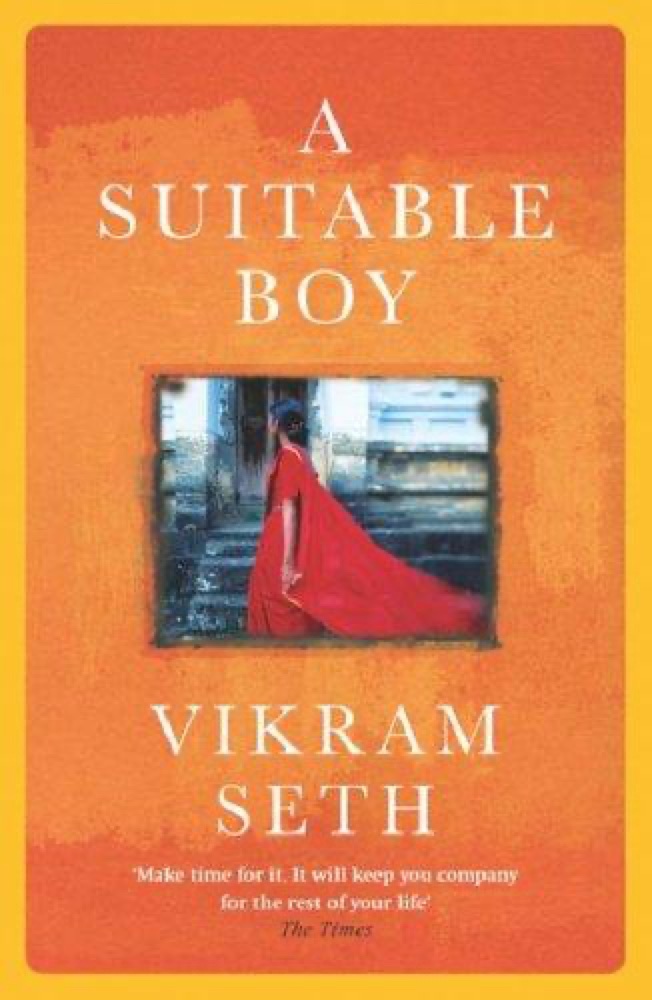 A Suitable Boy
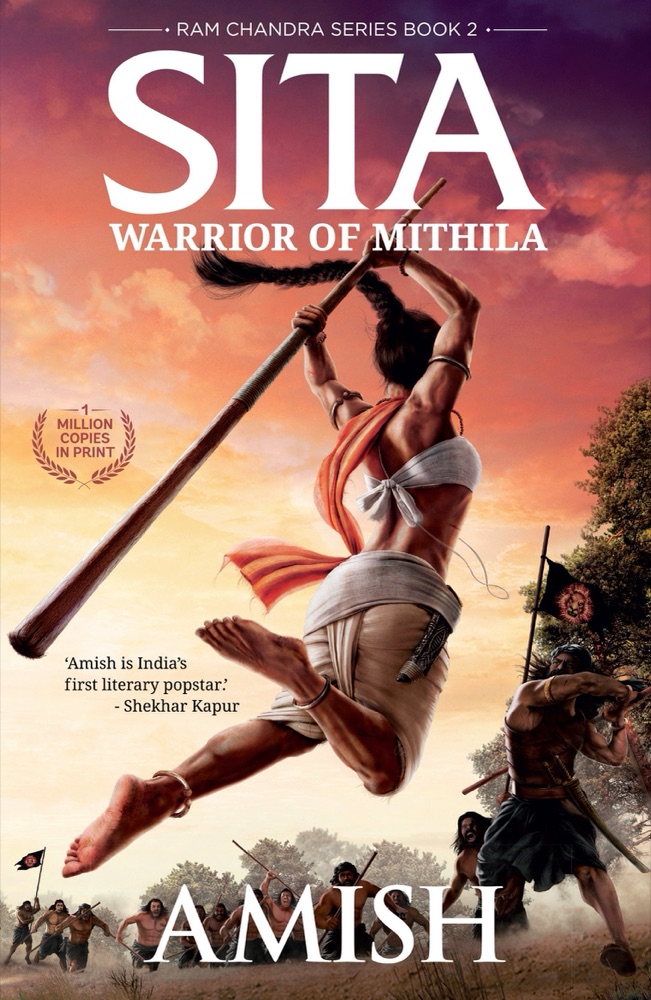 Sita: Warrior of Mithila
 White Teeth
 Wizard of the Crow
 The Golden House
 NW
NW
 Open City