
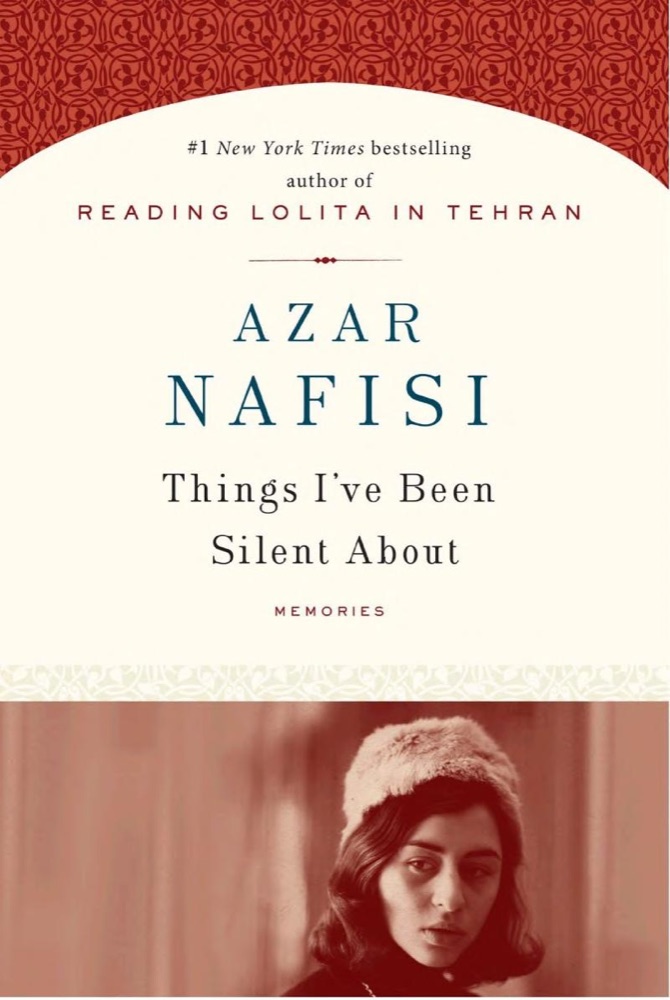
 Things I've Been Silent About
Quotes from the Book
Because to really integrate into a culture, I can tell you that you have to disintegrate first, at least partially, from your own. You have to separate, detach, disassociate. No one who demands that immigrants make “an effort at integration” would dare look them in the face and ask them to start by making the necessary “effort at disintegration.” They’re asking people to stand atop the mountain without climbing up it first.
7
That's the tragedy of exile. Things, as well as people, still exist, but you have to pretend to think of them as dead.
7
I have become—as I’m sure everyone does who has left his or her country—someone else. Someone who has translated myself into other cultural codes. Firstly in order to survive, and then to go beyond survival and forge a future for myself. And since it is a generally acknowledged idea that something is lost in translation, it should come as no surprise that we unlearn—at least partially—what we used to be, to make room for what we have become.
6
On a la vie de ses risques [...]. Si on ne prend pas de risque, on subit, et si on subit, on meurt, ne serait-ce que d'ennui.
5
I was confronted by a world that I could see and touch but didn't know how to talk about. There were so many words and names that I just didn't have. Flowers, trees, birds, reptiles, organs. The words you learn as you grow up in a country the ones the language reserves for people who are immersed in it and denies to those who just dip their toes in every now and then. The words for Saturday-afternoon strolls and summer camps and weekends in the country. Words from peaceful lives, lives that belong to the people living them.
4
There are always risks in life, my little ones. If you don’t take risks, you simply endure, and if you endure, you die—even if it’s only boredom that kills you.
3
Iranians don’t like solitude or silence (any noise other than the human voice, even the blaring horns of a traffic jam, is considered silence). If Robinson Crusoe had been Iranian, he would have let himself die the minute he got to the island, and the story would have been over.
3
But freedom is an illusion. The only thing that changes is the size of your prison.
2
More than once I heard him say that religion, like tyranny, dried up the capacity for analysis, with the sole purpose of imposing a single feeling: fear. “Fear is their only weapon, and the revolution is about turning it back on them,” he would say, with conviction.
2
But the present doesn't exist. It's only an intermission, a temporary respite, which might at any moment be swept away, destroyed, pulverized, by the escaped djinns of the past.
2
Talking about the present means I have to go deep into the past, to cross borders and scale mountains and go back to that lake so enormous they call it a sea. I have to let myself be guided by the flow of images and free associations, the natural fits and starts, the hollows and bumps carved into my memories by time. But the truth of memory is strange, isn’t it? Our memories select, eliminate, exaggerate, minimize, glorify, denigrate. They create their own versions of events and serve up their own reality. Disparate, but cohesive. Imperfect yet sincere.
2
Here’s what I’d learned about the Dutch: each person is free to be who they are, to want what they want, to live how they choose, on the condition that it doesn’t harm the well-being of anyone else, or the general equilibrium. It’s a philosophy of life that’s the exact opposite of Persian culture, where erecting barriers, getting involved in other people’s lives, and breaking the law is as natural as breathing. But it’s also unlike the Judeo-Christian rigidity of French culture,
1
People always think hard times bring you closer together, but that’s not the case with exile. Survival is a very personal matter.
1
Oh, there are transsexuals in Iran?” they exclaim, in the same disconcerted tone as if they’d just learned that a nude beach was being established in the Vatican. Because they don’t get that, in our culture, the important thing is to be something; to fall into one category or another, and follow its rules. Transsexuality exists because there is something worse than being transsexual, and that’s being homosexual. That’s not shameful. Shameful is losing your virginity before marriage, or having an abortion, or staying an old maid and living with your parents until they die. Shameful is being a drug addict or having an affair or raising children who then turn their backs on you. No, being gay isn’t shameful. It’s impossible. A non-reality.
1
I know what you’re thinking: the girl whose father wanted a son acts like a boy and ends up as a lesbian, what a cliché. It’s true.
1
didn’t know what the word lesbian meant; yet, by some strange alchemy, the second it dropped onto me, as dark as a drop of black ink into a glass of water, I felt it. It had something to do with how I acted, with who I was, and with shame.
1
Part of him had always been an exile, alone even in the middle of a crowd. He gathered people around him, but excluded himself from the gathering.
1
Sleep isn’t about resting, it’s about letting yourself settle, like the sediment at the bottom of a wine-barrel. I’m nowhere near trusting this world that much.
1
For Sara, being part of a couple, being married, sexuality—none of that was worth anything in itself. Those were only consensual steps, necessary springboards to reach the higher plane of existence that was motherhood.
1
In this life, both fate and free will have their parts to play, only the proportion changes, depending on the event.
1
We had all hoped that a day would come when the five of us could live together again, free and without fear. But freedom is an illusion. The only thing that changes is the size of your prison.
1
In una società in cui tutto è insidia e corruzione, in cui anche il semplice uscire di casa a comprare un panetto di burro può rivelarsi un incubo, raccontare, narrare, inventare e mentire significa rimanere vivi, eludere il timore, prendersi la consolazione dove c'è, nell'ncontro, nel riconoscersi, nello strofinare la propria esistenza contro quella dell'altro. Significa anche ammansire la paura, dirarmarla, impedirle di nuocere. Mentre il silenzio...Be', il silenzio vuol dire chiudere gli occhi, coricarsi nella tomba e chiudere il coperchio.
Our uprooting had turned us into strangers, not only to other people, but to one another. People always think hard times bring you closer together, but that’s not the case with exile. Survival is a very personal matter.
after the present. But the present doesn’t exist. It’s only an intermission, a temporary respite, which might at any moment be swept away, destroyed, pulverized, by the escaped djinns of the past.
Yet, throughout her life, Sara refused to acknowledge that political action and its dark side, a life spent focused on oneself, were just as important to her as her family.
In Iran, we don’t have homosexuals like in your country. We don’t have this phenomenon. I don’t know who’s
It’s Sara who left her behind. Kimiâ’s childhood ended at that moment, in that solitude, in that silence, in the shock of having been abandoned. And that mistake, that single mistake, weighs more heavily on Kimiâ now than everything good Sara has done for her.
But I sometimes think that her apparent detachment was her way of letting us know that she was helpless, that she didn’t know how to be a mother anymore. She doubtlessly didn’t know who we were anymore, or what she had a right to expect from us, now that our promised land had turned out to be a road to nowhere. Our uprooting had turned us into strangers, not only to other people, but to one another.
Watch on YouTube
About Négar Djavadi
We have collected 28 quotes from 1 book by Négar Djavadi on BookQuoters.
More about the author →About the book
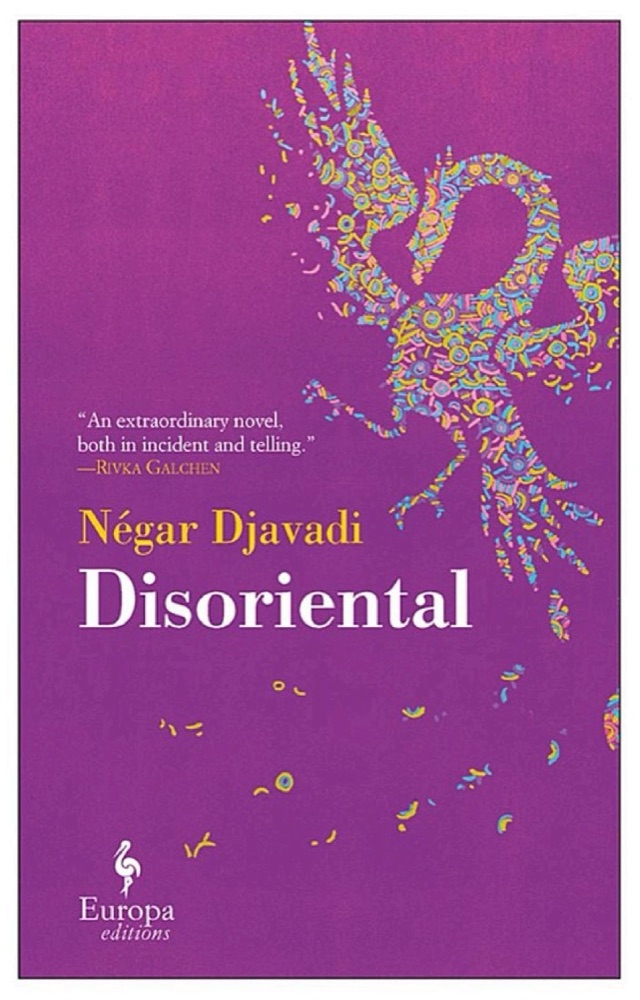
The story of a young girl and her family, at the core of an exploration of Iranian history.
Kimiâ Sadr fled Iran at the age of ten in the company of her mother and sisters to join her father in France. Now twenty-five, with a new life and the prospect of a child, Kimiâ is inundated by her own memories and the stories of her ancestors, which reach her in unstoppable, uncontainable waves. In the waiting room of a Parisian fertility clinic, generations of flamboyant Sadrs return to her, including her formidable great-grandfather Montazemolmolk, with his harem of fifty-two wives, and her parents, Darius and Sara, stalwart opponents of each regime that befalls them.
In this high-spirited, kaleidoscopic story, key moments of Iranian history, politics, and culture punctuate stories of family drama and triumph. Yet it is Kimiâ herself—punk-rock aficionado, storyteller extraordinaire, a Sch
Book details
- First published
- 2016
- Author
- Négar Djavadi
- Genre
- Fiction
- Goodreads rating
- 4.20 (7k ratings)
The buzz
- The New York TimesReview in The New York Timesprofessional review (via Book Marks)
- The GuardianReview in The Guardianprofessional review (via Book Marks)
- Kirkus ReviewsReview in Kirkus Reviewsprofessional review (via Book Marks)
- Publishers WeeklyReview in Publishers Weeklyprofessional review (via Book Marks)
- LA Review of BooksReview in LA Review of Booksprofessional review (via Book Marks)
- BooklistReview in Booklistprofessional review (via Book Marks)
Keep reading
Things I've Been Silent About
 The Girl Who Smiled Beads: A Story of War and What Comes After
 Dream Count
 The Eighth Life
 Varina
 The Ground Beneath Her Feet
 The Island of Missing Trees
 Colorless Tsukuru Tazaki and His Years of Pilgrimage
 This Strange Eventful History
 Identity
 The Story of the Lost Child
 Infinite Country
 NW
NW
 The Gap of Time
 Too Much Happiness: Stories
 The Loneliness of Sonia and Sunny
 Transit
 Another Country
 Leaving Before the Rains Come
 Creation Lake
 City of Stairs
 The Lives of Others
 Night Train to Lisbon
 The Book of Goose
 10 Minutes 38 Seconds in This Strange World
 Shame
Shame
 The Kite Runner
 Out of Oz
 My Friends
 Homegoing
 Warlight
 Free: A Child and a Country at the End of History
 Outline
 Aftershocks
 Oranges Are Not the Only Fruit
 Biography of X
 The Girl and the Stars
 Two Years Eight Months and Twenty-Eight Nights
 White Teeth
 Underground: The Tokyo Gas Attack and the Japanese Psyche
 The Postcard
 What Strange Paradise
 A Bend in the River
 The Cost of Living: A Working Autobiography
 All That I Am
 Infidel
 Flights
 Sexing the Cherry
 Hiddensee: A Tale of the Once and Future Nutcracker
 Arm of the Sphinx
 When Women Were Dragons
 Parade
 The Last Year of the War
 A Fraction of the Whole
 The Fall of Babel
 The Joke
 Embers
 To Paradise
 Panenka
 The Many Daughters of Afong Moy