
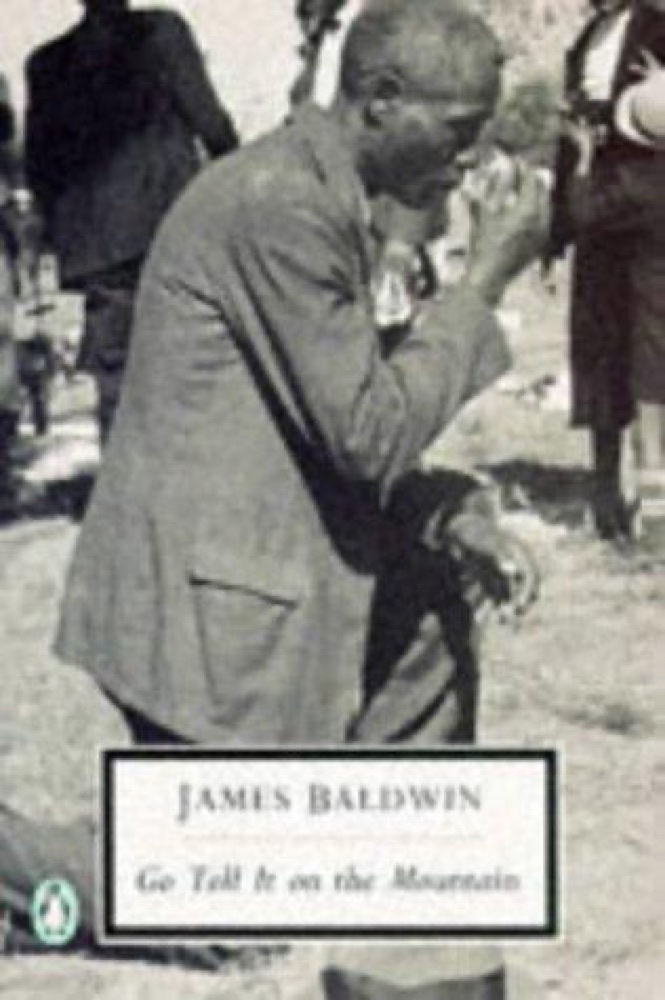
 Go Tell It on the Mountain
Quotes from the Book
The artistic image is not intended to represent the thing itself, but, rather, the reality of the force the thing contains.
148
ANY REAL CHANGE IMPLIES THE breakup of the world as one has always known it, the loss of all that gave one an identity, the end of safety. And at such a moment, unable to see and not daring to imagine what the future will now bring forth, one clings to what one knew, or thought one knew; to what one possessed or dreamed that one possessed. Yet, it is only when a man is able, without bitterness or self-pity, to surrender a dream he has long cherished or a privilege he has long possessed that he is set free—he has set himself free—for higher dreams, for greater privileges. All men have gone through this, go through it, each according to his degree, throughout their lives. It is one of the irreducible facts of life. And remembering this, especially since I am a Negro, affords me almost my only means of understanding what is happening in the minds and hearts of white Southerners today.
112
Many have given up. They stay home and watch the TV screen, living on the earnings of their parents, cousins, bothers, or uncles, and only leave the house to go to the movies or to the nearest bar. "How're you making it?" on may ask, running into them along the block, or in the bar. "Oh, I'm TV-ing it"; with the saddest, sweetest, most shamefaced of smiles, and from a great distance. This distance one is compelled to respect; anyone who has traveled so far will not easily be dragged again into the world. There are further retreats, of course, than the TV screen or the bar. There are those who are simply sitting on their stoops, "stoned," animated for a moment only, and hideously, by the approach of someone who may lend them the money for a "fix." Or by the approach of someone from whom they can purchase it, one of the shrewd ones, on the way to prison or just coming out.
106
Allegiance, after all, has to work two ways; and one can grow weary of an allegiance which is not reciprocal.
68
No one is more dangerous than he who imagines himself pure in heart: for his purity, by definition, is unassailable.
64
There is an illusion about America, a myth about America to which we are clinging which has nothing to do with the lives we lead and I don't believe that anybody in this country who has really thought about it or really almost anybody who has been brought up against it--and almost all of us have one way or another--this collision between one's image of oneself and what one actually is is always very painful and there are two things you can do about it, you can meet the collision head-on and try and become what you really are or you can retreat and try to remain what you thought you were, which is a fantasy, in which you will certainly perish.
52
People are continually pointing out to me the wretchedness of white people in order to console me for the wretchedness of blacks. But an itemized account of the American failure does not console me and it should not console anyone else. That hundreds of thousands of white people are living, in effect, no better than the "niggers" is not a fact to be regarded with complacency. The social and moral bankruptcy suggested by this fact is of the bitterest, most terrifying kind.
36
Though we do not wholly believe it yet, the interior life is a real life, and the intangible dreams of people have a tangible effect on the world.
33
We do not trust educated people and rarely, alas, produce them, for we do not trust the independence of mind which alone makes a genuine education possible.
33
There are few things under heaven more unnerving than the silent, accumulating contempt and hatred of a people.
33
The young think that failure is the Siberian end of the line, banishment from all the living, and tend to do what I then did--which was to hide.
13
Now I think there is a very good reason why the Negro in this country has been treated for such a long time in such a cruel way, and some of the reasons are economic and some of them are political. We have discussed these reasons without ever coming to any kind of resolution for a very long time. Some of them are social, and these reasons are somewhat more important because they have to do with our social panic, with our fear of losing status. This really amounts sometimes to a kind of social paranoia. One cannot afford to lose status on this peculiar ladder, for the prevailing notion of American life seems to involve a kind of rung-by-rung ascension to some hideously desirable state. If this is one’s concept of life, obviously one cannot afford to slip back one rung. When one slips, one slips back not a rung but back into chaos and no longer knows who he is. And this reason, this fear, suggests to me one of the real reasons for the status of the Negro in this country.
10
In this endeavor to wed the vision of the Old World with that of the New, it is the writer, not the statesman, who is our strongest arm. Though we do not wholly believe it yet, the interior life is a real life, and the intangible dreams of people have a tangible effect on the world.
8
The questions which one asks oneself begin, at last, to illuminate the world, and become one's key to the experience of others. One can only face in others what one can face in oneself. On this confrontation depends the measure of our wisdom and compassion. This energy is all that one finds in the rubble of vanished civilizations, and the only hope for ours.
7
the things that most white people imagine that they can salvage from the storm of life is really, in sum, their innocence. It was this commodity precisely which I had to get rid of at once, literally, on pain of death. I am afraid that most of the white people I have ever known impressed me as being in the grip of a weird nostalgia, dreaming of a vanished state of security and order, against which dream, unfailingly and unconsciously, they tested and very often lost their lives. It is a terrible thing to say, but I am afraid that for a very long time the troubles of white people failed to impress me as being real trouble. They put me in mind of children crying because the breast has been taken away. Time and love have modified my tough-boy lack of charity, but the attitude sketched above was my first attitude and I am sure that there is a great deal of it left.
7
They are two sides of the same coin and the South will not change—cannot change—until the North changes. The country will not change until it re-examines itself and discovers what it really means by freedom. In the meantime, generations keep being born, bitterness is increased by incompetence, pride, and folly, and the world shrinks around us. It is a terrible, an inexorable, law that one cannot deny the humanity of another without diminishing one’s own: in the face of one’s victim, one sees oneself. Walk through the streets of Harlem and see what we, this nation, have become.
6
Europeans never had the remotest intention of raising Africans to the Western level, of sharing with them the instruments of physical, political or economic power. It was precisely their intention, their necessity, to keep the people they ruled in a state of cultural anarchy, that is, simply in a barbaric state. “The famous inferiority complex one is pleased to observe as a characteristic of the colonized is no accident but something very definitely desired and deliberately inculcated by the colonizer.
6
No one in the world -- in the entire world -- know more -- knows Americans better or, odd as this may sound, loves them more than the American Negro. This is because he has had to watch you, outwit you, deal with you, and bear you, and sometimes even bleed and die with you, ever since we got here, that is, since both of us, black and white, got here -- and this is a wedding. Whether I like it or not, or whether you like it or not, we are bound together forever. We are part of each other.
6
To be with God is really to be involved with some enormous, overwhelming desire, and joy, and power which you cannot control, which controls you. I conceive of my own life as a journey toward something I do not understand, which in the going toward, makes me better. I conceive of God, in fact, as a means of liberation and not a means to control others. Love does not begin and end the way we seem to think it does. Love is a battle, love is a war; love is a growing up. No one in the world—in the entire world—knows more—knows Americans better or, odd as this may sound, loves them more than the American Negro. This is because he has had to watch you, outwit you, deal with you, and bear you, and sometimes even bleed and die with you, ever since we got here, that is, since both of us, black and white, got here—and this is a wedding. Whether I like it or not, or whether you like it or not, we are bound together forever. We are part of each other. What is happening to every Negro in the country at any time is also happening to you. There is no way around this. I am suggesting that these walls—these artificial walls—which have been up so long to protect us from something we fear, must come down.
5
Every society is really governed by hidden laws, by unspoken but profound assumptions on the part of the people, and ours is no exception.
5
The world tends to trap and immobilize you in the role you play; and it is not always easy—in fact, it is always extremely hard—to maintain a kind of watchful, mocking distance between oneself as one appears to be and oneself as one actually is.
4
Men do not like to be protected, it emasculates them. This is what black men know, it is the reality they have lived with; it is what white men do not want to know. It is not a pretty thing to be a father and be ultimately dependent on the power and kindness of some other man for the well-being of your house.
4
What I find appalling—and really dangerous—is the American assumption that the Negro is so contented with his lot here that only the cynical agents of a foreign power can rouse him to protest. It is a notion which contains a gratuitous insult, implying, as it does, that Negroes can make no move unless they are manipulated. It forcibly suggests that the Southern attitude toward the Negro is also, essentially, the national attitude. When the South has trouble with its Negroes—when the Negroes refuse to remain in their “place”—it blames “outside” agitators and “Northern interference.” When the nation has trouble with the Northern Negro, it blames the Kremlin. And this, by no means incidentally, is a very dangerous thing to do. We thus give credit to the Communists for attitudes and victories which are not theirs. We make of them the champions of the oppressed, and they could not, of course, be more delighted.
4
The projects in Harlem are hated. They are hated almost as much as policemen, and this is saying a great deal. And they are hated for the same reason: both reveal, unbearably, the real attitude of the white world, no matter how many liberal speeches are made, no matter how many lofty editorials are written, no matter how many civil-rights commissions are set up.
4
quoted Djuna Barnes: “Too great a sense of identity makes a man feel he can do no wrong. And too little does the same.
4
This equation has placed our cities among the most dangerous in the world and has placed our youth among the most empty and most bewildered. The situation of our youth is not mysterious. Children have never been very good at listening to their elders, but they have never failed to imitate them. They must, they have no other models. That is exactly what our children are doing. They are imitating our immorality, our disrespect for the pain of others.
4
The world had prepared no place for you, and if the world had its way, no place would ever exist. Now, this is true for everyone, but, in the case of a Negro, this truth is absolutely naked: if he deludes himself about it, he will die. This is not the way this truth presents itself to white men, who believe the world is theirs and who, albeit unconsciously, expect the world to help them in the achievement of their identity.
3
Uncle Tom is, for example, if he is called uncle, a kind of saint. He is there, he endures, he will forgive us, and this is a key to that image. But if he is not uncle, if he is merely Tom, he is a danger to everybody. He will wreak havoc on the countryside. When he is Uncle Tom he has no sex—when he is Tom, he does—and this obviously says much more about the people who invented this myth than it does about the people who are the object of it.
3
What it comes to, finally, is that the nation has spent a large part of its time and energy looking away from one of the principal facts of its life. This failure to look reality in the face diminishes a nation as it diminishes a person, and it can only be described as unmanly. And in exactly the same way that the South imagines that it “knows” the Negro, the North imagines that it has set him free. Both camps are deluded. Human freedom is a complex, difficult—and private—thing. If we can liken life, for a moment, to a furnace, then freedom is the fire which burns away illusion. Any honest examination of the national life proves how far we are from the standard of human freedom with which we began. The recovery of this standard demands of everyone who loves this country a hard look at himself, for the greatest achievements must begin somewhere, and they always begin with the person. If we are not capable of this examination, we may yet become one of the most distinguished and monumental failures in the history of nations.
3
I was, in short, but one generation removed from the South, which was now undergoing a new convulsion over whether black children had the same rights, or capacities, for education as did the children of white people. This is a criminally frivolous dispute, absolutely unworthy of this nation; and it is being carried on, in complete bad faith, by completely uneducated people. (We do not trust educated people and rarely, alas, produce them, for we do not trust the independence of mind which alone makes a genuine education possible.)
3
Watch on YouTube
About James Baldwin
We have collected 319 quotes from 14 books by James Baldwin on BookQuoters.
More about the author →More by James Baldwin
All books by James Baldwin →
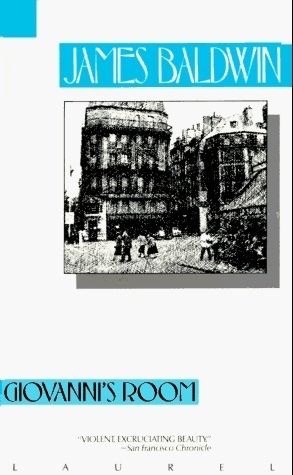
About the book
From one of the most brilliant writers and thinkers of the twentieth century comes a collection of "passionate, probing, controversial" essays ( The Atlantic ) on topics ranging from race relations in the United States to the role of the writer in society.
Told with Baldwin's characteristically unflinching honesty, this “splendid book” ( The New York Times ) offers illuminating, deeply felt essays along with personal accounts of Richard Wright, Norman Mailer and other writers.
“James Baldwin is a skillful writer, a man of fine intelligence and a true companion in the desire to make life human. To take a cue from his title, we had better learn his name.” — The New York Times
Book details
- First published
- 1961
- Author
- James Baldwin
- Genre
- Nonfiction
- Goodreads rating
- 4.36 (5k ratings)
Keep reading
 No Name in the Street
 Notes of a Native Son
 Between the World and Me
 The Souls of Black Folk
 The Autobiography of an Ex-Coloured Man
 I Am Not Your Negro
 The Autobiography of Martin Luther King, Jr.
 Where Do We Go from Here: Chaos or Community?
 Black Like Me
 Why We Can't Wait
 The Source of Self-Regard: Selected Essays, Speeches, and Meditations
 The Heart of a Woman
 Edge of Eternity
 Dreams from My Father: A Story of Race and Inheritance
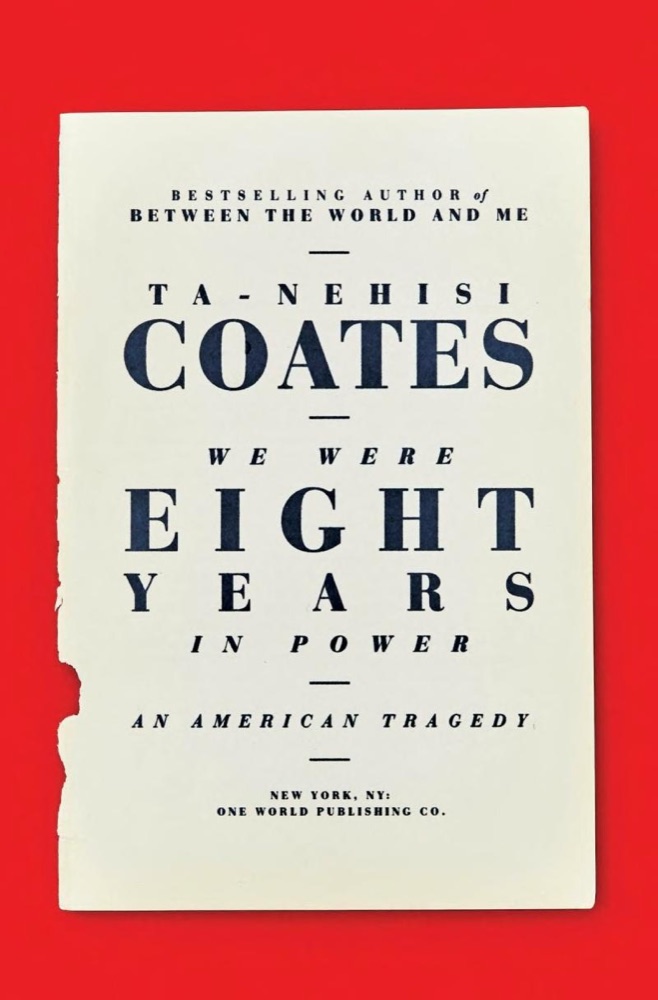 We Were Eight Years in Power: An American Tragedy
 The Golden House
 Notes from No Man's Land
 Black Skin, White Masks
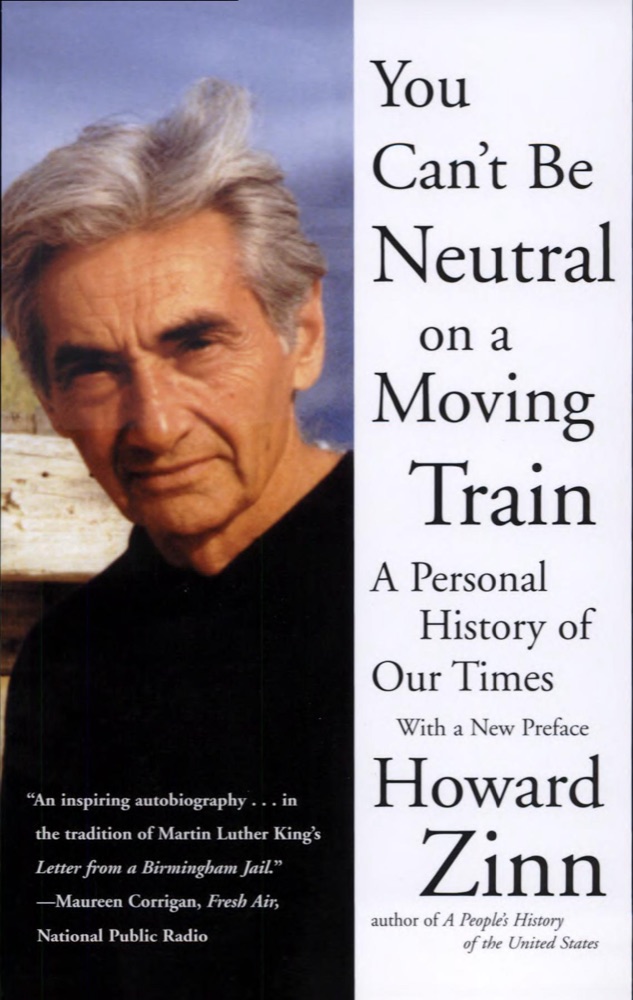 You Can't Be Neutral on a Moving Train: A Personal History of Our Times
 Invisible Man, Got the Whole World Watching: A Young Black Man's Education
 Anthills of the Savannah
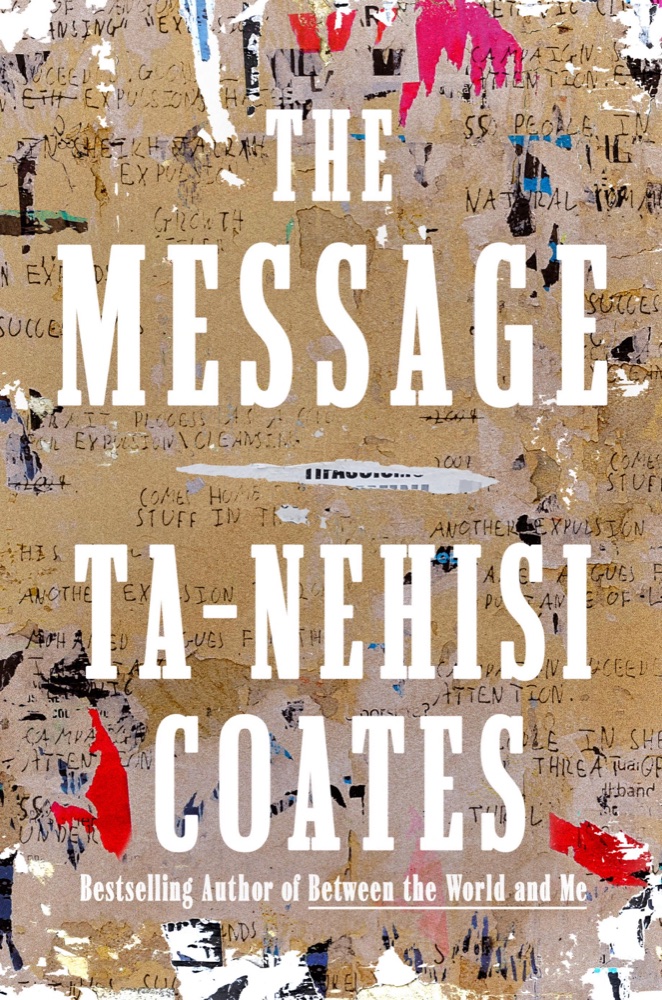 The Message
 The Committed
 When I Was a Child I Read Books
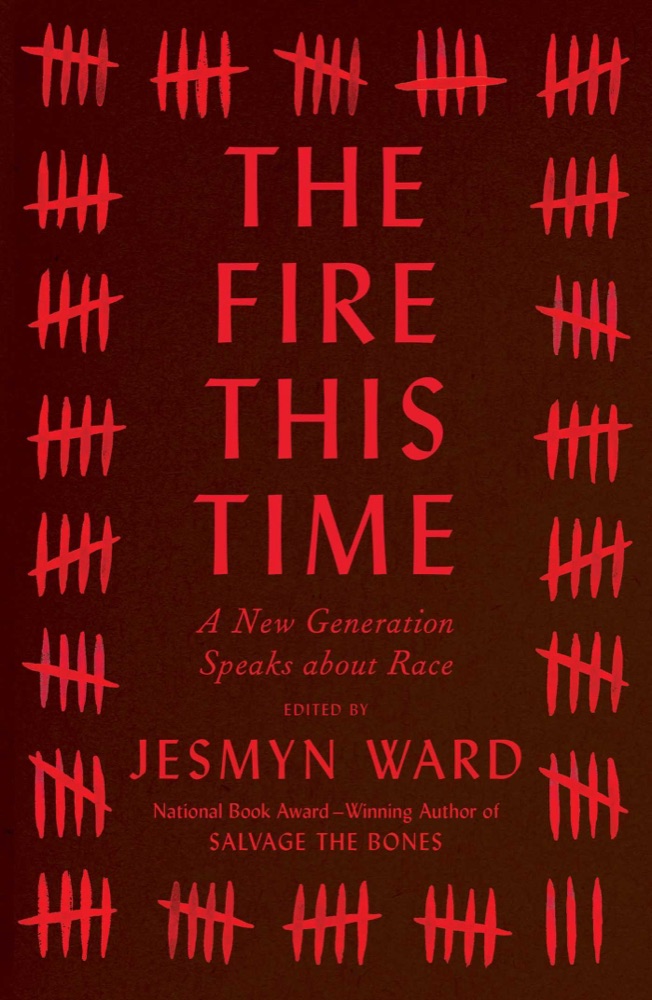 The Fire This Time: A New Generation Speaks About Race
 Assata: An Autobiography
 Hell of a Book
 The Autobiography of Eleanor Roosevelt
 A Promised Land
 Blood Done Sign My Name: A True Story
 How Long 'til Black Future Month?
 Mumbo Jumbo
 Begin Again: James Baldwin's America and Its Urgent Lessons for Our Own
 The Secret Agent
 Essays of E.B. White
 In the Light of What We Know
 Democracy in America
 James
James
 When They Call You a Terrorist: A Black Lives Matter Memoir
 The Fall of Babel
 The Story of My Experiments With Truth
 Arguably: Selected Essays
 Creation Lake
 You Can't Go Home Again
 Hitch-22: A Memoir
 Native Son
 All God's Children Need Traveling Shoes
 A People's History of the United States
 Just Us: An American Conversation
 Daybreak: Thoughts on the Prejudices of Morality
 American Pastoral
 Life at the Bottom: The Worldview That Makes the Underclass
 Resistance, Rebellion and Death: Essays
 Children of Dune
 What's Wrong with the World
 Shadow of the Hegemon
 A Song Flung Up to Heaven
 Long Walk to Freedom
 The Will to Power